60 Gallon vs. 80 Gallon Air Compressor: Which Fits Your Setup Better?
Choosing between a 60 gallon and 80 gallon air compressor requires balancing shop footprint against continuous high-pressure air delivery requirements.

For standard automotive repair shops, the 60 gallon unit provides sufficient peak CFM. Heavy industrial manufacturing facilities should select the 80 gallon model to eliminate pressure drops.
Compare all top models in our Best Air Compressor: Top Picks for Every Garage & Roadside.
Side-by-Side Breakdown
| Criteria | 60 Gallon | 80 Gallon Air Compressor | Edge |
|---|---|---|---|
| Peak Performance & Output | High volumetric output for medium tasks | Maximum sustained output for heavy tools | 80 Gallon Air Compressor |
| Duty Cycle & Consistency | Moderate cycle frequency under load | Extended runtime with superior thermal stability | 80 Gallon Air Compressor |
| Operating Noise & Vibration | Moderate sound levels with standard anchoring | Heavier vibration profile requiring solid pads | 60 Gallon |
| Portability & Footprint | Compact vertical footprint for tight shops | Larger structural envelope demanding more space | 60 Gallon |
| Maintenance & Service Life | Standard oil changes and filter checks | Identical maintenance intervals with larger reservoirs | Tie |
| Power Requirements | Standard 230V single-phase circuit compatibility | Heavy-duty electrical supply often needing specialized wiring | 60 Gallon |
| Best Ideal Use-Case | Professional auto repair and fabrication | Industrial production lines and commercial shops | 80 Gallon Air Compressor |
Tank Capacity Fundamentals and Volumetric Storage
Understanding volumetric air storage helps technicians match compressor size to pneumatic tool demands. A larger reservoir reduces motor cycling frequency, preventing premature thermal degradation in heavy-duty shop environments.
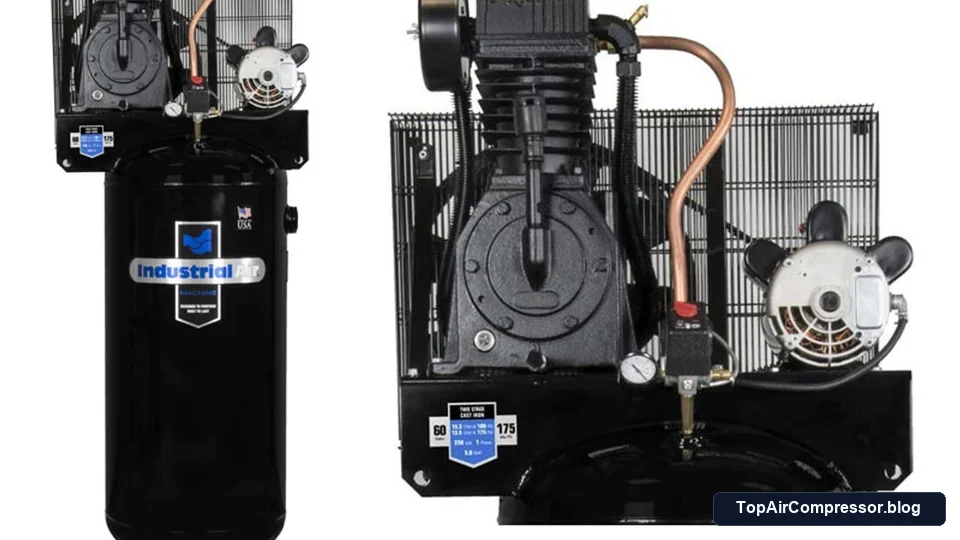
For smaller workshops, review our best 20 gallon air compressor guide before scaling up. The 60 gallon reservoir stores substantial air to support medium-duty painting and fastening applications.
Stepping up to an 80 gallon tank increases compressed air storage by roughly thirty-three percent. This extra volume provides a vital buffer during high-demand applications like continuous heavy grinding.
Understanding volumetric storage requires examining actual usable air versus total vessel volume. A sixty-gallon tank stores compressed air under high pressure, but safety regulations mandate leaving residual air inside the receiver.
Transitioning to an eighty-gallon ASME certified tank increases reserve capacity significantly. This extra volume prevents rapid pressure drops during high-demand operations like continuous grinding, protecting pneumatic tools from severe starvation and pressure drops.
Boyle's law governs how compressed air behaves inside these large steel vessels. Ambient temperature fluctuations directly alter internal tank pressure, meaning winter storage requires monitoring moisture condensation to prevent internal corrosion and rust.
- Volumetric storage dictates motor cycle frequency
- Larger tanks prevent severe line pressure drops
- Higher capacity buffers against sudden tool spikes
Evaluating Storage Dynamics in Professional Shops
Analyzing your peak air consumption prevents costly bottlenecks during critical shop operations. A properly sized reservoir ensures stable pressure delivery across multiple connected pneumatic lines.
Shops experiencing rapid pressure depletion should immediately consider upgrading their secondary storage capacity to maintain tool efficiency.
- Monitor peak tool CFM demands closely
- Prevent unexpected pressure drops during tasks
Performance Metrics and Real-World CFM Output
Evaluating cubic feet per minute ratings determines whether your compressor keeps pace. For portable tasks, consult our best 6 gallon air compressor reviews to find smaller jobsite alternatives.
While pump displacement matters, the larger tank volume of an 80 gallon system masks minor pressure drops during sudden tool usage. The 60 gallon unit recovers quickly but forces the pump to cycle sooner.
Evaluating CFM ratings at specific pressures dictates whether a compressor can drive demanding pneumatic equipment. Always measure output at ninety PSI rather than max pressure ratings to ensure realistic shop performance standards.
Volumetric efficiency drops as piston rings wear down over years of continuous industrial operation. Selecting a two-stage pump ensures higher delivered air volume per horsepower, outperforming single-stage alternatives during heavy production cycles.
- CFM ratings dictate real-world tool compatibility
- Two-stage pumps maximize pressure efficiency
- Tank volume cushions sudden air demand spikes
Assessing Sustained Tool Delivery
Continuous-use tools require reliable CFM delivery that outlasts simple tank reserve capacity. Matching your compressor pump displacement to your heaviest tool prevents workflow interruptions.
Professional grade pneumatic sanders demand consistent high volume air to operate without stalling.
- Match pump displacement to heavy tools
- Avoid compressor stalling during operation
Electrical Requirements and Power Infrastructure
Operating these large industrial compressors demands robust electrical service infrastructure within your facility. Most units require dedicated 230V or 460V wiring to handle heavy startup amperage draws safely.
A 60 gallon compressor typically draws moderate amperage. If you need intermediate capacity, check out our best 30 gallon air compressor selections for standard 120V workshop garage applications.
Industrial 80 gallon systems often demand heavier wiring and higher amp breakers to support powerful motors. Ensure your facility electrician inspects wire gauges to prevent dangerous voltage drops.
Running heavy stationary compressors demands robust electrical infrastructure capable of handling massive starting currents. Most sixty and eighty-gallon units require dedicated 230-volt single-phase circuits with heavy-gauge copper wiring to prevent dangerous voltage drops.
Industrial environments often utilize three-phase power to balance electrical loads efficiently across large motor windings. Checking your main breaker panel amperage before purchasing prevents costly service upgrades from your local utility provider.
Motor starter relays protect internal copper coils by managing sudden electrical surges during initial startup sequences. Installing proper thermal overload protection prevents catastrophic motor burnout during extended periods of heavy shop utilization.
- Dedicated electrical circuits are mandatory
- Verify breaker ratings before final installation
- Check wire gauges to prevent voltage drops
Managing Startup Amperage Demands
Magnetic starters and pressure switches protect motors from initial electrical surges during startup cycles. Proper breaker sizing eliminates nuisance tripping in busy commercial garages.
Consult licensed electricians to verify your shop's total load capacity.
- Magnetic starters protect electrical motors
- Prevent nuisance breaker trips during startup
Thermal Dynamics and Duty Cycle Management
For balanced output, explore our best 60 gallon air compressor lineup. Compressor duty cycles dictate how long a pump runs before requiring mandatory cooling downtime in busy shops.
Pushing a 60 gallon compressor beyond its rated duty cycle accelerates internal valve wear and oil breakdown. Monitoring operating temperatures protects your investment against catastrophic pump failure during intense operations.
Managing thermal dynamics is critical because compression generates immense heat within pump cylinders. Cast iron pump heads dissipate heat faster than aluminum models, extending component lifespan under rigorous industrial duty cycle demands.
Operating beyond the recommended duty cycle causes rapid oil breakdown and premature valve reed failure. Allowing adequate cooling intervals protects internal compressor components from destructive thermal expansion and permanent mechanical warp damage.
- Duty cycles determine maximum continuous runtime
- Two-stage pumps offer superior thermal efficiency
- Proper cooling prevents premature pump failure
Combating Heat Buildup in Industrial Pumps
Intercooler tubes and cast iron cylinders actively dissipate extreme operating heat generated under heavy loads. Adequate ambient airflow around the compressor head is essential for longevity.
Never enclose stationary compressors tightly without providing forced ventilation fans.
- Cast iron cylinders reduce thermal stress
- Provide adequate airflow around compressor heads
Physical Footprint and Shop Integration
Measuring available floor space is critical when integrating vertical stationary compressors into a crowded garage layout. The 80 gallon unit demands slightly more vertical clearance and a wider vibration-isolated footprint.
Securing your compressor to concrete using heavy-duty anchor bolts minimizes structural vibration and noise transmission. Proper clearance around the flywheel and motor shroud ensures adequate cooling airflow in tight workshops.
Proper shop integration demands careful measurement of floor space, ceiling height, and doorway clearances. Eighty-gallon vertical tanks require significant vertical clearance and stable concrete flooring capable of supporting heavy deadweight loads safely.
Vibration isolation pads placed beneath mounting feet reduce structural resonance and annoying noise propagation. Securing the unit with concrete anchor bolts prevents dangerous shifting or tipping during aggressive startup and shutdown cycles.
- Vertical tanks save valuable floor space
- Anchor bolts minimize destructive vibration
- Maintain clearance for cooling airflow
Optimizing Workshop Layout for Heavy Equipment
Positioning your compressor near main electrical panels reduces long wire run installation expenses. Keep the unit accessible for routine maintenance tasks like oil checks and belt inspections.
Strategic placement improves overall shop safety and operational efficiency.
- Locate near main electrical supply lines
- Ensure easy access for routine servicing
Maintenance Protocols and Component Durability
Routine condensate drainage prevents internal tank corrosion and extends the structural lifespan of your compressed air reservoir. Automatic electronic drain valves eliminate daily manual maintenance tasks on both tank sizes.
Changing synthetic compressor oil every service interval preserves pump longevity under heavy working loads. Inspecting belt tension and intake filters keeps your pneumatic system operating at peak volumetric efficiency.
Establishing rigorous maintenance protocols guarantees long-term operational reliability and user safety. Draining moisture from the tank daily prevents structural degradation caused by rust formation along the lower weld seams.
Synthetic compressor oils resist varnish buildup far better than traditional mineral lubricants under high operating temperatures. Inspecting drive belts and replacing air filter elements monthly maintains optimal volumetric efficiency and reduces motor strain.
- Drain tank condensate regularly to prevent rust
- Replace synthetic oil per manufacturer guidelines
- Inspect drive belts and intake filters monthly
Extending Equipment Lifespan Through Prevention
Proactive upkeep routines significantly reduce unexpected equipment downtime in professional environments. Keeping detailed service logs ensures warranty compliance and reliable daily performance.
Inspect check valves and pressure switches annually for wear.
- Maintain comprehensive equipment service logs
- Test safety pressure relief valves yearly
Deciding Your Ideal Shop Air Setup
Selecting the right pneumatic equipment upgrade depends on your peak tool CFM consumption and daily operating schedule. Match your compressor capacity directly to your most demanding continuous-use shop application.
Investing in an industrial air system future-proofs your garage against expanding tool requirements and increased staffing levels. Choose wisely to guarantee reliable, dry, and consistent pressure for every shop task.
Deciding your ideal shop setup requires analyzing peak air consumption rather than average tool requirements. Matching your compressor capacity to your toughest pneumatic tool prevents frustrating work stoppages and costly equipment upgrades later.
Professional automotive shops and fabrication facilities almost always benefit from upgrading to larger eighty-gallon systems. Smaller operations with intermittent air needs will find sixty-gallon models perfectly adequate for daily production tasks.
- Match capacity to peak tool CFM demands
- Future-proof your shop with adequate reserves
- Prioritize reliable pressure for daily tasks
Finalizing Your Compressor Investment Decision
Carefully weigh your current tool requirements against future business expansion plans before purchasing. Selecting the correct tank size guarantees years of trouble-free pneumatic tool operation.
Consult technical specifications to verify compatibility.
- Consider future shop expansion plans
- Review technical specifications thoroughly
Frequently Asked Questions
Can a 60 gallon compressor run an abrasive blaster?
Yes, a high-output 60 gallon compressor can successfully handle intermittent abrasive blasting provided that its continuous volumetric CFM rating closely matches your specific nozzle requirements and operational pressure thresholds.
Nevertheless, you will experience frequent motor cycling and noticeable pressure fluctuations during extended multi-minute surface preparation tasks across larger metal workpieces.
Is an 80 gallon compressor too large for a home garage?
An 80 gallon compressor can easily fit within a dedicated home workshop if you have sufficient vertical clearance and a reinforced concrete floor capable of supporting the heavier overall unit weight.
However, you must verify that your residential electrical panel can safely handle the substantial startup amperage demands without overloading.
How often should I drain condensation from these large tanks?
You must manually drain moisture from your compressed air reservoir at least once daily to prevent internal rust accumulation and preserve structural tank integrity over time.
Installing an automatic electronic drain valve eliminates this tedious chore while ensuring consistent moisture removal during humid operational weather conditions.
Do both compressor sizes require specialized electrical wiring?
Most stationary two-stage compressors in these capacity tiers require dedicated 230V single-phase or three-phase electrical circuits rather than standard 115V wall outlets.
Always consult a licensed professional electrician to inspect your facility wire gauges and breaker sizes to prevent dangerous voltage drops and equipment damage.
Which compressor size offers better long-term durability?
Both options utilize comparable industrial pump designs, meaning overall longevity depends more heavily on proper routine maintenance and adhering strictly to recommended duty cycles.
However, the larger thermal mass of an 80 gallon setup often experiences slightly less operational stress during heavy commercial use.