Air Tools vs. Cordless Electric Tools: Which Fits Your Setup Better?
Evaluating pneumatic systems against modern battery platforms requires a close look at raw torque, duty cycles, and site ergonomics. Choosing the right mechanism defines your workshop efficiency.

For continuous industrial fabrication, pneumatic air tools remain unbeatable due to their sustained high torque. However, mobile contractors thrive using cordless electric tools for untethered jobsite versatility.
Compare all top models in our Best Air Compressor: Top Picks for Every Garage & Roadside.
Side-by-Side Breakdown
| Criteria | Air Tools | Cordless Electric Tools | Edge |
|---|---|---|---|
| Peak Performance & Output | High continuous torque without thermal throttling | High initial torque subject to battery sag | Air Tools |
| Duty Cycle & Consistency | 100 percent continuous duty cycle capability | Intermittent duty limited by thermal limits | Air Tools |
| Operating Noise & Vibration | Low tool vibration with compressor noise remote | Higher motor vibration in hand | Cordless Electric Tools |
| Portability & Footprint | Tethered to heavy stationary or wheeled tanks | Completely untethered and highly mobile | Cordless Electric Tools |
| Maintenance & Service Life | Decades of service with basic oiling routines | Electronics and batteries degrade over years | Air Tools |
| Power Requirements | Requires dedicated 120V or 240V electrical drops | Rechargeable lithium-ion battery packs only | Cordless Electric Tools |
| Best Ideal Use-Case | Automotive assembly and production body shops | Field carpentry and rapid service calls | Tie |
Fundamental Engineering and Power Delivery Mechanics
Pneumatic systems rely on compressed gas expansion to drive mechanical pistons or turbine vanes. This fundamental physics design allows air tools to deliver massive power density without generating extreme internal motor heat.
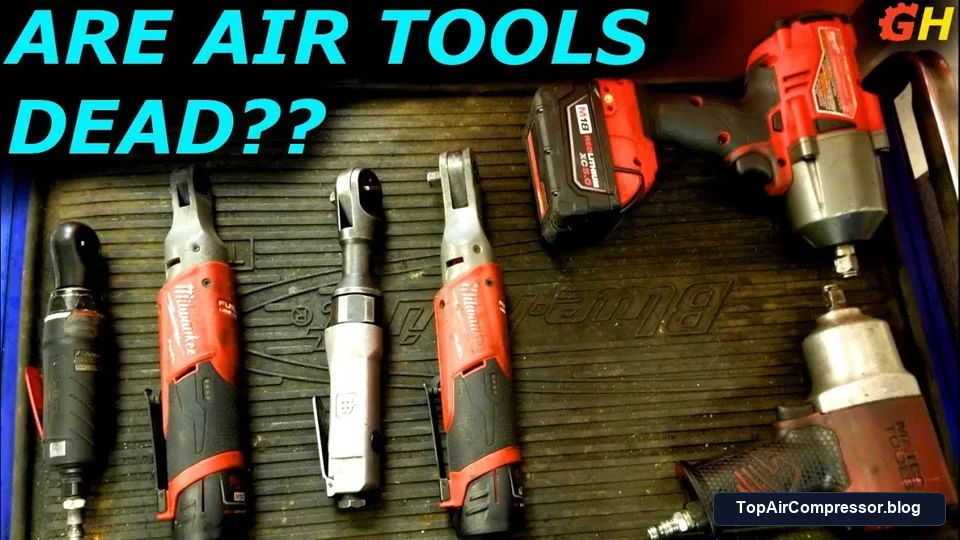
Conversely, battery-powered alternatives route chemical energy through brushless direct current motors. High-drain applications force these cordless electric tools to pull heavy current, resulting in rapid thermal accumulation inside sealed housings.
Pairing your setup with the best air compressor for pneumatic tools converts potential energy into kinetic force via volumetric displacement. A typical rotary vane motor delivers high instantaneous torque.
Cordless electric tools rely on lithium-ion chemistry and pulse-width modulation controllers. These systems regulate current to brushless motors, translating battery voltage directly into rotational velocity under varying mechanical loads.
- Pneumatic tools leverage continuous air volume for steady force.
- Electric motors depend on chemical discharge from lithium-ion cells.
- Air motors lack delicate circuit boards vulnerable to harsh drops.
Torque Curves and Energy Transfer
Air motors maintain steady rotational force as long as the compressor maintains CFM supply. This prevents sudden stalls during heavy fastener driving applications.
Modern brushless units offer exceptional electronic torque control. Yet, prolonged high-amp draws trigger thermal protection circuits, temporarily shutting down the tool during demanding work.
- Pneumatic torque remains exceptionally flat under heavy operational loads.
- Battery voltage sag reduces peak RPM during extended trigger pulls.
Real-World Performance and Sustained Output Under Load
Professional automotive shops demand consistent impact wrench performance across dozens of lug nuts. Pneumatic impact wrenches excel here by delivering identical striking force from the first bolt to the last.
Battery impacts match initial breakout numbers but lose efficiency as pack voltage drops. Technicians working long shifts often swap depleted packs mid-task to maintain acceptable working speeds.
Selecting the best portable air compressor for tools ensures your equipment maintains continuous power output indefinitely. Heavy-duty grinding or continuous impact work causes zero thermal degradation in standard pneumatic impact mechanisms.
Cordless tools deliver exceptional initial torque but suffer from thermal throttling during prolonged high-draw applications. Internal battery resistance generates substantial heat, forcing electronic safeguards to reduce operational speed automatically.
- Compressed air systems eliminate the variable of depleting battery reserves.
- Lithium-ion technology provides instant trigger response and variable speed control.
- Heavy grinding tasks heavily favor continuous pneumatic air supply.
Sustained Duty Cycles in Production Environments
Industrial assembly lines require tools that run continuously for eight-hour shifts. Air grinders and sanders handle this heavy workload without burning out internal windings.
Electric alternatives require substantial cool-down periods when pushed past standard thresholds. Overheating destroys stators quickly, making heavy sanding impractical for standard battery platforms.
- Air tools dissipate heat efficiently through expanding exhaust air.
- Electric models trap heat inside reinforced polymer composite shells.
Build Quality, Thermal Management, and Lifespan
The mechanical simplicity of air motors translates directly into extraordinary longevity. Cast aluminum housings and hardened steel internal components endure decades of severe jobsite abuse with minimal wear.
Battery platforms combine mechanical gearboxes with complex computer microchips. While extremely durable, drops and moisture exposure frequently damage sensitive circuit boards before the mechanical motor fails.
Reviewing what size air compressor for air tools you need reveals why pneumatic equipment features robust cast metal housings and minimal internal electronics, surviving harsh drops and solvent cleanings.
Cordless electric platforms integrate sensitive printed circuit boards and delicate cooling fans. While brushless motors last thousands of hours, battery pack degradation and moisture ingress frequently limit overall tool lifespan.
- Pneumatic units withstand harsh chemical exposure and metallic grinding dust.
- Battery packs degrade chemically over time regardless of physical care.
- Simple seal replacements restore pneumatic tools to factory performance.
Component Wear and Routine Overhauls
Maintaining pneumatic equipment requires daily oiling to prevent internal corrosion. When vanes eventually wear down, inexpensive rebuild kits return the tool to original operational tolerances.
Electric tool repairs often require replacing entire motor assemblies or control modules. High parts costs frequently render out-of-warranty electric repairs economically unviable for professional contractors.
- Internal oil lubrication drastically reduces metal-on-metal friction.
- Sealed electronic modules prevent field-level DIY mechanical repairs.
Workplace Noise Emissions and Environmental Footprint
Operating an entire pneumatic setup introduces notable acoustic challenges to the workspace. Compressor pump noise and high-pitched tool exhaust require proper hearing protection for all operators nearby.
Battery platforms operate much quieter during actual application, producing sound only when the motor spins. This lower decibel profile makes indoor finish carpentry significantly more pleasant for clients.
Air compressors generate significant ambient noise, often exceeding 85 decibels during active tank pressurization cycles. Exhaust ports on individual air tools also produce sharp pneumatic hiss requiring proper hearing protection.
Cordless electric tools operate much more quietly under normal load conditions. However, manufacturing lithium-ion cells creates a heavy environmental footprint, and dead battery recycling introduces complex hazardous waste processing requirements.
- Mufflers on modern air tools reduce high-frequency exhaust whistle.
- Electric motors generate zero local emissions or exhaust oil mists.
- Compressors demand dedicated acoustic enclosures in smaller workshops.
Air Quality and Workplace Contamination
Choosing the best electric air compressor ensures pneumatic systems rarely exhaust excessive oil into the air stream. Proper inline filtration remains mandatory when painting cars or finishing fine architectural woodwork.
Electric tools eliminate oil mist entirely, keeping delicate finishes pristine. However, carbon brush wear in older brushed motors can produce microscopic conductive dust particles.
- Desiccant dryers prevent moisture condensation from ruining pneumatic lines.
- Brushless electric motors eliminate carbon dust contamination concerns.
Mobility, Ergonomics, and Site Infrastructure Demands
Weight distribution represents a major ergonomic difference between these setups. Pneumatic hand tools feel incredibly lightweight because the heavy motor and energy source reside far away on the floor.
Cordless options concentrate heavy battery packs directly beneath the handle. This shifts the center of gravity downward, causing wrist fatigue during overhead framing or extended fastener driving.
Air tools eliminate heavy battery weight from the handle, reducing operator wrist fatigue during overhead tasks. Conversely, tethering technicians to heavy rubber hoses creates trip hazards and restricts movement across large sites.
Cordless platforms provide unmatched jobsite mobility without generators or permanent plumbing. Yet carrying multiple heavy battery packs and charging stations adds substantial logistical overhead to remote work environments.
- Air hoses create tripping hazards and restrict movement across large sites.
- Battery tools offer instantaneous deployment without wrestling heavy extension cords.
- Hose drag can pull tools awkwardly out of precise alignment.
Infrastructure and Site Setup Requirements
Setting up an air station requires reliable electrical power to drive the compressor pump. Remote outdoor locations mandate loud gasoline generators just to supply standard pneumatic pressure.
Battery ecosystems eliminate infrastructure hurdles through rapid charging stations. Crews simply charge spare packs overnight or via truck inverters, ensuring zero downtime on remote sites.
- Large air compressors require dedicated 240V high-amp circuit breakers.
- Multi-bay rapid chargers keep battery pools fully saturated.
Comprehensive Maintenance and Long-Term Operating Costs
Initial purchase prices tell only part of the long-term financial story. Pneumatic systems require investing in stationary compressors, rigid distribution piping, and moisture filters before operations begin.
Battery platforms require frequent financial reinvestment as chemical cells degrade. Replacing high-capacity lithium-ion packs every few years adds substantial recurring overhead to professional business budgets.
Pneumatic setups require daily moisture draining and regular oiler lubrication to prevent internal corrosion. Neglecting basic compressor maintenance rapidly destroys vane motors, whereas well-maintained systems operate reliably for decades.
Cordless electric tools demand virtually no routine mechanical maintenance beyond cleaning exterior debris. However, scheduled battery replacements every few years constitute a major recurring expense that increases total costs.
- Air tool purchase prices are remarkably low due to simple designs.
- Battery replacements constitute a major ongoing operational expense.
- Compressor maintenance involves routine oil changes and tank draining.
Total Cost of Ownership Analysis
Over a ten-year lifespan, pneumatic setups prove exceptionally cost-effective. Air tools rarely become obsolete because standard quick-disconnect fittings remain unchanged across decades of industry progress.
Rapidly evolving battery platforms mean proprietary charging standards change frequently. Contractors often find themselves replacing entire tool inventories simply because legacy battery shapes are discontinued.
- Standardized NPT fittings ensure universal cross-brand compatibility.
- Proprietary battery lineages lock users into single manufacturer ecosystems.
Selecting the Optimal Setup for Your Exact Workload
Choosing between these technologies depends entirely on your specific operational environment. Stationary fabrication shops benefit immensely from the unlimited duty cycle and rugged reliability of compressed air.
Mobile service technicians and framing contractors gain incredible efficiency from cordless platforms. Eliminating hoses and cords lets workers move rapidly across sprawling residential and commercial construction sites.
Choose pneumatic systems for high-volume automotive assembly lines and fabrication shops requiring continuous duty cycles. Stationary air compressors supply cheap, reliable pneumatic energy where mobility is secondary to performance.
Opt for cordless electric tools when performing field service, construction framing, or remote installations where power cords and hoses impede movement. Modern battery technology easily handles intermittent fastening tasks.
- Evaluate your daily duty cycles before committing to one platform.
- Consider site access to reliable high-amperage electrical service.
- Hybrid shops utilize air for heavy grinding and battery tools for assembly.
Making Your Final Equipment Investment Decision
Assess your shop layout and utility access to determine your baseline infrastructure. If you never leave your stationary workbench, pneumatic systems provide unmatched long-term value and power.
When jobsite mobility dictates your daily workflow, modern high-voltage batteries deliver sufficient power. Select the ecosystem that matches your primary physical environment to maximize productivity.
- Match tool weight and ergonomics directly to your primary operators.
- Calculate total infrastructure costs including power drops and hoses.
Frequently Asked Questions
Can cordless electric tools truly match the raw power of pneumatic air hammers?
While modern high-voltage battery hammers deliver impressive impact energy, heavy demolition still favors pneumatic systems. Continuous high CFM allows air hammers to run indefinitely without thermal shutdowns.
Why do professional automotive mechanics still heavily prefer air impact wrenches?
Pneumatic wrenches deliver consistent high torque without suffering from voltage sag. Unmatched power density keeps heavy lug removal fast and prevents frustrating mid-shift battery swaps.
What is the primary maintenance requirement for keeping air tools operating reliably?
Daily lubrication with specialized pneumatic oil is essential for longevity. Proper moisture filtration also prevents internal corrosion from ruining precision steel valves and pistons.
Do cordless electric tools cost more to operate over a ten-year lifespan?
Yes, because chemical lithium-ion battery packs inevitably degrade and require expensive replacement. Frequent pack purchases often exceed the low cost of maintaining a stationary air compressor.
Is it possible to run pneumatic air tools using portable battery-powered compressors?
Battery compressors exist, but they have extremely limited CFM output capabilities. Small tank volumes restrict these portable units to light brad nailing rather than heavy grinding.