Arb Air Compressor Single vs. Twin: Which Fits Your Setup Better?
Evaluating the single and twin configurations reveals distinct thermal and volumetric efficiencies. Understanding your CFM demands ensures optimal onboard air delivery.


Choose the Single for basic tire inflation and single-locker actuation. Opt for the Twin when running continuous high-volume pneumatic tools or dual air lockers.
Compare all top models in our Best Air Compressor: Top Picks for Every Garage & Roadside.
Side-by-Side Breakdown
| Criteria | Arb Air Compressor Single | Twin | Edge |
|---|---|---|---|
| Peak Performance & Output | Moderate CFM delivery suited for basic tasks | High-volume dual output for rapid inflation | Twin |
| Duty Cycle & Consistency | Standard 50 percent duty cycle rating | 100 percent duty cycle for continuous use | Twin |
| Operating Noise & Vibration | Lower decibel footprint during operation | Higher acoustic output from dual motors | Arb Air Compressor Single |
| Portability & Footprint | Compact housing fits tight engine bays | Larger chassis requires specialized mounting space | Arb Air Compressor Single |
| Maintenance & Service Life | Fewer internal components to service | Dual service points require routine inspection | Arb Air Compressor Single |
| Power Requirements | Lower amp draw protects factory wiring | Heavy electrical draw demands dedicated cabling | Arb Air Compressor Single |
| Best Ideal Use-Case | Weekend overlanding and differential lockers | Commercial service and air tool operation | Twin |
Architectural Design and Engineering Foundations
Highlighted in our best 60 gallon single stage air compressor guide, the single compressor architecture relies on one dedicated pump assembly to generate compressed air. This layout reduces mechanical complexity.
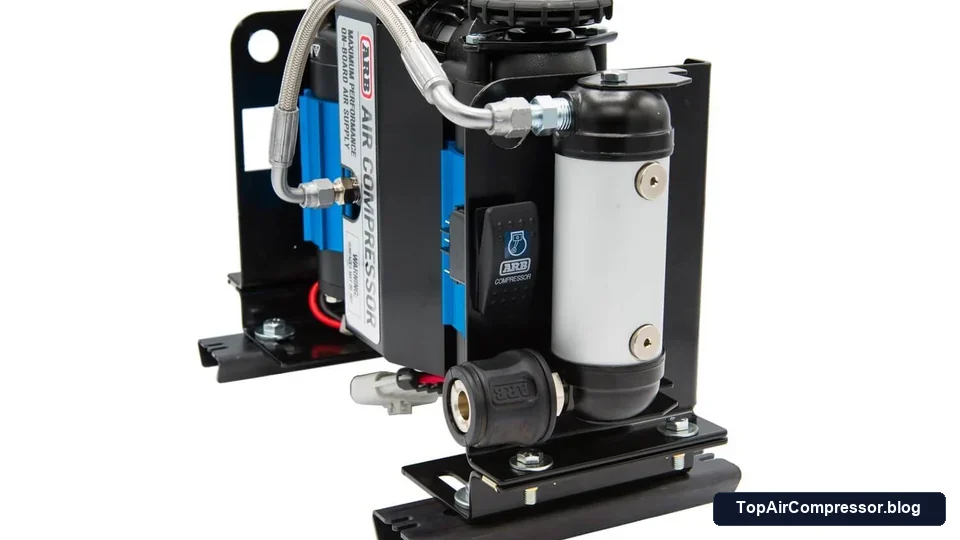
Conversely, the twin configuration utilizes two synchronized motor-compressor units operating in parallel. This dual-cylinder approach effectively doubles displacement and accelerates tank pressurization for demanding off-road pneumatic applications.
- Single unit minimizes vehicle engine bay modifications.
- Twin layout combines two independent pumping mechanisms.
- Both designs utilize anodized aluminum cylinders for heat dissipation.
Single Unit Mechanical Layout
Single compressors use a compact piston design connected to a robust 12-volt DC motor. The single piston stroke provides steady pressure suitable for standard tire reinflation tasks.
Engineers designed this layout for minimal space consumption in tight engine bays. Mounting brackets securely anchor the single housing against severe off-road vibration forces.
- Compact footprint fits crowded engine compartments easily.
- Simplified internal routing reduces pressure drop risks.
Twin Unit Dual-Pump Architecture
The twin setup incorporates dual independent compressor modules housed on a shared mounting base. Both pumps share an integrated manifold to combine airflow directly into your system.
This redundant design ensures that if one pump experiences mechanical failure, the secondary unit can maintain limp-home functionality. Such reliability proves critical during remote expedition travels.
- Dual motor setup provides built-in mechanical redundancy.
- Shared manifold balances pressure across both compressor cylinders.
Volumetric Output and Air Delivery Metrics
As outlined in our best single stage air compressor guide, measuring cubic feet per minute determines how quickly an onboard system refills large tires. The single unit delivers adequate flow without thermal overload.
Stepping up to the twin configuration dramatically increases your air delivery rate, allowing you to seat stubborn tire beads and power pneumatic impact wrenches effortlessly on the trail.
- Single compressor optimized for moderate low-pressure output.
- Twin compressor pushes high CFM for heavy pneumatic tools.
Evaluating Single Unit Flow Rates
Operating at zero static pressure, the single model pushes respectable airflow figures for standard lockers. However, filling oversized mud tires requires extended run times and careful monitoring.
Pressure drop characteristics remain predictable under normal loads. This makes the single unit highly reliable for standard recreational off-road vehicle configurations and light maintenance.
- Adequate for standard differential locking mechanisms.
- Requires patience when inflating large 35-inch tires.
Analyzing Twin Unit Volume Capacities
The twin compressor surges past standard benchmarks by delivering massive volume at high pressures. This high output significantly cuts down total tire inflation time during group trail stops.
Running air-operated tools becomes entirely feasible with this level of sustained pneumatic performance. Professional service vehicles benefit greatly from such robust on-board air capacity.
- Rapidly fills large volume air storage tanks.
- Supports continuous flow air tools in remote locations.
Thermal Management and Duty Cycle Limits
Heat management dictates how long your compressor can run before triggering internal thermal protection. Single units generate significant localized heat during prolonged tire inflation cycles.
Advanced cooling fins and integrated thermal switches protect both designs from permanent motor damage. Proper airflow around the mounting location remains vital for sustained operational longevity.
- Thermal cutoffs prevent catastrophic motor winding burnout.
- External cooling fins dissipate heat generated by compression.
Single Unit Duty Cycle Realities
The standard single compressor features a moderate duty cycle suited for intermittent tasks. Users must allow cooling intervals when inflating multiple large tires in hot weather.
Pushing past recommended run times triggers the internal thermal switch, halting operation temporarily. Respecting these operational limits preserves the lifespan of internal seals and bearings.
- Requires rest periods during multi-vehicle tire inflation sessions.
- Thermal overload switch protects sensitive electrical windings.
Twin Unit Continuous Duty Performance
Engineered for heavy industrial tasks, the twin model boasts an impressive continuous duty rating. It operates indefinitely under normal ambient temperatures without overheating core components.
Dual cooling fans actively draw ambient air across both motor housings during operation. As noted in our ARB twin air compressor review, this cooling strategy ensures reliable performance in extreme desert environments.
- Designed for continuous operation without thermal shutdowns.
- Dual cooling fans manage heat dissipation effectively.
Electrical Load and Current Draw Dynamics
Onboard air compressors demand substantial electrical current directly from your vehicle battery. The single unit draws moderate amperage, making it compatible with standard factory electrical charging systems.
Operating a high-output twin compressor requires heavy-gauge wiring and robust relay harnesses. Upgrading your alternator ensures your vehicle electrical system handles peak current demands safely.
- Single unit integrates safely with factory vehicle wiring.
- Twin setup demands dedicated heavy-gauge power cable runs.
Single Compressor Power Consumption
Drawing significantly fewer amps, the single compressor places minimal strain on standard alternators. This allows safe installation without requiring major electrical system modifications.
Standard inline fuses provide adequate protection against unexpected short circuits. Proper grounding ensures stable voltage delivery during high-pressure pumping cycles.
- Low amp draw prevents excessive alternator wear.
- Standard fuse protection safeguards vehicle electrical circuits.
Twin Compressor Electrical Demands
The twin system demands heavy electrical current to drive dual high-output motors simultaneously. Installing a secondary battery or high-output alternator prevents voltage drops during heavy use.
Heavy-gauge copper cabling minimizes resistance and prevents dangerous wire overheating under peak load. Professional installation guidelines must be followed meticulously for safety.
- Requires upgraded cabling to handle heavy current loads.
- Dual motors necessitate robust relay and switch integration.
Physical Dimensions and Vehicle Packaging
Finding suitable mounting space inside modern vehicle engine bays represents a major installation challenge. The compact single compressor fits easily into cramped fender wells and tight corners.
The larger twin unit requires careful measurement and often custom bracket fabrication. Interior cargo areas or dedicated under-bed mounts serve as alternative placement options.
- Single compressor fits crowded engine compartments easily.
- Twin system requires dedicated space or custom brackets.
Single Unit Packaging Flexibility
Compact dimensions allow installers to tuck the single compressor away securely. This protects the unit from mud, water submersion, and direct physical damage off-road.
Bracket options accommodate numerous popular four-wheel-drive vehicle models right out of the box. Minimal clearance requirements simplify the overall installation process considerably.
- Easily mounts under hoods or inside cab compartments.
- Shields internal components from harsh environmental elements.
Twin Unit Installation Footprint
The expansive footprint of the twin compressor demands deliberate spatial planning. Installers frequently utilize custom aluminum mounting plates to secure the heavy assembly safely.
Weight distribution must be considered when mounting the twin unit inside vehicle cabins. Secure fastening prevents dangerous shifting during extreme off-road articulation.
- Larger assembly requires custom mounting solutions.
- Weight considerations dictate secure structural attachment points.
Acoustic Footprint and Vibration Dampening
Pneumatic compressors generate noticeable mechanical noise and vibration during active operation. The single unit produces a moderate hum that remains acceptable during campsite use.
Operating two pumps simultaneously increases the overall acoustic output on the twin model. Proper rubber isolation mounts absorb unwanted chassis vibrations effectively.
- Single unit produces moderate operating noise levels.
- Twin compressor generates higher decibels under full load.
Single Compressor Sound Profiles
Engineered noise suppression helps keep the single unit relatively quiet during locker actuation. Rubber mounting feet isolate high-frequency vibrations from transferring into the vehicle body.
Users can operate the system without disturbing peaceful camp environments unnecessarily. This subtle acoustic profile enhances everyday vehicle comfort and usability.
- Rubber feet isolate chassis vibration successfully.
- Quieter operation suits casual overlanding environments.
Twin Compressor Acoustics and Isolation
Dual operating pistons create a more pronounced mechanical sound signature during high-volume delivery. Sound-deadening materials installed around the mounting area help reduce cabin noise intrusion.
Sturdy isolation hardware remains mandatory to prevent annoying panel rattles. Proper tuning of mounting points ensures structural integrity despite high operational vibrations.
- Dual motors produce a louder operational decibel level.
- Requires robust isolation mounts to prevent rattles.
Long-Term Maintenance and Field Serviceability
Routine maintenance ensures your onboard air system performs reliably when miles from civilization. Single compressors feature accessible air filters and straightforward internal maintenance routines.
The twin setup doubles your service points, requiring inspection of two air filters and multiple electrical connections. Keeping spare rebuild kits on hand safeguards your expedition readiness.
- Single unit features simplified filter replacement tasks.
- Twin model requires dual maintenance checks for longevity.
Maintaining Single Unit Systems
Routine upkeep for the single compressor involves cleaning washable air intake filters periodically. According to our best single phase air compressor list, checking electrical connections for corrosion prevents unexpected field failures.
Simple piston seals can be replaced easily using basic hand tools if wear occurs. This straightforward maintenance schedule appeals to DIY mechanics and overlanders.
- Washable air filters simplify routine cleaning procedures.
- Basic hand tools suffice for internal seal maintenance.
Servicing Twin Unit Assemblies
Maintenance routines for the twin compressor take slightly longer due to dual components. Technicians must inspect two separate filter elements and verify synchronized pressure switches.
Proactive replacement of worn brushes and seals prevents trail breakdowns. Investing time in preventive care guarantees dependable high-volume air delivery for years.
- Requires servicing two distinct air filter assemblies.
- Proactive parts replacement ensures long-term expedition reliability.
Frequently Asked Questions
Can a single compressor handle front and rear air lockers?
Yes, a single unit easily generates enough pressure to actuate both differential lockers. However, it lacks the high volume needed for rapid tire inflation.
Does the twin compressor require a dedicated storage tank?
While not strictly mandatory, adding an air tank helps smooth out airflow. This maximizes the efficiency of high-volume pneumatic tools and seating tire beads.
What causes an onboard compressor to overheat rapidly?
Exceeding the recommended duty cycle or blocking cooling airflow causes rapid thermal buildup. Always ensure adequate ventilation around the chosen mounting location.
Is professional electrical installation required for twin models?
Professional wiring is highly recommended due to the high amp draw. Proper relay integration protects your vehicle electrical system from dangerous overloads.
How often should I clean the compressor air filters?
Inspect and clean your air filters every few months, especially after dusty off-road trips. Clean filters maintain peak volumetric output and prevent premature wear.