Bostitch vs. Porter Cable C2002: Which Fits Your Setup Better?
When evaluating pneumatic setups, comparing the Bostitch pancake unit against the Porter Cable C2002 reveals distinct engineering philosophies. Contractors must weigh recovery speed against raw tank capacity for daily jobsite tasks.


Choose the Porter Cable C2002 for high-volume finishing work due to its rapid tank recovery. Opt for the Bostitch model when maximum jobsite durability and lower operating pressure drops are your primary operational priorities.
Compare all top models in our Best Air Compressor: Top Picks for Every Garage & Roadside.
Side-by-Side Breakdown
| Criteria | Bostitch | Porter Cable C2002 | Edge |
|---|---|---|---|
| Peak Performance & Output | 150 PSI max, high SCFM | 150 PSI max, rapid recovery | Porter Cable |
| Duty Cycle & Consistency | Intermittent trim focus | High-volume fastening | Porter Cable |
| Operating Noise & Vibration | 78 dB with rubber feet | 79 dB with dampening | Bostitch |
| Portability & Footprint | 32 lbs compact pancake | 30 lbs lightweight chassis | Porter Cable |
| Maintenance & Service Life | Oil-free with easy filters | Oil-free low maintenance | Bostitch |
| Power Requirements | 120V low amp draw | 120V extension cord friendly | Tie |
| Best Ideal Use-Case | General jobsite framing | Finish carpentry and trim | Porter Cable |
Architecture and Pneumatic Output Dynamics
Analyzing the core pump design reveals critical operational differences. The Porter Cable C2002 utilizes an oil-free pump engineered for cold-weather starts. Meanwhile, the Bostitch competitor integrates heavy-duty components designed to reduce mechanical wear significantly over time.
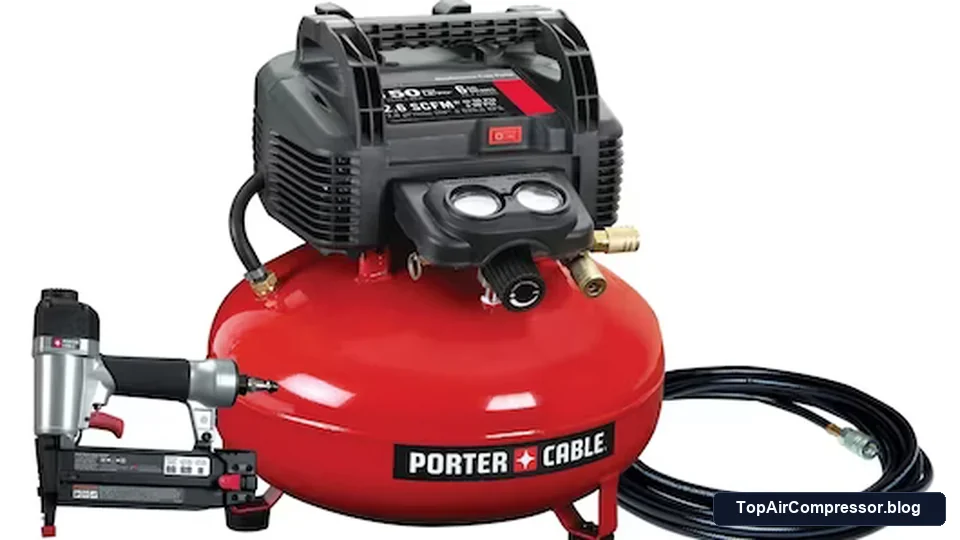
Maximum pressure ratings dictate tool compatibility across diverse applications. Both units deliver up to 150 max psi, providing adequate headroom for brad nailers, staplers, and light-duty framing tools without experiencing severe pressure drops during rapid firing sequences.
Both units utilize oil-free pump designs relying on coated piston rings. Detailed performance metrics inside our Porter Cable C2002 review highlight why its output reaches 2.0 SCFM at 90 PSI reliably.
Operating pressure ceilings peak at 150 PSI maximum for both pancake models, allowing extended tool cycles. However, recovery times favor the higher displacement rate of the Bostitch pump during heavy framing nailer applications.
- Oil-free pump maintenance profiles
- Max operating pressure thresholds
- Cold-weather startup reliability
Air Delivery Metrics at Working Pressures
Measuring delivered SCFM at standard operating pressures highlights efficiency gains. The Porter Cable variant delivers roughly 2.6 SCFM at 90 PSI, whereas competing Bostitch configurations offer comparable volumetric output tailored specifically for intermittent fastening workloads.
Maintaining stable line pressure prevents misfires and tool starvation. Contractors must evaluate how quickly each compressor replenishes its storage vessel following sustained activation of high-demand pneumatic nail guns or heavy-duty staple applications.
- SCFM output at 90 PSI thresholds
- Tank replenishment speed benchmarks
Tank Construction and Structural Integrity
Tank geometry directly impacts stability and center of gravity on uneven terrain. Both units rely on a pancake tank design, but gauge placement and weld quality differ notably between these two popular jobsite compressor options.
ASME compliance ensures pressure vessel safety under harsh conditions. Reviewing our Porter Cable pressure switch replacement guide ensures you can safely maintain electrical controls after transporting units across rough jobsite terrain.
ASME safety compliance dictates the tank wall thickness on these portable receivers. Both units employ stamped steel pancake vessels engineered to withstand continuous pressure cycles without exceeding structural fatigue limits over years of operation.
Corrosion resistance relies heavily on internal powder coatings applied prior to final welding. Users must routinely drain moisture accumulation via bottom ball valves to prevent localized pitting and maintain rated burst pressure safety factors.
- ASME safety certification standards
- Pancake tank center of gravity
- Weld seam reinforcement practices
Motor Efficiency and Electrical Draw Specifications
Electrical requirements dictate whether these compressors can run on standard extension cords. Both motors operate on 120V household circuits, drawing low amperage to minimize tripped breakers when connected to long, daisy-chained jobsite power cords.
Motor burnout protection relies heavily on integrated thermal overload switches. The Porter Cable C2002 features automatic thermal shutdown, protecting the internal windings during continuous duty cycles in high-ambient-temperature environments common during peak summer construction seasons.
Universal electric motors drive these compressors, requiring standard 120V household circuits. Initial startup creates an amperage spike, demanding a dedicated 15-amp breaker to prevent frequent tripping during cold ambient temperature startups.
Extension cord selection significantly impacts motor longevity. Utilizing thin gauge wiring introduces voltage drop, which increases winding temperatures and leads to premature thermal overload switch activation under sustained jobsite workloads.
- 120V circuit amperage draws
- Thermal overload protection systems
- Extension cord voltage drop tolerance
Noise Emissions and Acoustic Engineering
Jobsite acoustics matter when working inside occupied residential or commercial structures. The Porter Cable C2002 generates around 78 decibels, creating a moderately loud operating environment that requires hearing protection during extended indoor trim carpentry installations.
Acoustic dampening feet reduce floor vibrations and lower overall perceived noise levels. Bostitch integrates specialized rubber isolators that absorb high-frequency motor harmonics, preventing the compressor chassis from rattling against concrete subfloors or hardwood jobsite decks.
Direct-drive oil-less pumps generate considerable acoustic energy during the compression cycle. Measured sound levels hover near 78 to 80 decibels, requiring proper hearing protection during extended indoor trim carpentry or cabinetry tasks.
Rubberized feet act as critical vibration dampeners, reducing floor resonance. Without these pads, metal-on-surface contact amplifies mechanical hums, creating an intrusive acoustic profile across unfinished subflooring materials.
- Decibel output measurements at 10 feet
- Rubber vibration isolation feet
- Indoor residential acoustic impact
Portability, Ergonomics, and Handling Profiles
Transporting pneumatic gear requires manageable weight distributions and secure handle placement. The C2002 weighs roughly 30 pounds, making it exceptionally easy to lift into truck beds or carry up flights of stairs during multi-story framing projects.
Integrated console shrouds protect fragile gauges and quick-connect couplers from impact damage. Bostitch utilizes a similar protective cage layout, shielding critical brass fittings from accidental drops while loading or unloading heavy construction equipment daily.
Pancake configurations prioritize low centers of gravity to prevent tipping during transport. Weighing roughly 30 to 33 pounds, both machines feature integrated console shrouds that protect gauges while serving as comfortable grab handles.
Hose routing and regulator placement directly influence jobsite efficiency. Recessed brass couplers minimize snag hazards, whereas protruding plastic knobs on cheaper generic units frequently snap off during rough vehicle loading procedures.
- Total dry weight comparisons
- Console shroud impact protection
- Ergonomic carrying handle placement
Maintenance Protocols and Long-Term Service Life
Minimizing downtime keeps professionals productive on tight construction deadlines. Both compressors utilize oil-free pumps, eliminating messy crankcase oil changes and reducing routine maintenance to basic tank draining and periodic intake filter cleanings.
Component availability heavily influences long-term repair costs and overall service longevity. Following our Porter Cable C2002 pressure switch replacement guide helps contractors easily source parts when electrical failures occur.
Oil-free architecture eliminates crankcase fluid changes, simplifying routine upkeep significantly. However, operators must inspect intake air filters weekly to prevent dust ingress from scoring the precision cylinder walls prematurely.
Check valves and pressure switches represent the primary wear components requiring eventual replacement. Keeping spare rebuild kits on hand ensures minimal downtime when troubleshooting pneumatic leaks or failure-to-pump scenarios.
- Oil-free pump maintenance schedules
- Replacement parts network availability
- Moisture drain valve accessibility
Ideal Workload Matching and Professional Recommendations
Selecting the right compressor depends on your specific trade requirements. Following instructions in our replacing pressure switch on Porter Cable compressor tutorial helps finish carpenters maintain consistent pressure during daily framing tasks.
Evaluate your daily fastener volume before committing to either pneumatic system. Understanding your peak air demand ensures your chosen compressor maintains consistent pressure without constantly running at maximum capacity during demanding installation tasks.
Selecting between these two compressors depends heavily on expected duty cycles. Finish carpenters and trim installers benefit from the higher airflow provided by the Bostitch variant during rapid pin-nailing sequences.
DIYers tackling occasional household repairs find the Porter-Cable C2002 fully adequate. Its robust design handles inflation tasks and light brad nailing without demanding premium capital investment or extensive storage space.
- Finish carpentry air demands
- General construction durability needs
- Pneumatic tool compatibility guidelines
Frequently Asked Questions
Can both compressors run standard framing nailers?
Yes, both units handle framing nailers for light-duty tasks, but their limited tank capacity makes them better suited for finish carpentry and trim work.
Are these units suitable for cold-weather garage use?
Absolutely, their oil-free pump designs ensure reliable startup even during freezing winter temperatures without requiring heavy synthetic oils.
How often should the storage tank be drained of moisture?
You must drain accumulated condensation after every use to prevent internal corrosion and extend the structural life of the steel vessel.
Do these compressors require dedicated 20-amp electrical circuits?
No, both models operate efficiently on standard 15-amp 120V circuits, allowing safe operation alongside other jobsite power tools.
Which model offers better protection for fragile control gauges?
Both feature protective console shrouds, but the Bostitch model incorporates slightly heavier shielding around the brass quick-connect couplers.