California Air Tools vs. Fortress: Which Setup Fits Your Workload?
Weighing ultra-quiet operation against contractor-grade durability, we analyze how California Air Tools and Fortress air compressors compare. Choose the right pneumatic tool partner for your shop.

California Air Tools dominates interior finish work with whisper-quiet operation, while Fortress wins rugged jobsite utility through higher pressure limits and robust frame designs.
Compare all top models in our Best Air Compressor: Top Picks for Every Garage & Roadside.
Side-by-Side Breakdown
| Criteria | California Air Tools | Fortress | Edge |
|---|---|---|---|
| Peak Performance & Output | Consistent CFM at 90 PSI | High volume rapid recovery | Fortress |
| Duty Cycle & Consistency | Moderate continuous duty | Heavy-duty industrial capacity | Fortress |
| Operating Noise & Vibration | Ultra-low decibel output (~60dB) | Standard contractor noise level | California Air Tools |
| Portability & Footprint | Lightweight aluminum tanks | Heavy-duty roll cage frames | California Air Tools |
| Maintenance & Service Life | Oil-free low-wear piston design | Rugged industrial pump build | Tie |
| Power Requirements | Standard 15-amp household circuit | Standard 15-amp household circuit | Tie |
| Best Ideal Use-Case | Indoor finish carpentry & trim | General framing & jobsite use | Split Workload |
Engineering Philosophy and Core Design Approaches
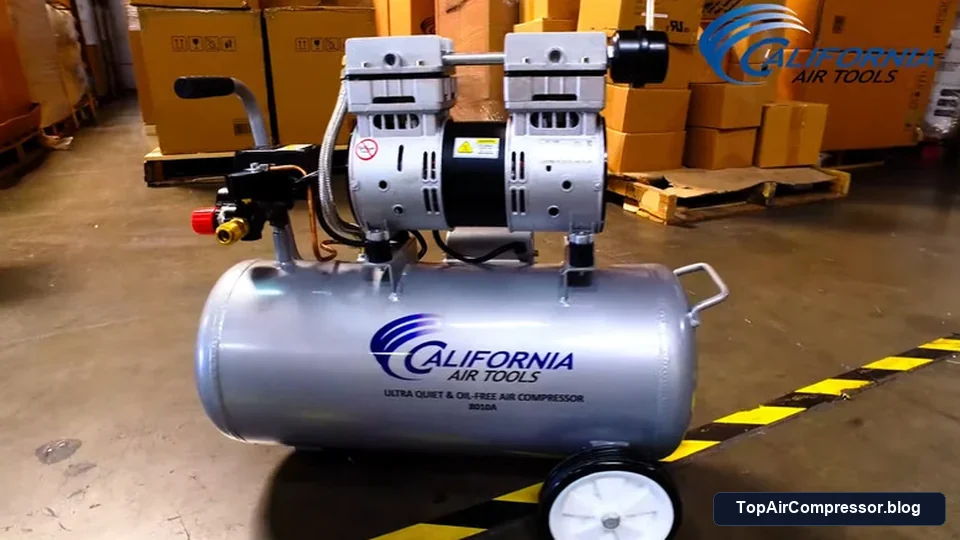
California Air Tools prioritizes ultra-quiet operation by utilizing dual-piston oil-free motor assemblies running at lower RPMs. This mechanical choice drastically reduces mechanical wear and ambient noise on delicate indoor jobsites.
Fortress approaches compressed air engineering through a rugged, contractor-centric lens emphasizing high output capacity. Their pumps are built for fast tank replenishment and high continuous demand in demanding commercial construction environments.
Understanding these foundational design differences helps technicians select equipment that aligns with specific daily workplace demands and noise restrictions.
California Air Tools prioritizes ultra-quiet operation by utilizing dual-piston oil-free pumps running at 1680 RPM, as detailed in our california air tools 8010 review. This engineering choice drastically reduces mechanical wear.
Conversely, Harbor Freight's Fortress brand emphasizes high volumetric output and aggressive duty cycles tailored for professional contractors. Their pump designs often prioritize rapid tank recovery over absolute decibel minimization during heavy pneumatic tasks.
Evaluating these opposing design philosophies requires examining your typical operating environment. Finish carpenters generally prefer the lower sonic footprint, while framing crews benefit from the robust pressure recovery engineered into Fortress systems.
- California Air Tools focuses on low-RPM acoustic reduction.
- Fortress engineers for rapid tank recovery and high output.
- Both brands utilize modern oil-free pump architecture.
Motor Mechanics and Thermal Engineering
Low-revving pump designs significantly extend internal component lifespans by minimizing friction and operational heat accumulation. Thermal management remains crucial for maintaining steady airflow during extended renovation tasks.
Heavy-duty copper windings in competing units ensure reliable torque delivery under heavy electrical loads. Proper ventilation prevents premature motor burnout on hot summer jobsite locations.
- Low RPM motors reduce friction and heat.
- Heavy copper windings improve starting torque.
Performance Metrics, Delivery Volumes, and Pressure Ratings
Evaluating CFM delivery requires examining sustained pneumatic tool usage. For instance, our california air tools 10020c review highlights how these units deliver consistent airflow at 90 PSI suitable for nailers and finish sprayers.
Fortress units typically offer higher maximum pressure thresholds, giving framers extra headroom for demanding pneumatic framing nailers. Higher maximum PSI allows longer hose runs without losing immediate striking power.
Matching delivery volumes to tool consumption rates prevents frustrating pressure drops during critical fastening operations.
Standard CFM delivery ratings reveal significant operational differences when running high-demand air tools. California Air Tools units usually deliver reliable air volume at 90 PSI, perfectly suited for brad nailers and light spray equipment.
Fortress models frequently boast higher maximum working pressures reaching up to 175 or 200 PSI on select vertical tanks. This extended pressure ceiling allows pneumatic technicians to regulate line pressure down efficiently.
When calculating your actual air consumption, always add a safety margin to prevent continuous motor operation. Exceeding the manufacturer's recommended duty cycle risks premature valve wear and thermal overload across both platforms.
- CFM ratings dictate tool compatibility and simultaneity.
- Maximum PSI provides buffer for extended hose lengths.
- Consistent delivery ensures reliable fastener sinking.
Pressure Recovery Rates under Load
Rapid pressure recovery minimizes downtime between heavy nailing cycles on fast-paced construction projects. Efficient reed valves and large intake ports optimize air induction efficiency.
Monitoring tank depletion speeds helps operators select adequately sized reservoirs for continuous spray painting or sanding applications.
- Quick recovery speeds boost productivity.
- Optimized reed valves enhance pumping efficiency.
Motor Longevity, Thermal Management, and Duty Cycles
Thermal efficiency dictates how long an air compressor runs before triggering overloads. We highlight top models in our best california air tools compressor guide featuring large cooling fins and aluminum shrouds to dissipate heat effectively.
Fortress emphasizes industrial-grade copper windings and heavy-duty crankcase ventilation to endure extended duty cycles. Optimized thermal management prevents premature motor degradation during heavy weekend framing or renovation tasks.
Regularly checking cooling surfaces ensures maximum heat dissipation during high-ambient-temperature operation.
Thermal management directly dictates compressor longevity under heavy commercial use. California Air Tools incorporates dual piston sleeves designed to dissipate frictional heat quickly, minimizing thermal stress during extended operational cycles.
Fortress compressors rely on efficient cast iron cylinders and engineered cooling fins to manage high internal operating temperatures. This robust metallurgical choice handles sustained industrial workloads without suffering catastrophic winding degradation.
Monitoring your ambient job site temperature remains vital for preventing unexpected thermal shutdowns. Operating either brand in confined spaces without adequate cross-ventilation drastically shortens the overall lifespan of the electric motor.
- Cooling fins prevent dangerous thermal overloads.
- Industrial windings withstand heavy electrical current.
- Proper ventilation extends total machine lifespan.
Duty Cycle Ratings and Safe Operation Limits
Understanding duty cycle percentages prevents accidental motor burnout caused by overworking portable compressors. Most units are designed for intermittent rather than continuous round-the-clock industrial service.
Adhering to recommended run-to-rest ratios protects internal piston rings and cylinder walls from excessive thermal expansion.
- Respect duty cycle limits to avoid burnout.
- Protect piston rings from thermal expansion.
Acoustic Profiles, Vibration Damping, and Workplace Ergonomics
Operating noise levels define whether an air compressor can sit directly inside a finished residential room. California Air Tools units famously operate around sixty decibels, allowing normal conversation nearby.
Fortress compressors run significantly louder due to higher operational RPMs and rugged steel construction. Users must deploy long extension hoses or sound baffles when working inside occupied indoor spaces.
Vibration isolation feet reduce creeping and floor resonance during startup sequences.
Acoustic engineering sets California Air Tools apart by consistently achieving noise levels around 60 decibels. This remarkable reduction allows operators to converse normally right next to the running compressor indoors.
Fortress units generally operate at higher decibel ratings due to their faster motor speeds and heavy-duty output demands. Integrating rubber vibration isolators during installation helps dampen low-frequency floor resonances significantly.
Workplace ergonomics heavily influence tool selection when working in noise-sensitive environments like occupied homes or hospitals. Prioritizing sound abatement measures prevents worker fatigue and complies with strict local occupational health standards.
- Low decibel ratings enable indoor residential use.
- Vibration pads prevent compressor walking during startup.
- Acoustic shielding protects worker hearing health.
Decibel Comparisons in Closed Environments
Testing noise output in enclosed rooms reveals stark differences in acoustic comfort between these two manufacturers. Quiet models eliminate the need for hearing protection during light trim work.
Jobsite units demand ear protection compliance due to high decibel output levels during startup and refill cycles.
- Enclosed rooms amplify compressor noise output.
- Hearing protection remains vital for loud models.
Portability Factors, Frame Integrity, and Site Resilience
Jobsite mobility depends heavily on wheel design, handle ergonomics, and overall unit balance. California Air Tools uses lightweight aluminum tanks and compact wheel kits for easy transport upstairs.
Fortress counters with heavy-duty roll cages and puncture-proof wheels designed to survive rough truck beds. Rugged frame protection shields vital gauges and regulators from accidental impacts during transit.
Balanced carrying handles reduce operator fatigue when loading equipment into service vehicles daily.
Job site mobility depends heavily on balanced weight distribution and ergonomic handle configurations. California Air Tools designs lightweight aluminum or steel tanks that prioritize easy manual transport across uneven multi-story construction stairwells.
Fortress platforms emphasize rugged roll cages and puncture-proof wheels built to withstand harsh industrial loading docks. These reinforced frames protect sensitive gauges and regulators from accidental impacts during transit.
Evaluating frame integrity requires inspecting weld points and wheel mounting brackets thoroughly before deployment. A solid structural foundation ensures your equipment survives daily throwing into truck beds without developing leaks.
- Aluminum tanks reduce overall carrying weight.
- Roll cages protect components from impact damage.
- Puncture-proof wheels handle rough terrain easily.
Transit Durability and Storage Footprint
Compact footprints allow mechanics and contractors to store units efficiently beneath truck toolboxes or shelves. Secure tie-down points prevent shifting during highway transport.
Robust frame construction absorbs severe vibrations experienced on unpaved roads leading to remote construction sites.
- Compact shapes maximize storage efficiency.
- Tie-down points secure units during transport.
Maintenance Protocols, Wear Parts, and Long-Term Service
Oil-free pump designs eliminate the need for regular crankcase oil changes across both manufacturing lineups. Users only need to inspect intake air filters and drain tank moisture regularly.
Sourcing replacement components like check valves, pressure switches, and unloader tubes remains straightforward for both brands. Routine maintenance schedules ensure reliable performance throughout years of heavy operational use.
Draining accumulated condensation prevents internal tank corrosion and extends structural pressure vessel integrity.
Routine maintenance schedules differ notably depending on your chosen compressor's internal architecture. Oil-free pumps eliminate crankcase changes but require regular piston ring inspections to maintain efficient compression ratios over time.
Fortress models often utilize robust splash-lubricated systems demanding periodic oil checks and filter element replacements. Sticking to strict fluid change intervals prevents catastrophic bearing failure during heavy job site deployment.
Draining moisture accumulation from the storage tank remains a non-negotiable daily chore for both brands. Installing an automatic drain valve mitigates internal corrosion risks and extends your pressure vessel's working life.
- Oil-free designs reduce routine maintenance chores.
- Regular moisture draining prevents tank corrosion.
- Replacement parts remain widely available online.
Filter Inspection and Moisture Management
Clean intake filters prevent abrasive dust particles from scoring internal cylinder walls and valve plates. Inspecting filter elements monthly maintains optimal CFM delivery.
Automatic ball drains simplify moisture purging routines on larger high-capacity tank configurations.
- Monthly filter checks protect cylinder walls.
- Moisture purging prevents internal rust formation.
Selecting the Optimal Pneumatic System for Your Workload
Matching an air compressor to your specific trade ensures maximum efficiency and longevity. As noted in our california air tools 1p1060s review, cabinet makers and finish carpenters benefit immensely from quiet, reliable output.
General contractors and framing crews require the robust pressure delivery and tough exterior housing of Fortress. Evaluating daily CFM needs helps you choose the correct tool for your shop.
Balancing budget constraints with performance expectations guarantees long-term satisfaction with your pneumatic equipment investment.
Choosing the correct air compressor requires matching your specific tool requirements with pump output capabilities. Assess your maximum continuous CFM draw before investing in either California Air Tools or Fortress equipment lines.
Quiet operation and lightweight portability make California Air Tools ideal for trim carpenters and interior renovators. Conversely, heavy-duty contractors needing sustained high pressure will find Fortress units better suited for framing.
Carefully balancing your immediate budget constraints against long-term maintenance expectations ensures maximum return on investment. Selecting the right pneumatic power source guarantees seamless job site productivity without unexpected equipment failures.
- Match compressor specifications to your daily trade.
- Consider noise restrictions before buying for indoor work.
- Evaluate peak CFM requirements for demanding pneumatic tools.
Trade-Specific Recommendations and Final Verdict
Finish carpenters should prioritize ultra-quiet performance to maintain client comfort in furnished homes. Framing professionals need maximum tank pressure and impact-resistant roll cages.
Assess your primary jobsite conditions carefully before purchasing to secure the ideal balance of power and acoustics.
- Finish work demands whisper-quiet operation.
- Framing requires maximum durability and high pressure.
Frequently Asked Questions
Which brand is better for quiet indoor finish carpentry?
California Air Tools remains the absolute best choice for indoor finish carpentry because their specialized oil-free dual-piston motors operate at remarkably low noise levels compared to conventional units.
This exceptional whisper-quiet performance successfully eliminates jobsite hearing fatigue during lengthy residential remodeling and trim installation tasks.
Are Fortress air compressors suitable for professional framing crews?
Fortress compressors excel in demanding framing environments due to their rugged roll cages, high pressure thresholds, and rapid tank recovery speeds. Their durable steel construction withstands harsh jobsite conditions and delivers reliable pneumatic power for heavy nail guns.
Do both compressor brands require regular oil maintenance?
Both California Air Tools and Fortress feature oil-free pump designs that completely eliminate messy crankcase oil changes and routine lubrication tasks. Users only need to perform basic upkeep like draining tank moisture and cleaning intake filters.
Can these air compressors run on standard household electrical outlets?
Most portable models from both manufacturers are engineered to operate safely on standard fifteen-amp household electrical circuits without tripping breakers. Always verify starting amp draws when running extension cords to prevent voltage drop issues.
Which compressor line offers better long-term portability?
California Air Tools generally provides superior portability for indoor tasks through lightweight aluminum tanks and compact wheel kits. Conversely, Fortress offers heavy-duty transport frames built specifically to survive rough treatment in contractor truck beds.