Cfm vs. Psi: Which Fits Your Setup Better?
Understanding the fundamental difference between air volume and pressure helps operators select pneumatic tools correctly. Proper sizing prevents performance drops during continuous heavy workshop tasks.


For continuous grinding and spraying, CFM is the absolute winner due to its volume capacity. Meanwhile, PSI reigns supreme for intermittent fastening tasks requiring brute-force pressure.
Compare all top models in our Best Air Compressor: Top Picks for Every Garage & Roadside.
Side-by-Side Breakdown
| Criteria | Cfm | Psi | Edge |
|---|---|---|---|
| Peak Performance & Output | High volume delivery | High pressure force | CFM for volume |
| Duty Cycle & Consistency | Maintains sustained flow | Spikes and drops fast | CFM for consistency |
| Operating Noise & Vibration | Larger pumps run quieter | Smaller units strain hard | CFM for quietness |
| Portability & Footprint | Bulky tank requirements | Compact jobsite designs | PSI for portability |
| Maintenance & Service Life | Heavy-duty dual pumps | High-wear single stages | CFM for longevity |
| Power Requirements | Requires heavy electrical draw | Runs on standard outlets | PSI for flexibility |
| Best Ideal Use-Case | Sandblasting and painting | Nail guns and inflation | Split by application |
Defining the Core Metrics of Pneumatic Systems
Pneumatic engineering relies heavily on balancing air volume against force limits. Cubic feet per minute measures how much air a compressor moves continuously under specific conditions.
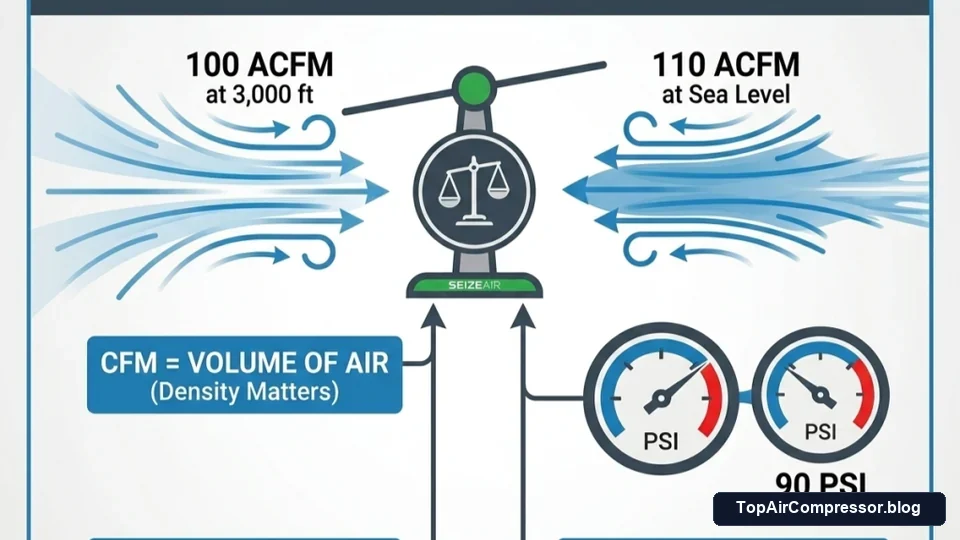
Conversely, pounds per square inch measures the physical pressure exerted per unit area. Operators must understand both metrics to prevent tool starvation and premature mechanical motor failure.
Ignoring these fundamental principles leads to severe operational bottlenecks. You can easily balance these metrics by using our cfm to psi calculator to ensure proper system design.
- CFM dictates overall volume capacity for continuous air tools.
- PSI measures mechanical force intensity within the storage tank.
- Balancing both factors ensures optimal pneumatic equipment longevity.
Understanding Volumetric Efficiency
Volumetric efficiency determines how well a compressor pump converts physical displacement into usable compressed air. High efficiency ratings reduce energy waste and lower operating temperatures significantly across shifts.
Thermal expansion reduces actual output compared to theoretical displacement calculations. Technicians must always account for ambient temperature shifts when planning shop air systems.
- Piston displacement differs from actual delivered air delivery.
- Ambient temperature impacts volumetric output calculations directly.
Volume Delivery Mechanics and Air Consumption
Air volume determines whether high-consumption tools operate without frustrating interruptions. Heavy tools like sanders and spray guns demand massive sustained volume output to function effectively.
If your compressor cannot supply enough volume, pressure drops instantly. Running our air compressor cfm psi calculator helps prevent catastrophic pressure starvation during heavy tasks.
Choosing a unit with adequate volumetric delivery keeps production lines running smoothly. Always check tool consumption ratings at specific working pressures before buying equipment.
- High-consumption tools drain undersized tanks in seconds.
- Volume deficits cause noticeable drops in working pressure.
- Continuous operations require robust multi-cylinder pump designs.
Calculating Total System Demand
Summing individual tool requirements helps technicians size their compressors accurately. Adding safety margins prevents unexpected motor strain during simultaneous multi-tool workshop operations.
Industrial standards recommend multiplying total tool consumption by a factor of 1.25. This accounts for minor leaks and normal wear over time.
- List every pneumatic tool used simultaneously in your shop.
- Apply a safety factor to protect against airline pressure loss.
Pressure Thresholds and Force Generation
Pressure represents the force pushing air through your distribution lines and hoses. Higher pressure ratings allow pneumatic tools to drive fasteners deeply into dense hardwoods.
Most standard workshop applications operate efficiently between ninety and one hundred psi. Checking values with a psi to cfm conversion calculator prevents damaging internal tool seals.
Maintaining consistent pressure requires reliable mechanical pressure switches and regulators. Pressure drops during heavy draws can compromise fastener depth consistency.
- Pressure drives mechanical force into fastening applications.
- Regulators protect sensitive downstream tools from over-pressurization.
- High-pressure systems demand heavy-duty reinforced steel tanks.
Managing Pressure Drops in Lines
Long distribution runs inevitably cause friction losses and pressure drops. Larger pipe diameters minimize internal resistance and preserve necessary operating force at the tool connection.
Quick-disconnect fittings also introduce minor restrictions into the pneumatic circuit. Upgrading to high-flow fittings improves overall system efficiency and tool response times.
- Friction inside narrow hoses reduces effective tool pressure.
- High-flow couplers eliminate common pneumatic delivery bottlenecks.
Matching Equipment Output to Air Tool Demands
Every pneumatic device lists specific manufacturer requirements for pressure and volume. Reviewing what psi should car tires be and matching compressor specs ensures reliable tool performance.
Failing to match these parameters results in sluggish tool operation and excessive wear. Technicians must prioritize volume for grinders and pressure for impact wrenches.
Reviewing technical data sheets before purchasing prevents costly equipment mismatches. Proper pairing extends the working lifespan of both compressor and tools.
- Check manufacturer data plates for precise operational requirements.
- Grinders and sanders demand high volume above all else.
- Impact wrenches and nailers rely heavily on high pressure.
Evaluating Industrial vs Consumer Ratings
Consumer compressors often display inflated peak ratings rather than continuous output. Real running specs give technicians a realistic picture of everyday performance capabilities.
Industrial equipment adheres to strict testing standards for accurate flow measurement. Always verify standard conditions when comparing different compressor models.
- Peak ratings mislead buyers regarding continuous tool operation.
- Standardized testing ensures accurate cross-brand performance comparisons.
Duty Cycles, Thermal Management, and Efficiency
Duty cycles dictate how long a compressor pump can run safely before cooling. Proper thermal management prevents motor burnout and extends the operational life of the unit.
High-volume units often feature cast-iron pumps that dissipate heat effectively. Consumer models with high pressure ratings may require frequent cooling breaks.
Monitoring ambient shop temperatures helps maintain acceptable operating duty cycles. Adequate ventilation around the compressor enclosure prevents dangerous overheating issues.
- Duty cycles limit continuous running time to prevent damage.
- Cast-iron pumps manage internal heat better than aluminum.
- Good ventilation improves overall compressor efficiency significantly.
Preventing Thermal Overload Events
Thermal overloads trip circuit breakers when pumps run too hot. Resetting safety switches requires waiting for complete motor cooling and identifying root causes.
Dirty intake filters restrict airflow and force motors to work harder. Regular cleaning keeps operating temperatures within safe engineering parameters.
- Overload switches protect windings from catastrophic burnout.
- Dirty air filters increase operating heat and reduce efficiency.
Operational Safety Standards and Pressure Regulation
Safety regulations require reliable pressure relief valves on every compressed air tank. Routine safety checks prevent catastrophic vessel failures in busy industrial workshops.
Operators must never adjust factory pressure switch settings beyond safe limits. Doing so compromises the structural integrity of the steel storage receiver.
Wearing appropriate personal protective equipment remains mandatory during pneumatic operations. High-pressure air streams can cause severe injuries if mishandled.
- Relief valves prevent dangerous over-pressurization of storage tanks.
- Factory pressure limits protect workers from vessel rupture.
- Always wear eye protection around active pneumatic lines.
Vessel Inspection Protocols
Storage tanks require periodic inspections for internal corrosion and wear. Draining tank moisture daily prevents rust formation along the bottom steel seams.
Professional hydrostatic testing may be required for older industrial receivers. Following strict safety codes keeps your entire facility operating securely.
- Moisture accumulation causes hidden internal tank corrosion.
- Daily draining preserves structural steel integrity over time.
Maintenance Protocols for Sustained Output
Regular maintenance ensures your compressor delivers consistent volume and pressure outputs. Changing compressor oil and cleaning filters keeps internal components running smoothly.
Neglecting basic upkeep leads to carbon buildup on internal valve reeds. This restricts airflow and degrades both volume and pressure performance metrics.
Establish a strict preventive maintenance schedule based on operating hours. Documenting service intervals helps track equipment health and predict component failures.
- Scheduled maintenance preserves peak volume and pressure delivery.
- Carbon buildup on valve reeds restricts normal airflow.
- Keep detailed logs of all oil changes and filter replacements.
Belt Tension and Alignment Checks
Belt-driven compressors require periodic tension adjustments for optimal power transfer. Properly aligned pulleys reduce premature belt wear and energy loss during startup.
Loose belts slip under load, reducing pump speed and air delivery. Inspect drive belts monthly for cracking, glazing, or excessive stretching.
- Loose belts cause power slippage and reduced pump speed.
- Monthly inspections catch belt wear before unexpected failures.
Frequently Asked Questions
Why is CFM more important than PSI for spray painting?
Spray guns require a continuous, uninterrupted volume of air to atomize paint evenly. Sufficient CFM delivery prevents pressure drops that ruin spray finishes.
Can I increase PSI to compensate for low CFM output?
Raising pressure does not increase total air volume delivered by the pump. Tool starvation occurs when volume capacity fails to meet consumption demands.
How do I calculate total CFM requirements for my shop?
Add the consumption ratings of all tools operating simultaneously together. Multiplying by safety factors ensures your compressor handles peak workshop demand effortlessly.
What causes sudden pressure drops in pneumatic lines?
Undersized hoses and clogged filters restrict proper airflow through the system. Using high-flow fittings minimizes friction and preserves necessary working pressure.
How often should I drain moisture from the air tank?
You should drain accumulated condensation from the tank after every daily use. Daily moisture removal prevents internal rust and extends receiver lifespan.