Corded Impact Wrench vs. Cordless: Which Fits Your Setup Better?
Choosing between a tethered pneumatic system and a self-contained battery tool demands careful analysis. Professionals must weigh sustained torque delivery against absolute jobsite mobility and setup convenience.


Heavy-duty fabrication shops achieve maximum productivity with pneumatic corded setups. Mobile service technicians thrive using high-voltage cordless impact wrenches for rapid field deployments.
Compare all top models in our Best Air Compressor: Top Picks for Every Garage & Roadside.
Side-by-Side Breakdown
| Criteria | Corded Impact Wrench | Cordless | Edge |
|---|---|---|---|
| Peak Performance & Output | Uncapped continuous torque | High peak, thermal limited | Corded |
| Duty Cycle & Consistency | 100 percent continuous duty | Prone to thermal throttling | Corded |
| Operating Noise & Vibration | High exhaust/mechanical noise | Lower operational decibels | Cordless |
| Portability & Footprint | Restricted by hose/compressor | Complete wireless freedom | Cordless |
| Maintenance & Service Life | Minimal mechanical wearing | Battery degradation over time | Corded |
| Power Requirements | Reliable shop air supply | High-capacity lithium packs | Cordless |
| Best Ideal Use-Case | High-volume production assembly | Mobile roadside service | Cordless |
Torque Delivery and Raw Power Output Mechanics
Pneumatic and corded electric impact wrenches deliver uncompromised rotational force without suffering from voltage sag. Their direct energy transfer mechanisms sustain peak breakaway torque under heavy mechanical loads.
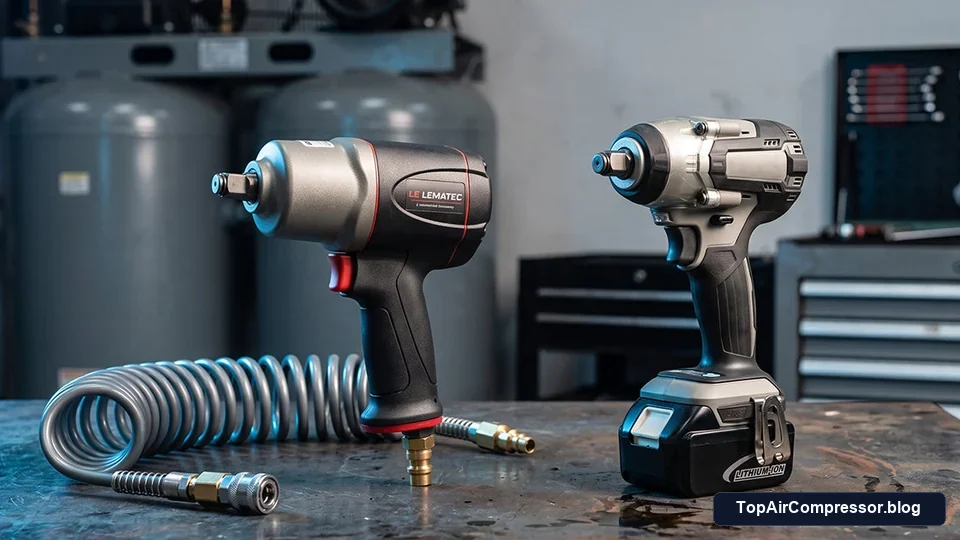
Modern cordless alternatives utilize brushless motors and advanced lithium-ion cells to close the performance gap. However, extreme fastener removal still challenges battery management systems during prolonged high-draw tasks.
Similarly, pairing pneumatic tools with selections from our best air hose for impact wrench guide eliminates internal pressure drops, ensuring maximum CFM delivery for demanding automotive disassembly tasks.
Conversely, high-draw cordless brushless motors utilize high-amperage lithium-ion packs to generate massive breakaway forces, though internal resistance causes slight thermal throttling when operating continuously at maximum output thresholds.
- Sustained mechanical advantage under heavy load conditions
- Direct pneumatic energy transfer eliminates electrical resistance completely
- Brushless motors maximize battery efficiency during short bursts
Evaluating Breakaway Torque Under Extreme Loads
Rusted suspension bolts require immense initial impact energy to break free successfully. Corded pneumatic systems excel here by maintaining steady line pressure without thermal interruptions.
Cordless units achieve comparable peak figures momentarily but quickly generate internal heat. This thermal buildup forces electronic safeguards to throttle output performance automatically.
- Steady line pressure supports continuous high torque output
- Thermal limits restrict extended high-draw fastener removal
Thermal Regulation and Continuous Duty Cycles
Reviewing options in our best air impact wrench for small compressor roundup helps technicians maintain consistent performance without risking motor burnout during repetitive fastening cycles.
Battery-powered impact wrenches accumulate heat rapidly within the motor housing and cell packs. Heavy-duty fastening cycles frequently trigger thermal shutdowns, halting production on busy assembly lines.
Thermal management differentiates these tools significantly during heavy industrial assembly, as corded units circulate ambient air via internal fans to prevent stator overheating during extended duty cycles.
Cordless alternatives trap heat within sealed housing compartments near the battery terminal interface, requiring intelligent circuit protection to automatically shut down the tool before permanent cell damage occurs.
- Expanding compressed air cools pneumatic impact motors naturally
- Lithium cells generate internal resistance during continuous high-amp draws
- Thermal protection circuits prevent permanent battery cell damage
Managing Heat Dissipation in High-Volume Shops
Commercial assembly environments operate equipment across continuous shifts without allowing cool-down periods. Corded pneumatic designs handle this punishing duty cycle effortlessly year after year.
Operators relying on cordless solutions must rotate multiple battery packs to manage thermal loads effectively. This operational overhead complicates workflow efficiency in demanding industrial facilities.
- Pneumatic tools handle continuous shift work without rest
- Battery rotation strategies mitigate shop thermal management issues
Weight Distribution, Ergonomics, and Operator Fatigue
Tool weight directly influences operator fatigue during overhead assembly or tight chassis work. Cordless impact wrenches integrate heavy battery blocks, shifting the center of gravity forward significantly.
Corded pneumatic wrenches feature lightweight composite housings since they lack onboard power storage. This balanced weight distribution reduces wrist strain during extended automotive repair shifts.
Operator ergonomics heavily depend on mass centralization, where corded models place heavy motor assemblies centrally, minimizing wrist torque while introducing snag hazards from trailing power cords.
Battery-powered impact tools shift the center of gravity downward toward the handle base, improving balance overhead but increasing cumulative muscle strain during overhead bolting applications.
- Onboard battery packs increase overall tool weight substantially
- Pneumatic designs eliminate heavy battery cells from handles
- Hose drag introduces subtle resistance during complex overhead maneuvers
Assessing Physical Strain in Automotive Repair Shops
Technicians working underneath vehicle lifts manipulate heavy impact tools continuously throughout the day. Minimizing tool mass prevents repetitive strain injuries and maintains consistent productivity levels.
While cordless models free technicians from tangled supply lines, their heavier build increases upper-body fatigue. Evaluating physical demands helps supervisors select optimal equipment for specific job roles.
- Lower tool mass prevents cumulative repetitive strain injuries
- Hose management requires deliberate workspace organization habits
Power Infrastructure and Jobsite Mobility Factors
While cordless tools offer high mobility, professional shops rely on pneumatic setups found in our best air compressor for impact wrench overview to deliver continuous, uncompromised torque during heavy assembly operations.
Corded systems require a reliable stationary power source, such as a shop compressor or generator. This infrastructure dependency anchors operations to specific locations but ensures infinite runtime.
Jobsite mobility requires evaluating infrastructure constraints, since corded impact wrenches demand reliable AC power sources or heavy-duty extension cords to prevent voltage drop and motor burnout.
Battery platforms eliminate tethered limitations entirely, allowing technicians to scale remote infrastructure projects swiftly while managing spare battery rotation schedules and charging station logistics.
- Complete wireless freedom enables rapid remote roadside repairs
- Stationary compressors guarantee unlimited continuous operational runtime safely
- Electrical generators add logistical overhead for corded field setups
Infrastructure Requirements for Remote Service Fleets
Mobile service trucks often install dedicated gasoline generators to run high-capacity air compressors. Maintaining this auxiliary engine requires rigorous preventative maintenance and fuel management.
Equipping service vans with advanced multi-port battery charging stations simplifies mobile infrastructure significantly. Technicians simply swap charged lithium packs to maintain uninterrupted workflow in the field.
- Mobile compressors demand auxiliary fuel and engine maintenance
- Multi-port chargers streamline field battery management workflows
Maintenance Protocols and Long-Term Service Life
Tool longevity depends heavily on routine maintenance requirements and internal component wear patterns. Pneumatic wrenches demand daily oil lubrication to protect internal impact mechanisms from premature corrosion.
Cordless impact wrenches require minimal mechanical maintenance but suffer from chemical battery degradation. Lithium-ion cells eventually lose capacity over several years, necessitating costly pack replacements.
Long-term service life demands strict adherence to maintenance protocols, including routine inspection of cord insulation and carbon brush replacements on universal motors to prevent internal arcing.
Cordless platforms reduce electrical maintenance overhead by using brushless designs, though technicians must regularly clean battery contact terminals to maintain low electrical resistance during high draws.
- Pneumatic tools demand daily inline oiler maintenance routines
- Brushless electric motors reduce internal brush wear significantly
- Battery packs degrade chemically and require periodic replacement investments
Long-Term Component Reliability and Operating Costs
Selecting units from our best air compressor to run impact wrench compilation ensures your shop maintains stable pressure and prevents pneumatic tool starvation during continuous maintenance workflows.
Cordless platforms offer sealed electronic controls but remain vulnerable to moisture and drop impacts. Replacing degraded battery ecosystems represents a continuous recurring expense for business owners.
- Simple mechanical valves offer superior long-term durability
- Sealed electronics protect against dust and moisture ingress
Acoustic Profiles and Vibration Attenuation
Occupational safety regulations mandate careful monitoring of workplace noise and vibration exposure levels. Pneumatic impact wrenches generate sharp mechanical exhaust noise that requires proper hearing protection.
Cordless electric models generally operate at slightly lower decibel levels during standard fastening tasks. However, high-frequency motor whines can still cause auditory fatigue during prolonged usage periods.
Acoustic profiles and vibration attenuation vary based on internal hammer mechanism designs, with both types generating high decibel levels that require mandatory hearing protection during prolonged utilization.
Cordless impacts often feature advanced rubber overmolds and counter-weighted internal dampeners, absorbing high-frequency shocks effectively to lower overall hand-arm vibration syndromic risks for operators.
- Pneumatic exhaust ports produce high decibel mechanical noise signatures
- Brushless electric motors eliminate explosive exhaust sound profiles
- Vibration dampening grips protect operators from white finger syndrome
Workplace Noise Mitigation and Operator Comfort
Industrial shops must implement comprehensive hearing conservation programs when utilizing loud pneumatic tooling. Selecting muffled exhaust designs helps reduce ambient noise levels across bustling production floors.
Electric cordless tools offer quieter operation in noise-sensitive residential or indoor commercial environments. Operators appreciate reduced acoustic interference when communicating with team members during installations.
- Exhaust mufflers reduce shop floor ambient decibel levels
- Indoor commercial jobsites benefit from quieter cordless operation
Total Cost of Ownership and Investment Strategies
Initial purchasing expenses represent only a fraction of the total equipment lifecycle cost. Corded pneumatic systems require significant capital investment in stationary compressors, distribution piping, and regulators.
Cordless impact kits appear cost-effective initially but demand expensive high-capacity battery replacements over time. Balancing upfront infrastructure costs against operational flexibility guides intelligent purchasing decisions.
Evaluating total cost of ownership requires balancing initial acquisition expenditures against consumable costs, factoring in frequent battery pack replacements over multi-year operational life spans for cordless fleets.
Corded models typically present lower lifetime expenses due to fewer wear components, though potential project delays from managing power cords can negatively impact overall labor productivity.
- Stationary air compressors demand substantial fixed infrastructure capital investments
- Proprietary battery ecosystems lock users into specific brand platforms
- Pneumatic tools feature lower per-unit replacement costs long-term
Calculating Long-Term Return on Equipment Investments
Facility managers evaluating equipment budgets must factor in energy consumption and maintenance labor. Pneumatic systems consume substantial electricity to generate compressed air continuously.
Battery charging stations draw minimal electrical current compared to large industrial air compressors. Analyzing utility bills helps operations optimize energy expenditures across large commercial fleets.
- Air compressors represent substantial baseline electrical power consumers
- Battery chargers offer exceptional electrical efficiency during charging cycles
Frequently Asked Questions
Which impact wrench provides more consistent torque output?
Corded pneumatic impact wrenches deliver uncompromised continuous torque without suffering from power fade. They maintain peak performance indefinitely when connected to an adequately sized compressor.
Can cordless models replace air tools in heavy-duty shops?
Modern battery units handle many fastening tasks efficiently but struggle during continuous high-volume assembly. Heavy manufacturing facilities still rely primarily on robust pneumatic systems.
What are the main maintenance differences between both types?
Pneumatic tools require daily oil lubrication to protect internal mechanical components from wear. Cordless alternatives demand zero mechanical oiling but require costly battery replacements over time.
How does tool weight impact daily operator fatigue?
Cordless wrenches integrate heavy lithium battery packs that shift balance forward and increase wrist strain. Lightweight pneumatic models reduce upper-body fatigue during extended repair shifts.
Which option offers a lower total cost of ownership?
Pneumatic systems involve high initial compressor infrastructure costs but feature cheaper individual tools. Cordless setups lower initial setup expenses while introducing recurring battery replacement costs.