Cordless vs. Pneumatic Impact Wrench: Which Fits Your Setup Better?
Choosing between battery and air power defines modern garage efficiency. We analyze torque, runtime, and infrastructure to help you select the ultimate fastening tool.


For absolute mobility and quick field service, Cordless units dominate. For continuous heavy industrial assembly and unlimited duty cycles, the Pneumatic Impact Wrench remains unmatched.
Compare all top models in our Best Air Compressor: Top Picks for Every Garage & Roadside.
Side-by-Side Breakdown
| Criteria | Cordless | Pneumatic Impact Wrench | Edge |
|---|---|---|---|
| Peak Performance & Output | High breakaway torque restricted by battery discharge rates. | Limitless continuous torque backed by stable compressor CFM. | Pneumatic |
| Duty Cycle & Consistency | Thermal throttling under heavy, unbroken production cycles. | Sustained 100% duty cycle without thermal degradation. | Pneumatic |
| Operating Noise & Vibration | Lower overall decibels with localized motor vibration. | High exhaust noise mitigated by modern muffled handles. | Cordless |
| Portability & Footprint | Completely self-contained with zero hoses or tank requirements. | Tethered to heavy stationary compressors or rigid air lines. | Cordless |
| Maintenance & Service Life | Battery degradation requires periodic pack replacement over time. | Decades of service life if properly lubricated and moisture-free. | Pneumatic |
| Power Requirements | High-capacity lithium-ion cells and multi-voltage charging docks. | Demands robust air compressors delivering high SCFM at 90 PSI. | Cordless |
| Best Ideal Use-Case | Mobile roadside service, framing, and general automotive repair. | High-volume assembly plants and heavy truck tire shops. | Split |
Engineering Fundamentals of High-Torque Fastening
Modern fastening technology relies on distinct mechanical impulses to break stubborn rusted bolts free. Understanding these foundational forces dictates whether electric motors or compressed air better serves your professional workshop.
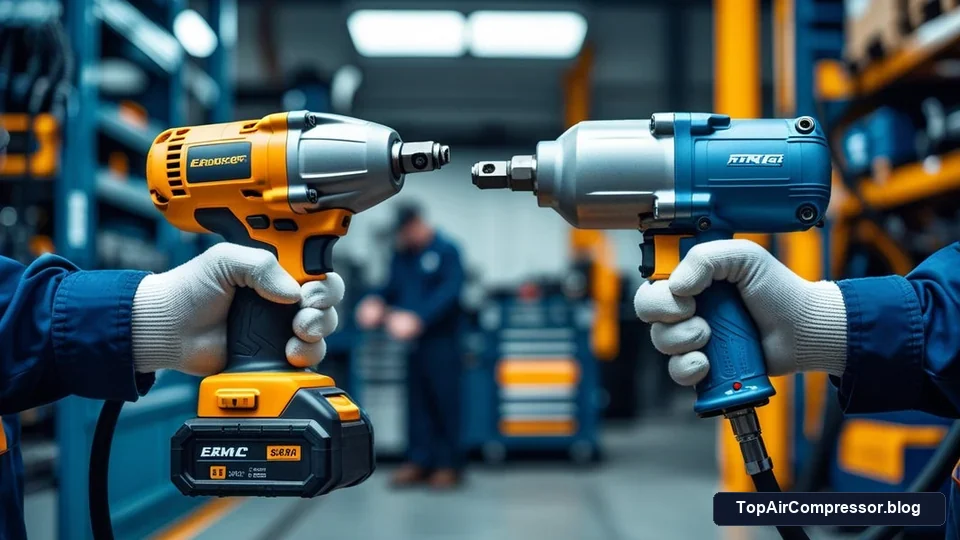
Engineers measure impact efficiency through rotational blow frequency and anvil mass geometry. Both tool categories leverage internal hammer and anvil mechanisms to multiply rotational force exponentially beyond standard drill drivers.
Pneumatic impact wrenches leverage rotary-vane air motors to deliver continuous power without thermal overload. Finding the best air compressor to run impact wrench tasks requires matching CFM output correctly.
Internal anvil and hammer mechanisms store kinetic energy before releasing it in sudden rotational bursts. Understanding these mechanical principles helps technicians match impact frequency against specific fastener joint stiffness categories during demanding assembly operations.
- Internal hammer and anvil strike mechanics
- Conversion of electrical or pneumatic energy
- Torque multiplication via rotational impact pulses
Mechanical Energy Conversion Mechanics
Cordless tools convert chemical battery energy into electromagnetic rotation via brushless DC motors. This architecture delivers instantaneous torque delivery without external hose restrictions.
Pneumatic variants expand compressed air against internal vanes or turbine rotors. This pneumatic expansion creates rapid kinetic motion transferred directly to the spring-loaded impact assembly.
- Brushless DC motor electromagnetic efficiency
- Compressed air expansion against rotor vanes
Real-World Performance and Output Dynamics
Bench testing reveals stark operational differences when facing severely seized chassis fasteners. While battery units achieve high peak figures, sustaining that output under load separates the two systems.
Air-driven systems maintain stable working pressure directly at the tool inlet through rigid plumbing. This continuous pneumatic supply prevents the torque sag commonly experienced during prolonged heavy fastening operations.
Air-powered impact tools maintain peak torque output throughout extensive duty cycles. Choosing the best air hose for impact wrench applications prevents restriction and pressure drops during heavy work.
Environmental temperature heavily influences lithium-ion pack discharge rates and overall pneumatic line pressure efficiency. Technicians must evaluate real-world pressure drops because inadequate hose diameters severely restrict true dynamic tool performance on busy job sites.
- Sustained output under prolonged heavy loads
- Inlet pressure stability via dedicated air lines
- Resistance to thermal sag during continuous use
Torque Delivery Under Extreme Loads
Heavy suspension work demands consistent breakaway torque across multiple stubborn anchor bolts. Pneumatic hammers deliver relentless hammering frequency without draining an onboard energy reservoir.
Advanced lithium battery packs utilize high-discharge cell configurations to match pneumatic bursts. However, intensive continuous triggering triggers internal thermal protection circuits to prevent catastrophic overheating.
- Continuous hammering frequency under heavy loads
- Thermal protection circuit activation thresholds
Build Quality, Maintenance, and Long-Term Durability
Workshop durability depends heavily on environmental resilience and routine maintenance schedules. Industrial air tools feature rugged steel housings designed to withstand harsh chemical exposure and physical drops.
Battery platforms require careful handling to protect sensitive onboard microprocessors and delicate electronic triggers. Moisture ingress can severely compromise internal printed circuit boards during outdoor service calls.
Pneumatic housings utilize cast aluminum or magnesium alloys designed to withstand harsh shop environments and chemical exposure. Cordless tool chassis incorporate reinforced engineering plastics that absorb moderate drops but degrade under prolonged solvent exposure.
Regular lubrication is mandatory for air tools to prevent internal motor corrosion and premature wear on sliding vanes. Conversely, battery platforms require minimal mechanical upkeep but demand strict inspection of battery terminal contacts for oxidation.
- Rugged steel and aluminum pneumatic housings
- Electronic circuit board vulnerability in wet areas
- Routine daily oil lubrication requirements for air motors
Servicing Requirements and Wear Components
Pneumatic impacts demand daily air line lubrication to prevent internal motor scoring. Neglecting this simple maintenance task drastically reduces operating lifespan and diminishes output torque efficiency.
Cordless platforms eliminate fluid maintenance but introduce consumable battery replacement costs. Lithium-ion cells naturally degrade over years of deep cycling, requiring eventual pack investments.
- Daily pneumatic oil mist injection requirements
- Lithium-ion cell degradation and replacement cycles
Operational Footprint, Noise, and Workplace Ergonomics
Shop ergonomics dictate technician fatigue levels over long shifts involving thousands of fasteners. Eliminating heavy rubber air hoses transforms overhead automotive work and tight engine bay maneuverability.
Pneumatic tools historically generated sharp exhaust decibels that required hearing protection. Modern piped-handle exhaust routing successfully channels escaping air downward and away from the operator's face.
Pneumatic wrenches generally feature superior power-to-weight ratios, reducing wrist fatigue during overhead automotive assembly tasks. However, heavy rubber supply hoses introduce constant drag and create tripping hazards across active maintenance shop floors.
Cordless impact tools eliminate tethering restrictions, significantly improving mobility for roadside service trucks and remote industrial installations. Operators must manage heavier tool masses caused by high-capacity lithium packs attached directly to handles.
- Elimination of cumbersome rubber supply hoses
- Exhaust routing and decibel attenuation designs
- Technician fatigue reduction in tight engine bays
Weight Distribution and Balance Profiles
Heavy battery packs alter the natural pistol-grip balance point of cordless wrenches. This added bottom-heavy weight can strain forearms during extended overhead transmission installation procedures.
Air tools offer exceptional power-to-weight ratios because they lack heavy energy storage cells. The absence of a battery makes the main tool chassis remarkably light and nimble.
- Pistol-grip balance point and forearm strain
- Superior power-to-weight ratio in air impacts
Power Delivery Systems and Infrastructure Demands
Infrastructure requirements separate self-contained electric tools from stationary compressed air networks. Selecting the best air compressor for impact wrench operations ensures your pneumatic setup delivers maximum reliable torque.
Running high-demand air tools requires large-diameter plumbing, high-flow couplers, and efficient air dryers. Neglecting these infrastructure elements creates severe pressure drops that cripple pneumatic tool performance.
Compressed air ecosystems require substantial upfront capital investment in stationary compressors, refrigerated dryers, and distribution piping networks. Facilities must maintain proper filtration to remove moisture that causes internal pneumatic corrosion and valve sticking.
Battery-powered fleets depend on reliable charging infrastructure, stable grid power, and scheduled cell replacements every few operational years. Technicians benefit from decentralized charging stations but must track pack cycle counts to prevent unexpected failures.
- Upstream compressor capacity and tank sizing
- High-flow plumbing and quick-disconnect fittings
- Elimination of infrastructure via battery swapping
Electrical Grid vs. Pneumatic Plumbing Needs
Cordless systems shift infrastructure demands from physical piping to electrical charging stations. Multi-bay rapid chargers ensure continuous battery rotation without relying on shop air compressors.
Conversely, major industrial facilities already possess extensive piping networks delivering reliable compressed air. Tapping into existing headers makes adding more air impact wrenches virtually cost-free.
- Multi-bay rapid battery charging infrastructure
- Existing industrial compressed air header networks
Fleet Economics and Total Cost of Ownership
Evaluating long-term financial commitments requires analyzing initial purchase costs versus ongoing replacement expenses. Battery-powered setups involve higher initial kit investments due to premium lithium-ion cells.
Pneumatic tools feature lower upfront acquisition costs but demand significant capital expenditure. Selecting the best air impact wrench for small compressor setups helps budget-conscious shops minimize equipment overhead.
Air impact tools offer exceptionally long operational lifespans with minimal component degradation when properly oiled and maintained daily. Initial savings can be offset by high energy consumption costs associated with running commercial air compressors continuously.
Cordless systems involve higher initial equipment expenses due to specialized battery investments and regular replacement cycles. However, eliminating fixed plumbing requirements dramatically reduces facility overhead and simplifies workshop layout modifications over time.
- Upfront hardware and battery pack investments
- Compressor infrastructure capital expenditure costs
- Long-term consumable replacement financial planning
Calculating Return on Investment Across Crews
Field service fleets save thousands by avoiding heavy, fuel-burning gas compressors in mobile trucks. Equipping technicians with high-output battery kits maximizes billable hours on remote job sites.
Stationary manufacturing assembly lines benefit immensely from pneumatic durability. Eliminating battery replacement cycles across dozens of assembly stations yields substantial long-term operational savings.
- Mobile service truck fuel and space savings
- Stationary assembly line long-term cost efficiency
Selecting the Optimal Tool for Your Specific Workload
Choosing the right fastening platform depends entirely on your daily operational environment and workflow intensity. Mobile mechanics benefit immensely from untethered battery freedom during roadside rescue calls.
High-volume tire shops and heavy equipment rebuilders require the relentless stamina of compressed air. Matching tool capabilities to actual workload demands prevents premature equipment failure and frustration.
Stationary automotive assembly lines benefit immensely from pneumatic systems because continuous duty cycles demand unwavering thermal stability. High-volume production environments thrive where tools remain plugged into overhead balancer reels throughout entire shifts.
Mobile service technicians and field contractors should prioritize advanced cordless platforms to eliminate generator transport hassles completely. Matching tool capabilities to specific fastening demands ensures optimal productivity across diverse job site conditions.
- Matching tool capabilities to operational environments
- Assessing daily fastener volume and duty cycles
- Balancing mobility requirements against continuous power
Making Your Final Workshop Decision
Audit your current shop layout and power infrastructure before purchasing new fastening equipment. If your technicians constantly move between remote vehicles, invest in high-voltage cordless kits.
If your team performs continuous heavy assembly along a fixed production line, install robust pneumatic drops. A dedicated compressed air system guarantees endless high-torque performance without downtime.
- Auditing shop layout and mobility requirements
- Evaluating fixed production line workflow demands
Frequently Asked Questions
Can cordless impact wrenches truly replace pneumatic air tools in professional automotive shops?
High-end battery models match pneumatic breakaway torque for standard chassis repairs. However, continuous heavy truck applications still favor compressed air systems for endurance.
Why do pneumatic impact wrenches require daily oil lubrication through the air inlet?
High-speed internal air motors operate under extreme friction and velocity conditions. Applying specialized pneumatic tool oil prevents premature vane wear and internal corrosion.
What compressor size is required to run a heavy-duty 1/2-inch pneumatic impact wrench?
Running high-demand impact wrenches efficiently requires a compressor delivering at least four to six CFM at 90 PSI with a sixty-gallon tank.
Do extreme winter temperatures affect the performance of cordless impact wrench batteries?
Cold weather temporarily increases internal electrical resistance in lithium-ion cells. Using insulated battery wraps and keeping spares indoors preserves cold-weather performance.
Which tool type offers a lower total cost of ownership over a ten-year service span?
Pneumatic tools typically last decades with basic lubrication, while battery packs degrade. Factoring in periodic battery replacement costs makes air tools cheaper long-term.