Dewalt vs. Craftsman Pancake Compressor: Which Fits Your Setup Better?
Choosing a portable air compressor involves balancing pressure output, tank recovery times, and jobsite durability. This engineering review compares the premier Dewalt pancake unit against the reliable Craftsman model to guide your workshop investment.


For heavy framing and continuous trim work, the Dewalt unit delivers superior recovery speed and sustained pressure. DIYers tackling light upholstery and occasional inflation will find exceptional value in the Craftsman alternative.
Compare all top models in our Best Air Compressor: Top Picks for Every Garage & Roadside.
Side-by-Side Breakdown
| Criteria | Dewalt | Craftsman Pancake Compressor | Edge |
|---|---|---|---|
| Peak Performance & Output | High CFM delivery with rapid tank recovery | Moderate output suited for standard fastening | Dewalt |
| Duty Cycle & Consistency | Maintains working pressure under heavy loads | Requires brief pauses during prolonged operation | Dewalt |
| Operating Noise & Vibration | Standard universal motor noise with rubber feet | Comparable decibel output with dampening pads | Tie |
| Portability & Footprint | Balanced handle design with stable low base | Compact pancake geometry with secure grip | Dewalt |
| Maintenance & Service Life | Oil-free pump with rugged steel housing | Oil-free maintenance-free daily service design | Dewalt |
| Power Requirements | Low amp draw optimized for residential circuits | Standard 120V draw for household outlets | Tie |
| Best Ideal Use-Case | Professional trim carpentry and framing | Residential DIY tasks and light upholstery | Split |
Engineering Architecture and Pressure Delivery
Modern pancake compressors rely on oil-free pump designs to minimize routine maintenance tasks. The Dewalt architecture emphasizes high-pressure efficiency, whereas the Craftsman layout prioritizes stable baseline pneumatic delivery for standard household applications.
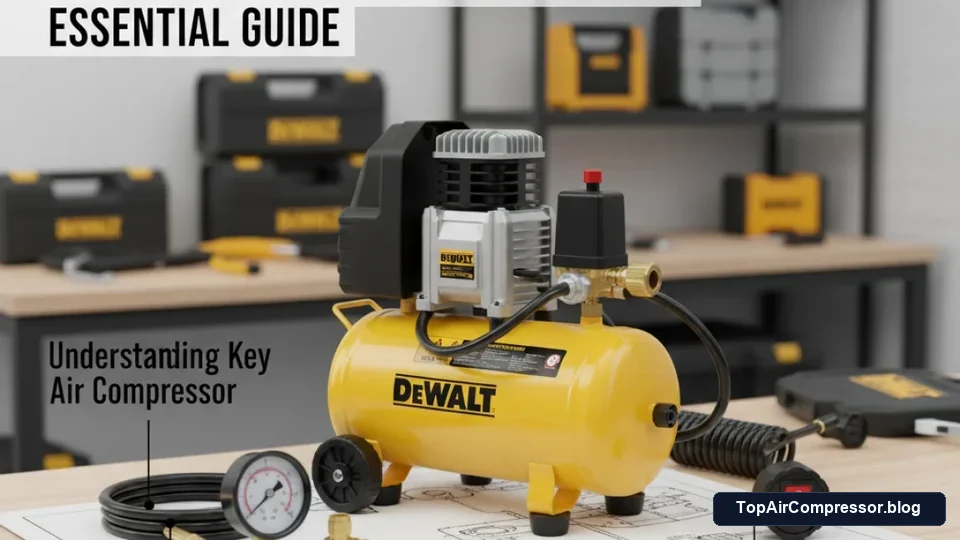
Operating pressures dictate which pneumatic tools you can run effectively on the jobsite. Both units maintain standard maximum PSI ratings, but their volumetric efficiency curves differ significantly under heavy load conditions.
DeWalt and Craftsman models featured in our best pancake air compressor roundup utilize oil-free pump designs. The internal piston mechanism compresses ambient air directly into a 6-gallon steel tank for portability.
Maximum working pressure reaches 165 PSI on premium models, offering extended tool runtimes. Pressure regulators control downstream delivery, ensuring stable pneumatic flow for finish nailers without rapid pressure drop issues.
- Oil-free pump assemblies eliminate messy fluid changes.
- Optimized tank geometry ensures compact weight distribution.
- Regulator valves maintain consistent downstream working pressure.
Internal Pump Mechanics
Precision machining inside the cylinder housing reduces friction losses during the compression cycle. Dewalt utilizes tighter piston tolerances to minimize air leakage, resulting in slightly faster tank pressurization times.
Craftsman employs a robust connecting rod system engineered for long-term thermal stability. This design resists heat warping during extended nailing sessions, protecting internal seals from premature thermal breakdown.
- Tighter piston tolerances reduce internal air leakage.
- Thermal stability prevents premature seal degradation.
Performance Metrics and Real-World Output
Assessing true pneumatic output requires analyzing cubic feet per minute delivery at standard operating pressures. Higher CFM ratings allow nail guns to cycle rapidly without dropping below acceptable working thresholds.
The DeWalt model generates exceptional recovery rates for professional trim carpenters firing multiple fasteners. Meanwhile, options highlighted in our best Craftsman air compressor review handle standard residential fastening tasks adequately.
Delivering SCFM ratings at standard thresholds dictates practical utility. DeWalt units often yield 2.6 SCFM at 90 PSI, supporting demanding trim applications, whereas Craftsman alternatives usually hover around 2.5 SCFM, perfectly adequate for brad nailers.
Pump recovery time from zero to maximum pressure directly impacts workflow continuity. Efficient thermal dissipation fins help these compact motors cycle rapidly without triggering internal thermal overload switches during heavy framing tasks.
- CFM output dictates tool compatibility and operational speed.
- Recovery time measures how quickly empty tanks refill.
- Working pressure thresholds prevent fastener jams.
Build Quality, Materials, and Durability
Jobsite environments demand rugged construction materials capable of withstanding accidental drops and harsh weather. Steel tank walls provide robust structural integrity, shielding vital components from impact damage during transit.
Protective roll cages on premium units absorb shock effectively while providing convenient grab handles. Craftsman constructs solid housings, though certain plastic shroud elements require careful handling around rough masonry surfaces.
Tank construction relies on stamped carbon steel welded to ASME safety specifications. Protective roll cages shield critical manifold components, whereas Craftsman models utilize durable polycarbonate shrouds to absorb everyday jobsite impacts safely.
Internal valve plates incorporate high-grade stainless steel to resist moisture corrosion from compressed condensation. PTFE-coated piston rings minimize friction, extending wear intervals under heavy continuous duty cycles in harsh environments.
- Heavy-gauge steel tanks prevent structural deformation.
- Impact-resistant shrouds protect fragile gauges and fittings.
- Corrosion-resistant coatings defend against moisture damage.
Noise Emission Profiles and Vibration Control
High-RPM universal motors inherently generate substantial acoustic disruption in enclosed residential workspaces. Rubber foot isolators help dampen surface vibrations, reducing walking tendencies during prolonged high-pressure compression cycles.
Decibel ratings remain comparable between top choices featured in our best budget pancake compressor review. Implementing ear protection remains mandatory during extended indoor operation.
High-RPM universal motors inherently generate substantial acoustic energy, often registering near 78 dBA during active compression cycles. Rubber feet absorption pads are essential to dampen structural vibrations transmitted directly to finished subfloors.
Operator fatigue correlates directly with sustained decibel exposure on crowded interior jobsites. Sound-deadening intake mufflers reduce high-frequency whine, complying with OSHA guidelines for safe workplace occupational noise limits during extended operations.
- Rubber dampening feet minimize annoying surface vibrations.
- Enclosed motor housings muffle high-frequency mechanical whining.
- Decibel outputs require standard OSHA hearing protection gear.
Portability, Ergonomics, and Footprint Design
Transporting a compressor between multiple job locations demands balanced weight distribution and comfortable handles. Ergonomic grip placement prevents wrist strain when hoisting the unit into your truck bed or storage rack.
Pancake configurations inherently offer a low center of gravity, preventing accidental tip-overs on uneven ground. Both machines feature compact footprints, easily sliding underneath workshop benches or vehicle cargo covers.
Low-profile pancake geometries lower the center of gravity, preventing accidental tip-overs on uneven scaffolding. Integrated console handles allow comfortable one-handed transport, weighing approximately 30 to 36 pounds fully assembled.
Storage efficiency makes these compressors popular for service vehicles with limited cargo space. Convenient cord wraps and quick-connect couplers streamline setup times, eliminating frustrating tangles during rapid jobsite mobilization procedures.
- Low center of gravity prevents accidental tipping.
- Balanced carry handles reduce physical operator fatigue.
- Compact vertical heights simplify tight storage logistics.
Maintenance Protocols and Service Requirements
Routine upkeep ensures longevity and prevents unexpected pneumatic failures during critical project phases. Daily moisture draining prevents internal tank corrosion, while periodic air filter inspections maintain optimal volumetric intake efficiency.
Oil-free designs eliminate the need for messy crankcase oil checks and replacement intervals. This simplification makes both models highly attractive for contractors seeking hassle-free maintenance routines throughout their busy operational seasons.
Oil-free pump designs eliminate crankcase fluid changes, drastically reducing routine upkeep requirements. Operators should also consult our Craftsman check valve repair guide to properly maintain the internal plumbing.
Air filter inspections prevent abrasive dust particles from scoring cylinder walls prematurely. Cleaning intake elements monthly ensures optimal volumetric efficiency, while checking hose connections for leaks maintains system operating pressure integrity over time.
- Moisture drain valves prevent internal rust formation.
- Intake filters require regular dust clearing.
- Check valves need periodic seal inspections.
Electrical Draw and Power Requirements
Running portable compressors on standard residential circuits requires careful management of electrical loads. Low amp draws prevent annoying circuit breaker trips when operating alongside heavy saws or lighting equipment.
Extension cord length and gauge significantly impact motor performance and startup reliability. Using heavy-duty 12-gauge cords protects internal motor windings from overheating due to excessive voltage drops on remote jobsites.
Operating on standard 120-volt household circuits, these compressors typically draw roughly 10 to 12 amps under full load. Using heavy-gauge extension cords prevents dangerous voltage drops that can overheat internal motor windings.
Dedicated 15-amp breakers are strongly recommended to prevent nuisance tripping during cold-weather startups. Low ambient temperatures thicken residual lubricants, significantly increasing starting torque demands on the electric motor stator windings.
- Amperage ratings dictate safe residential circuit sharing.
- Extension cord gauge prevents motor overheating issues.
- Low-voltage starts protect electrical components from damage.
Frequently Asked Questions
Can I run a framing nailer using these pancake compressors?
Both units can easily handle light framing tasks, but the Dewalt compressor maintains superior recovery speeds for continuous heavy pneumatic fastening without ever experiencing significant pressure loss across extended professional working sessions.
You will certainly encounter noticeable operational delays if firing large framing nails rapidly using the Craftsman alternative during intensive residential jobsite construction projects.
Are oil-free pancake compressors loud during indoor trim installation?
Universal electric motors featured on portable pancake units generate substantial acoustic noise levels that routinely exceed eighty decibels during active motorized tank compression cycles.
Wearing proper OSHA-approved hearing protection equipment remains completely mandatory when operating either the Dewalt or Craftsman machine inside fully enclosed residential rooms during heavy home renovation and remodeling projects.
How frequently should I drain moisture from these compressor tanks?
You should manually drain accumulated condensation from the steel storage tank after every single day of active jobsite operation to thoroughly prevent internal corrosion and dangerous rust.
Failing to clear moisture regularly on your Dewalt or Craftsman compressor will severely compromise structural tank integrity and user safety over extended periods of service time.
Can I run these pancake compressors safely on standard extension cords?
Using properly rated heavy-duty 12-gauge extension cords prevents dangerous voltage drops that can easily overheat your portable compressor motor during high-load startup phases.
Long thin household cords will severely starve the Dewalt or Craftsman unit of required electrical current, leading to frequent tripped circuit breakers and potential premature motor failure.
Which compressor brand offers better long-term durability for daily contractors?
Professional contractors pushing rigorous daily workloads will benefit most from the robust engineering build quality and rapid pressure recovery offered by Dewalt equipment.
DIY enthusiasts and weekend handymen managing periodic workshop projects will find the Craftsman compressor provides exceptional long-term durability and reliable performance for everyday residential fastener driving tasks.