Electric Impact Wrench vs. Air: Which Fits Your Setup Better?
Choosing between battery-driven fastening tools and pneumatic systems impacts daily shop efficiency. Balancing raw power, mobility, and infrastructure demands ensures optimal workshop productivity.

For mobile field service, electric impact wrenches provide unmatched convenience. High-volume industrial assembly lines benefit most from pneumatic air tools due to continuous thermal stability.
Compare all top models in our Best Air Compressor: Top Picks for Every Garage & Roadside.
Side-by-Side Breakdown
| Criteria | Electric Impact Wrench | Air | Edge |
|---|---|---|---|
| Peak Performance & Output | High torque via brushless motors | Exceptional continuous power density | Air |
| Duty Cycle & Consistency | Battery capacity dependent | Continuous industrial duty cycle | Air |
| Operating Noise & Vibration | Moderate motor and impact noise | High exhaust noise, low vibration | Electric Impact Wrench |
| Portability & Footprint | Self-contained battery powered | Requires compressor and hose lines | Electric Impact Wrench |
| Maintenance & Service Life | Electronics and battery degradation | Simple mechanical air motor | Air |
| Power Requirements | Rechargeable lithium-ion battery packs | Stationary air compressor and plumbing | Electric Impact Wrench |
| Best Ideal Use-Case | Mobile roadside repairs and service | High-volume automotive service bays | Split |
Fundamental Mechanics and Power Delivery Architecture
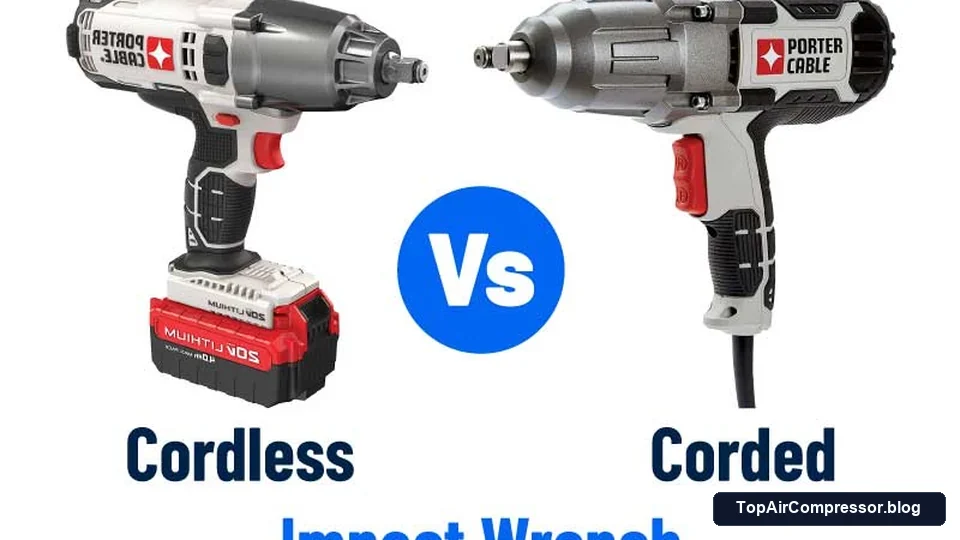
Modern battery-powered impact wrenches rely on high-output lithium-ion cells and advanced brushless motors. These components convert stored electrical energy into instantaneous rotational impacts through sophisticated internal hammer and anvil mechanisms.
Pneumatic impact wrenches harness continuous compressed air delivered via the best air compressor for impact. This compressed gas expands rapidly inside a precision air motor, driving mechanical impact mechanisms with incredible raw mechanical efficiency.
Pneumatic impacts rely on compressed air routed through internal vanes to spin a rotor. This mechanical energy transfers directly to an anvil via a twin-hammer mechanism delivering instant rotational strikes.
Cordless electric models substitute air lines with high-draw lithium-ion battery packs and brushless DC motors. These electronic systems convert stored electrical current into rapid magnetic pulses driving a spring-loaded impact mechanism.
- Brushless electric motors maximize energy transfer efficiency.
- Pneumatic air motors deliver direct, unrestricted kinetic power.
- Internal hammer designs dictate peak breakaway torque ratings.
Energy Conversion Efficiency in Fastening Tools
Electrical systems lose minor energy converting chemical battery power into mechanical rotation. Conversely, pneumatic setups experience pressure drops across fittings, regulators, and long supply hoses before reaching the tool.
Understanding these inherent energy losses helps technicians select the right compressor sizing or battery voltage tier for demanding high-torque applications in professional service environments.
- Voltage sag affects heavy electric motor performance.
- Pressure drop reduces pneumatic tool output force.
Torque Generation and Fastening Speed Dynamics
High-end cordless electric wrenches now rival traditional pneumatic units in breakaway torque metrics. Advanced electronic control modules optimize hammer strikes to break stubborn rusted fasteners efficiently.
Pneumatic tools maintain consistent high-speed rotational output under heavy load without thermal throttling. This steady kinetic delivery accelerates repetitive production line assembly tasks significantly.
Air impact wrenches maintain sustained peak torque using setup guidance from our best air compressor to run. Their continuous pneumatic flow provides superior breakout force for rusted fasteners, achieving maximum breakaway torque rapidly.
Modern high-voltage electric impacts match pneumatic breakout figures temporarily but rely heavily on software controls. Intelligent microprocessors manage current draw to prevent motor burnout while delivering adjustable ipm impact rates.
- Cordless models offer adjustable multi-stage electronic torque settings.
- Air tools deliver instant maximum torque upon trigger pull.
- Fastener grade dictates required output specifications.
Evaluating Breakaway Versus Tightening Torque
Breakaway torque measures a tool's capacity to loosen seized or rusted threaded fasteners. Pneumatic systems often excel in continuous heavy-duty loosening applications due to constant airflow.
Electric models compensate with heavy hammer blows and high-discharge lithium-ion battery packs. Both technologies safely handle standard automotive lug nuts when properly matched to specifications.
- Seized hardware demands high initial breakaway force.
- Over-tightening risks stretching critical fastener threads.
Ergonomics, Weight Distribution, and Operator Fatigue
Battery-integrated electric impact wrenches concentrate weight at the base due to heavy lithium-ion packs. This design can increase wrist strain during prolonged overhead or awkward automotive repair tasks.
Pneumatic wrenches feature lightweight composite or aluminum motor housings without heavy onboard batteries. However, attached rubber air supply hoses add persistent drag and handling resistance.
Pneumatic tools offer exceptionally low tool weight because heavy motors remain inside stationary compressors. However, rigid air hoses introduce significant torsional drag, increasing operator wrist fatigue during overhead automotive assembly tasks.
Electric impact wrenches eliminate rigid lines highlighted in our best air hose for impact guide. Despite this advantage, heavy multi-cell battery packs shift the center of gravity forward, worsening static grip strain during prolonged horizontal jobs.
- Battery weight impacts overhead workspace maneuverability.
- Hose stiffness influences overall pneumatic tool handling.
- Rubberized grips reduce harmful hand-arm vibration transmission.
Managing Tool Weight and Spatial Freedom
Mobile technicians favor cordless wrenches because they eliminate cumbersome pneumatic supply lines. Working inside tight engine bays becomes simpler without managing trailing rubber hoses.
Shop environments with overhead balancer reels neutralize pneumatic hose weight effectively. Operators experience minimal fatigue during long shifts in stationary manufacturing assembly bays.
- Hose management systems improve pneumatic ergonomics.
- Compact battery packs reduce overall tool heft.
Jobsite Mobility and Infrastructure Setup Requirements
Electric impact wrenches offer true plug-and-play portability for roadside service trucks and remote jobsites. Technicians simply swap charged battery packs to maintain continuous operational readiness anywhere.
Pneumatic setups demand stationary or truck-mounted air compressors, copper or PEX plumbing, and filtered air lines. This infrastructure anchors air tools firmly to fixed workshop environments.
Pneumatic systems demand a stationary infrastructure including piped airlines, water separators, and heavy-duty compressors. This fixed setup restricts operation to stationary workshops possessing adequate cfm air delivery and stable electrical feeds.
Cordless electric wrenches provide absolute mobility for roadside service trucks and remote construction sites. Technicians simply swap charged battery packs, bypassing the need for generators, extension cords, or complex pneumatic hose routing.
- Cordless tools eliminate the need for noisy compressors.
- Pneumatic systems require clean, dry compressed air supply.
- Electrical generators support remote battery charging stations.
Infrastructure Costs and Fixed Setup Limitations
Building a reliable pneumatic network involves significant upfront investment in air compressors, piping, and moisture traps. Neglecting moisture management leads to premature internal rust and tool failure.
Electric platforms require only spare batteries and rapid charging docks to ensure uptime. This simpler infrastructure suits independent mechanics and mobile service contractors exceptionally well.
- Moisture separators protect sensitive pneumatic valve components.
- Battery chargers require stable local electrical supply.
Duty Cycles, Thermal Limits, and Continuous Operation
Intensive continuous fastening can trigger thermal protection circuits in heavy-duty electric impact wrenches. Excessive current draw heats up motor windings and battery cells, forcing temporary operational shutdowns.
Pneumatic tools handle extreme high-volume duty cycles without electrical heat accumulation. Expanding compressed air naturally cools the internal motor during sustained heavy industrial operations.
Air impact wrenches boasting virtually unlimited duty cycles are featured in our best air impact wrench overview. Operators can run these pneumatic tools continuously without risking thermal overload shutdowns.
Electric impacts generate substantial internal heat within the motor windings and circuit boards during high-demand fastening. Heavy continuous fastening triggers automatic thermal protection circuits, forcing temporary work stoppages until temperatures drop.
- Thermal limits restrict continuous high-torque electric use.
- Compressed air expansion provides natural internal motor cooling.
- Industrial assembly lines demand relentless operational durability.
Overcoming Thermal Throttling in Production
High-output brushless tools manage heat better than older brushed designs, yet they still possess thermal thresholds. Rotating spare battery packs helps dissipate operational heat during demanding tasks.
Pneumatic tools continue running indefinitely provided the compressor maintains adequate CFM output. Heavy manufacturing facilities rely heavily on this uninterrupted thermal endurance.
- Brushless windings resist high operating temperatures.
- Compressor CFM capacity dictates total system endurance.
Maintenance Protocols and Long-Term Durability
Electric impact wrenches contain complex circuit boards, triggers, and rechargeable battery cells that degrade over time. Proper storage and protecting electronics from moisture ensure maximum operating lifespan.
Pneumatic impact wrenches feature robust mechanical designs with minimal electronic failure points. Regular daily oiling of internal air motors keeps components operating smoothly for decades.
Pneumatic tools require daily oil lubrication through air inlets to prevent internal rust and wear. Proper moisture trap maintenance prevents compressed condensation from destroying precision air motor vanes over extended operational lifespans.
Electric impact wrenches require zero pneumatic upkeep but demand careful battery storage and terminal cleaning. Brushless motors last indefinitely, though sealed gearboxes eventually need high-temperature grease replenishment to prevent premature mechanical failure.
- Battery chemistry degrades naturally over several years.
- Pneumatic oilers prevent internal corrosion and wear.
- Simple mechanical designs simplify field overhaul procedures.
Routine Service Tasks for Maximum Tool Longevity
Maintaining pneumatic equipment requires checking inline lubricators and draining water from storage tanks daily. Neglected air lines introduce moisture that quickly ruins internal vanes and bearings.
Electric impact upkeep focuses on keeping battery contact points clean and storing cells at proper charge levels. Avoiding deep discharge cycles preserves expensive lithium-ion battery health.
- Daily tank draining prevents harmful line corrosion.
- Clean battery terminals ensure reliable electrical contact.
Frequently Asked Questions
Can a cordless electric impact wrench truly replace a shop air gun?
High-end cordless models match pneumatic breakaway torque for most automotive tasks. However, continuous industrial assembly lines still require pneumatic air tools for thermal endurance.
Why is proper air lubrication critical for pneumatic impact wrenches?
Compressed air lacks natural lubrication and strips protective films from internal moving parts. Regular application of pneumatic tool oil prevents premature motor wear and friction.
How does cold weather affect electric impact wrenches versus air tools?
Extreme cold reduces lithium-ion battery capacity and temporarily lowers electrical output power. Conversely, moisture in compressed air lines freezes easily, causing pneumatic tool blockages.
Which tool type offers a lower long-term cost of ownership?
Pneumatic tools feature simpler mechanical designs that last decades with basic lubrication. Air systems avoid costly battery replacements despite higher initial compressor setup expenses.
What maintenance does an electric impact wrench require over time?
Operators must keep battery terminal contacts clean and prevent deep cell discharges. Storing lithium-ion batteries at partial charge ensures maximum service lifespan for the tool.