Electric Ratchet vs. Impact Driver: Which Fits Your Setup Better?
Choosing between an electric ratchet and an impact driver requires balancing torque delivery, physical dimensions, and fastener access in tight mechanical environments.

For low-profile mechanical teardowns, the electric ratchet dominates, whereas heavy-duty framing and lag-screw driving demand the raw rotational force of an impact driver.
Compare all top models in our Best Air Compressor: Top Picks for Every Garage & Roadside.
Side-by-Side Breakdown
| Criteria | Electric Ratchet | Impact Driver | Edge |
|---|---|---|---|
| Peak Performance & Output | 35-80 ft-lbs continuous torque | 1,500+ in-lbs impact force | Impact Driver |
| Duty Cycle & Consistency | High thermal stability under load | High impact frequency resilience | Electric Ratchet |
| Operating Noise & Vibration | Low mechanical gear whine | High concussive hammering vibration | Electric Ratchet |
| Portability & Footprint | Slim head for tight spaces | Bulky nose requiring axial clearance | Electric Ratchet |
| Maintenance & Service Life | Requires pawl and gear lube | Requires collet and anvil inspection | Tie |
| Power Requirements | 12V to 20V lithium battery | 12V to 20V high-draw battery | Tie |
| Best Ideal Use-Case | Automotive engine bays and trim | Structural framing and decking | Split |
Mechanical Design and Internal Architecture
Electric ratchets utilize a low-profile mechanical head design driven by a planetary gearbox, allowing technicians to manually break loose stubborn bolts before utilizing motor-driven rotation to spin fasteners rapidly out.
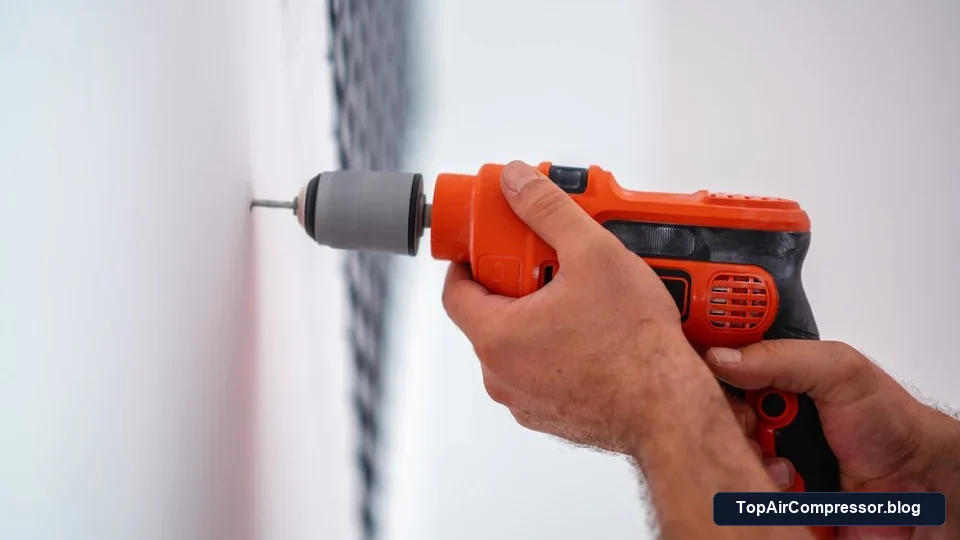
Conversely, impact drivers incorporate a spring-loaded striking mechanism inside the nosecone, delivering rapid rotational hammer blows that effortlessly overcome high breakaway torque on heavily corroded or rusted structural fasteners.
Electric ratchets rely on a planetary gear train coupled to a mechanical head, offering sustained manual torque capacity, which pairs nicely with our best electric air compressor guide for heavy shop setups.
Conversely, impact drivers utilize an anvil and hammer mechanism housed within a robust aluminum housing, generating intense rotational impacts that convert motor revolutions into high-frequency concussive blows.
- Planetary gearsets optimize low-profile clearance
- Spring-loaded striking anvils generate rotational shocks
- Manual breakout leverage protects delicate motor windings
Gearbox Engineering and Durability
The internal planetary gear assembly inside a professional electric ratchet is engineered to withstand high manual leverage without stripping the delicate internal teeth or burning out the compact brushed motor.
- Hardened steel alloy gears resist shock
- Compact housings maximize tight-space access
Torque Delivery Mechanics and Fastener Engagement
Understanding output metrics requires looking beyond standard maximum torque ratings, as ratchets provide continuous low-RPM spin while impact drivers deliver sudden, high-intensity rotational impacts measured in inch-pounds.
When servicing automotive suspension components or prepping wheels alongside our best electric tire inflator, impact drivers transfer shockwaves through sockets, whereas ratchets rely on steady rotational force.
Ratchets apply continuous rotational force up to their stall limit, requiring operators to manually break loose stubborn fasteners before the brushless motor finishes spinning them out.
Impact drivers deliver rapid, pulsed torque peaks measured in foot-pounds, driving long structural screws efficiently while managing high fastener shear stress through rapid rotational hammering cycles.
- Continuous spin prevents sudden fastener binding
- Impact shocks break through thread locker compounds
- Matched drive mechanisms prevent premature socket wear
Ergonomics, Clearance, and Spatial Constraints
Working inside cramped engine bays demands spatial efficiency, making the slim profile of an electric ratchet superior to heavy pneumatic setups paired with the best air compressor for impact gun.
An impact driver requires clear axial alignment with the fastener head, often forcing mechanics to use universal joints that absorb valuable kinetic energy and reduce overall fastening efficiency.
Low-profile ratchet heads feature elongated necks designed specifically to reach deep into confined automotive spaces where traditional pistol-grip tools cannot physically fit or rotate safely.
Impact drivers possess a bulky, forward-heavy pistol configuration that demands ample clearance above the work surface, though they provide superior wrist torque control during heavy driving tasks.
- Extended reach profiles navigate cramped engine compartments
- Pistol grips optimize downward vertical force application
- Offset drive heads eliminate knuckle clearance issues
Duty Cycle, Thermal Management, and Battery Draw
Extended fastening sessions generate substantial internal heat, requiring advanced thermal management systems to protect both tool circuitry and lithium-ion battery packs from premature degradation during heavy workloads.
Impact drivers draw high instantaneous electrical current, contrasting with pneumatic alternatives powered by the best air compressor for impact tools, while ratchets pull steady current under continuous load.
Extended continuous bolting sessions generate significant heat within compact ratchet gearboxes, necessitating thermal overloads to protect internal windings from premature insulation failure during heavy commercial work.
Impact drivers handle sustained hammering better due to integrated cooling fans, yet continuous heavy-duty fastening rapidly depletes lithium-ion battery packs under high amperage draw conditions.
- Thermal overload protection prevents motor burnout
- Optimized amp-draw preserves battery runtime limits
- Efficient cooling vents dissipate heavy internal heat
Maintenance Protocols and Longevity Factors
Routine maintenance for electric ratchets involves periodic lubrication of the internal mechanical pawls and gears, ensuring smooth manual operation when breaking stubborn bolts loose without power assistance.
Impact drivers require regular inspection of the anvil and collet assembly, as constant metal-on-metal hammering accelerates wear on the quick-release chuck and internal retaining rings.
Routine maintenance for electric ratchets requires periodic head disassembly and application of high-pressure grease to internal pawls to prevent excessive mechanical wear during high-torque manual breaking.
Conversely, impact drivers demand regular inspection of the quick-release collet and anvil surfaces to ensure bits lock securely without excessive lateral play or internal slipping under load.
- Scheduled gear lubrication extends operating lifespan
- Collet and anvil checks prevent socket ejection
- Brushless motor designs eliminate carbon buildup
Application Matrix and Jobsite Suitability
Automotive technicians heavily favor electric ratchets for interior trim, water pumps, and valve covers, while general contractors rely on impact drivers for framing, decking, and heavy structural timber.
Selecting the correct tool prevents stripped fastener heads and drastically reduces fatigue during repetitive assembly tasks across demanding industrial and automotive maintenance environments.
Technicians choose electric ratchets for automotive suspension work, water pump replacements, and interior dash repairs where speed and tight access supersede brute impact torque output.
Contractors rely on impact drivers for framing, deck building, and driving large lag screws into dense timber where high RPM and impact energy transfer maximize productivity.
- Automotive assembly favors continuous low-torque spinning
- Structural construction demands high-impact driving force
- Ergonomic optimization reduces daily operator fatigue
Frequently Asked Questions
Can an electric ratchet replace an impact driver for automotive work?
While an electric ratchet excels in tight engine bays where clearance is extremely limited, it completely lacks the high rotational impact force required to remove severely rusted suspension lug nuts.
Therefore, professional technicians must keep both specialized tools in their service cart to handle diverse vehicle maintenance tasks effectively.
Why do impact drivers feel harsh on smaller fasteners?
Impact drivers generate intense rotational hammer blows specifically engineered for driving long structural screws into dense lumber without pre-drilling pilot holes.
Utilizing this aggressive mechanism on tiny machine screws or delicate plastic automotive components will easily strip threads and snap fastener heads off completely.
How much manual torque can an electric ratchet handle safely?
Most professional electric ratchets allow operators to apply significant manual leverage to break stubborn bolts loose before engaging the electric motor.
Exceeding the manufacturer recommended manual torque limit can permanently damage the internal planetary gearbox and render the expensive tool completely unusable.
Are brushless motors necessary for these handheld power tools?
Brushless motors deliver significantly higher operational efficiency, extended runtime per battery charge, and a much longer overall service life than traditional brushed alternatives.
Investing in brushless variants ensures consistent torque output and drastically reduces the likelihood of thermal overload during demanding daily professional applications.
Can an impact driver be used with standard chrome sockets?
Standard chrome hand sockets are far too brittle to withstand the high-frequency shockwaves generated by an impact driver and can shatter dangerously under load.
You must always utilize black industrial impact-rated sockets manufactured from durable chrome-molybdenum steel for safe and reliable daily operation.