Gas vs. Electric Air Compressor: Which Fits Your Setup Better?
Selecting the right air compressor requires balancing mobile power autonomy against stationary efficiency. This comprehensive technical guide evaluates both architectures.

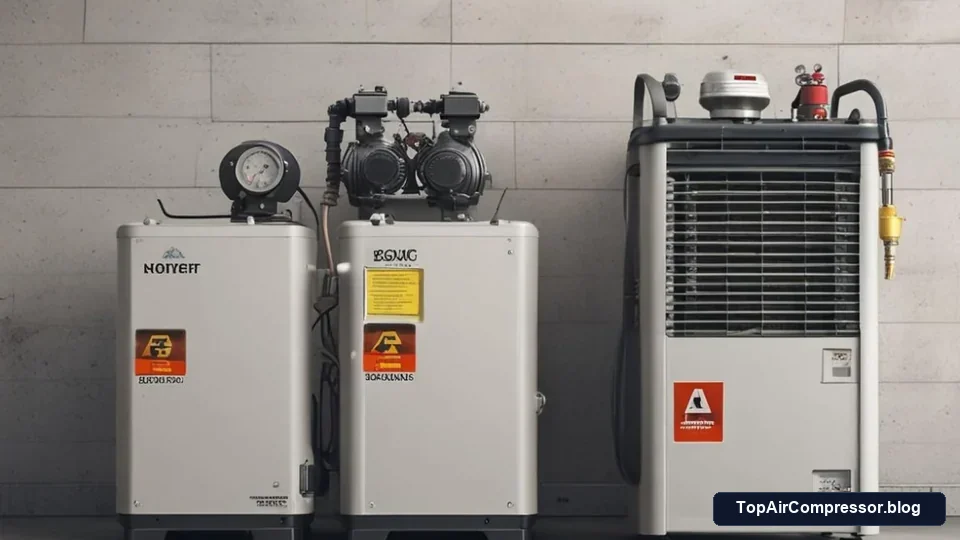
Choose gas compressors for remote job sites lacking permanent grid infrastructure. Select electric compressors for indoor facilities requiring clean, continuous operation.
Compare all top models in our Best Air Compressor: Top Picks for Every Garage & Roadside.
Side-by-Side Breakdown
| Criteria | Gas | Electric Air Compressor | Edge |
|---|---|---|---|
| Peak Performance & Output | High initial torque and CFM | Consistent steady CFM output | Gas |
| Duty Cycle & Consistency | Variable based on fuel supply | Continuous 100% duty cycle | Electric Air Compressor |
| Operating Noise & Vibration | High decibel and heavy vibration | Quieter with minimal vibration | Electric Air Compressor |
| Portability & Footprint | Fully mobile on wheels/skids | Stationary or heavy transport | Gas |
| Maintenance & Service Life | Demands frequent engine service | Low maintenance electric motor | Electric Air Compressor |
| Power Requirements | Unleaded gasoline or diesel | Standard 120V to 480V grid | Electric Air Compressor |
| Best Ideal Use-Case | Remote outdoor construction sites | Indoor manufacturing and auto shops | Tie |
Thermodynamic Principles and Macroscopic Gas Behavior
Analyzing gas behavior at a macroscopic level helps engineers predict pressure drops and volumetric efficiency. Boyle's law dictates that absolute pressure and volume are inversely proportional under isothermal conditions.
Real-world pneumatic systems experience thermal shifts during rapid compression cycles. Mathematical models must account for heat dissipation to maintain accurate volumetric output ratings across varied operating environments.
Understanding adiabatic compression proves essential when evaluating high-pressure portables found in our best electric air compressor for tires roundup, where rapid piston strokes generate significant heat inside the cylinder chamber.
Boyle’s law dictates that reducing a gas volume proportionally increases pressure, yet practical polytropic processes account for continuous heat loss through cast-iron cylinder fins and steel receiver tank walls during operation.
- Macroscopic pressure-volume relationships
- Isothermal versus adiabatic compression shifts
- Volumetric efficiency calculations
- Cylinder wall thickness dictates external convective heat transfer rates.
- Stroke velocity directly impacts momentary pressure spike severity.
Physical Characteristics of Compressed Media
Elemental gases like atmospheric air behave near-ideally at standard ambient temperatures and moderate pressures. Compressibility factors diverge significantly when pushing pneumatic limits past standard industrial thresholds.
Evaluating the physical state of working fluids ensures equipment longevity and prevents unexpected phase changes. Moisture management remains paramount during high-volume pneumatic delivery.
- Ambient air property baselines
- Dew point and moisture management
Isothermal Efficiency Factors
Intercoolers minimize multi-stage compression losses by extracting heat between cylinders, pushing actual thermodynamic performance closer to ideal isothermal expansion curves while lowering overall mechanical stress on valves.
- Multi-stage cooling drops discharge temperatures.
- Lower heat reduces moisture condensation rates.
Internal Combustion Engine Processing vs Electric Motor Dynamics
Gas-powered units rely on internal combustion engines to process mechanical energy through fuel ignition. These engines deliver high torque across variable RPM bands without external electrical grids.
Electric compressors utilize induction motors to achieve steady rotational speeds and high continuous torque. Induction efficiency minimizes mechanical losses, making them ideal for predictable workshop schedules.
Gas-powered units featured in our best gas powered air compressor reviews rely on small gasoline engines whose torque curves fluctuate heavily with crankshaft RPM during heavy remote workloads.
Electric induction motors deliver consistent starting torque via electromagnetic induction, providing immediate operational readiness and eliminating the complex carburetor maintenance associated with seasonal gasoline storage in harsh environments.
- Combustion engine torque curves
- Electric motor induction stability
- Mechanical power transmission efficiency
- Governor springs dynamically adjust throttle plates under surging pneumatic demands.
- Rotor slip characteristics protect windings from sudden mechanical binding.
Power Processing and Energy Conversion
Converting chemical energy from fossil fuels involves thermal losses inherent to combustion cycles. Electric systems convert electrical current directly into rotational force with fewer intermediate thermal steps.
Understanding these conversion pathways clarifies why electric units maintain superior running efficiency indoors. Gas units trade this efficiency for absolute autonomy in remote locations.
- Thermal loss differentials
- Direct electrical conversion efficiency
Torque Delivery Mechanics
Combustion engines experience power loss at high altitudes due to reduced oxygen density, whereas induction motors maintain full rated horsepower regardless of barometric pressure variations or extreme ambient temperature swings.
- Altitude drops engine volumetric efficiency.
- Motors maintain consistent RPM under load.
Storage, Transport, and Physical Site Logistics
Transporting heavy equipment across rugged terrain demands robust frame designs and pneumatic tires. Gas compressors excel in mobile logistics because they eliminate umbilical power cords entirely.
Stationary electric units prioritize compact footprints and secure anchor points inside permanent workshops. Storage tank integrity must be inspected regularly regardless of the primary power source.
Towable gas compressors demand robust torsion-axle suspensions and heavy-duty safety chains to absorb severe highway vibrations during transport across rugged job sites without structural chassis fatigue.
Stationary electric compressors require permanent concrete pad mounting and careful alignment with three-phase wiring, eliminating mobility but offering secure, vibration-damped operations inside climate-controlled industrial manufacturing facilities.
- Rugged frame mobility
- Stationary footprint management
- Tank pressure vessel ratings
- Pneumatic tires on mobile units need frequent pressure checks before highway towing.
- Isolation pads prevent motor harmonics from fracturing rigid facility piping.
Site Infrastructure and State Variations
Regional logistics and local infrastructure heavily influence fuel availability and grid reliability. Fluctuating state gas prices impact daily operational budgets for mobile contractor fleets relying on combustion power.
Comparing states reveals distinct regional preferences based on climate severity and utility costs. Remote western sectors often favor gas units, while dense urban hubs rely on stable grid power.
- Regional fuel cost impacts
- Grid stability and climate factors
Weight and Footprint Constraints
Gasoline fuel tanks add substantial dynamic weight during transport, necessitating adherence to DOT towing regulations and rigorous tongue-weight distribution checks before moving units between active construction zones.
- Fuel mass alters trailer tongue weight.
- Electrical drops require heavy conduit protection.
Safety Protocols, Emission Health Effects, and Ventilation
Operating internal combustion engines inside enclosed spaces generates lethal carbon monoxide gas accumulations. Exhaust ventilation is absolutely non-negotiable when deploying gas compressors near working personnel.
Health effects from prolonged exposure to combustion fumes include respiratory irritation and systemic toxicity. Electric compressors eliminate toxic exhaust entirely, safeguarding indoor worker health.
Operating internal combustion engines indoors generates lethal carbon monoxide emissions, demanding strict outdoor placement or certified extraction ducting to prevent acute poisoning in enclosed workspace environments.
Electric compressors eliminate exhaust hazards but introduce severe arc flash risks during high-voltage maintenance, requiring lockout-tagout procedures and insulated personal protective equipment by certified electrical technicians.
- Carbon monoxide risk mitigation
- Exhaust ventilation requirements
- Indoor air quality protection
- Exhaust monitoring alarms safeguard crews working in semi-enclosed trenches.
- Grounding rods protect operators against stray voltage faults during wet conditions.
Electrical Hazards and Mechanical Safety
Electric units introduce unique safety concerns involving high-voltage wiring and wet-environment grounding. Proper ground-fault circuit interrupters prevent catastrophic electrical shocks during job-site dampness.
Mechanical guards must cover spinning belts and pulleys on both compressor types to prevent operator injury. Routine safety audits ensure pressure relief valves function correctly under peak loads.
- High-voltage grounding standards
- Belt guard mechanical safety
Ventilation and Exhaust Mitigation
Gas units mandate at least six feet of clearance from building walls to prevent exhaust recirculation and overheating failures of the engine cooling shroud during prolonged summer shifts.
- Exhaust heat degrades nearby building materials.
- Forced ventilation prevents toxic gas accumulation.
Mathematical Models of Efficiency and Energy Conversion
Engineering teams rely on complex mathematical models to simulate compressor performance under extreme loads. These equations map volumetric output against ambient temperature and barometric pressure fluctuations.
Analyzing energy conversion units helps technicians translate electrical wattage into effective CFM delivery. Specific power consumption metrics reveal the true operational cost of compressed air generation.
Calculating overall wire-to-air efficiency involves multiplying the motor efficiency, mechanical transmission factor, and thermodynamic compression ratio to determine total energy consumption per actual cubic foot delivered.
Internal combustion systems suffer from low thermal efficiency, converting only a fraction of gasoline energy into mechanical shaft work while losing the remainder through exhaust manifolds and block cooling fins.
- Volumetric output simulation equations
- Specific power consumption metrics
- Barometric pressure adjustments
- Power factor correction capacitors reduce reactive electrical draw on industrial grids.
- Frictional losses in belt drives degrade overall volumetric delivery.
Contextualizing Energy and Power Units
Understanding energy units bridges the gap between electrical horsepower and mechanical pneumatic output. Standard conversions simplify comparisons between diverse motor sizes and displacement ratings.
Exploring what energy represents in pneumatic systems highlights the conversion from electrical potential to kinetic airflow. Proper unit conversion prevents costly sizing errors during specification.
- Horsepower to CFM conversions
- Pneumatic kinetic energy metrics
Specific Power Consumption Metrics
Engineers use brake horsepower per 100 CFM to evaluate energy costs, comparing the expensive kilowatt-hour draw of electric grids against the fuel consumption rates of carbureted small engines.
- Electricity offers superior lifecycle cost predictability.
- Engine load profiles dictate true fuel burn.
Historical Research and Special Industrial Topics
Historical research shows that early pneumatic systems relied heavily on steam and rudimentary gas engines. Modern engineering has refined these designs into highly efficient, portable power plants.
Special topics in compressed air technology encompass cryogenic gas processing and high-pressure scuba filling. These niche applications demand specialized metallurgy and rigorous multi-stage compression stages.
Early portable pneumatic systems relied on steam-driven pistons before gasoline engine evolution enabled truly mobile construction equipment capable of powering pneumatic breakers on remote infrastructural projects.
Modern industrial applications in explosive atmospheres require specialized explosion-proof motors and pneumatic controls to eliminate electrical sparks, contrasting sharply with standard commercial electric setups.
- Evolution of pneumatic machinery
- Cryogenic gas processing standards
- Multi-stage compression mechanics
- Cast iron construction defined vintage compressor durability standards.
- Pneumatic logic circuits replaced fragile electronics in early harsh mining tools.
Further Reading and Literature Review
Industry professionals should consult engineering handbooks and thermodynamic textbooks for deeper theoretical understanding. Further reading helps technicians master advanced fluid dynamics and system troubleshooting.
Keeping up with technical journals ensures maintenance teams adopt the latest safety and efficiency protocols. Continuous education directly improves equipment reliability across demanding industrial sectors.
- Engineering handbook references
- Technical journal literature reviews
Evolution of Portable Pneumatics
The introduction of rotary screw air ends revolutionized mobile gas compressors, particularly models highlighted in our best gas air compressor for service truck guide, replacing heavy reciprocating pistons with helical rotor designs.
- Rotary screws increased continuous duty cycles.
- Pneumatic logic controls bypassed electrical hazards.
Comprehensive Maintenance, Lifecycle, and Economic Analysis
Gas compressors require rigorous small-engine maintenance including oil changes, spark plug replacements, and filter cleanings. Engine service intervals occur much more frequently than electric motor upkeep.
Electric compressors feature sealed bearings and minimal moving parts, drastically reducing routine maintenance labor. Over a decade of operation, electric units typically yield lower total ownership costs.
Gas compressors require frequent carburetor cleaning, spark plug replacements, and oil filter changes every one hundred hours to prevent premature engine wear under dusty construction site conditions.
When selecting models for indoor facilities, evaluating options within our best electric air compressor reviews helps operators minimize maintenance overhead while ensuring long-term reliability and steady pneumatic output.
- Small-engine maintenance schedules
- Sealed electric motor reliability
- Total lifecycle cost comparison
- V-belt tension checks prevent slippage and premature sheave wear.
- Condensate drain traps need daily purging to stop tank corrosion.
Page Version Status and Equipment Tracking
Maintaining accurate equipment logs ensures compliance with warranty terms and preventive maintenance schedules. Regular page version updates on digital management systems prevent outdated service manuals from circulating.
Tracking operational hours helps facility managers predict component wear before catastrophic failure occurs. Documenting maintenance history maximizes resale value and operational uptime.
- Digital equipment log management
- Operational hour tracking systems
Long-Term Capital Amortization
Total cost of ownership calculations consistently favor electric models due to cheaper utility power rates and reduced preventative maintenance labor, despite higher initial installation expenses for industrial transformers.
- Electric motors lack consumable ignition parts.
- Engine rebuilds occur frequently in heavy use.
Frequently Asked Questions
Can I run a gas compressor inside a closed garage safely?
Running a traditional internal combustion gas compressor inside a tightly sealed residential garage creates lethal carbon monoxide hazards because toxic exhaust fumes accumulate rapidly without adequate mechanical cross-ventilation.
Always position combustion units outdoors in open areas with proper perimeter clearance distances to safeguard operators from dangerous chemical emissions.
Why do industrial facilities prefer electric compressors over gas models?
Electric air compressors provide superior operational efficiency and eliminate harmful exhaust emissions entirely when deployed within permanent indoor manufacturing facilities.
Select permanent electric installations whenever stable local grid power is available to minimize routine mechanical maintenance and bothersome noise disruption for staff.
What makes gas compressors better for remote contractor applications?
Gas-powered compressors deliver unmatched mechanical mobility for remote construction sites lacking temporary or permanent electrical grid infrastructure. Choose robust gas models when your demanding daily contractor tasks require high CFM pneumatic output far away from standard wall outlets.
How do engineers calculate specific power consumption for units?
Calculating accurate specific power consumption requires evaluating induction motor efficiency ratings, ambient barometric pressure, and volumetric displacement under maximum load. Consult engineering conversion charts to match exact electrical amperage requirements with your facility's main breaker capacity.
What routine maintenance differentiates gas from electric compressors?
Routine maintenance for gas units involves frequent engine oil changes, spark plug checks, and air filter replacements compared to sealed electric motors. Schedule regular preventive upkeep meticulously to extend the maximum operational lifecycle of your chosen compressor architecture.