Hvlp vs. Lvlp Spray Gun Air Compressor: Which Fits Your Setup Better?
Choosing between high-volume low-pressure and low-pressure systems dictates your entire pneumatic setup. Proper air delivery ensures flawless automotive finishes or fine woodworking results.

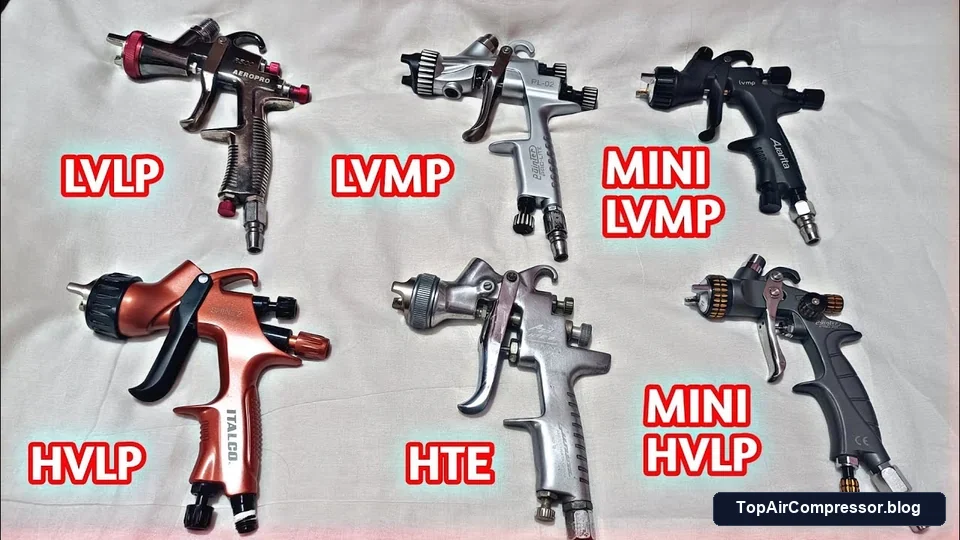
HVLP setups demand massive CFM delivery for production painting shops, whereas LVLP spray gun air compressor configurations thrive on smaller, portable home garage units.
Compare all top models in our Best Air Compressor: Top Picks for Every Garage & Roadside.
Side-by-Side Breakdown
| Criteria | Hvlp | Lvlp Spray Gun Air Compressor | Edge |
|---|---|---|---|
| Peak Performance & Output | High air volume at low pressure requires large CFM. | Lower air consumption preserves compressor duty cycles. | Lvlp |
| Duty Cycle & Consistency | Demands continuous run-time from heavy-duty industrial tanks. | Operates efficiently on smaller homeowner storage tanks. | Lvlp |
| Operating Noise & Vibration | Requires large multi-cylinder pumps producing higher decibel levels. | Smaller motor draws reduce overall workshop noise output. | Lvlp |
| Portability & Footprint | Bulky stationary vertical tanks dominate floor space. | Compact twin-stack or pancake designs enhance jobsite mobility. | Lvlp |
| Maintenance & Service Life | High moisture accumulation requires frequent water separator drains. | Reduced condensation protects internal valves and fittings. | Hvlp |
| Power Requirements | Often demands dedicated 230V heavy electrical sub-panels. | Runs reliably on standard 115V household wall circuits. | Lvlp |
| Best Ideal Use-Case | Production automotive body shops and professional furniture painting. | DIY hobbyists, cabinet refiners, and mobile contractors. | Lvlp |
Core Engineering Principles and Air Delivery Dynamics
Pneumatic atomization relies on balancing strict pressure and volumetric flow metrics. Fluid transfer efficiency dictates how much coating actually reaches your target substrate instead of floating away as wasteful overspray.
Understanding compressor dynamics helps prevent starvation issues during critical painting phases. Pressure drop management separates professional finishing results from amateur textured mistakes across large surfaces.
Consult our best air compressor for spray gun options when high volume systems require massive air delivery exceeding 12 CFM at 40 PSI from your workshop compressor.
Conversely, Low Volume Low Pressure technology optimizes transfer efficiency by utilizing internal fluid channels that restrict air consumption down to 3 to 6 CFM, reducing your overall compressor duty cycle.
- HVLP systems push 10 PSI at the air cap using high CFM.
- LVLP configurations operate efficiently below 10 PSI with lower CFM demands.
- Atomization quality depends entirely on stable regulator delivery.
Volumetric Efficiency and CFM Demands
High-volume setups require compressors rated for substantial cubic feet per minute ratings. Continuous CFM delivery prevents pressure starvation during extended trigger pulls on large panels.
Smaller compressors struggle to maintain the strict volumetric thresholds required by traditional turbine setups. Air receiver capacity must match the spray gun manufacturer's precise operational mandates.
- Check pump displacement versus actual delivered CFM.
- Account for line pressure losses in long hoses.
Transfer Efficiency Trade-offs
Federal environmental standards mandate high transfer efficiency ratings for professional coating applications. Material savings offset the higher initial investment in specialized high-volume pneumatic hardware.
Lower pressure variants balance transfer rates with reduced air compressor demands. Finishing precision remains high while minimizing costly paint material waste over time.
- HVLP achieves up to 65 percent transfer efficiency.
- LVLP matches transfer efficiency with lower air volume.
Performance and Real-World Output Analysis
Real-world application tests reveal distinct operational differences between these two pneumatic painting technologies. Surface finish quality depends heavily on maintaining consistent atomization pressure throughout the entire spray stroke.
Worksite conditions often dictate which system delivers superior practical output without frustrating delays. Moisture management becomes critical when running high-volume compressors in humid workshop environments.
Atomization quality depends heavily on consistent pressure delivery detailed inside our best air compressor for hvlp gun guide, requiring at least a 60-gallon tank to prevent pressure drops.
LVLP alternatives compensate for lower air volumes by maintaining stable fluid delivery with smaller portable compressors, making them ideal for mobile contractors needing reliable pressure regulation.
- High-volume sprayers excel at broad, uniform industrial coverage.
- Low-pressure variants offer superior control in tight spaces.
- Consistent pressure eliminates common orange-peel paint defects.
Automotive and Cabinetry Application Results
Automotive clear coats demand flawless wet edges without dry spray anomalies. Professional gloss levels require stable air delivery that smaller portable compressors cannot reliably sustain.
Cabinetry refinishing benefits from the tighter control offered by lower air volumes. Precision pattern adjustments prevent runs and sags on vertical stile and rail doors.
- Automotive base coats need uninterrupted air supply.
- Cabinet doors require nimble, lightweight hose setups.
Over-spray Reduction and Material Savings
Minimizing airborne mist protects both operator health and surrounding shop inventory. Overspray containment reduces expensive cleanup times and lowers overall coating material consumption rates.
Efficient atomization physics ensure maximum droplet retention on the intended workpiece surface. Transfer ratios directly impact profitability on high-end commercial woodworking projects.
- Reduced fog improves indoor air quality metrics.
- Fewer masking requirements save valuable prep time.
Build Quality, Maintenance, and Long-Term Durability
Heavy-duty workshop equipment requires robust construction to withstand daily operational stress. Cast iron pumps and durable copper winding motors extend the service life of professional compressor units.
Routine maintenance schedules protect sensitive internal components from premature mechanical wear and tear. Desiccant air dryers prevent moisture from contaminating expensive polyurethane and lacquer finishes.
Professional spray equipment requires stainless steel fluid needles and precision brass air caps to resist solvent corrosion, ensuring long service life under daily workshop operating conditions.
Routine maintenance involves solvent flushing and applying pneumatic tool oil to needle packings, preventing premature seal degradation and maintaining optimal atomization performance across both gun types.
- Drain air receiver tanks daily to prevent internal rust.
- Inspect regulator diaphragms regularly for pressure leakage.
- Clean spray gun fluid passages immediately after every use.
Pump Longevity and Thermal Management
Continuous-run operations generate significant thermal energy that can degrade pump oil rapidly. Thermal overload protection prevents catastrophic motor burnout during lengthy commercial painting jobs.
Cast iron cylinder sleeves dissipate heat much faster than lightweight aluminum alternatives. Proper cooling fins ensure reliable performance through multi-hour coating sessions.
- Monitor oil sight glasses on lubricated pumps.
- Ensure adequate ventilation around stationary compressor enclosures.
Filtration and Moisture Control Protocols
Compressed air naturally accumulates condensed water vapor as it cools down before reaching the tools featured in our best paint spray gun for air compressor review.
Maintaining dry air lines is non-negotiable for achieving professional automotive paint finishes. Desiccant stages absorb remaining humidity right before the primary regulator.
- Install drop filters at least 25 feet from the tank.
- Replace filter elements according to manufacturer run-hours.
Noise, Energy Efficiency, and Workshop Footprint
Workshop environment ergonomics depend heavily on managing decibel levels and floor space. Quiet compressor technology protects operator hearing during extended project preparation sessions.
Electrical efficiency impacts monthly operating costs for busy commercial painting operations. Power factor correction prevents unnecessary circuit breaker trips on overloaded shop electrical panels.
Running large compressors for HVLP setups generates significant ambient noise, often exceeding 85 decibels, which necessitates hearing protection and dedicated sound-dampened mechanical rooms.
LVLP systems lower electrical consumption by operating smaller motors, directly reducing your facility utility overhead costs while maintaining a compact workshop footprint for tight spaces.
- Low-noise scroll pumps reduce decibel fatigue significantly.
- Compact vertical tanks preserve valuable floor square footage.
- Energy-efficient motors lower overall utility overhead expenses.
Decibel Ratings and Operator Comfort
High-horsepower industrial compressors often produce noise levels exceeding eighty decibels. Sound-dampening enclosures create a safer, more comfortable indoor working environment for technicians.
Piston slap and intake roar contribute heavily to fatigue during long shifts. Quiet-running designs allow normal conversation without requiring heavy hearing protection.
- Compare decibel ratings at standard operating distances.
- Use remote compressor closets to isolate noise.
Electrical Demands and Circuit Protection
Large industrial motors require specialized heavy-gauge wiring and dedicated circuit breakers. Starting amperage spikes can strain older residential electrical service panels significantly.
Efficient low-draw compressors operate safely on standard household wall outlets. Voltage stability prevents motor stalling and ensures consistent pump cycle times.
- Verify breaker amperage before purchasing heavy machinery.
- Avoid long extension cords that cause voltage drops.
Which Option Fits Your Workload and Budget Best
Selecting the correct pneumatic setup depends entirely on your specific project frequency. Production body shops require heavy-duty continuous systems that easily handle back-to-back painting workflows.
DIY hobbyists and weekend woodworkers achieve fantastic results with smaller, cost-effective configurations. Balanced investments prevent overspending on industrial hardware you rarely utilize.
Selecting the right pneumatic setup depends on your daily production volume, where automotive restoration shops need high CFM output, whereas hobbyists thrive with lower air requirements.
When choosing equipment from our best portable air compressor for hvlp spray gun guide, always match your tool consumption to ensure flawless finish quality on every single project.
- Match compressor CFM output to spray gun requirements.
- Consider future project scaling when buying equipment.
- Factor in hose, fitting, and filtration accessory costs.
Professional Shop versus DIY Garage Scenarios
Commercial painting contractors cannot afford downtime caused by underpowered equipment. Industrial-grade hardware delivers the reliability needed for strict daily commercial deadlines.
Home garage enthusiasts benefit from portable units that store easily out of sight. Versatile pneumatic tools handle inflation and nailing tasks alongside painting.
- Prioritize uptime and durability for commercial applications.
- Focus on portability and multi-use versatility for hobbies.
Long-Term Cost of Ownership Analysis
Initial purchase prices represent only a fraction of lifetime equipment expenses. Energy consumption efficiency accumulates significant savings over years of regular workshop use.
Quality replacement parts and accessible service networks reduce long-term maintenance downtime. Reliable warranty coverage protects your capital investment against unexpected mechanical failures.
- Calculate lifetime electricity and maintenance costs.
- Choose reputable brands with readily available spare parts.
Frequently Asked Questions
Can I run an HVLP spray gun on a small portable air compressor?
Most small pancake compressors lack the required CFM output for traditional HVLP guns. Air starvation will cause pressure drops and ruin your paint finish.
Why is an LVLP spray gun better for smaller air compressors?
LVLP guns operate efficiently on significantly lower air volume requirements. Reduced CFM demand allows smaller portable storage tanks to keep up easily.
Do I need a special air dryer for automotive painting?
Moisture ruins fresh clear coat applications instantly in humid conditions. Desiccant air filters are essential to trap water vapor before atomization.
What is the primary difference in transfer efficiency?
HVLP and LVLP both achieve high transfer rates near sixty-five percent. Material savings minimize costly overspray waste compared to legacy conventional guns.
How do I calculate the correct CFM for my painting setup?
Always match your compressor output rating to your spray gun requirements. Safety margins ensure your pump never runs continuously under heavy loads.