Ingersoll Rand vs. Eaton Air Compressor: Which Fits Your Setup Better?
Choosing between Ingersoll Rand and Eaton requires evaluating industrial durability against high-output CFM delivery. We examine engineering specs to help you select the ideal heavy-duty system.

For massive continuous CFM output and heavy industrial fabrication, Eaton leads the comparison. When standardized global service networks and proven cast-iron reliability matter most, Ingersoll Rand remains the safer choice.
Compare all top models in our Best Air Compressor: Top Picks for Every Garage & Roadside.
Side-by-Side Breakdown
| Criteria | Ingersoll Rand | Eaton Air Compressor | Edge |
|---|---|---|---|
| Peak Performance & Output | High volumetric efficiency | Massive continuous CFM delivery | Eaton Air Compressor |
| Duty Cycle & Consistency | Reliable 100% continuous rating | Heavy-duty low-RPM durability | Tie |
| Operating Noise & Vibration | Moderate industrial noise profile | Lower RPM quiet signature | Eaton Air Compressor |
| Portability & Footprint | Standard vertical tank options | Robust heavy-gauge footprints | Ingersoll Rand |
| Maintenance & Service Life | Global parts network access | Oversized serviceable components | Ingersoll Rand |
| Power Requirements | Demands dedicated industrial circuits | Efficient amperage draw ratios | Eaton Air Compressor |
| Best Ideal Use-Case | General automotive and shops | Heavy industrial sandblasting | Eaton Air Compressor |
Evaluating Core Engineering Philosophies and Output Metrics
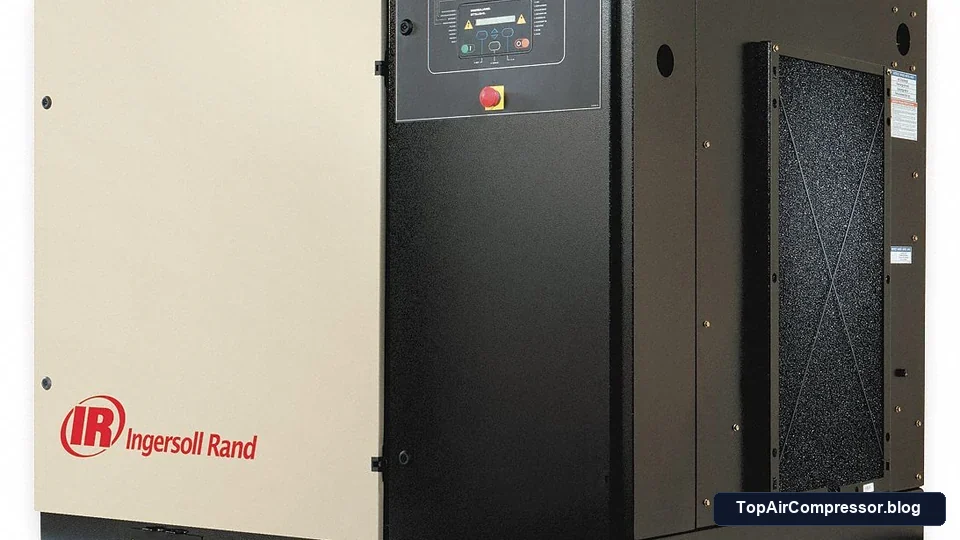
Ingersoll Rand engineers units focusing on standardized volumetric efficiency and widespread parts availability. Their pumps prioritize reliable everyday operation across diverse automotive and general workshop applications.
Eaton approaches heavy-duty pneumatics by maximizing solid cast-iron displacement and lowering pump RPM. This design philosophy directly reduces operating temperatures while delivering exceptional continuous airflow.
Ingersoll Rand prioritizes industrial volumetric efficiency through advanced multi-stage compression blocks designed specifically for continuous heavy-duty cycles in harsh manufacturing facilities and assembly plants.
Eaton engineering emphasizes heavy cast iron pump construction, focusing deliberately on lower rotational speeds to extend overall mechanical longevity under demanding automotive shop conditions.
- Ingersoll Rand emphasizes global service networks.
- Eaton focuses on low-RPM cast-iron longevity.
- Both brands serve demanding industrial environments.
- Ingersoll Rand units routinely target higher maximum operating pressures exceeding 175 PSI for specialized industrial pneumatic tooling and assembly requirements.
- Eaton systems leverage oversized displacement pumps to deliver superior cubic feet per minute delivery metrics at significantly reduced electric motor revolutions.
Examining Volumetric Efficiency Under Load
True volumetric efficiency dictates how well pressure is maintained during shifts. Ingersoll Rand units manage thermal expansion effectively, especially when properly configuring your air compressor switch settings for peak loads.
Eaton counters with massive, heavy-walled cast-iron cylinders that absorb friction heat efficiently. These robust pumps maintain stable delivery rates even when running continuously in high-ambient-temperature facilities.
- Thermal management dictates sustained pressure delivery.
- Cast-iron cylinders absorb operating friction effectively.
Pressure Profiles and Duty Ratings
Evaluating pressure profiles requires calculating exact compressor displacement alongside specific operational duty cycles to ensure your pneumatic system avoids overheating during peak production demands.
- High-pressure configurations demand rigorous adherence to ASME pressure vessel standards and periodic safety valve testing protocols.
- Lower RPM pump designs inherently reduce mechanical friction, directly minimizing thermal stress across critical crankshaft and piston components.
Build Quality, Materials, and Long-Term Durability
Industrial compressors demand heavy tanks and robust components. Ingersoll Rand utilizes ASME-certified receivers alongside reliable hardware like an updated pressure switch engineered to withstand cyclical fatigue.
Eaton constructs their compressor pumps using oversized connecting rods and precision balance flywheels. This commitment to heavy-duty metallurgy significantly minimizes mechanical wear across high-stress operational cycles.
Ingersoll Rand incorporates precision-machined aluminum and steel alloys to optimize weight distribution while maintaining strict structural integrity across mobile and stationary compressor frames.
Eaton constructs its compressor cylinders entirely from solid cast iron materials, providing exceptional resistance to thermal distortion and abrasive wear over decades of heavy service.
- ASME certification ensures structural tank integrity.
- Oversized rods reduce long-term mechanical wear.
- Heavy metallurgy prevents premature pump failure.
- Industrial grade connecting rods feature rifle-drilling or specialized oil dippers to ensure positive lubrication across high-stress journal bearing surfaces.
- Heavy-gauge steel receiver tanks undergo strict ASME code certification to guarantee structural safety under maximum operating pressure thresholds.
Tank Construction Standards
Receiver tanks endure immense pressure fluctuations every single operational cycle. Both manufacturers apply rigorous welding standards to prevent structural fatigue and maintain safe working limits.
Routine tank inspections remain vital regardless of the brand you select for your facility.
- Pressure fluctuations test tank weld integrity.
- Routine inspections prevent catastrophic tank failures.
Metallurgical Comparisons and Wear Resistance
Metallurgical composition directly dictates how well cylinder bores resist scoring from particulate ingestion and insufficient oil lubrication during prolonged heavy-load operations.
- Solid cast iron cylinders tolerate higher operating temperatures without experiencing the dimensional warping common in thinner aluminum blocks.
- Precision honed cylinder walls maintain optimal piston ring sealing, drastically reducing oil carryover into downstream compressed air distribution networks.
Noise Levels, Thermal Management, and Footprint
Operating noise impacts shop safety and operator fatigue. Ingersoll Rand units manage internal friction effectively when filled with synthetic fluids specified in our compressor oil manual during routine servicing.
Eaton prioritizes low pump speeds, resulting in noticeably quieter acoustic signatures during standard operation. Their extensive cast-iron construction naturally dampens mechanical vibrations without requiring costly external isolation mounts.
Managing acoustic output in industrial settings requires evaluating both mechanical pump noise and high-frequency intake turbulence generated during rapid air compression cycles.
Eaton compressors typically achieve lower decibel ratings by running their heavy cast iron pumps at significantly slower rotational speeds than high-revving competitors.
- Lower pump RPM reduces operating noise levels.
- Cast-iron dampens mechanical vibration naturally.
- Strategic placement mitigates shop fatigue.
- Effective thermal management heavily relies upon oversized intercoolers that efficiently dissipate radiant heat before moisture can condense inside the primary air storage receiver tank.
- Vertical tank configurations significantly reduce floor space requirements, making them ideal for cramped automotive service bays and crowded fabrication shops.
Acoustic Control Strategies
Managing decibel output in enclosed workshops improves overall communication and safety. Eaton achieves lower noise outputs naturally through slower pump revolutions rather than restrictive baffling.
Ingersoll Rand relies on enclosed cabinet designs for specific quiet-series models.
- Slower revolutions lower decibel output naturally.
- Enclosed cabinets isolate mechanical noise effectively.
Acoustic Engineering and Heat Rejection
Acoustic dampening enclosures and centrifugal intake silencers effectively reduce operational noise pollution, protecting technicians from hearing damage during continuous workshop shifts.
- Efficient aftercoolers lower compressed air temperatures, protecting downstream air dryers and pneumatic tools from thermal shock and moisture damage.
- Adequate physical clearance around compressor units ensures unobstructed airflow for vital belt guard cooling fans and pump heads.
Power Requirements, Electrical Efficiency, and Safety
Heavy electrical demands require proper facility preparation and robust magnetic motor starters. Both manufacturers require dedicated circuits with strict adherence to local electrical codes for safe, reliable operation.
Eaton often features lower amperage draws under load due to efficient pump displacement ratios. Ingersoll Rand provides comprehensive wiring diagrams and reliable overload protection across their industrial motor lineups.
Industrial compressors demand careful electrical planning, requiring proper wire sizing, magnetic motor starters, and thermal overload relays to prevent catastrophic electrical motor failures.
Running heavy-duty electric motors efficiently requires matching starting torque characteristics with local facility power availability, whether single-phase or three-phase electrical service.
- Dedicated electrical circuits are mandatory.
- Magnetic starters protect high-horsepower motors.
- Amperage draw efficiency varies by displacement.
- OSHA compliance mandates strict adherence to electrical grounding standards and accessible emergency shut-off switches near every primary compressor installation location.
- Voltage drop across long electrical supply runs can cause excessive motor heating and eventual premature failure of internal winding insulation.
Voltage Drop and Motor Protection
Inadequate wiring gauge causes severe voltage drop during heavy motor startup sequences. Ensure your installation features properly sized copper conductors and certified thermal overload relays.
Preventing electrical faults extends the operating life of your compressor.
- Proper wiring prevents damaging voltage drops.
- Thermal relays protect against phase imbalance.
Electrical Protection and Grid Compatibility
Dual voltage motor configurations provide installation flexibility, allowing facilities to configure wiring for either standard voltage tiers depending on existing infrastructure layouts.
- Magnetic starters protect compressor motors from low voltage conditions and harmful phase imbalances in three-phase electrical distribution networks.
- Pressure switch actuators must feature reliable unloader valves to vent head pressure, preventing high-torque motor restarts under load.
Maintenance Protocols and Component Serviceability
Routine maintenance extends life and prevents catastrophic pump failures. Ingersoll Rand utilizes accessible spin-on filters alongside steps detailed in our oil change instructions to ensure long-term durability.
Eaton units feature sight glasses for rapid oil level verification alongside generously sized drain valves. Their modular pump design allows straightforward replacement of reed valves and piston rings.
Establishing rigorous preventive maintenance schedules ensures long equipment lifespans, requiring regular oil changes, filter inspections, and condensate draining from storage receiver tanks.
Component accessibility heavily influences routine servicing times, with well-designed belt guards and spin-on oil filters simplifying daily technician inspection and upkeep tasks.
- Spin-on filters simplify routine oil changes.
- Sight glasses allow rapid fluid inspections.
- Modular pump designs ease internal repairs.
- Synthetic compressor lubricants extend oil change intervals significantly while reducing carbon buildup on internal valve plates and pistons.
- Checking belt tension regularly prevents premature belt slip, excessive heat generation, and uneven wear on motor and pump drive pulleys.
Lubrication and Filter Upkeep
Synthetic compressor oils resist thermal breakdown much better than traditional petroleum stocks. Establish a strict schedule for checking intake air filters to prevent abrasive particulate ingestion.
Clean intake filtration protects precision-honed cylinder walls.
- Synthetic oils resist extreme thermal breakdown.
- Intake filter checks prevent abrasive wear.
Service Intervals and Consumable Replacement
Consumable parts like intake air filters and check valves require periodic replacement to maintain peak volumetric efficiency and prevent particulate damage inside cylinders.
- Routine inspection of oil sight glasses helps operators catch minor leaks before they escalate into catastrophic mechanical pump seizures.
- Automated electronic condensate drains eliminate the human error factor, ensuring reliable moisture removal from tanks without manual daily intervention.
Real-World Workload Suitability and Application Matching
Choosing the correct compressor depends entirely on your daily air tool demands and duty cycle requirements. Automotive body shops thrive on consistent pressure delivery and reliable moisture separation.
Heavy fabrication plants needing constant sandblasting or pneumatic press operations benefit from Eaton's continuous-run capabilities. Match your peak CFM requirements against manufacturer curves before final purchase.
Matching a compressor to your specific application requires calculating total air consumption of all simultaneous tools while accounting for future facility expansion plans.
Automotive body shops and heavy manufacturing plants have vastly different pneumatic demands, requiring careful analysis of duty cycles and peak air volume requirements.
- Automotive shops require consistent pressure delivery.
- Fabrication plants demand continuous-run capabilities.
- Always calculate peak CFM before purchasing.
- Sandblasting and continuous grinding operations demand high-capacity rotary screw or multi-stage reciprocating systems to maintain steady working pressures.
- Intermittent fastener applications allow smaller storage tanks and lighter-duty pump configurations to operate efficiently without exceeding thermal limitations.
Sizing Your Air Delivery System
Always tally the individual CFM consumption ratings of every simultaneous air tool. Adding a twenty percent safety margin prevents your new compressor from running in constant overload.
Proper sizing guarantees pneumatic tool longevity and performance.
- Tally simultaneous tool CFM demands accurately.
- Include safety margins for pneumatic longevity.
Application-Specific Sizing Methodologies
Calculating accurate cubic feet per minute requirements prevents undersizing errors that cause compressors to run continuously, leading to accelerated wear and excessive energy costs.
- Factoring in a safety margin of twenty percent accounts for future tool additions and normal system leakage over time.
- Evaluating environmental factors like ambient humidity ensures appropriate air treatment equipment selection to protect sensitive downstream pneumatic automation machinery.
Frequently Asked Questions
Which brand offers better longevity for heavy industrial use?
Eaton compressors generally outlast competitors in continuous-duty applications due to their heavy cast-iron construction and exceptionally low operating speeds.
Are Ingersoll Rand replacement parts easier to source globally?
Ingersoll Rand parts are widely available through a massive network of authorized distributors, making routine maintenance and emergency repairs exceptionally straightforward worldwide.
Do these compressors require specialized electrical installation?
Industrial models from both brands typically require dedicated high-voltage circuits, professional hardwiring, and magnetic motor starters to ensure safe, compliant daily operation.
Which compressor runs quieter in a closed shop environment?
Eaton systems usually operate at significantly lower RPMs, producing a much more tolerable acoustic profile and reduced mechanical vibration during heavy workloads.
How often should I perform scheduled maintenance tasks?
You must check oil levels daily, change synthetic lubricants every thousand hours, and inspect intake filters monthly to maintain optimal operational efficiency.