Oilless vs. Oiled Air Compressor: Which Fits Your Setup Better?
Choosing the right compressor requires balancing long-term maintenance demands against your immediate air delivery needs. Understanding lubrication differences protects your pneumatic investment.

Oilless compressors dominate light, portable tasks requiring clean air. Oiled models remain the definitive standard for heavy-duty industrial shops demanding continuous duty cycles.
Compare all top models in our Best Air Compressor: Top Picks for Every Garage & Roadside.
Side-by-Side Breakdown
| Criteria | Oilless | Oiled Air Compressor | Edge |
|---|---|---|---|
| Peak Performance & Output | Moderate CFM delivery | High CFM output | Oiled Air Compressor |
| Duty Cycle & Consistency | Intermittent operation | Continuous heavy duty | Oiled Air Compressor |
| Operating Noise & Vibration | Louder mechanical vibration | Smoother, quieter operation | Oiled Air Compressor |
| Portability & Footprint | Lightweight, highly portable | Heavy, stationary units | Oilless |
| Maintenance & Service Life | Lower maintenance, shorter life | Regular fluid changes, long life | Oiled Air Compressor |
| Power Requirements | Standard household circuits | Often requires specialized wiring | Oilless |
| Best Ideal Use-Case | Trim carpentry and nailing | Automotive repair and grinding | Oiled Air Compressor |
Engineering Fundamentals and Mechanical Design
Oilless compressors rely on self-lubricating synthetic piston rings composed of advanced PTFE materials. This dry design eliminates oil reservoirs entirely, preventing fluid migration into the compressed air stream.
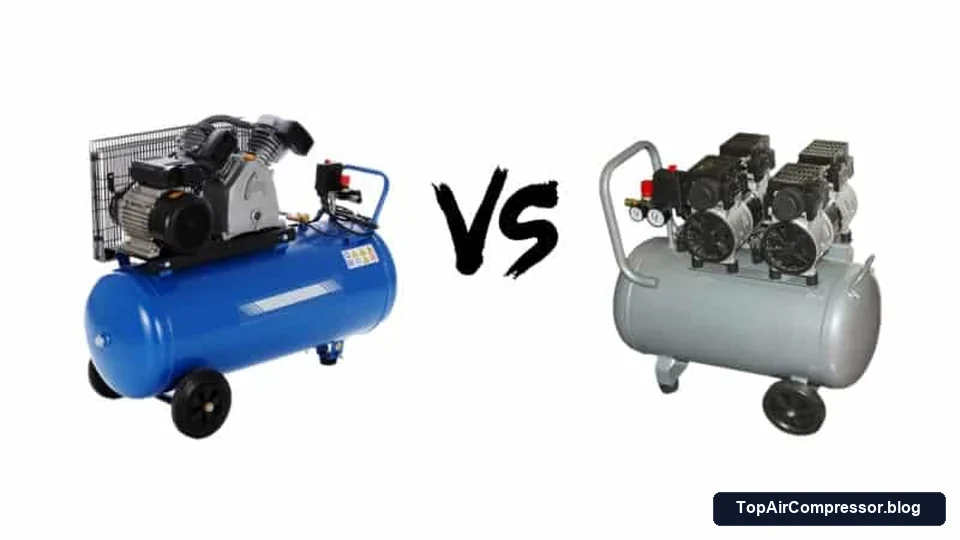
Traditional oiled compressors submerge internal components in liquid oil baths or use splash lubrication systems. This fluid film drastically reduces mechanical friction, minimizing component wear during high-load operations.
Oilless compressors rely on PTFE piston rings and permanently sealed bearings to eliminate liquid lubricants. This design prevents hydrocarbon contamination in sensitive pneumatic lines but increases mechanical friction and thermal stress.
Conversely, oiled units utilize a crankshaft splash-lubrication system or pressurized oil pump. This creates a viscous boundary layer between metal components, drastically lowering operating temperatures and minimizing mechanical wear during heavy industrial cycles.
- PTFE piston ring technology eliminates fluid contamination
- Splash and pressure pump lubrication reduce friction
- Zero fluid migration protects sensitive pneumatic tools
- PTFE-coated cylinder walls require zero liquid lubricants.
- Cast-iron crankcases absorb heavy reciprocating mechanical forces.
Materials and Tolerance Engineering
Precision machining is essential for oilless cylinders because they lack a fluid buffer to seal microscopic gaps. Tight manufacturing tolerances ensure adequate compression without premature ring degradation.
Oiled systems tolerate slightly broader machining tolerances since viscous oil films naturally seal minor clearance discrepancies. This fundamental metallurgy difference dictates overall unit weight and complexity.
- Tight manufacturing tolerances on dry cylinders
- Viscous oil films seal minor mechanical clearances
Piston Ring Metallurgy
High-end oilless pumps incorporate composite carbon rings designed to withstand extreme thermal expansion without degrading. Standard consumer models use soft fluoropolymer coatings that wear down significantly faster under continuous commercial workloads.
- Carbon composite rings extend oilless durability profiles.
- Standard fluoropolymer layers degrade quickly under high heat.
Performance Metrics and Real-World Air Delivery
Evaluating volumetric efficiency reveals distinct operational boundaries between these two distinct pump configurations. Oiled pumps generally sustain higher cubic feet per minute delivery ratings during extended runtime scenarios.
Dry-running units generate significant thermal buildup, forcing lower duty cycles to prevent catastrophic motor failure. Consequently, professional contractors must evaluate their actual tool consumption rates carefully.
Evaluating volumetric efficiency requires examining actual CFM at 90 PSI rather than displacement figures. Oilless pumps typically suffer volumetric degradation as operating temperatures rise and internal component tolerances expand without liquid cooling seals.
Oiled reciprocating compressors maintain tighter sealing tolerances because oil fills micro-gaps between piston rings and cylinder walls. This hydraulic seal ensures consistent volumetric output over extended operating periods without severe pressure drop-offs.
- Sustained high CFM delivery in oiled configurations
- Thermal limitations restrict continuous oilless operation
- Pneumatic tool compatibility dictates pump selection
- Displacement CFM overestimates actual delivered pneumatic volume.
- Thermal expansion reduces oilless volumetric efficiency ratings.
Pressure Ratings and Tank Recovery
Pound per square inch capabilities vary based on thermal management and piston ring integrity. Heavy-duty oiled pumps recover tank pressure faster during demanding sanding or grinding tasks.
Smaller oilless units handle intermittent nailing operations efficiently but struggle to maintain stable pressure during continuous abrasive blasting or spray painting applications.
- Faster tank pressure recovery in lubricated pumps
- Intermittent pressure drops common in dry units
Volumetric Efficiency Factors
Ambient temperature swings drastically alter operational pressure decay rates in unlubricated systems. Mechanics must account for a ten percent delivery loss when deploying portable oilless units in extreme sub-freezing jobsite environments.
- Cold ambient conditions stiffen oilless internal valve reeds.
- Lubricated systems maintain steady viscosity across temperature ranges.
Thermal Management and Continuous Duty Cycles
Heat dissipation remains the single greatest mechanical challenge inside any reciprocating air compressor pump. Lubricating oil acts as a vital thermal transfer agent, much like the units found in our best portable tire air compressor reviews.
Without circulating oil, oilless cylinders rely entirely on external cooling fins and high-velocity fans. This thermal limitation prevents most consumer dry units from exceeding a fifty percent duty cycle.
Heat dissipation dictates the operational duty cycle rating of any pneumatic machine. Oilless units generate intense localized friction on dry cylinder walls, necessitating aggressive cooling fins and high-RPM electric fans to prevent premature structural failure.
Oil acts as a thermal transfer fluid, carrying combustion and friction heat away from the piston crown toward the cast-iron crankcase. This bulk fluid capacity allows many oiled compressors to achieve a continuous 100 percent duty cycle.
- Oil acts as a vital internal thermal transfer agent
- Cooling fins and fans manage dry cylinder temperatures
- Duty cycle restrictions protect oilless motor windings
- Dry friction creates concentrated thermal zones on pistons.
- Oil reservoirs act as massive thermal distribution sinks.
Managing Thermal Overload Risks
Running an oilless pump past its recommended duty cycle accelerates piston ring wear dramatically. Thermal expansion alters cylinder clearances, leading to sudden loss of compression and permanent damage.
Commercial oiled pumps incorporate heavy cast-iron crankcases that absorb and radiate thermal energy efficiently. This robust construction permits continuous multi-shift operation without risking internal seizure.
- Accelerated ring wear from thermal expansion
- Cast-iron crankcases radiate operational heat effectively
Thermal Overload Protectors
Modern portable oilless pumps integrate manual thermal reset switches calibrated to trip at specific winding temperatures. Operators pushing these units beyond specified duty cycles face frequent shutdowns and accelerated motor burnout risks.
- Bimetallic thermal switches protect motor windings from melting.
- Forced-air cooling fans must remain completely unobstructed always.
Maintenance Schedules, Wear, and Lifespan
Maintenance requirements present a classic trade-off between daily convenience and long-term mechanical longevity. Oiled compressors demand routine oil level checks, filter changes, and periodic fluid replacements.
Conversely, oilless systems offer virtually maintenance-free operation until the coated piston rings eventually wear out. However, replacing those sealed internal components usually requires a complete pump teardown.
Maintenance regimes differ sharply between these two distinct compressor architectures. Reviewing our guide on what is an oilless air compressor helps operators understand why dry units demand frequent PTFE wear ring inspections.
Oiled units demand rigorous adherence to oil change intervals using synthetic non-detergent lubricants. Neglecting this schedule allows particulate buildup to rapidly scour crankcase bearings, destroying the pump long before its theoretical mechanical lifespan expires.
- Routine fluid checks required for oiled models
- Maintenance-free convenience defines dry compressor designs
- Component replacement complexity differs significantly between units
- Oilless units trade fluid maintenance for scheduled ring replacements.
- Synthetic compressor oils resist thermal breakdown under extreme pressure.
Calculating Total Operating Lifespan
Commercial lubricated compressors frequently exceed thousands of operating hours before requiring a major overhaul. The constant presence of clean lubricating fluid prevents metal-on-metal friction entirely.
Dry units typically have a shorter operational lifespan due to continuous dry friction on cylinder walls. Users must weigh lower initial maintenance against earlier equipment replacement costs.
- Thousands of operating hours from lubricated pumps
- Shorter service life in dry friction designs
Valve Plate Inspection Protocols
Reed valves in high-frequency reciprocating pumps endure immense mechanical fatigue over thousands of cycles. Technicians must inspect stainless steel reed valves annually for micro-fractures that severely compromise tank pressurization rates and overall volumetric efficiency.
- Fatigue cracks on reed valves cause immediate pressure loss.
- Carbon buildup on valves restricts optimal airflow pathways.
Acoustic Profiles, Vibration, and Workspace Ergonomics
Noise pollution directly impacts jobsite safety and workshop comfort during long pneumatic fabrication sessions. Oiled belt-driven compressors typically operate at much lower RPMs, resulting in a quieter acoustic profile.
Direct-drive oilless units spin at high velocities, producing a sharp, piercing mechanical whine that requires mandatory hearing protection. Vibration dampening feet are also critical for stabilizing dry compressors.
Noise output remains a primary ergonomic consideration when deploying compressors inside enclosed workshops. Oilless direct-drive units often produce harsh high-frequency whines exceeding eighty decibels due to their inherently elevated rotational speeds and dry mechanical contacts.
Belt-driven oiled compressors operate at significantly lower RPMs, resulting in a deeper acoustic frequency and lower decibel ratings. This dampens operator fatigue and complies more easily with standard occupational health and safety noise regulations.
- Lower RPMs reduce noise in belt-driven oiled units
- High-velocity whining characterizes direct-drive oilless pumps
- Vibration dampening minimizes walking on hard floors
- Direct-drive oilless motors scream at high rotational velocities.
- Belt-driven oiled pumps shift noise into manageable frequencies.
Jobsite and Shop Placement Strategies
Placing a loud oilless compressor inside a small residential garage amplifies acoustic reverberation significantly. Finding the best air compressor for your shop ensures proper remote placement or enclosures for a comfortable environment.
Heavier oiled stationary units require dedicated concrete slab positioning to absorb heavy operational vibration. Proper placement protects internal copper windings and prevents structural fastener fatigue.
- Acoustic reverberation in enclosed residential workshops
- Dedicated slab mounting stabilizes heavy oiled compressors
Vibration Dampening Mounts
Excessive reciprocating vibration can loosen structural fasteners and damage surrounding shop equipment. Installing neoprene isolation pads beneath heavy cast-iron compressor feet effectively absorbs kinetic energy and protects permanent workshop flooring installations.
- Rubber isolators neutralize high-frequency structural resonance paths.
- Anchor bolts require torque checks following initial installation phases.
Selecting the Ideal Unit for Your Specific Workload
Choosing between these technologies depends entirely on your specific application, environment, and daily runtime requirements. Oilless models excel in finish carpentry, mobile service trucks, and cleanrooms.
Industrial fabrication shops, automotive garages, and heavy pneumatic production lines require the durability of an oiled compressor. Always analyze your peak air demands before choosing from the best portable air compressor for tools on the market.
Choosing the correct architecture depends entirely on air purity requirements and daily run times. Laboratories, medical offices, and spray-painting operations must select oilless configurations to eliminate any risk of oil vapor contamination ruining sensitive downstream applications.
Automotive repair facilities and heavy fabrication shops benefit immensely from oiled rotary screw or reciprocating systems. These robust units deliver the high continuous CFM required to operate impact wrenches, sanders, and plasma cutters all day.
- Match pump technology to daily CFM requirements
- Consider environmental cleanliness and air purity needs
- Evaluate portability constraints versus runtime demands
- Medical labs demand hydrocarbon-free air to protect delicate equipment.
- Automotive shops need heavy-duty CFM for pneumatic impact tools.
Avoiding Common Purchasing Mistakes
Purchasing an undersized oilless unit for continuous sanding operations leads to constant motor overheating. Always calculate your maximum tool air consumption with a safe operational safety margin included.
Conversely, installing a massive oiled stationary compressor for occasional tire inflation wastes electricity and capital. Aligning your equipment specs with realistic workloads guarantees optimal efficiency.
- Calculate tool air consumption with safety margins
- Avoid oversized industrial units for light tasks
Cost-Benefit Analysis Parameters
Initial purchase prices represent only a fraction of total lifecycle operating expenses. Evaluate energy consumption rates, routine maintenance supplies, and projected pump replacement timelines before finalizing your capital equipment procurement budget for the facility.
- Energy efficiency ratings significantly impact long-term operational overhead.
- Component longevity dictates true return on equipment investments.
Frequently Asked Questions
Can an oilless compressor contaminate my pneumatic lines with oil?
No, because oilless pumps contain zero liquid lubricants within the compression chamber. Dry PTFE piston rings eliminate any possibility of hydrocarbon migration into your delivered air stream.
Why do oiled compressors require heavy cast-iron pump heads?
Cast-iron construction absorbs intense mechanical stress and dissipates frictional heat much faster than aluminum. Robust thermal management ensures long-term reliability during continuous industrial operating cycles.
How often should I change the oil in my compressor?
Most manufacturers recommend changing compressor oil every one hundred to three hundred hours of operation. Regular fluid maintenance prevents premature mechanical wear and protects internal pump components.
Are oilless compressors suitable for automotive spray painting?
Most portable oilless units lack the continuous CFM output required for professional spray painting. Continuous high volume delivery is best handled by large lubricated stationary compressors.
Why are direct-drive oilless compressors noticeably louder?
They operate at much higher motor speeds to generate sufficient airflow without gear reductions. High rotational velocity creates a sharp mechanical whine that requires hearing protection.