Polyurethane vs. Pvc Air Hose: Which Fits Your Setup Better?
Choosing the right pneumatic line impacts jobsite efficiency and tool performance. We evaluate polyurethane and PVC hoses to help you select the ideal option.


Polyurethane wins for extreme cold flexibility and kink resistance, while PVC offers superior budget value for light-duty indoor garage shops and hobbyists.
Compare all top models in our Best Air Compressor: Top Picks for Every Garage & Roadside.
Side-by-Side Breakdown
| Criteria | Polyurethane | Pvc Air Hose | Edge |
|---|---|---|---|
| Peak Performance & Output | Maintains high flow | Moderate flow rate | Polyurethane |
| Duty Cycle & Consistency | Exceptional reliability | Standard reliability | Polyurethane |
| Operating Noise & Vibration | Absorbs shock well | Transmits more shock | Polyurethane |
| Portability & Footprint | Ultra lightweight | Heavier construction | Polyurethane |
| Maintenance & Service Life | Long lifespan | Frequent replacement | Polyurethane |
| Power Requirements | Optimizes tool PSI | Potential pressure drop | Polyurethane |
| Best Ideal Use-Case | Professional jobsites | Light hobby garage | Polyurethane |
Material Composition and Molecular Structure
Selecting pneumatic lines requires understanding how different polymers react under working pressures. Polyurethane features a thermoplastic base that balances elasticity with high tensile strength.
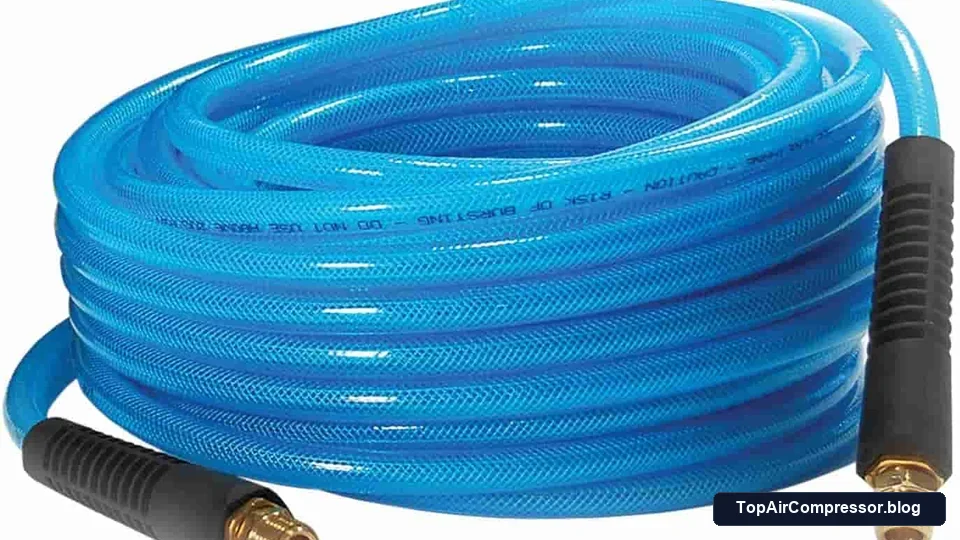
Conversely, standard polyvinyl chloride utilizes plasticizers for initial flexibility. Over time, as detailed in our comprehensive air hose guide, these chemical additives leach out, causing the material to stiffen rapidly in demanding environments.
Polyurethane utilizes a thermoplastic elastomer matrix featuring urethane linkages, offering superior elongation recovery. In contrast, polyvinyl chloride relies on rigid polymer chains softened with plasticizers that eventually leach out.
This molecular difference dictates chemical resilience. Polyurethane resists petroleum oils and solvents effectively, whereas standard PVC degrades rapidly when exposed to aggressive hydrocarbon fluids found in automotive shops.
- Thermoplastic polyurethane elastomer base
- Plasticizer-dependent PVC formulation
- Different rates of chemical breakdown
Polymer Chemistry Comparison
Polyurethane molecular chains allow superior memory retention and stretch capability. This engineering design ensures the hose returns to its original shape after severe pulling.
PVC relies on a rigid compound matrix softened by artificial plasticizers. When exposed to continuous UV radiation, this matrix degrades faster than polyurethane.
- Superior memory retention in polyurethane
- UV degradation vulnerability in PVC
Flexibility and Temperature Extremes
Operating pneumatic tools in freezing winter conditions demands reliable equipment. Pairing flexible lines with our retractable air hose reel picks ensures your shop setup maintains outstanding flexibility even when temperatures drop significantly.
PVC hoses tend to become rigid and unmanageable in cold weather. This stiffness makes coiling difficult and increases the risk of cracking under pressure.
Temperature fluctuations severely impact hose performance. Polyurethane maintains remarkable flexibility down to minus 40 degrees Fahrenheit, whereas standard PVC stiffens significantly below freezing, creating severe coiling memory issues.
High heat environments also expose structural vulnerabilities. While polyurethane safely tolerates continuous operation up to 150 degrees Fahrenheit, cheap PVC softens and risks ballooning failure under rated working pressure.
- Sub-zero pliability for polyurethane
- Cold-weather stiffness for PVC
Thermal Performance Analysis
Thermal ratings dictate where you can safely deploy your compressed air lines. Polyurethane handles sub-zero climates without losing its structural integrity.
Standard PVC loses flexibility rapidly once ambient readings dip below freezing. Mechanics must handle PVC carefully during winter months to avoid damage.
- Wide thermal operating window
- Winter handling precautions for PVC
Weight, Handling, and Ergonomics
Ergonomic considerations significantly impact operator fatigue during long shifts in busy automotive shops. Polyurethane is noticeably lighter than traditional PVC, reducing arm strain.
Heavy PVC lines drag awkwardly across rough concrete floors and catch on sharp corners. Technicians frequently prefer polyurethane for maneuverability in tight bays.
Operator fatigue directly correlates with equipment weight. Polyurethane hoses are exceptionally lightweight, reducing arm strain during overhead framing or continuous automotive assembly tasks where constant movement is required.
Conversely, traditional PVC options feature heavier wall constructions. This added mass increases drag resistance across rough concrete floors, complicating jobsite maneuvering and increasing daily operator fatigue indices.
- Reduced operator fatigue with polyurethane
- Increased drag resistance from heavy PVC
Daily Shop Mobility
Automotive technicians benefit greatly from exploring our best polyurethane air hose guide to find lightweight lines that glide smoothly across rough shop floors while minimizing frustrating friction against vehicles.
PVC tends to grip concrete and twist into stubborn knots during high-speed tasks. This requires constant untangling by busy workshop technicians.
- Smooth floor gliding characteristics
- Knotting tendencies in rubberized PVC
Durability, Kink Resistance, and Abrasion
Jobsite durability dictates how often you must replace damaged pneumatic distribution lines. Polyurethane resists abrasions and punctures far better than standard PVC variants.
Kink formation restricts airflow and starves pneumatic impact wrenches of vital operating pressure. While PVC kinks easily and retains memory bends, polyurethane bounces back.
Surface wear resistance dictates total operational longevity. Polyurethane features an inherently tough outer skin that resists sharp abrasions, outlasting standard PVC lines exposed to coarse aggregates on construction sites.
Kink recovery represents another critical engineering distinction. High-grade polyurethane snaps back instantly after being stepped on, whereas PVC frequently develops permanent kinks that permanently restrict airflow volume.
- High puncture resistance in polyurethane
- Persistent kinking issues in PVC
Wear and Tear Resistance
Industrial environments expose lines to sharp metal shavings and heavy foot traffic. Polyurethane withstands these harsh physical abuses remarkably well.
PVC scratches and punctures more easily under similar mechanical stress parameters. Contractors usually choose reinforced polyurethane for rugged outdoor jobsites.
- Metal shaving tolerance
- Reinforced exterior options
Pressure Ratings and Flow Efficiency
Internal diameter consistency directly affects the volumetric flow rate delivered to your air tools. Polyurethane hoses maintain stable inner dimensions under maximum working pressure.
Budget PVC lines can expand slightly under high heat and pressure, reducing tool torque. Engineers carefully evaluate burst pressure ratings to ensure safety.
Internal diameter consistency directly controls pneumatic tool efficiency. Polyurethane maintains stable inner diameters under peak loads, minimizing pressure drop across long hose runs powering heavy impact wrenches.
Burst pressure thresholds demand careful engineering verification. Reinforced PVC handles standard shop pressures adequately, but premium polyurethane delivers higher burst safety margins for demanding industrial applications.
- Stable internal diameter maintenance
- Volumetric flow rate preservation
Pneumatic Tool Output
Consistent pressure delivery ensures pneumatic grinders and ratchets perform at peak capacity. Polyurethane prevents pressure drops over long distances.
PVC expansion under load can starve high-demand air tools of necessary CFM delivery. Professional setups require strict volumetric consistency.
- CFM delivery optimization
- Tool torque consistency
Cost Analysis and Expected Lifespan
Initial capital expenditure often tempts buyers toward cheaper thermoplastic alternatives. PVC costs significantly less upfront, making it attractive for budget-conscious hobbyists.
However, polyurethane provides a much lower total cost of ownership through extended service life. Professional contractors save money by avoiding frequent replacements.
Initial capital expenditure heavily favors economy solutions. PVC hoses offer an inexpensive entry point for hobbyists, though frequent replacements offset initial savings over standard operating lifecycles.
Long-term value calculations favor advanced synthetic materials. Polyurethane requires a larger upfront investment but delivers exceptional longevity rewards that reduce total equipment downtime for professional contractors.
- Low initial price point for PVC
- Extended service life for polyurethane
Long-Term Value Evaluation
Calculating long-term value requires factoring replacement frequency into your budget. Polyurethane outlasts PVC by several years in professional settings.
Hobbyists requiring only occasional garage use may find PVC replacement costs negligible. Commercial operations benefit from investing in premium polyurethane lines.
- Replacement frequency metrics
- Commercial investment returns
Best Applications for Each Hose Type
Matching the hose to your specific operational environment prevents premature equipment failure. Polyurethane excels in professional auto body shops, roofing, and frigid outdoor conditions.
PVC serves adequately inside climate-controlled workshops where heavy pulling and sub-zero temperatures never occur. Woodworking hobbyists often find PVC matches their workload.
Matching material traits to specific trades ensures optimal productivity. Polyurethane excels in finishing carpentry, paint spraying, and mobile service trucks where tight spaces demand superior bend radii.
Conversely, consult our air compressor hose picks if you need budget-friendly PVC for stationary garage setups where temperature extremes and heavy abrasion are entirely absent from your daily shop tasks.
- Professional auto body applications
- Climate-controlled hobby workshops
Target User Profiles
Professional contractors and assembly line operators demand maximum reliability from pneumatic accessories. Polyurethane satisfies these rigorous daily performance demands.
Weekend DIYers working on light inflation tasks do not require industrial-grade durability. PVC provides an affordable solution for casual garage projects.
- Contractor performance requirements
- Weekend DIY suitability
Frequently Asked Questions
Which material handles sub-zero winter temperatures more effectively?
Polyurethane remains exceptionally flexible in harsh freezing winter environments because its advanced thermoplastic elastomer construction actively resists the severe stiffening forces that commonly plague lower-tier professional pneumatic polymers.
In direct contrast, standard PVC compounds harden quite rapidly and fracture very easily when subjected to sub-zero temperatures during demanding outdoor construction and heavy automotive service operations.
Why does PVC cost less than polyurethane air hose options?
PVC manufacturing utilizes cheaper raw chemical compounds and straightforward extrusion processes that reduce initial production overhead for manufacturers. Conversely, polyurethane requires complex thermoplastic elastomer formulations that increase material costs while delivering superior tear resistance and extended lifespan.
Do polyurethane hoses kink as easily as standard PVC lines?
Polyurethane possesses superior memory recovery properties that allow the hose to spring back into shape immediately after accidental pinching or pulling. Standard PVC easily retains permanent kinks that permanently restrict internal airflow to your valuable pneumatic tools.
Is polyurethane noticeably lighter than traditional PVC air hoses?
Polyurethane is significantly lighter than standard PVC, which substantially reduces operator fatigue during overhead automotive assembly and framing tasks. Heavy PVC lines create unnecessary drag across rough floors and increase physical strain during long work shifts.
Can I use PVC hoses for professional auto body repair shops?
PVC is generally unsuitable for high-demand professional auto body environments because it lacks the necessary abrasion resistance and flexibility. Professional shops should select polyurethane to withstand harsh chemicals, heavy foot traffic, and extreme working conditions.