Polyurethane vs. Rubber Air Hose: Which Fits Your Setup Better?
Polyurethane lines offer lightweight flexibility for indoor workshops, while heavy-duty rubber hoses deliver unmatched abrasion resistance and thermal stability for rugged job sites. Choosing the right pneumatic umbilical impacts daily productivity.

Choose polyurethane for nimble indoor trim work where weight matters, but deploy rubber for demanding industrial yards requiring high heat tolerance and maximum durability.
Compare all top models in our Best Air Compressor: Top Picks for Every Garage & Roadside.
Side-by-Side Breakdown
| Criteria | Polyurethane | Rubber Air Hose | Edge |
|---|---|---|---|
| Peak Performance & Output | High CFM delivery | Stable volumetric flow | Polyurethane |
| Duty Cycle & Consistency | Maintains flexibility | Withstands high heat | Rubber Air Hose |
| Operating Noise & Vibration | Low flow turbulence | Dampens pulsations | Rubber Air Hose |
| Portability & Footprint | Extremely lightweight | Heavier bulkier coil | Polyurethane |
| Maintenance & Service Life | Prone to sharp punctures | Resists job site abuse | Rubber Air Hose |
| Power Requirements | Minimizes pressure drops | Standard friction losses | Polyurethane |
| Best Ideal Use-Case | Indoor finish carpentry | Automotive repair bays | Split Decision |
Material Composition and Engineering Foundations
Modern pneumatic networks rely heavily on specialized hose chemistries to maintain consistent airflow and structural integrity under high operational pressures. Engineers evaluate tensile strength alongside elongation metrics to predict long-term performance.
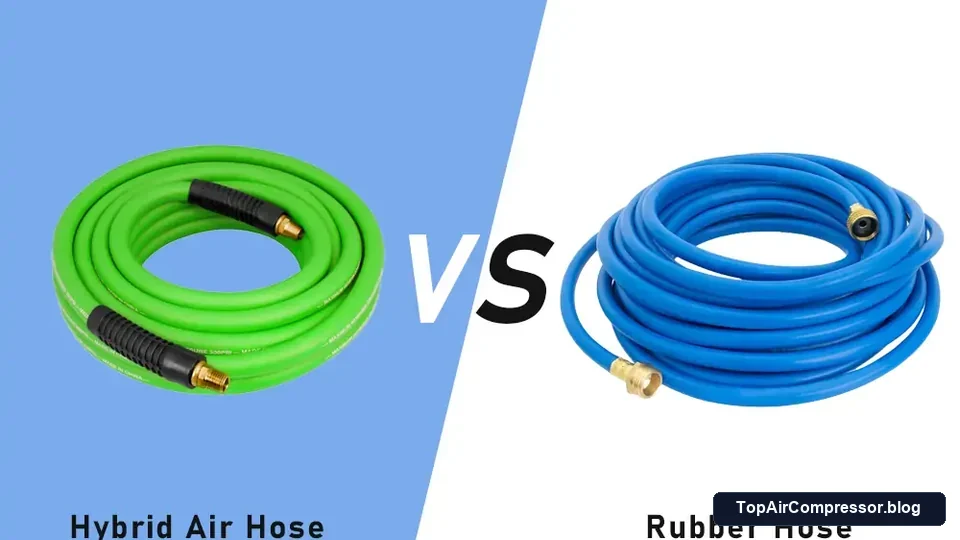
Thermoplastic polyurethane utilizes advanced polymer chains that resist kinking while maintaining an exceptionally low weight profile. This molecular structure allows for thin walls that maximize internal diameter without increasing outer dimensions.
Synthetic rubber hoses incorporate multi-ply fabric reinforcement sandwiched between heavy-duty elastomer layers. This traditional construction absorbs severe mechanical shock and provides superior resistance to weld slag and sharp aggregate edges.
Polyurethane hoses rely on thermoplastic ester- or ether-based polyurethanes, offering exceptional tensile strength and chemical resistance. Ether-based variants resist hydrolysis in humid environments, preventing premature polymer chain degradation over time.
Traditional rubber pneumatic lines utilize heavy-duty synthetic or natural elastomers reinforced with polyester or braided cotton cords. This robust multi-ply construction absorbs severe mechanical shock, but adds significant dead weight to daily tool setups.
Molecular density dictates how each material reacts under constant pressure cycles and dynamic loading. Polyurethane maintains a rigid molecular matrix, whereas rubber flexes elastically, yielding distinct trade-offs in long-term dimensional stability across fluctuating thermal ranges.
- Advanced thermoplastic polymers provide exceptional kink resistance while maintaining a remarkably lightweight profile for effortless handling during intricate indoor finish carpentry and trim work.
- Reinforced synthetic rubber constructions deliver superior structural integrity and mechanical shock absorption across demanding industrial outdoor job sites where heavy physical abuse is completely normal.
Polymer Chemistry Versus Elastomers
Evaluating polymer chemistry helps technicians understand how environmental exposure degrades different materials over extended cycles. Reviewing options featured in our best air hose for air compressor list clarifies these performance distinctions.
Thermoplastics soften slightly at elevated temperatures, whereas cured rubber maintains dimensional stability across a much wider thermal operating window.
- Thermoplastic materials soften at higher temperatures.
- Cured elastomer compounds maintain thermal stability.
Performance and Real-World Output Metrics
Air delivery efficiency dictates how effectively pneumatic tools operate at the end of a long supply line under maximum load. Selecting options from our comprehensive best air hose guide helps prevent severe pressure drops.
Polyurethane hoses feature ultra-smooth interior walls that reduce frictional losses, ensuring higher CFM delivery to demanding nailers and impact wrenches. Internal friction reduction directly enhances overall system efficiency.
Rubber lines exhibit slightly higher internal resistance due to textured reinforcement layers, yet their thick walls prevent catastrophic ballooning during sudden pressure spikes. Volumetric stability remains a key engineering advantage.
Internal diameter tolerances directly influence pneumatic tool efficiency, CFM delivery, and pressure drop over long runs. Polyurethane maintains a smoother inner lumen wall, reducing frictional turbulence compared to porous rubber interior surfaces.
Rubber hoses excel at handling high-volume intermittent surges without excessive expansion or ballooning under load. Their thick walls dampen pressure spikes, safeguarding downstream regulators from sudden hydraulic shock during heavy impact wrench usage.
Flow capacity calculations must factor in inner diameter constriction when selecting fittings and quick-disconnect couplers. Even minor reductions in effective bore size can starve high-demand grinders of crucial operating CFM at the jobsite.
- Smooth interior polyurethane channels significantly reduce internal friction losses to guarantee maximum CFM delivery for high-demand pneumatic fastening tools on active jobs.
- Thick rubber wall designs prevent dangerous volumetric expansion during sudden pressure spikes, ensuring stable output for heavy rotary hammers and grinders.
Build Quality, Maintenance and Durability Analysis
Job site durability depends on a hose's ability to withstand being dragged across concrete, exposed to UV radiation, and run over by heavy vehicles. Preventive maintenance schedules vary significantly between materials.
Polyurethane resists oil and grease exceptionally well, but sharp metal shards can puncture thin outer walls if proper routing guidelines are ignored. Field repairs often require complete section replacement.
Rubber hoses tolerate extreme physical abuse, oil contamination, and direct contact with hot soldering equipment without suffering catastrophic structural failure. Heavy-duty abrasion resistance makes rubber the preferred choice outdoors.
Inspecting outer jackets for abrasion wear prevents unexpected blowouts during critical shop operations. Polyurethane resists cuts and oil degradation exceptionally well, while rubber withstands hot weld spatter far better than standard thermoplastics.
Routine maintenance requires checking swivel fittings, crimped ferrules, and bend restrictors for signs of fatigue. Rubber lines benefit from periodic cleaning with mild soap to remove grease, preventing premature rubber dry rot.
Storage techniques significantly extend operational lifespan regardless of the chosen hose material. Avoiding tight coil radiuses and keeping lines out of direct sunlight prevents ultraviolet polymer degradation in outdoor automotive service environments.
- Polyurethane hoses resist oils and greases effectively but require careful routing to avoid punctures from sharp metallic debris on concrete floors.
- Rubber air lines withstand direct exposure to hot welding slag and heavy vehicle traffic without suffering catastrophic failures in harsh industrial environments.
Flexibility, Ergonomics and Cold Weather Behavior
Operator fatigue increases dramatically when handling stiff pneumatic lines in freezing temperatures or tight framing environments during winter construction projects. Ergonomic hose design directly influences daily output.
Polyurethane remains remarkably flexible even when ambient temperatures drop below freezing, eliminating the frustrating memory coil effect common in lesser thermoplastics. Low-temperature flexibility reduces strain on wrists.
Standard rubber hoses stiffen noticeably in cold weather, becoming cumbersome to coil and store at the end of a long shift on outdoor commercial masonry jobs.
Sub-freezing temperatures challenge pneumatic setup flexibility by stiffening standard polymer and rubber compounds. Premium polyurethane maintains high pliability down to minus forty degrees, preventing the frustrating memory coil effect common in cheaper lines.
Ergonomic strain accumulates quickly when operators drag heavy rubber lines across concrete floors all day. Lightweight polyurethane drastically reduces wrist fatigue, though its tendency to snag on sharp corners requires careful routing habits.
Thermal coefficient properties dictate how dramatically a hose expands or contracts when ambient temperatures shift. Operators must account for these dimensional changes when sizing lengths for precision assembly line pneumatic drop stations.
- Flexible polyurethane chemistries prevent the frustrating memory coil effect in freezing temperatures, reducing physical wrist strain for busy framing crews.
- Traditional rubber lines stiffen significantly during cold weather operations, requiring extra manual effort to uncoil and store properly after shifts.
Noise, Pressure Drop and Pneumatic Efficiency
Pneumatic system noise often stems from turbulent airflow caused by restricted fittings or collapsed inner liners inside aging distribution assemblies. Smooth bores mitigate high-frequency whistling sounds.
Polyurethane maintains a consistent inner diameter through tight bends, minimizing turbulence and maintaining steady downstream pressure for precision finishing operations. Flow consistency prevents tool starvation.
Rubber hoses absorb compressor pulsations more effectively, dampening harmonic vibrations before they reach sensitive pneumatic gauges and expensive assembly line tools daily.
While traditional rubber excels at heavy vibration dampening, many modern facilities compare these metrics against our best polyurethane air hose guide to balance overall weight and operational flexibility.
Pressure drop accumulates over distance due to friction against the inner walls of the tubing. Utilizing a slightly larger inner diameter mitigates restriction, ensuring optimal tool torque delivery at the furthest workstation connection.
Minimizing connector restriction is just as vital as choosing the correct hose material and diameter. High-flow industrial quick couplers prevent unnecessary flow restriction, maximizing overall pneumatic system efficiency and compressor duty cycle longevity.
- Maintained inner dimensions through sharp bends effectively prevent high-frequency whistling and turbulent airflow in modern polyurethane distribution setups.
- Thick elastomer walls absorb severe compressor harmonic vibrations before they reach sensitive pneumatic gauges and expensive assembly line tools.
Safety Standards and Burst Pressure Ratings
Occupational safety regulations mandate strict burst pressure safety factors, typically requiring a four-to-one ratio against maximum working pressure ratings across all commercial pneumatic lines.
Polyurethane lines achieve high working pressures with thinner walls, but operators must inspect them regularly for deep gouges that compromise structural reinforcement integrity.
Rubber assemblies offer a high margin of safety against accidental over-pressurization, providing visible warning blisters before experiencing a total structural blow out. Burst safety margins protect technicians.
Industry safety protocols mandate a strict four-to-one safety factor between working pressure and ultimate burst pressure. Standard professional hoses typically feature a three hundred PSI maximum working rating with twelve hundred PSI burst limits.
OSHA regulations require proper whip hoses and secure mechanical clamps to prevent hazardous flailing during failures. Polyurethane fails cleanly with minimal whipping action, whereas heavy rubber can store immense stored kinetic energy under rupture.
Temperature derating factors must be applied when operating pneumatic lines in elevated thermal environments. Exceeding manufacturer temperature thresholds drastically reduces the safe working pressure threshold, creating severe workplace safety liabilities for facility managers.
- High working pressure thresholds in thin-walled polyurethane demand frequent visual inspections for deep gouges compromising overall structural safety.
- Generous safety factors in multi-ply rubber assemblies provide clear visible warning blisters before experiencing total blowout under high pressure.
Which Option Fits Your Specific Workload
Selecting the ideal pneumatic line requires analyzing your specific working environment, climate conditions, and tool demands. For demanding stationary shop applications, consult our best rubber air hose roundup to ensure maximum durability.
Trim carpenters, cabinet makers, and mobile service technicians benefit immensely from the lightweight agility and snag resistance of high-grade polyurethane air lines.
Auto body shops, heavy construction crews, and industrial manufacturing plants rely on durable rubber hoses to withstand relentless daily abuse and harsh chemical exposures.
Mobile technicians and finish carpenters benefit immensely from lightweight, kink-resistant polyurethane setups. Their exceptional abrasion resistance and low weight make them ideal for rapid site deployment and overhead nailing applications.
Heavy-duty automotive shops and fabrication facilities demand the rugged resilience of reinforced rubber lines. Their superior resistance to welding sparks and crushing loads ensures long-term reliability in harsh industrial environments.
Assessing daily usage patterns, environmental hazards, and tool air volume requirements guides the final selection process. Balancing initial setup costs against projected lifespan guarantees maximum operational value for your maintenance budget.
- Choose lightweight polyurethane for indoor trim carpentry where reduced operator weight and superior snag resistance significantly improve daily productivity.
- Deploy heavy-duty rubber hoses in busy automotive repair bays and construction yards requiring maximum abrasion resistance and heat tolerance.
Frequently Asked Questions
Can I use a polyurethane hose in cold winter weather?
Yes, high-grade polyurethane engineered with advanced thermoplastic formulations remains remarkably flexible in sub-freezing environments without stiffening up or developing stubborn memory coils.
This exceptional cold-weather pliability prevents operator fatigue and ensures your pneumatic tools receive consistent airflow even during harsh winter construction projects across demanding northern job sites without fail.
Why do professional mechanics prefer heavy-duty rubber air hoses?
Professional mechanics heavily prefer traditional rubber air lines because they withstand continuous exposure to hot automotive fluids, sharp metal debris, and heavy shop traffic throughout the day.
Their thick multi-ply construction provides outstanding durability against accidental crushing while effectively dampening intense pneumatic tool vibrations during demanding daily service tasks across busy automotive repair facilities.
How do pressure drops compare between polyurethane and rubber?
Polyurethane hoses feature remarkably smooth interior walls that minimize internal friction losses, delivering higher CFM output to demanding tools at a distance.
Rubber lines have slightly textured reinforcements that marginally increase resistance, yet their overall performance remains exceptionally reliable across standard commercial pressure ranges and long service intervals in various professional industrial workshops.
Which air hose material lasts longer in outdoor environments?
Heavy-duty rubber air hoses generally outlast polyurethane when subjected to intense ultraviolet radiation, abrasive concrete surfaces, and constant dragging across rough terrain outdoors.
While polyurethane excels indoors, robust rubber elastomer compounds resist environmental degradation much better over extended years of punishing construction site deployment under severe weather conditions without losing structural integrity.
Are polyurethane hoses easy to repair if damaged?
Polyurethane lines are generally difficult to patch in the field because their thin walls and slick exterior coatings do not accept standard compression fittings well.
When a polyurethane hose suffers a puncture, technicians typically replace the entire damaged section or install permanent splice barbs with heavy-duty crimped metal ferrules for safety compliance.