Rolair vs. Makita Air Compressor: Which Fits Your Setup Better?
Choosing the right pneumatic tool partner requires evaluating heavy-duty jobsite durability against high-efficiency motor engineering. We examine Rolair and Makita units to guide your professional investment.

Rolair dominates rugged industrial endurance for framing crews, whereas Makita excels in lightweight mobility and quiet operation. Choose Rolair for raw jobsite abuse or Makita for agile interior finishing work.
Compare all top models in our Best Air Compressor: Top Picks for Every Garage & Roadside.
Side-by-Side Breakdown
| Criteria | Rolair | Makita Air Compressor | Edge |
|---|---|---|---|
| Peak Performance & Output | High sustained CFM delivery | Rapid pressure recovery cycles | Rolair |
| Duty Cycle & Consistency | Heavy continuous load survival | Optimized intermittent cycle efficiency | Rolair |
| Operating Noise & Vibration | Higher industrial decibel output | Low-decibel interior engineering | Makita |
| Portability & Footprint | Rugged heavy-gauge steel frames | Lightweight compact roll-cages | Makita |
| Maintenance & Service Life | Splash-lubricated cast-iron pumps | Maintenance-free oil-free designs | Rolair |
| Power Requirements | High-torque induction motors | Brushless efficient universal motors | Makita |
| Best Ideal Use-Case | Framing and exterior roofing | Finish carpentry and trim tasks | Split |
Architectural Engineering and Mechanical Design Foundations
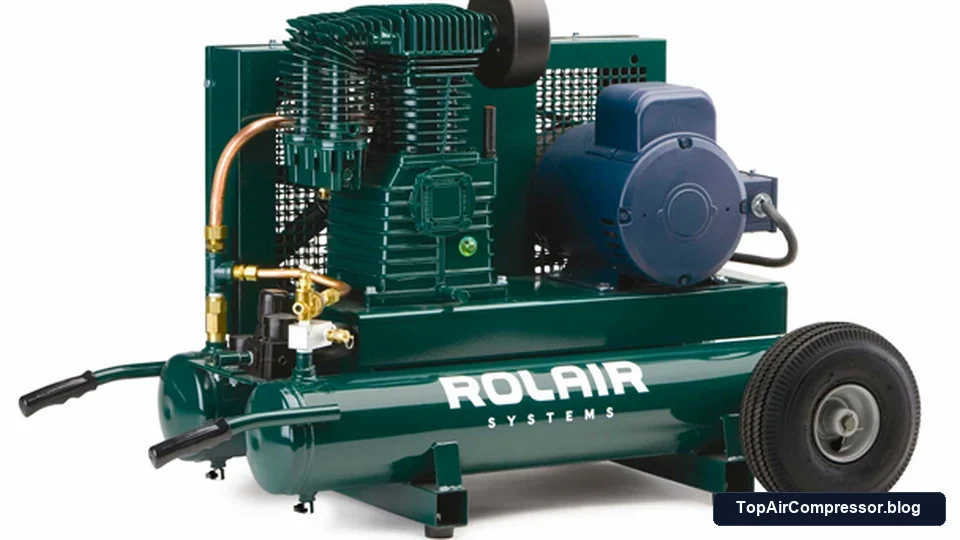
Selecting professional pneumatic equipment demands a close look at internal mechanical engineering. Rolair typically builds heavy cast-iron pumps designed for multi-decade survival on demanding commercial jobsites.
Conversely, engineering teams at Makita prioritize advanced motor tech and lightweight alloys. Our Makita 5200 air compressor review details how this philosophy reduces operator fatigue during transport.
Both manufacturers utilize rigorous quality control standards, yet their target demographics diverge sharply. Understanding these foundational design choices dictates long-term equipment reliability.
- Heavy cast-iron pump blocks
- Advanced brushless motor configurations
- Divergent engineering target demographics
Pump Construction and Materials
Rolair pump blocks utilize thick-walled cast iron to maximize thermal mass. This material resists warping during continuous high-pressure cycles under heavy jobsite demands.
Makita often pairs aluminum cylinder blocks with cast-iron sleeves. This hybrid approach slashes dead weight while maintaining vital cylinder wear resistance over thousands of hours.
- Thick-walled cast iron construction
- Hybrid aluminum and iron sleeves
Motor Efficiency and Power Delivery
Industrial low-RPM induction motors drive Rolair units with massive torque reserves. These motors handle severe voltage drops on long extension cords far better than smaller alternatives.
Makita favors high-efficiency universal or brushless DC motors spinning at higher speeds. They extract maximum pneumatic output from standard 15-amp household electrical circuits safely.
- High-torque low-RPM induction motors
- High-efficiency universal or brushless setups
Pneumatic Output and Delivery Characteristics
Assessing pure volumetric output requires examining cubic feet per minute ratings across operating pressures. Rolair compressors consistently deliver sustained CFM figures for demanding framing nailers.
Makita units optimize quick recovery times to keep finish carpenters moving efficiently. Their pump designs prioritize rapid pressure restoration over massive continuous storage capacities.
Evaluating your specific tool air consumption helps prevent costly pressure drops. Matching CFM delivery prevents tool starvation during rapid-fire fastening sequences on site.
- Sustained CFM delivery for framing
- Rapid pressure recovery for finish work
- Prevention of costly tool starvation
CFM Flow Rates at Standard Pressures
Operating at ninety PSI reveals distinct volumetric efficiencies between these competing brands. Rolair models often push higher volumes to sustain multiple framing nailers simultaneously.
Makita engineering concentrates on single-user efficiency at standard working pressures. Their pumps match the exact demands of brad nailers and staplers without unnecessary energy waste.
- High volume output at ninety PSI
- Targeted efficiency for single users
Recovery Times Under Heavy Loads
Tank depletion tests measure how fast a compressor rebuilds pressure from empty. Rolair recovery cycles emphasize robust thermal shedding during marathon nailing operations.
Makita relies on high-velocity pump strokes to cut tank refill times significantly. Electric motors spool up rapidly, minimizing downtime between heavy fastening bursts.
- Robust thermal shedding during recovery
- High-velocity pump stroke refills
Jobsite Portability and Ergonomic Footprints
Maneuvering heavy equipment across uneven terrain tests the limits of jobsite mobility. Makita compressors generally offer lighter overall weights and compact roll-cage configurations.
Rolair designs often feature heavier-gauge steel frames and solid construction that prioritize impact resistance. Transporting these units requires lifting strength but guarantees frame integrity.
Balancing weight reduction against structural armor is a permanent engineering compromise. Selecting your unit depends on whether you value carrying ease or impact survival.
- Lighter overall weight profiles
- Heavy-gauge steel impact resistance
- Engineering trade-offs in portability
Weight Distribution and Center of Gravity
Ergonomic carrying handles placed near the balance point reduce strain during single-handed transport. Makita excels at centering the load for comfortable stair climbing.
Rolair units often feature wider stances and balanced wheelbarrow handles to ease movement. Their greater total mass requires thoughtful loading techniques into service vehicles.
- Optimized single-handed carrying handles
- Balanced wheelbarrow handle configurations
Frame Protection and Roll-Cage Design
Protective steel roll cages shield critical components from falling debris and rough handling. Rolair uses heavy-gauge tubing that absorbs direct impact without transferring force.
Makita employs reinforced composite shrouds alongside tubular steel to save crucial pounds. This smart protection strategy defends vulnerable gauges and regulators from accidental drops.
- Heavy-gauge steel tubing protection
- Reinforced composite shroud defenses
Acoustic Profiles and Vibration Management
Working inside finished residential properties makes acoustic output a primary equipment selection factor. Quiet Makita models utilize low-decibel engineering to protect professional hearing.
Industrial Rolair compressors generate higher decibel levels due to their heavy mechanical components. Contractors working outdoors will appreciate their uncompromising power delivery despite the noise.
Effective vibration dampening prevents compressors from walking across smooth concrete floors. Both brands incorporate robust rubber isolation feet to absorb destructive mechanical resonance.
- Low-decibel interior operation
- Higher decibel industrial output
- Rubber isolation foot dampening
Decibel Ratings in Closed Spaces
Operating loud machinery in occupied homes creates immediate complaints from clients and occupants. Makita low-noise variants let you work indoors without disturbing surrounding tenants.
Rolair units generate the classic roar of heavy-duty industrial pneumatic machinery. Ear protection remains mandatory when running these powerful commercial units in close quarters.
- Client-friendly low decibel levels
- Industrial roar requiring ear protection
Rubber Isolation Feet and Dampening
Excessive vibration loosens fittings and accelerates internal wear over time. As noted in our Makita MAC2400 review, heavy-duty rubber feet absorb kinetic energy, keeping the compressor firmly anchored.
Makita uses specially formulated elastomeric mounts to isolate the pump assembly effectively. This engineering choice reduces structural vibration transferred to your vehicle bed.
- Kinetic energy absorbing rubber feet
- Elastomeric pump assembly mounts
Maintenance Protocols and Long-Term Service Life
Maximizing operational lifespan requires adhering to strict preventative maintenance schedules consistently. Rolair oil-lubricated pumps demand regular oil changes to ensure maximum longevity.
Many Makita units feature oil-free pump designs that eliminate routine fluid changes entirely. This maintenance simplicity appeals to busy contractors with minimal time for upkeep.
Field serviceability separates professional-grade equipment from disposable hardware store alternatives. Both brands supply readily available replacement parts for rebuilding worn components.
- Regular oil change requirements
- Maintenance-free oil-free pump designs
- Readily available replacement parts
Valve Maintenance and Oil Changes
Cast-iron splash-lubricated pumps require periodic oil checks and full fluid replacements annually. Clean oil protects critical cylinder walls from premature scoring and excessive wear.
Oil-free PTFE coated rings eliminate fluid maintenance but wear out faster under heavy continuous loads. Contractors must weigh convenience against eventual component replacement intervals.
- Annual splash-lubricated fluid changes
- PTFE coated ring wear considerations
Belt Tensioning and Component Access
Belt-driven Rolair configurations require occasional tension adjustments and guard removals. Easy access panels simplify this routine chore for maintenance technicians on site.
Direct-drive Makita units eliminate belts entirely, reducing potential failure points significantly. This direct coupling transfers motor energy straight to the compression cylinders efficiently.
- Belt tension adjustment requirements
- Direct-drive elimination of belts
Thermal Regulation and Duty Cycle Performance
Generating high-pressure air produces intense heat that can destroy internal pump components. Rolair thermal management relies on massive cast-iron cooling fins and generous airflow.
Makita integrates precision cooling fans directly into the motor housing. You can examine these thermal features closely in our Makita 5.2 gallon air compressor review for detailed metrics.
Monitoring duty cycles prevents catastrophic thermal overloads during peak summer construction seasons. Proper heat dissipation guarantees reliable performance throughout long working days.
- Massive cast-iron cooling fins
- Precision armature cooling fans
- Prevention of thermal overloads
Cooling Fin Geometries and Airflow
Deeply etched cooling fins on Rolair pumps maximize surface area exposure to ambient air. Natural convection drafts carry heat away from critical compression chambers efficiently.
Makita shroud designs channel high-velocity air streams directly over cylinder heads. This forced cooling offsets the smaller thermal mass of aluminum components.
- Maximized surface area cooling fins
- High-velocity forced air shrouds
Thermal Overload Protection Systems
Automatic thermal breakers shut down the motor before internal windings sustain permanent heat damage. Both brands integrate reliable reset switches to protect your investment.
Operating in extreme ambient temperatures tests these safety cutoffs frequently. Ensuring adequate ventilation around your compressor prevents nuisance shutdowns during critical tasks.
- Automatic thermal breaker shutdowns
- Reliable manual reset switches
Real-World Application Matching for Trades
Selecting the correct machine depends entirely on your specific daily trade requirements. Framing and roofing contractors need the sustained volume that Rolair reliably provides.
Finish carpenters and cabinet installers benefit from Makita portability and quiet operation. Matching equipment capabilities to your workload prevents costly inefficiencies on job sites.
Investing in professional pneumatic gear pays dividends through years of uninterrupted service. We suggest evaluating your daily air consumption before reading our Makita Mac700 air compressor review to choose correctly.
- Framing and roofing volume demands
- Finish carpentry portability needs
- Investment value through service life
Framing and Roofing Workloads
Driving hundreds of heavy framing nails strains lesser compressors beyond their design limits. Rolair heavy-duty tanks and pumps handle demanding framing schedules effortlessly.
Roofers working on steep pitches require reliable air delivery in harsh outdoor environments. Rugged frame construction withstands rough treatment on elevated scaffolding.
- Heavy framing nail drive capacity
- Elevated scaffolding ruggedness
Finish Carpentry and Trim Tasks
Interior trim work demands precision pressure regulation and minimal operating noise. Makita compressors deliver clean, oil-free air that protects expensive custom millwork finishes.
Transporting compact units up multiple flights of stairs preserves technician energy for installation work. Lightweight engineering directly enhances daily productivity in finish trades.
- Precision interior trim regulation
- Stair climbing weight advantages
Power Requirements and Electrical Compatibility
Jobsite electrical supplies frequently fluctuate, testing the electrical tolerance of professional compressors. Rolair induction motors tolerate voltage sags exceptionally well without stalling out.
Makita engineered electronics manage power surges cleanly to protect sensitive internal components. Understanding your power source ensures seamless operation on remote building sites.
Matching compressor amp draws to generator capacities prevents tripped breakers and electrical faults. Proper planning avoids frustrating delays during critical construction milestones.
- Voltage sag tolerance on long cords
- Surge management in electronics
- Generator capacity matching
Generator Compatibility on Remote Sites
Running equipment off portable jobsite generators requires stable startup amperage thresholds. Rolair induction motors manage initial startup loads reliably with proper generator sizing.
Makita units feature low initial draw profiles that integrate smoothly with smaller portable generators. This compatibility helps remote crews maintain productivity away from grid power.
- Startup amperage threshold management
- Small portable generator compatibility
Extension Cord Voltage Drop Tolerance
Long extension cords cause voltage drops that can overheat and ruin electric motors. Heavy-duty Rolair windings resist heat accumulation during extended cord runs.
Makita motor safeguards protect against low voltage conditions by tripping cleanly before damage occurs. Always use properly gauged copper cords to maintain peak performance.
- Extension cord heat accumulation resistance
- Protective low voltage trip features
Frequently Asked Questions
Which brand offers better durability for heavy framing crews?
Rolair compressors generally provide superior longevity for demanding framing applications due to their heavy-duty cast-iron pumps and robust industrial build quality.
Rolair remains the ultimate choice for professional framing contractors who subject their equipment to harsh daily jobsite abuse, multi-tool operations, and continuous high-pressure cycles across rugged commercial construction environments.
Are Makita air compressors better for interior finish carpentry?
Makita air compressors excel in interior finish carpentry because they offer exceptional lightweight portability, compact footprints, and remarkably quiet operating decibel levels.
Makita is the ideal partner for professional finish carpenters working inside occupied residential homes where low noise emissions and effortless stair transport matter most for daily productivity.
Do Rolair compressors require more maintenance than Makita units?
Rolair units often feature splash-lubricated cast-iron pumps that demand periodic fluid changes and routine filter upkeep to guarantee maximum operational service life.
Conversely, Makita oil-free models eliminate fluid maintenance entirely, making them highly convenient for busy contractors who prefer minimal equipment upkeep.
How do the noise levels compare between Rolair and Makita?
Makita engineering places a heavy emphasis on low-decibel operation, making their specialized units significantly quieter than traditional industrial pneumatic alternatives.
Makita wins clearly on acoustics for sensitive indoor jobs, whereas Rolair prioritizes raw pneumatic power over quiet operation in outdoor settings.
Which brand provides better value for general contractors?
General contractors must carefully weigh heavy-duty framing endurance against agile mobility when selecting between these two reputable professional brands. Rolair delivers superior long-term value for rugged exterior construction, while Makita offers unmatched value for agile interior remodeling and trim work.