Rubber vs. Hybrid Air Compressor Hose: Which Fits Your Setup Better?
Choosing the right pneumatic conduit dictates pneumatic efficiency and site safety. Evaluate the structural resilience of traditional rubber against modern polymer hybrid alternatives under jobsite demands.

Traditional rubber remains unmatched for abrasive industrial environments and high-heat welding sparks. Conversely, hybrid polymer hoses deliver superior flexibility and lighter weight for mobile automotive and general contracting tasks.
Compare all top models in our Best Air Compressor: Top Picks for Every Garage & Roadside.
Side-by-Side Breakdown
| Criteria | Rubber | Hybrid Air Compressor Hose | Edge |
|---|---|---|---|
| Peak Performance & Output | High burst tolerance | Balanced working pressure | Rubber |
| Duty Cycle & Consistency | Maintains shape under load | Excellent kink resistance | Hybrid |
| Operating Noise & Vibration | Damps tool vibrations | Flexible dampening | Tie |
| Portability & Footprint | Heavier and bulkier | Ultra-lightweight profile | Hybrid |
| Maintenance & Service Life | Decades with care | High tear resistance | Rubber |
| Power Requirements | Low friction loss | Minimal pressure drop | Tie |
| Best Ideal Use-Case | Heavy manufacturing & welding | General carpentry & auto shops | Hybrid |
Material Composition and Core Engineering
Pneumatic distribution relies heavily on molecular makeup to withstand fluctuating internal pressures. Traditional lines utilize reinforced vulcanized compounds designed for rugged industrial facilities.
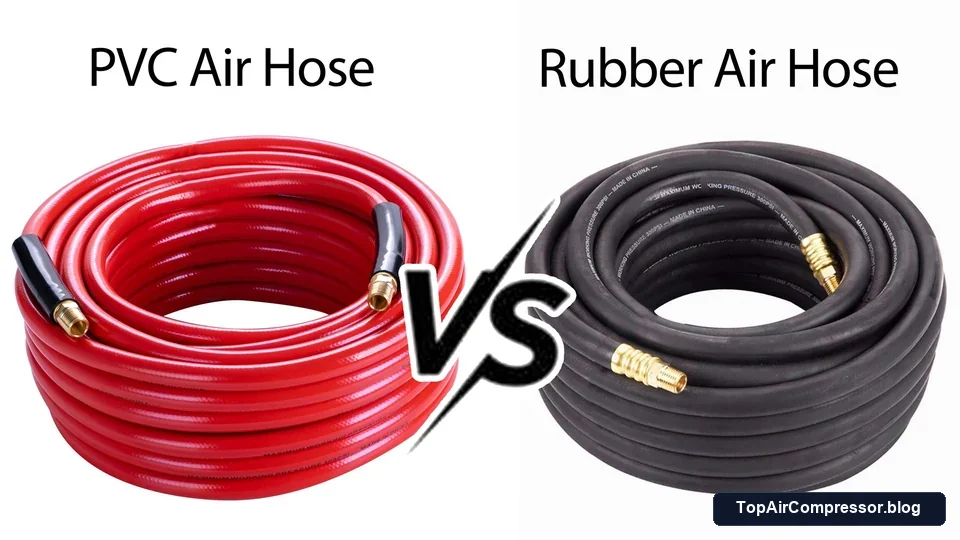
Modern engineered alternatives blend PVC and nitrile polymers to achieve optimal balance. This specific chemical formulation maximizes tensile strength while drastically reducing overall material density.
Traditional rubber hoses utilize heavy synthetic elastomers reinforced with multi-ply polyester braids, providing exceptional structural integrity under continuous pneumatic pulsation and severe mechanical stress.
Hybrid variants combine flexible PVC and nitrile polymers within a co-extruded layered process, balancing extreme pliability with chemical resistance while lowering overall volumetric mass significantly.
- Vulcanized compounds offer extreme chemical and thermal stability.
- Polymer blends yield enhanced memory and reduced coil memory.
- Reinforcement layers prevent ballooning under maximum working pressure.
Understanding Polymer Blends
Engineers formulate hybrid conduits by merging rubber flexibility with PVC resilience. This synergy prevents common structural failures during high-cycle pneumatic operations.
Selecting the correct wall thickness ensures compliance with OSHA safety margins. Always verify the maximum PSI rating matches your compressor output.
- Blended polymers resist petroleum-based compressor oils.
- Balanced wall thickness optimizes inner diameter flow rates.
Flexibility and Cold-Weather Performance
Sub-zero temperatures transform standard thermoplastic lines into rigid, unmanageable hazards. Traditional rubber retains admirable pliability in freezing conditions, preventing dangerous kinks.
Advanced polymer composites rival traditional compounds by maintaining flexibility down to negative forty degrees. This characteristic prevents workplace tripping hazards on winter construction sites.
Pure rubber maintains predictable elasticity down to minus 40 degrees Fahrenheit, preventing the dangerous stiffening issues common in sub-zero automotive or harsh winter construction environments.
Modern hybrid formulations resist coiling memory remarkably well at freezing temperatures, though extreme cold snaps can temporarily reduce their operational bend radius compared to traditional rubber.
- Rubber naturally resists stiffening in unheated winter workshops.
- Hybrid variants incorporate anti-freeze plasticizers for extreme cold.
- Flexible lines reduce wrist strain during repetitive fastening tasks.
Thermal Resilience Testing
Laboratory evaluations subject both conduits to extreme thermal cycling tests. Results indicate hybrid materials bounce back rapidly after sustained compression in frost.
Technicians must always assess ambient temperature ranges before deploying standard shop air lines outdoors. Pairing your conduit with a reliable air compressor hose reel prevents dangerous workplace tripping hazards.
- Thermal memory testing prevents permanent kinking.
- Cold pliability directly impacts daily operator productivity.
Durability, Abrasion Resistance, and Heat Tolerances
Rough concrete floors and sharp steel edges punish pneumatic lines relentlessly. Rubber construction excels against aggressive abrasion, dragging smoothly over jagged aggregate surfaces without shredding.
While polymer blends handle moderate wear efficiently, prolonged dragging across sharp slag can breach outer jackets. However, their puncture resistance remains surprisingly competitive for everyday shop use.
Heavy-duty rubber compounds endure direct contact with hot welding slag and sharp metal edges, boasting superior abrasion resistance across abrasive industrial concrete and gravel floors.
Hybrid hoses handle working temperatures up to 150 degrees Fahrenheit safely, but prolonged exposure to direct flame or extreme radiant heat rapidly degrades their PVC outer sheath.
- Rubber handles direct contact with hot welding spatter safely.
- Hybrid covers resist chemical degradation from common shop solvents.
- Reinforced braiding prevents catastrophic blowouts under surge loads.
Surface Friction and Dragging
Frictional drag increases operator fatigue when pulling long lines across floors. Hybrid options feature slick exterior finishes that glide effortlessly around corners.
Traditional compounds feature higher friction coefficients but endure harsher dragging environments without structural compromise.
- Slick outer coatings prevent snagging on ladder rungs.
- High-friction rubber stays put on slanted roofs securely.
Weight, Ergonomics, and Operator Fatigue
Pneumatic ergonomics directly influence daily output in busy automotive service centers. Heavy lines strain shoulder muscles during overhead framing or extended automotive repair tasks.
Hybrid configurations weigh significantly less than equivalent length industrial rubber setups. This weight reduction translates to noticeable decreases in physical fatigue by shift end.
Technicians dragging long lines across large manufacturing facilities experience significantly reduced physical fatigue using hybrid hoses, which weigh up to thirty percent less than standard rubber assemblies.
Heavy rubber assemblies demand greater physical pull force around tight workshop corners, increasing upper body muscle strain during overhead automotive assembly and continuous manufacturing tasks.
- Lightweight conduits simplify coiling and storage procedures.
- Reduced mass prevents tool sagging during delicate assembly work.
- Balanced weight distribution enhances overall tool maneuverability.
Impact on Daily Workflow
Workers dragging lighter conduits report less physical strain over standard shifts. This ergonomic advantage boosts overall facility efficiency and lowers injury claims.
Balancing weight against physical durability remains the primary challenge for engineers.
- Ergonomic improvements reduce cumulative trauma disorders.
- Lighter lines allow faster repositioning around vehicles.
Pressure Drop and Inner Diameter Dynamics
Maintaining consistent pneumatic pressure ensures impact wrenches deliver rated torque values. Internal diameter consistency prevents turbulent airflow and subsequent pressure loss over distance.
Both material types maintain stable inner diameters when properly fitted with high-flow brass couplers. Reviewing the best type of air compressor hose helps minimize restrictive pressure drops across complex setups.
Maintaining a consistent inner diameter of three-eighths inch ensures optimal CFM air delivery, minimizing destructive pressure drop over standard fifty-foot pneumatic tool runs.
Both material types offer smooth interior extrusion channels that restrict turbulent airflow, preserving rated compressor output and ensuring demanding pneumatic tools operate at peak efficiency.
- Proper inner diameter sizing guarantees optimal pneumatic tool performance.
- Smooth inner linings minimize turbulent air friction coefficients.
- Consistent flow prevents premature tool motor wear.
Flow Rate Optimization
High-demand tools require unobstructed airflow to operate at peak efficiency. Selecting correct inner diameters prevents starved pneumatic motors and sluggish fasteners.
Regularly inspect internal channels for moisture accumulation and debris blockages.
- Quarter-inch lines suit light fastening applications efficiently.
- Three-eighths inch lines feed heavy impact wrenches adequately.
Industrial Applications and Sector Standards
Heavy manufacturing environments demand uncompromising equipment reliability and safety compliance. Steel mills and foundries routinely specify traditional rubber for its unmatched heat resistance.
Conversely, residential contractors and mobile automotive technicians favor hybrid alternatives. Their versatility and effortless handling suit dynamic, fast-paced commercial jobsite requirements.
Professional automotive paint booths require strictly silicone-free rubber lines to prevent catastrophic surface contamination defects, making traditional rubber the mandatory industry standard choice.
General carpentry and framing crews prefer lightweight hybrid hoses for daily mobility, meeting standard OSHA safety guidelines for workplace trip hazard reduction and efficiency.
- Foundries require flame-retardant rubber conduits for safety.
- Automotive shops benefit from oil-resistant polymer blends.
- Construction sites demand kink-free routing around scaffolding.
Specialized Sector Requirements
Agriculture and utility sectors need weather-resistant materials for outdoor maintenance tasks. Selecting a dependable cold weather air hose ensures lines withstand ultraviolet radiation and harsh chemical exposure.
Marine environments require corrosion-resistant end fittings to prevent premature system failure.
- UV inhibitors prevent sun-induced polymer degradation.
- Corrosion-resistant brass fittings extend full assembly lifespan.
Maintenance Protocols and Longevity Expectations
Proactive maintenance extends equipment service life and prevents sudden worksite accidents. Inspect outer jackets regularly for cracking, deep abrasions, and bulging sections.
Drain compressor tanks daily to prevent moisture contamination inside your lines. Proper storage away from direct sunlight preserves polymer elasticity over many seasons.
Routinely inspecting outer jackets for ozone cracking and checking brass fittings for thread wear prevents catastrophic pressure blowout failures during active compressor operations.
Well-maintained industrial rubber hoses frequently exceed ten years of reliable service, whereas hybrid options typically require replacement after five to seven demanding operational years.
- Wipe down exterior surfaces to remove chemical residues.
- Store coils loosely to prevent permanent structural memory.
- Replace damaged fittings immediately to maintain safe pressures.
Inspection Best Practices
Establish a routine inspection schedule for all high-pressure pneumatic lines. Catching minor wear early prevents catastrophic blowout events during operation.
Always depressurize systems completely before attempting any maintenance work.
- Check crimped collar security before each work shift.
- Test burst pressure ratings periodically in high-use shops.
Frequently Asked Questions
Which option offers better overall cold-weather flexibility?
Both materials handle low temperatures well, but hybrid polymer hoses generally stay more pliable in freezing conditions without kinking permanently.
Can hybrid lines withstand direct contact with welding sparks?
Traditional rubber provides superior heat resistance against hot slag. Rubber lines are strongly recommended for welding environments.
Do these conduits experience noticeable pressure drops over long distances?
Pressure drop depends primarily on inner diameter sizing rather than material. Proper sizing ensures optimal airflow across both types.
Why do hybrid options feel significantly lighter on jobsites?
Advanced polymer blends reduce material density while maintaining high burst strength. Lighter mass greatly reduces daily operator fatigue.
How often should standard pneumatic conduits be replaced in a busy shop?
Inspect lines monthly for cracks or bulges. Regular preventative replacement prevents dangerous workplace blowouts under high pressure.