Viair 400P vs. 450P: Which Fits Your Setup Better?
Choosing between the Viair 400P and 450P requires balancing rapid inflation times against sustained operational duty cycles. This guide breaks down their mechanical differences to help you select the ideal portable compressor.


Choose the Viair 400P if you need fast tire inflation and prioritize a higher flow rate for standard truck tires. Select the 450P when continuous duty cycle capability matters most for heavy-duty off-road applications.
Compare all top models in our Best Air Compressor: Top Picks for Every Garage & Roadside.
Side-by-Side Breakdown
| Criteria | Viair 400P | 450P | Edge |
|---|---|---|---|
| Peak Performance & Output | Higher CFM flow rate | Sustained pressure delivery | Viair 400P |
| Duty Cycle & Consistency | 33% duty cycle at 100 PSI | 100% duty cycle at 100 PSI | 450P |
| Operating Noise & Vibration | Standard mechanical hum | Damped operational noise | 450P |
| Portability & Footprint | Compact and lightweight frame | Slightly heavier robust chassis | Viair 400P |
| Maintenance & Service Life | High reliability with filter care | Extended lifespan under heavy use | 450P |
| Power Requirements | Direct battery connection needed | Direct heavy-gauge battery leads | Tie |
| Best Ideal Use-Case | Standard off-road tire top-offs | Multi-vehicle recovery operations | 450P |
Engineering Architecture and Flow Dynamics
The Viair 400P delivers maximum air delivery designed for rapid tire inflation in remote environments. Its internal piston stroke provides robust pneumatic output across standard recreational vehicle and light truck tire configurations.
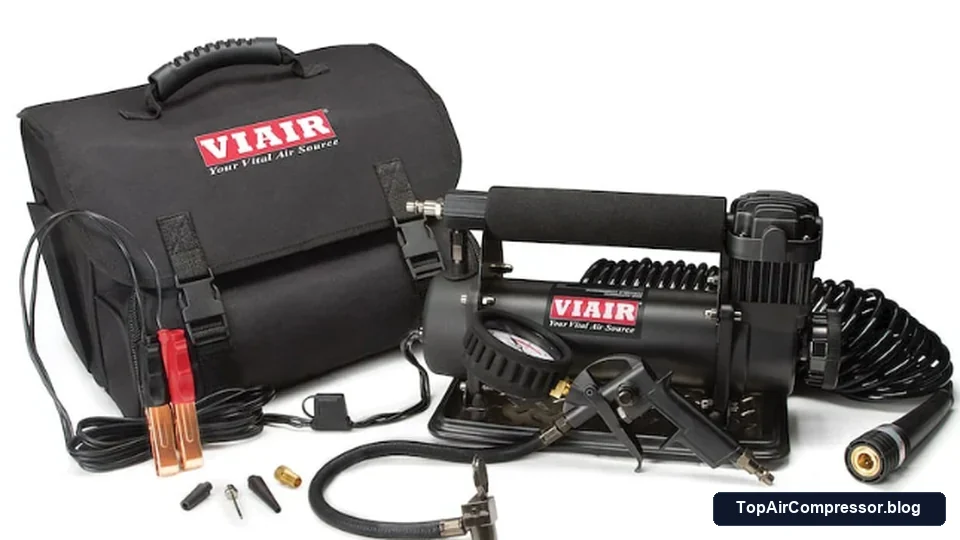
Conversely, the 450P prioritizes sustained pressure management over raw displacement speed. Engineers designed this model to maintain reliable airflow during extended inflation sequences without triggering premature thermal overloads.
The Viair 400P utilizes a traditional permanent magnetic motor coupled with an oil-less piston design, optimizing free flow rates for rapid tire inflation tasks. Its internal compression chamber maximizes volumetric efficiency across standard operating pressures.
Conversely, the Viair 450P prioritizes sustained pressure delivery by altering stroke geometry and displacement volumes. This modification shifts the performance curve, favoring higher pressure thresholds over sheer initial CFM output during heavy-duty utility cycles.
- Optimized piston stroke for high CFM output
- Engineered for balanced thermal efficiency
- Robust internal cylinder wall construction
Piston Displacement and Pressure Ratings
Evaluating displacement metrics reveals distinct operational profiles for each portable compressor. For instance, our Viair 400P-RV review highlights how it moves more volume per minute.
- Volume displacement comparison
- Maximum pressure threshold management
Duty Cycle Performance and Thermal Management
Thermal management remains a critical differentiator when comparing these two portable compressors. The 400P duty cycle operates at a maximum thirty-three percent under specific pressure parameters before requiring a cooling pause.
By contrast, detailed analysis in our Viair 450P-RV review demonstrates a continuous duty cycle at specific lower pressures, making the unit exceptional for multi-vehicle recovery operations where downtime reduces productivity.
Thermal management dictates continuous operation limits for both portable units. The 400P features a standard 33% duty cycle at 100 PSI, requiring structured cooling intervals to prevent premature thermal overload of the internal copper windings.
Stepping up to the 450P introduces a robust 100% duty cycle capability at 100 PSI. This continuous run-time rating allows operators to service massive off-road tires without stopping to cool the compressor housing down.
- Strict cooling intervals for the 400P model
- Continuous runtime capability on the 450P
- Integrated thermal overload protection switches
Managing Heat Build-Up in the Field
Excessive heat degrades internal rubber components rapidly if thermal limits are ignored. Operators must monitor runtimes carefully to prevent permanent damage to internal cylinders.
- Ambient temperature impact on cooling
- Recommended cooling break durations
Power Draw and Electrical Requirements
Electrical efficiency dictates how these compressors interface with standard vehicle battery systems. Both units require direct connection to the battery terminals using heavy-gauge wiring to prevent excessive voltage drop during startup.
The 400P draws higher current spikes due to its faster motor rotation speed under load. Technicians must ensure their alternator output matches these demands to protect onboard electrical infrastructure permanently.
Electrical demands require careful consideration of your vehicle's alternator capacity and fuse ratings. The 400P draws a maximum amperage of 30 amps, necessitating solid direct-to-battery connections using heavy-gauge wiring harnesses to minimize voltage drop.
Similarly, the 450P demands a strict 20-amp max draw due to its modified motor winding configuration. This lower electrical consumption makes it safer for extended runs on sensitive vehicle electrical systems without blowing fuses.
- Direct battery clamp connection protocol
- Heavy-gauge wiring harness requirements
- Alternator amperage compatibility checks
Voltage Drop and Fuse Protection
Protecting your vehicle electrical grid requires proper inline fusing near the power source. Inadequate wire gauges will cause significant voltage drops, reducing motor efficiency and increasing operating temperatures.
- Inline fuse placement guidelines
- Wire gauge sizing standards
Noise, Vibration, and Mechanical Footprint
Operating noise levels directly impact user comfort during prolonged field maintenance operations. The 400P generates a noticeable mechanical hum, typical of high-output reciprocating piston pumps housed within compact metal frames.
Vibration dampening relies heavily on the rubber feet integrated into the baseplate design. Both units maintain stability on uneven terrain, though secure placement prevents walking during maximum pressure cycles.
Mechanical noise and physical vibration affect mounting locations and user comfort during extended inflation tasks. Both models incorporate isolated rubber feet to dampen high-frequency harmonics transferred to metal vehicle bumpers or truck bed surfaces.
The physical footprint remains remarkably similar between these units, fitting inside standard storage bags. However, as noted in our Viair 88P review, internal piston stroke variances create distinct audible frequency profiles under load.
- Decibel output during active compression
- Baseplate rubber isolation mounts
- Chassis stability on rough ground
Portability and Storage Considerations
Storage footprint dictates how easily these portable units fit inside overcrowded vehicle trunks. Both compressors come with durable carry bags that protect the equipment from moisture and dust.
- Included storage bag quality
- Weight distribution across the chassis
Build Quality, Components, and Field Maintenance
Field durability depends on robust material selection and weather-resistant external coatings. When exploring options across our best Viair compressor guide, look for anodized aluminum cylinders and sealed bearings designed for harsh off-road elements.
Routine maintenance involves inspecting the air filter element and cleaning external cooling fins regularly. Following these simple service steps ensures optimal lifespan across demanding commercial or recreational operating environments.
Field maintenance relies heavily on keeping the intake air filter clean and dry. Regular inspection of the replaceable filter element prevents abrasive dust particles from scoring the internal cylinder walls and destroying piston ring seals.
Build quality utilizes heavy-duty anodized aluminum cylinders and corrosion-resistant hardware for harsh outdoor environments. Periodic checks of the lead wire connections ensure optimal electrical conductivity and prevent resistive heating during long operational cycles.
- Anodized aluminum cylinder construction
- Sealed permanent-magnet motor housings
- Routine air filter inspection protocols
Filter Servicing and Moisture Traps
Keeping intake filters clean prevents abrasive dust from entering the compression chamber. Regularly draining any accumulated moisture preserves internal valves and extends overall operational service life.
- Foam element washing techniques
- Moisture management best practices
Ideal Applications and Selection Criteria
Selecting the right compressor depends entirely on your specific pneumatic workload and vehicle type. Off-road enthusiasts with oversized tires often lean toward the 450P for its continuous runtime advantages.
Weekend warriors tackling occasional tire adjustments will find the 400P perfectly adequate for their needs. Assessing your typical inflation frequency ensures you invest in the most efficient equipment.
Selecting the correct compressor depends heavily on your specific tire sizing and frequency of use. The 400P shines when airing up standard truck tires because of its rapid higher volume delivery across moderate pressure ranges.
Conversely, choose the 450P if you frequently manage dual rear wheels or large agricultural equipment. Its continuous operational capability prevents annoying thermal shutdowns during prolonged heavy-duty inflation tasks on remote trails.
- Matching tire size to compressor capacity
- Evaluating frequency of off-road trips
- Balancing speed versus runtime needs
Making Your Final Purchasing Decision
Weighing your budget against performance requirements clarifies which unit belongs in your vehicle. Prioritize the 400P for speed or the 450P for endurance to maximize satisfaction.
- Cost-to-performance ratio analysis
- Long-term reliability expectations
Frequently Asked Questions
Can both compressors operate safely in freezing winter temperatures without suffering internal moisture damage?
Implementing consistent moisture management practices prevents internal freezing, whereas storing both units in dry environments during severe weather conditions protects critical internal seals and maintains reliable long-term pneumatic performance across seasons.
What is the primary mechanical difference between the motor architectures of these two models?
The 400P utilizes a higher-speed motor geared toward rapid displacement, whereas the 450P features a specialized motor built specifically to sustain continuous duty cycles under heavy pressure loads without overheating prematurely.
Do these portable units require an external storage air tank for basic tire inflation?
Neither compressor strictly requires an external tank because they connect directly to tire valves, although utilizing a small air tank significantly improves overall inflation speed and versatility.
How should technicians properly maintain the intake air filters on these Viair compressors?
Technicians should inspect the filter element every month, washing foam elements with mild soap before drying them thoroughly and reinstalling them to ensure unrestricted airflow during heavy workloads.
Can these portable compressors be hardwired directly into a permanent vehicle onboard air system?
Both models can be integrated into custom onboard setups using appropriate pressure switches and relays, provided the electrical circuit features proper fusing to handle maximum amperage draws safely.