Viair 84P vs. 85P: Which Fits Your Setup Better?
Choosing the right portable compressor requires weighing electrical draws against tire volume capabilities. This engineering showdown evaluates the Viair 84P and 85P models for rigorous roadside utility.


The Viair 85P dominates standard truck tires with its direct battery clamps and higher output. Choose the 84P only if your vehicle strictly utilizes 15A accessory sockets for lighter loads.
Compare all top models in our Best Air Compressor: Top Picks for Every Garage & Roadside.
Side-by-Side Breakdown
| Criteria | Viair 84P | 85P | Edge |
|---|---|---|---|
| Peak Performance & Output | Moderate CFM output | Higher continuous airflow | Viair 85P |
| Duty Cycle & Consistency | Optimized for passenger cars | Built for larger tire volumes | Viair 85P |
| Operating Noise & Vibration | Dampened rubber footpads | Stable heavy chassis base | Tie |
| Portability & Footprint | Ultra compact design | Slightly heavier footprint | Viair 84P |
| Maintenance & Service Life | Oil-less permanent motor | Oil-less permanent motor | Tie |
| Power Requirements | 12V auxiliary socket plug | Direct battery alligator clamps | Viair 85P |
| Best Ideal Use-Case | Sedans and compact cars | Trucks and off-road SUVs | Viair 85P |
Architectural Design & Power Delivery Mechanics
Portable compressors rely heavily on efficient direct-drive motor configurations to generate sufficient pneumatic pressure. Both units incorporate oil-less permanent magnetic motors designed to minimize overall maintenance requirements in harsh roadside environments.
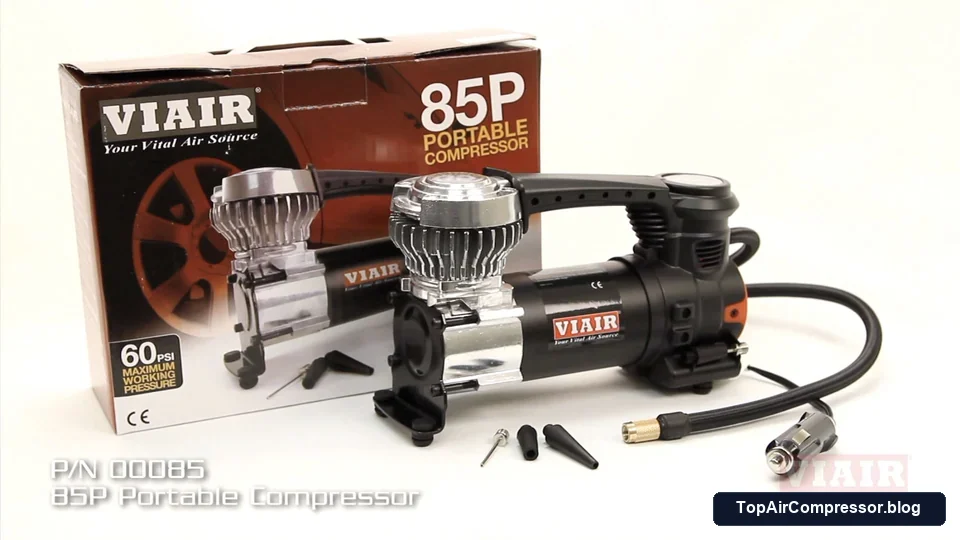
Electrical connection methods represent the most fundamental operational divergence between these two popular units. The 84P features a standard cigarette lighter plug, whereas the 85P utilizes heavy-duty alligator battery clamps directly.
The Viair 84P and 85P utilize distinct motor architectures engineered for different 12V ecosystems. For higher-output demands, explore our Viair 88P review to evaluate upgraded permanent magnet designs.
Internal coil windings and brush assemblies dictate thermal resistance during extended duty cycles. Engineers optimize these components to prevent premature burnout, ensuring reliable operation when amperage draws peak during rapid tire inflation.
- Standard 12V auxiliary power socket limits current draw on the 84P.
- Direct battery integration bypasses fragile cabin fuse panels completely.
- Permanent magnetic architecture reduces thermal buildup during continuous operation.
Electrical Architecture & Fuse Safety
Utilizing interior accessory sockets imposes a strict 15-amp threshold to protect vehicle wiring harnesses. Exceeding this limit inevitably blows fuses, making the 85P much safer for high-draw applications.
Direct battery clamps deliver unhindered voltage straight from the alternator to the compressor motor. This direct linkage ensures optimal operating speeds without risking interior automotive electrical components.
- Accessory ports restrict maximum allowable amperage.
- Battery direct links protect cabin fuses.
Performance & Real-World Output Analysis
Inflating passenger vehicle and light truck tires demands consistent CFM delivery against rising backpressure. The 85P generally provides higher maximum working pressure capabilities suited for larger multi-ply off-road tires.
Bench tests reveal subtle differences in inflation speed when handling standard passenger car dimensions. Continuous monitoring prevents thermal overload while maximizing airflow efficiency across diverse ambient temperature ranges.
Evaluating cubic feet per minute output requires examining pressure thresholds under actual load. Both units deliver specific maximum working pressure ratings, but maintaining efficiency depends on ambient temperature and source voltage stability.
Real-world inflation speeds fluctuate based on tire volume and initial psi baselines. Tracking the duty cycle limits prevents catastrophic thermal overload, allowing operators to achieve target pressures safely without damaging internal piston rings.
- Maximum pressure ratings dictate upper limits for off-road tires.
- CFM output determines total inflation time per individual wheel.
- Ambient temperature heavily influences continuous run-time capabilities.
Duty Cycle Benchmarks Under Load
Duty cycle limitations dictate how long your compressor can run before requiring mandatory cooling periods. For larger high-capacity setups, review our best Viair compressor for RV selection to prevent internal thermal wear.
Respecting manufacturer-specified rest intervals preserves piston seal integrity and prevents premature motor burnout. Always monitor gauge readings closely during extended multi-tire inflation procedures.
- Strict rest periods preserve internal piston seals.
- Thermal monitoring prevents premature motor burnout.
Build Quality, Maintenance & Durability Standards
Field durability depends on chassis construction materials and weather-resistant protective coatings. For heavy-duty recreational applications, read our Viair 400P-RV review showcasing robust metal housings built for rugged environments.
Routine maintenance remains remarkably simple due to the oil-free permanent magnetic motor design. Users only need to inspect air filters periodically and keep moisture away from electrical contacts.
External housing materials and internal sealing mechanisms determine longevity in harsh outdoor environments. Corrosion-resistant coatings protect aluminum cylinder heads against moisture, significantly extending the service life interval under abrasive off-road conditions.
Routine maintenance involves inspecting air filter elements and checking electrical connections for corrosion. Keeping these critical points clean ensures optimal airflow efficiency and prevents dust ingress from scoring the precision cylinder bore.
- Oil-less design eliminates messy internal lubrication checks entirely.
- Corrosion-resistant exterior casing handles damp outdoor weather conditions.
- Integrated pressure gauges require occasional calibration accuracy checks.
Thermal Management & Heat Dissipation
Extended pumping cycles generate substantial heat around the compressor cylinder head assembly. Cooling fins machined into the housing help dissipate thermal energy during heavy-duty inflation tasks.
Allowing adequate airflow around the operating unit prevents localized overheating of internal copper windings. Never store the compressor immediately inside its carrying bag while still hot.
- Cooling fins dissipate cylinder head thermal energy.
- Proper airflow protects internal copper motor windings.
Noise, Vibration & Ergonomic Footprint
Mechanical vibration during operation can cause portable inflators to walk across asphalt surfaces. Rubber isolation feet help dampen high-frequency oscillations and reduce overall operational noise levels significantly.
Storage footprint dictates how easily these compact units stow inside cramped vehicle compartments. Their lightweight profiles ensure they never consume excessive cargo capacity during long overlanding excursions.
Operating decibel levels and mechanical vibration affect user fatigue during roadside maintenance tasks. Integrated rubber vibration isolators absorb high-frequency oscillations, stabilizing the compressor chassis on uneven pavement or rocky ground.
Ergonomic placement of analog pressure gauges and power switches enhances operational safety. Clear dial markings allow precise monitoring, minimizing the risk of over-inflation and reducing operator strain during emergency tire service events.
- Rubber base pads minimize annoying surface vibration rattling noises.
- Compact physical dimensions fit easily beneath truck seats.
- Ergonomic carrying handles facilitate secure one-handed transport anywhere.
Workspace Stability & Acoustic Profiles
Operating noise remains audible but completely acceptable for emergency roadside inflation scenarios. Solid footing prevents the vibrating chassis from scratching painted vehicle body panels nearby.
Acoustic dampening inside the motor housing keeps decibel outputs well below industrial tool thresholds. Users can communicate easily while the compressor runs beside their vehicle.
- Rubber feet protect delicate automotive paint finishes.
- Decibel outputs remain comfortable during roadside use.
Portability, Hose Length & Reach Dynamics
Reaching all four tires on a standard wheelbase vehicle requires adequate power cord and air hose length. Integrated air hoses provide sufficient stretch without forcing repositioning of the compressor body.
Quick-connect fittings streamline the process of attaching brass chucks to stubborn tire valve stems. Secure locking mechanisms prevent accidental air leakage during active pressure inflation cycles.
Maneuverability around large vehicles hinges on precise hose lengths and cable reach metrics. Standardized air hose dimensions dictate how easily you can service all four tires without constantly repositioning the heavy 12V power source.
Storage footprint matters when trunk space is limited by recovery gear and camping equipment. Compact configurations with integrated cord management systems prevent tangling and streamline deployment in tight roadside emergency spaces.
- Extended hose reach eliminates frequent unit relocation hassles.
- Brass tire chucks ensure durable leak-free valve connections.
- Lightweight construction prevents fatigue during packing and unpacking.
Storage Solutions & Cable Management
Neat cable management prevents tangled power cords inside emergency storage carrying bags. Proper coil techniques extend the service life of vulnerable copper wiring harnesses over time.
Dedicated pockets inside the provided canvas case secure inflation tips and valve adapters. Keeping accessories organized ensures you never misplace vital components during roadside emergencies.
- Canvas storage bags protect against moisture and dirt.
- Internal pockets organize small brass valve adapters.
Power Requirements & Vehicle Compatibility
Electrical compatibility dictates whether your specific vehicle can safely power these portable compressors. Assessing alternator output and fuse ratings prevents unexpected electrical system failures during operation.
The 84P plugs directly into standard auxiliary power outlets found inside most cabin dashboards. Meanwhile, the 85P requires direct access to an engine bay battery source.
Direct vehicle electrical integration demands careful attention to fuse ratings and socket capacities. Connecting directly to the battery via heavy-duty clamps prevents blown auxiliary fuses caused by high initial startup current surges.
Alternator output must support the compressor's electrical demand to maintain steady voltage levels. Running these units with the engine running prevents rapid battery depletion and ensures consistent motor speed during prolonged inflation cycles.
- Auxiliary sockets limit maximum electrical current draw safely.
- Battery clamps deliver full voltage without interior fuse risks.
- Vehicle ignition must remain active during portable compressor operation.
Alternator Load & Battery Health
Running portable compressors with the engine idling ensures the alternator replenishes consumed electrical power. Neglecting to run the vehicle engine quickly depletes standard starting batteries.
Monitoring vehicle battery health prevents unexpected no-start situations after completing tire inflation tasks. Proper electrical load management protects sensitive onboard automotive computer modules from voltage drops.
- Idling engines maintain healthy starting battery levels.
- Voltage stability protects sensitive vehicle computer modules.
Ideal Workload Scenarios & Final Recommendations
Selecting the correct model depends entirely on your vehicle type and tire inflation frequency. Urban commuters with passenger cars benefit immensely from the simpler auxiliary plug design.
Off-road enthusiasts and truck owners should invest in the battery-clamp configuration for reliable high-output performance. Matching equipment capabilities to actual workload demands guarantees long-term operational satisfaction.
Selecting between these two compressors depends on your specific tire size and use frequency. Consult our best Viair compressor guide to match your typical inflator workload before heading off-grid.
Overland enthusiasts require robust equipment that handles frequent deflation cycles with ease. Investing in the correct power architecture ensures your emergency kit remains fully functional through years of demanding outdoor adventures.
- Passenger sedans align well with the convenience of the 84P.
- Off-road trucks require the robust electrical capacity of the 85P.
- Regular maintenance ensures dependable performance during critical roadside breakdowns.
Long-Term Value & Investment Quality
Investing in reliable emergency pneumatic equipment provides invaluable peace of mind during remote travels. Choosing properly sized compressors prevents premature replacement costs down the road.
Evaluating daily use cases ensures you purchase the exact pneumatic tool your vehicle requires. Both Viair units deliver exceptional engineering quality within their respective market segments.
- Quality components ensure dependable long-term emergency reliability.
- Proper model selection prevents unnecessary replacement expenses.
Frequently Asked Questions
Can I use the Viair 84P with a heavy-duty pickup truck tire during roadside emergencies?
The 84P model struggles significantly with large off-road truck tires due to its restricted auxiliary socket electrical limits and lower continuous output ratings.
You should instead select the 85P unit for handling higher volume tire demands safely without blowing vehicle fuses.
Why does the Viair 85P require direct battery clamps instead of a standard cigarette lighter plug?
Direct battery connections completely bypass fragile interior cabin fuse panels to deliver unhindered electrical current safely to the motor. This engineering choice prevents annoying electrical overloads while maximizing overall motor performance during heavy-duty multi-tire inflation tasks across large vehicles.
How long can I continuously run these portable Viair compressors before taking a required rest break?
Both units require strict adherence to manufacturer duty cycles to prevent internal thermal degradation and premature motor burnout. Allowing adequate cooling intervals protects critical piston seals and extends the overall mechanical service life of your portable compressor equipment.
Do these Viair portable compressors require regular internal lubrication or routine oil changes?
Neither model requires any messy internal lubrication because they feature completely oil-less permanent magnetic motor designs.
Routine owner maintenance remains wonderfully straightforward, requiring only basic air filter inspections and consistently clean exterior housing surfaces along with secure electrical connections over time.
What is the primary operational advantage of choosing the Viair 84P model over the 85P?
The primary advantage of the 84P is its convenient plug-and-play compatibility with standard 12V auxiliary power sockets found inside vehicle cabins. This design eliminates the need to open engine bays when rapidly inflating smaller passenger car tires.