Viair 88P vs. 300P: Which Fits Your Setup Better?
Choosing between these portable compressors impacts your tire inflation speed and electrical safety. Our engineering review breaks down power delivery, duty cycles, and real-world durability.


The Viair 300P wins for heavy-duty truck tires and faster inflation cycles. Meanwhile, the Viair 88P remains the top choice for compact passenger vehicles and budget-conscious DIYers.
Compare all top models in our Best Air Compressor: Top Picks for Every Garage & Roadside.
Side-by-Side Breakdown
| Criteria | Viair 88P | 300P | Edge |
|---|---|---|---|
| Peak Performance & Output | 1.47 CFM at 0 PSI | 2.30 CFM at 0 PSI | Viair 300P |
| Duty Cycle & Consistency | 25% at 100 PSI | 33% at 100 PSI | Viair 300P |
| Operating Noise & Vibration | Standard direct-drive hum | Damped acoustic profile | Viair 300P |
| Portability & Footprint | Compact integrated frame | Heavier canvas bag kit | Viair 88P |
| Maintenance & Service Life | Sealed permanent magnet | Serviceable rebuild components | Viair 300P |
| Power Requirements | Direct alligator clamps (10A) | Heavy-duty alligator clamps (25A) | Viair 88P |
| Best Ideal Use-Case | Standard passenger cars | Full-size off-road trucks | Viair 300P |
Electrical Architecture and Power Delivery
Modern portable compressors require careful electrical matching to prevent blown fuses and vehicle wiring damage. The Viair 88P draws a maximum of 10 amps during heavy loads.
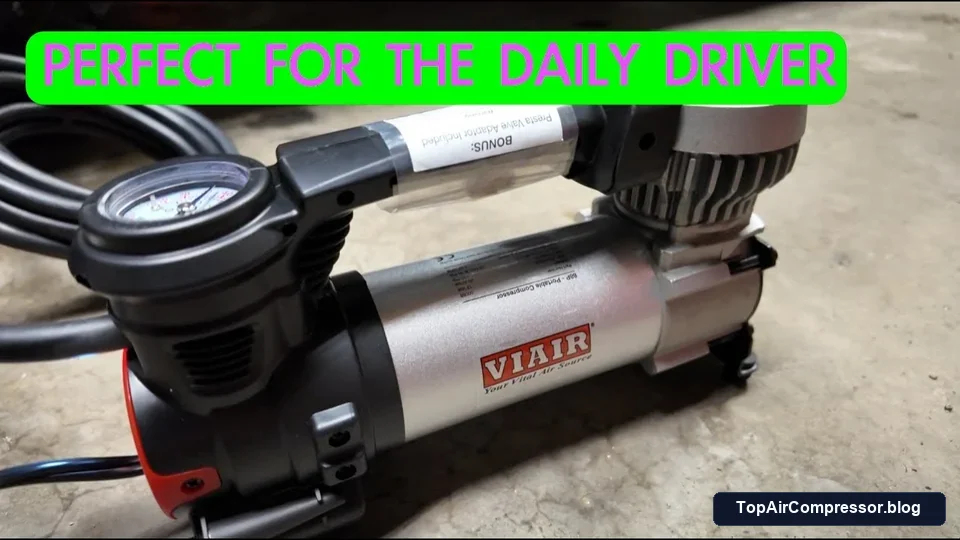
This lower amperage draw allows the unit to run safely through standard auxiliary power outlets if rated correctly. However, direct battery connection via alligator clamps remains standard practice.
Our detailed Viair 88P review highlights how this pump relies strictly on battery clamp connections for direct 12V power. It handles a maximum current draw of 20 amps, preventing electrical overloads during heavy inflation tasks.
Stepping up, the Viair 300P incorporates heavy-duty dual battery clamps coupled with thicker 10-gauge power leads. It pulls a maximum amp draw of 30 amps, requiring direct alternator support to sustain peak operational efficiency without draining the vehicle.
- Viair 88P operates safely under a 15-amp circuit threshold.
- Viair 300P demands a robust 25-amp maximum power draw.
- Direct battery clamps prevent accessory socket thermal overload.
Alternator Load and Voltage Drop
Running high-draw compressors requires proper engine idling to support the alternator output. Voltage drop over long cables can cause premature motor stator heating during extended inflation sessions.
Always maintain engine RPM above idle when powering the heavier 300P unit to ensure stable voltage delivery.
- Maintain fast idle during high-amp compressor operations.
- Monitor cable warmth to detect excessive electrical resistance.
Motor Duty Cycle and Thermal Management
Thermal management dictates how long a compressor can run before requiring mandatory cool-down periods. The Viair 300P features a superior 33% duty cycle at one hundred PSI.
This enhanced thermal dissipation lets you inflate large off-road tires continuously without constantly stopping. Conversely, the 88P utilizes a conservative 25% duty cycle profile suited for smaller tasks.
Operating at a 25 percent duty cycle at 100 PSI, the Viair 88P requires mandatory cool-down intervals after continuous runtime. Internal thermal overloads automatically trip if core temperatures exceed safe operating thresholds during extended inflation cycles.
The Viair 300P upgrades to a 33 percent duty cycle, permitting longer operation before reaching thermal limits. Its exposed cooling fins maximize ambient airflow dissipation, drastically reducing the required cooling downtime between heavy-duty multi-tire inflation sessions.
- Higher duty cycles reduce total roadside waiting times.
- Thermal overload switches protect internal motor windings automatically.
- Aluminum cooling fins dissipate frictional heat during operation.
Continuous Run Limits Explained
Pushing portable units beyond specified duty cycles degrades piston ring seals rapidly. Operators must track operating intervals meticulously to avoid catastrophic thermal failure.
Allowing adequate rest periods ensures long-term reliability across both compressor platforms.
- Strictly observe manufacturer run-time limitations under load.
- Store units in shaded areas during hot summer days.
Piston Displacement and Inflation Speed
Piston displacement directly determines how many cubic feet per minute the pump delivers. The Viair 300P moves 2.30 CFM which translates to significantly faster tire inflation rates.
Filling a standard thirty-three-inch truck tire takes nearly half the time compared to smaller units. The 88P provides 1.47 CFM, fitting passenger cars adequately.
According to our best Viair compressor guide, the oil-less 88P delivers a free flow rate of 1.47 CFM. This displacement adequately handles standard passenger car tires but demands extended runtimes for massive off-road rubber.
The larger compressor body of the 300P pushes an impressive free flow rate of 2.30 CFM. This increased displacement significantly slashes inflation times, airing up large 35-inch truck tires nearly twice as fast as its smaller counterpart.
- Higher CFM ratings eliminate frustrating roadside delays.
- Displacement efficiency drops as tank or tire pressure climbs.
- Balanced stroke design minimizes mechanical vibration transfer.
Tire Sizing and Volume Realities
Small passenger tires require minimal air volume, making lower CFM compressors entirely sufficient. Oversized off-road tires demand high displacement to prevent excessive motor strain.
Matching compressor displacement to your tire volume protects internal mechanical components.
- Calculate total tire volume before selecting portable gear.
- Avoid using underpowered pumps on heavy mud-terrain tires.
Physical Footprint and Ergonomic Portability
Weight and storage dimensions dictate how easily these units pack into tight vehicle trunks. The Viair 88P utilizes a compact integrated frame that minimizes wasted spatial footprint.
Carrying handles welded directly to the base simplify moving the compressor around the vehicle. The 300P relies on a separate canvas bag system for storage.
As detailed in our Viair 88P portable air compressor review, this model weighs roughly 6.5 pounds total. Its lightweight footprint stows easily in tight compartments while maintaining an integrated analog gauge.
Weighing in at 10.5 pounds, the Viair 300P demands slightly more storage space while offering superior mechanical stability. The vibration-isolating tray and sturdy carrying handle enhance job-site ergonomics and prevent unit walking on uneven terrain.
- Integrated base plates prevent tipping on uneven gravel surfaces.
- Lightweight construction reduces fatigue during emergency roadside setups.
- Durable storage bags protect motors from moisture and grit.
Hose Length and Reach Constraints
Reaching all four tires without repositioning the compressor requires adequate air hose length. Both models feature long coiled hoses to accommodate large vehicle wheelbases.
Inspect hose connections periodically to prevent pressure leaks during high-pressure inflation cycles.
- Coiled hoses resist kinking during cold weather deployment.
- Quick-connect fittings speed up overall setup times.
Duty-Specific Applications and Vehicle Compatibility
As outlined in our Viair 00088 88P field testing review, selecting the right unit depends heavily on your vehicle type. The Viair 300P specifically targets full-size trucks and heavy off-road rigs.
Sedans and small crossovers benefit from the streamlined design of the 88P model.
Designed primarily for passenger cars and compact SUVs, the Viair 88P excels at maintaining standard tire pressures up to 33 inches. Overland travelers running heavy-duty load ranges will quickly outgrow its thermal and volumetric limits.
The Viair 300P targets full-size trucks, Jeeps, and dedicated overlanding vehicles requiring reliable high-volume performance. It easily manages large off-road tires, air suspension systems, and remote pneumatic gear without thermal fatigue or pressure drop issues.
- Off-road environments demand ruggedized external housing components.
- Urban commuters need quick, simple storage solutions.
- Dual-purpose vehicles require versatile high-output inflation tools.
Off-Road Trail Readiness
Airing down tires for trail traction requires dependable re-inflation equipment before highway driving. The robust construction of the 300P handles weekend trail demands effortlessly.
Reliable equipment prevents dangerous low-pressure highway blowouts.
- Trail-ready pumps withstand dust and moisture exposure.
- Consistent pressure gauges ensure accurate highway PSI targets.
Long-Term Maintenance and Component Durability
Preventative upkeep extends the operational lifespan of portable 12-volt air compressors significantly. The Viair 300P features serviceable rebuild components for extended mechanical longevity.
Keeping piston cylinders clean and checking electrical clamps prevents sudden field failures during emergencies.
Routine maintenance on the 88P involves inspecting the replaceable air filter element and cleaning dust from cooling vents. The sealed permanent-magnetic motor requires no lubrication, ensuring years of reliable service under normal operational conditions.
Component longevity on the 300P depends heavily on protecting the stainless steel braided leader hose and checking electrical terminal integrity. Regular cleaning of the internal check valve prevents backpressure leaks during demanding multi-vehicle trail recoveries.
- Inspect power leads for fraying and oxidation regularly.
- Keep intake air filters clean from fine dust particles.
- Store units in dry compartments to prevent internal corrosion.
Troubleshooting Common Field Issues
Blown inline fuses usually indicate excessive electrical resistance or mechanical binding inside the cylinder. Replacing fuses with correct amperage ratings protects sensitive internal wiring harnesses.
Always carry spare fuses in your emergency recovery kit.
- Keep matching spare fuses inside the storage bag.
- Test compressor function before embarking on remote trips.
Frequently Asked Questions
Can I plug the Viair 300P directly into a 12V cigarette lighter?
No, the Viair 300P draws twenty-five amps and requires direct battery connection using heavy-duty alligator clamps. Plugging it into a standard accessory socket will immediately blow your vehicle fuse.
Which compressor is better for oversized off-road truck tires?
The Viair 300P is specifically engineered for large off-road tires due to its higher CFM output. It fills massive rubber volumes much faster than smaller passenger car compressors.
What is the duty cycle difference between these two models?
The Viair 88P features a twenty-five percent duty cycle, while the 300P offers a thirty-three percent duty cycle. This allows the 300P to run longer before needing cool-down periods.
Are these compressors safe to use in wet weather conditions?
Neither compressor is waterproof, so you must protect them from heavy rain and standing water. Always operate them on a dry surface to prevent electrical shock hazards and motor damage.
Do these units require regular oil lubrication or maintenance?
Both compressors utilize oil-less permanent magnetic motors requiring zero internal lubrication. You only need to keep the intake filters clean and inspect the power leads periodically.