Air Dryer CFM Calculation & Formula
Accurate airflow sizing prevents moisture damage in pneumatic lines. Proper calculations ensure your air dryer handles peak compressor output without excessive pressure drops.

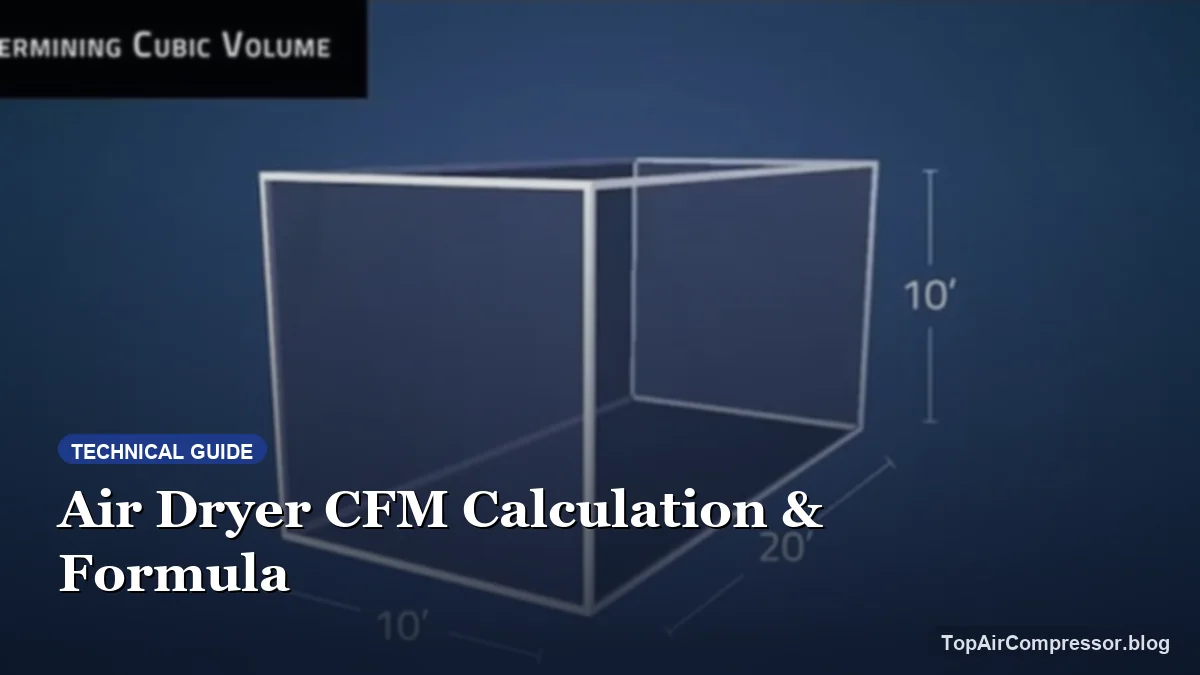
To calculate dryer capacity, multiply your compressor output by temperature and pressure correction factors. Always match the dryer rating to actual volumetric flow at inlet conditions.
Looking for matching picks? See our Best 5 Cfm Air Compressor: Top Workshop Picks.
Practical Quick-Reference Table
| Scenario / Metric | Recommended Target | Why It Matters |
|---|---|---|
| Compressor Output | Maximum rated CFM | Establishes baseline volumetric flow demand |
| Ambient Temperature | Peak summer rating | Accounts for cooling efficiency losses |
| Operating Pressure | Minimum psi value | Compensates for density and velocity shifts |
| Correction Factors | Manufacturer charts | Prevents severe equipment undersizing errors |
| Purge Air Volume | Plus fifteen percent | Required for heatless desiccant regeneration |
| Safety Margin | Twenty percent buffer | Accommodates future plant capacity expansions |
Understanding Compressed Air Dryer Sizing Fundamentals
Sizing an air treatment unit requires strict attention to operational variables. Failing to account for ambient conditions can lead to wet lines, ruined pneumatic tools, and costly downtime.
Compressors discharge air at high temperatures saturated with moisture. An appropriately sized dryer removes this vapor before it condenses inside downstream distribution piping networks.
Technical editors must emphasize that dryers process actual volumetric flow. Standard cubic feet per minute ratings require adjustment based on operating pressure and temperature extremes.
Engineers utilize standardized correction tables provided by manufacturers. Applying these specific multipliers prevents under-sizing your moisture removal system during peak summer heat waves.
- Always evaluate maximum compressor discharge volume.
- Account for peak ambient temperatures at the installation site.
- Verify operating pressure at the dryer inlet port.
- Include a safety margin for future system expansion.
Inlet Condition Variations
Inlet air temperature heavily impacts moisture holding capacity. Warmer air carries significantly more water vapor than cooler air, forcing the dryer to work much harder.
Pressure fluctuations alter the volumetric flow entering the heat exchanger. Stable inlet pressure ensures predictable moisture loads throughout the entire production shift.
- Measure actual inlet temperature with calibrated sensors.
- Record minimum operating pressure during heavy demand cycles.
Technical Definition and Purpose of Air Dryers
A compressed air dryer is an engineered mechanical device. Its primary function is removing water vapor and residual humidity from generated compressed air streams.
Atmospheric air contains varying amounts of moisture depending on location. When compressed, this water concentrates significantly, threatening sensitive pneumatic actuators and control valves.
Dryers protect equipment by lowering the dew point of the air. Achieving a specific pressure dew point prevents liquid water from forming inside distribution piping.
Industrial facilities rely on clean, dry air for consistent manufacturing quality. Unwanted moisture causes rust, pneumatic tool failures, and contaminated paint finishing applications.
- Removes harmful moisture vapor from compressed streams.
- Lowers pressure dew point below ambient temperature levels.
- Protects downstream machinery from premature internal corrosion.
- Ensures reliable operation of precision pneumatic automation.
Video Walkthrough: How to Calculate Required CFM
How Refrigerated and Desiccant Units Process Airflow
Refrigerated dryers chill incoming air to condense water vapor. This mechanical cooling process typically achieves a standard pressure dew point suitable for general industrial applications.
Desiccant dryers use chemical adsorption beds to strip moisture. These specialized units deliver ultra-low dew points required for critical electronics, laboratories, and outdoor winter lines.
Understanding operational differences dictates your CFM calculation approach. While standard refrigerated units handle volumetric flow easily, reviewing a best 10 cfm air compressor review highlights why desiccant systems require purge air adjustments.
Purge air consumption in heatless desiccant dryers can reach fifteen percent. You must add this purge volume directly to your total calculated CFM requirement.
- Refrigerated dryers use chillers for general moisture removal.
- Desiccant systems employ hygroscopic beads for deep drying.
- Heatless desiccant models consume purge air during regeneration cycles.
- Always factor purge losses into final sizing equations.
Standard Mathematical Formula and Core Variables
Consulting our best air dryer for air compressor guide helps simplify your primary calculations. You divide actual compressor CFM by the combined temperature and pressure correction factors to determine exact required capacity.
Let Q represent the actual compressor flow rate. Let Ct represent the temperature correction factor and Cp represent the pressure correction factor.
The calculation equation appears as required CFM equals Q divided by the product of Ct multiplied by Cp. This yields the true corrected capacity.
Neglecting any single variable compromises the entire mathematical outcome. Always double-check your manufacturer specification sheets for exact correction factor tables and multipliers.
- Identify baseline compressor flow in cubic feet per minute.
- Lookup appropriate temperature correction factor from data charts.
- Determine pressure correction multiplier based on operating psi.
- Divide baseline flow by combined correction multipliers.
Step-by-Step Computational Process for Accurate CFM
Begin your calculation by gathering exact compressor performance data. Reviewing our scfm vs. cfm air compressor guide ensures you use the correct maximum rated output measured at standard conditions.
Next, measure the maximum ambient temperature surrounding the installation site. High ambient temperatures degrade dryer cooling efficiency, requiring a larger capacity selection.
Record the minimum operating pressure at the dryer inlet. Lower operating pressures increase volumetric velocity, which affects moisture separation efficiency inside the heat exchanger.
Multiply your correction factors together before dividing the compressor flow. This final arithmetic step gives you the exact minimum CFM rating for your dryer.
- Gather maximum compressor output data from nameplates.
- Measure highest expected room temperature near equipment.
- Note lowest operational pressure during peak shifts.
- Compute final corrected CFM using standard formulas.
Video Walkthrough: Calculating CFM or Velocity from Area
Pressure and Temperature Correction Multipliers
Correction multipliers compensate for harsh operating environments. Standard ratings assume specific baseline conditions that rarely match real-world industrial plant floors.
A temperature correction factor decreases dryer capacity as heat rises. If ambient temperatures exceed standard ratings, you must apply a fractional multiplier to expand capacity.
Pressure multipliers adjust for compressed air density changes. Higher operating pressures pack air molecules tighter, allowing smaller dryers to process more mass flow.
Consult technical engineering manuals for exact manufacturer multipliers. Using generic estimates can lead to severe equipment undersizing and persistent moisture contamination issues.
- Temperature multipliers adjust for high ambient heat loads.
- Pressure multipliers account for compressed air density shifts.
- Manufacturer charts provide precise engineering correction values.
- نهAssume standard rating conditions apply universally.
Practical Sizing Tools and Engineering Worksheets
Modern facilities often rely on digital tools. Utilizing our interactive cfm & tank sizing calculator simplifies complex mathematical formulas by automating correction factor lookups for various brands.
Engineering worksheets provide a manual alternative for field technicians. Using paper calculation sheets ensures you check every required variable before ordering expensive hardware.
Spreadsheet templates help facility managers audit existing air systems. You can input historical pressure and temperature logs to evaluate current dryer performance margins.
Always verify automated tool outputs against manual calculations. Cross-checking prevents software input errors from compromising your final compressed air equipment selection.
- Utilize digital calculators for rapid preliminary estimates.
- Keep printed engineering worksheets for field audits.
- Build custom spreadsheets for plant expansion tracking.
- Cross-verify all automated software results manually.
Evaluating Specific Facility Requirements and Demands
Every industrial plant features unique operational demands. Evaluating your specific duty cycle helps determine whether you need continuous or intermittent drying capacity.
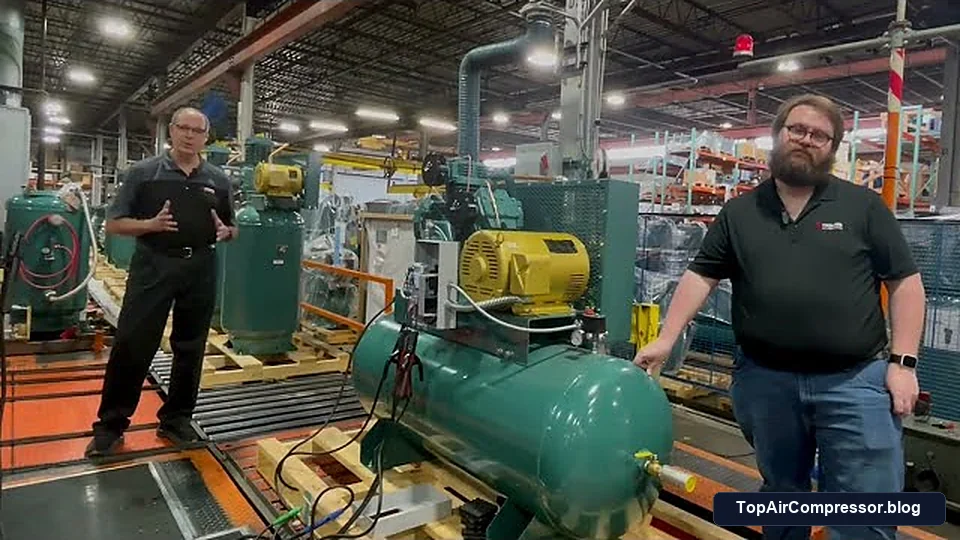
Production shifts dictate peak air consumption patterns. You must size your dryer for the maximum instantaneous flow rather than the daily average volume.
Consider future plant growth when calculating air dryer CFM. Adding a twenty percent safety margin accommodates new pneumatic machinery without requiring immediate equipment replacements.
Environmental factors like humidity levels and dust impact performance. Facilities in coastal regions face extreme moisture loads requiring robust industrial drying solutions.
- Analyze peak instantaneous air demand across shifts.
- Account for environmental humidity and coastal locations.
- Incorporate safety margins for future facility expansion.
- Evaluate continuous versus intermittent duty cycles.
Selecting the Ideal Equipment Type for Your Plant
Choosing between refrigerated and desiccant models is crucial. Match the technology directly to your required pressure dew point and facility application standards.
General manufacturing plants thrive using refrigerated air dryers. They offer reliable moisture removal with low operational overhead and minimal routine maintenance requirements.
Critical industries demand desiccant drying technology. Pharmaceutical, electronics, and food processing plants require ultra-low dew points to prevent product contamination and spoilage.
Factor energy consumption into your equipment selection process. Refrigerated units consume less power, while desiccant models require energy for regeneration and purge cycles.
- Match dryer technology to required dew point limits.
- Select refrigerated units for general industrial manufacturing.
- Deploy desiccant systems for sensitive processing environments.
- Evaluate overall energy consumption and maintenance overhead.
Data Analysis and Typical Operating Scenarios
Analyzing operating data helps optimize compressed air efficiency. Reviewing pressure drop logs reveals when heat exchangers require cleaning or internal maintenance.
Case studies show proper sizing eliminates downstream moisture. Facilities that accurately calculate CFM experience significantly fewer pneumatic valve and cylinder failures over time.
Monitoring compressor discharge temperatures prevents unexpected failures. Keeping inlet temperatures within manufacturer limits ensures your air dryer operates at peak design efficiency.
Regular data audits keep your pneumatic system running smoothly. Consistent tracking of volumetric flow guarantees long-term reliability across all connected plant machinery.
- Review pressure drop logs to spot maintenance needs.
- Analyze past failure reports to improve sizing accuracy.
- Monitor compressor discharge temperatures during peak shifts.
- Conduct regular system audits for optimal performance.
Frequently Asked Questions
Why is CFM calculation essential for air dryers?
Accurate CFM calculations prevent harmful moisture from entering your sensitive pneumatic distribution lines during peak daily production cycles.
Proper equipment sizing ensures your selected drying unit maintains a reliable pressure dew point without causing unexpected pressure restrictions throughout the entire industrial facility network.
What variables impact the final dryer CFM result?
The primary operational variables include maximum compressor discharge volume, high ambient installation temperature, and fluctuating operating system pressure. Factoring in these specific environmental conditions prevents premature equipment failure and costly downstream water contamination across your entire manufacturing plant.
How do correction factors alter the base CFM?
Manufacturer correction factors adjust your baseline compressor flow for harsh ambient temperatures and operating pressures. Applying these essential multipliers ensures your chosen dryer handles real-world capacity demands rather than ideal laboratory conditions.
Do desiccant dryers require special CFM adjustments?
Yes, heatless desiccant dryers consume purge air during their internal regeneration cycles. You must add this specific purge volume percentage directly to your total calculated CFM requirement before selecting equipment.
Can I use digital tools for sizing calculations?
Digital sizing calculators provide quick preliminary estimates by automating complex correction factor lookups. However, experienced technicians should always cross-verify these software outputs against manual engineering calculations to guarantee accuracy.