How Many CFM for Die Grinder?
Calculating accurate air delivery ensures pneumatic rotary tools operate without pressure drops. Proper sizing prevents premature motor burnout.

Most standard pneumatic die grinders require between 4 and 8 CFM at 90 PSI for continuous operation. Always match your compressor tank and pump displacement to the tool's rating.
Looking for matching picks? See our Best Air Compressor For Die Grinder: Top Picks Reviewed.
Practical Quick-Reference Table
| Scenario / Metric | Recommended Target | Why It Matters |
|---|---|---|
| Standard Die Grinder | 4-6 CFM at 90 PSI | Powers light deburring and weld cleaning tasks safely. |
| Heavy Angle Grinder | 8-12 CFM at 90 PSI | Sustains high torque during aggressive material removal work. |
| Air Hose Diameter | 3/8-inch minimum | Prevents restrictive pressure drops across long runs. |
| Compressor Sizing | 1.5x tool requirement | Prevents continuous pump run times and thermal overload. |
| Operating Pressure | 90 PSI dynamic | Delivers optimal rotational speed and cutting torque. |
| Tank Capacity | 30-gallon minimum | Provides adequate buffer volume for sustained tool usage. |
Decoding Rotary Tool Air Consumption Mechanics
Pneumatic die grinders demand high volumes of compressed air to maintain high RPM under heavy load. Understanding air consumption metrics prevents frustrating stalls during porting or weld blending operations.
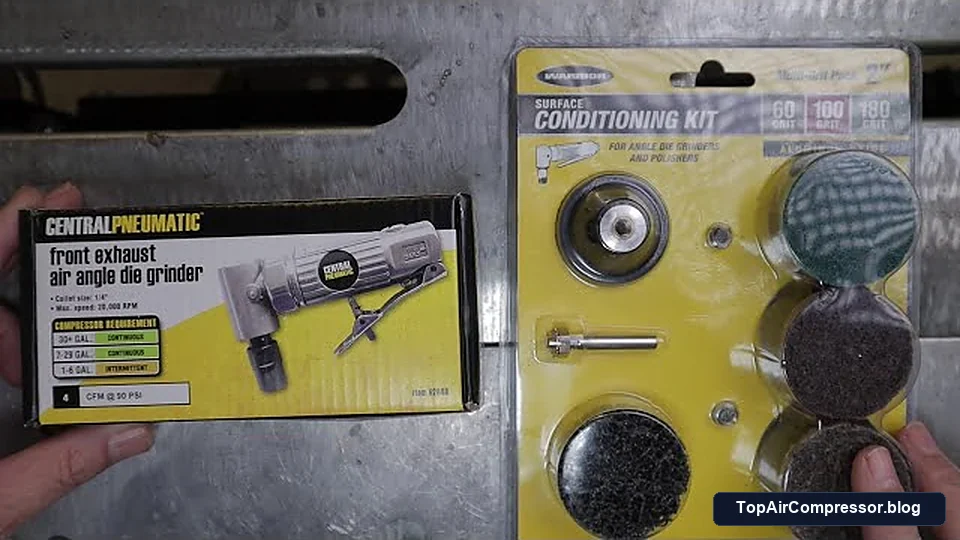
Manufacturers rate air consumption in cubic feet per minute at a specific operating pressure, usually 90 PSI. Failing to meet this continuous rating causes severe motor heating and sluggish material removal rates.
Straight and angle die grinders differ slightly in internal turbine design and exhaust routing. Heavy-duty porting jobs require significantly more sustained air delivery than intermittent light deburring tasks on sheet metal.
Duty cycles dictate how long your compressor can run before requiring a mandatory cooling pause. Rotary tools demand a 100 percent duty cycle mindset because operators often run them continuously for minutes.
Pneumatic die grinders operate via high-speed turbine or vane motors requiring a steady volume of compressed air. Understanding free air delivery is essential because continuous-duty grinding quickly exhausts standard storage tanks.
Standard straight or angle die grinders typically consume between 4 to 8 CFM at 90 PSI. Heavy-duty material removal tasks demand significantly higher air volume to maintain proper spindle speed under heavy operational loads.
Rotary vanes inside the motor rely on pneumatic pressure and velocity to generate high RPM output. When inlet pressure drops below 90 PSI, motor efficiency plummets, causing bogging and premature internal mechanical wear.
Duty cycles dictate how long you can continuously grind before your compressor recovers pressure. Use our CFM & tank sizing calculator to factor in a 100% duty cycle multiplier properly.
- Standard straight grinders consume 4 to 6 CFM.
- Heavy angle grinders demand 8 to 12 CFM.
- Operating pressure must remain at 90 PSI under load.
- Continuous grinding requires higher compressor displacement.
Internal Turbine Dynamics
Rotary vanes inside the motor housing rely on constant airflow to spin at 20,000 RPM or higher. Restricted volume immediately drops rotor speed and reduces cutting torque.
Exhaust air carries away heat and friction-generated debris from the internal components. Proper lubrication via an inline oiler ensures these fast-moving metal parts withstand extreme friction.
- Vanes require clean, oiled air.
- Low pressure burns out motors.
Calculating Actual Delivery Versus Compressor Displacement
Piston displacement listed on compressor nameplates does not equal actual delivered air output. You must calculate Free Air Delivery to determine if a machine can truly power your rotary grinder.
A safe industry rule dictates multiplying your tool requirement by a safety factor of 1.5. This compensates for volumetric efficiency losses and prevents the compressor motor from running constantly.
Single-stage compressors struggle to maintain steady pressure during extended die grinder sessions. Two-stage pumps deliver higher pressure and sustained CFM ratings suitable for demanding industrial fabrication environments.
Tank capacity acts as a temporary buffer rather than a primary source of continuous volume. A thirty-gallon tank provides a brief cushion, but the pump must still generate enough CFM.
Many users confuse pump displacement with actual CFM delivery ratings provided by manufacturers. Compressor pumps rated in piston displacement overstate real output by roughly 15 to 20 percent due to volumetric inefficiencies.
Choosing the best air compressor for a die grinder ensures your shop equipment delivers adequate SCFM at 90 PSI. Multiply continuous tool consumption by a safety factor of 1.5 to prevent overheating.
Tank capacity acts as a temporary buffer rather than a continuous supply source for high-draw pneumatic tools. A 30-gallon tank allows short bursts of grinding, but continuous weld blending requires a massive 60-gallon stationary unit.
Single-stage compressors struggle to maintain consistent pressure during prolonged die grinder sessions. Upgrading to a two-stage compressor ensures cooler operating temperatures and reliable delivery under heavy industrial fabrication workloads.
- Calculate FAD instead of displacement.
- Apply a 1.5 safety multiplier.
- Choose two-stage pumps for heavy work.
- Match tank size to application duration.
Evaluating Pump Efficiency
Volumetric efficiency drops as atmospheric temperature and humidity increase during summer shop sessions. Quality pumps maintain higher output ratios through effective intercoolers and cast-iron cylinders.
Always inspect pump stroke rates and motor horsepower ratings before purchasing a workshop compressor. Undersized motors overheat quickly when pushed past their maximum thermal operating thresholds.
- Humidity reduces pump output efficiency.
- Cast-iron cylinders last longer.
Video Walkthrough: Why are CFM ratings BS?
Plumbing and Air Line Setup for Pneumatic Grinders
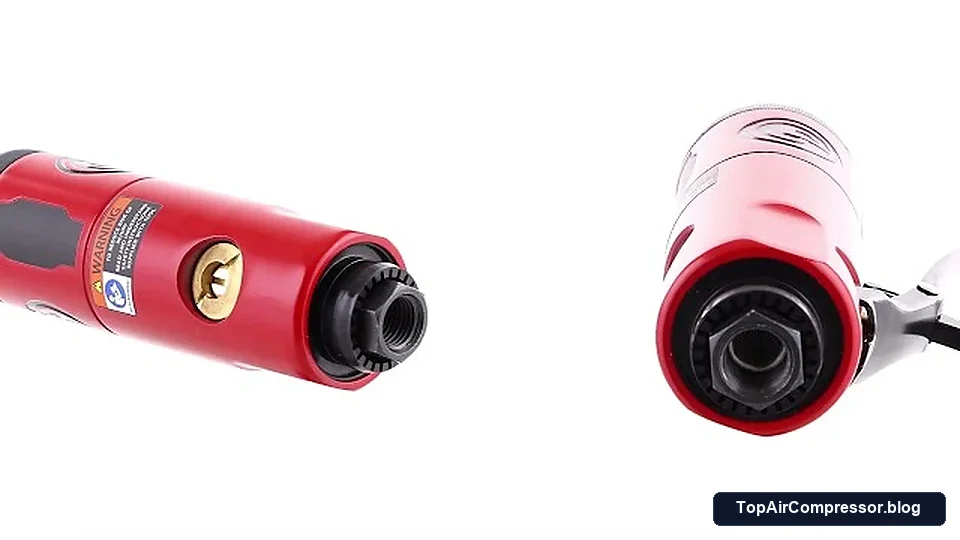
Restrictive fittings and narrow hoses create massive pressure drops before air reaches the tool inlet. Upgrade your distribution network to three-eighths inch lines to maintain proper operating pressure.
Reviewing the best CFM for air tools helps you avoid restrictive quick-disconnect couplers that choke high-volume airflow. Install high-flow industrial style fittings to ensure maximum pressure transfer without severe restriction.
Moisture separators and filter-regulator-lubricator units protect internal grinder components from water damage. Clean, dry air prevents rust formation and keeps pneumatic turbine vanes moving freely.
Avoid long coils of narrow plastic tubing between the regulator and the workstation. Rigid copper or aluminum hard piping minimizes friction loss across expansive automotive and fabrication shops.
Restrictive air lines severely limit the volume of compressed air reaching your rotary cutting tool. Using an adequate 3/8-inch inner diameter hose prevents catastrophic pressure drops over standard twenty-foot working lengths.
Quick-disconnect couplers often restrict airflow more than any other single component in your pneumatic circuit. Selecting high-flow industrial fittings ensures your die grinder receives the uninhibited volume needed for maximum RPM.
Installing a dedicated filter-regulator-lubricator unit protects internal motor components from moisture and friction damage. Set the inline regulator precisely while the tool triggers to measure dynamic operating pressure under load.
Hard-piping your shop with ¾-inch copper or aluminum tubing reduces friction losses compared to flexible rubber lines. Proper slope and drop legs prevent condensation from flooding your precision pneumatic rotary equipment.
- Use three-eighths inch minimum hoses.
- Install high-flow pneumatic couplers.
- Position moisture filters near drops.
- Avoid excessive coiled plastic lines.
Regulator Calibration Steps
Adjust your air pressure regulator while the die grinder is actively running under load. Static pressure readings drop significantly the moment you squeeze the throttle lever.
Set the dynamic operating pressure precisely to 90 PSI at the tool inlet. This ensures optimal cutting speed and prevents excessive air consumption from over-pressurization.
- Adjust regulator under active load.
- Target 90 PSI dynamic pressure.
Diagnosing Pressure Drops and Performance Lag
Sudden loss of grinder RPM usually points to blocked filters or undersized distribution piping. Check all pressure gauges while the tool runs to identify restrictive choke points.
Carbon buildup inside the exhaust port or motor housing restricts spent air evacuation. Clean internal components using approved solvents to restore factory rotational speed and efficiency.
Worn rotor vanes create internal air leakage that bypasses the mechanical turbine blades. Replace damaged internal components immediately to regain lost torque and reduce wasted air volume.
Leaking quick-disconnect seals vent valuable compressed air silently throughout your entire workshop network. Inspect all threaded connections using soapy water solution to locate hidden pneumatic leaks.
When your die grinder loses power mid-cut, check the inline pressure gauge under active load conditions. A sudden drop exceeding 15 PSI indicates severe bottlenecks within your fittings, hoses, or undersized regulator valves.
Inspect all quick-connect fittings for internal wear, restriction, or debris buildup that chokes airflow. Replacing worn standard fittings with high-flow pneumatic plugs immediately restores lost torque and prevents frustrating motor stalling.
Moisture accumulation in air lines damages internal rotary vanes and causes erratic tool behavior. Daily draining of tank condensate and maintaining working desiccant air dryers protects your investment against premature component failure.
Undersized distribution piping creates a permanent bottleneck that no compressor upgrade can completely resolve. Upgrading main lines to proper diameters guarantees sustained delivery for high-demand pneumatic applications like heavy grinding.
- Monitor gauges during tool operation.
- Clean carbon from exhaust ports.
- Replace worn rotor vanes promptly.
- Check for silent air leaks.
Voltage Drop Verification
Electric compressor motors suffer from severe power loss when connected to long extension cords. Voltage drops cause thermal overloads and reduce the pump's capacity, much like choosing the best CFM for spray painting.
Plug your heavy-duty compressor directly into a dedicated wall outlet with proper breaker sizing. Never rely on household extension cords for industrial workshop equipment power supplies.
- Avoid long compressor extension cords.
- Use dedicated heavy electrical circuits.
Routine Maintenance and Pneumatic Safety Protocols
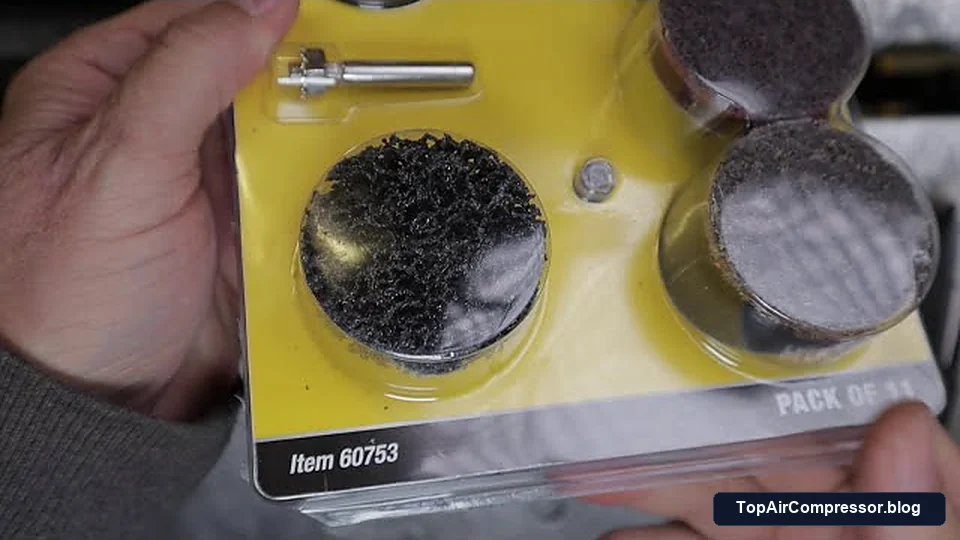
Daily lubrication is mandatory for high-speed pneumatic motors operating at elevated rotational velocities. Add three to five drops of pneumatic oil into the tool inlet before every shift.
Drain receiver tanks daily to prevent corrosive moisture accumulation from destroying the vessel interior. Accumulated water reduces available air storage capacity and contaminates downstream pneumatic tools.
Inspect abrasive burrs and carbide bits for chipped teeth before mounting them in collets. Wounded bits cause severe vibration that damages the precision spindle bearings and motor housing.
Always wear heavy eye protection, leather gloves, and hearing protection during metal grinding operations. High-velocity debris and piercing exhaust noise pose significant hazards to shop technicians.
Proper lubrication is the single most critical factor for extending pneumatic die grinder operating life. Inject three drops of pneumatic oil into the air inlet daily before starting any intensive metal fabrication work.
Inspect abrasive burrs and mounted wheels for cracks or chips before every single operational session. Operating damaged accessories at 25,000 RPM creates extreme safety hazards including catastrophic fragmentation and severe operator injury.
Always wear heavy leather work gloves, eye protection, and certified hearing protection during grinding tasks. Compressed air tools generate significant noise levels exceeding 85 decibels, requiring strict adherence to occupational safety standards.
Periodically check collet runout and spindle bearing play to ensure smooth, vibration-free rotary action. Excessive vibration fatigues operator hands and accelerates wear on carbide burr cutting edges during extended fabrication runs.
- Apply pneumatic oil daily.
- Drain storage tanks completely.
- Check carbide burrs for cracks.
- Wear certified personal protective equipment.
Collet Inspection Guidelines
Worn collets fail to grip carbide burr shanks securely during high-speed rotation tasks. Replace damaged collets immediately to prevent dangerous tool ejection hazards inside the workspace.
Clean the collet taper and spindle threads regularly with a wire brush and solvent. Proper seating ensures concentric rotation and eliminates destructive vibrational wear patterns over time.
- Inspect collets for wear.
- Clean tapers with solvent.
Frequently Asked Questions
Can I run a die grinder on a small portable pancake compressor?
Small pancake compressors completely lack the continuous CFM output required to power high-speed rotary tools effectively. The small pump will run continuously and overheat rapidly under heavy metal removal loads, leading to premature motor failure.
Always use a larger stationary compressor with sufficient storage volume and adequate motor horsepower to handle sustained pneumatic demands.
What happens if my air pressure drops below ninety PSI?
Low operating pressure causes the die grinder to lose significant rotational speed and cutting torque during fabrication work. This stall condition forces operators to push harder, which accelerates abrasive wear and damages the internal motor turbine.
Maintaining steady system pressure ensures efficient material removal and extends overall equipment service life significantly.
Do I really need to oil my pneumatic die grinder every day?
Daily lubrication is absolutely essential because high-speed rotary motors operate under intense mechanical friction at high RPM. Adding pneumatic oil prevents internal metal components from seizing and protects against destructive rust formation from residual moisture.
Skipping this vital maintenance step ruins precision turbine vanes within a very short operating timeframe.
Why does my compressor run hot when I use an angle grinder?
Heavy angle grinders demand much higher CFM volumes than standard portable compressors can supply continuously. The undersized pump works constantly at maximum capacity, generating extreme thermal energy that trips internal thermal overloads.
Upgrading to a higher-capacity two-stage compressor resolves this thermal issue and matches the tool's heavy air demand.
Can I use standard automotive hoses for a die grinder setup?
Standard quarter-inch automotive air hoses restrict airflow severely and cause massive pressure drops right at the tool inlet. Using restricted lines robs your die grinder of necessary operating pressure and reduces overall cutting efficiency.
Always install dedicated three-eighths inch or larger internal diameter hoses for high-demand pneumatic equipment networks.