How Many CFM for Framing Nailer?
Determine exact airflow needs for heavy-duty pneumatic framing nailers. Master CFM ratings to prevent pressure drops.


Framing nailers typically require 2.0 to 3.0 CFM at 90 PSI for rapid sequential firing, though actual air consumption depends entirely on your specific nailing frequency.
Looking for matching picks? See our Best Pancake Air Compressor For Framing Nailer: Top Picks.
Practical Quick-Reference Table
| Scenario / Metric | Recommended Target | Why It Matters |
|---|---|---|
| Single Framing Nailer | 2.2 CFM at 90 PSI | Ensures consistent fastener depth during intermittent framing tasks. |
| Dual Framing Nailers | 4.5 to 5.0 CFM at 90 PSI | Prevents pressure starvation when two carpenters work simultaneously. |
| Tank Capacity | 6 to 10 Gallons minimum | Buffers sudden air volume demands during rapid fastener placement. |
| Operating Pressure | 100 to 120 PSI output | Accounts for line friction losses over standard hose lengths. |
| Hose Diameter | 3/8 inch inner diameter | Maximizes volumetric airflow delivery compared to narrower lines. |
| Duty Cycle | 50% to 75% rating | Protects pump motor from overheating under heavy framing loads. |
Demystifying Air Delivery Requirements for Framing Nailers
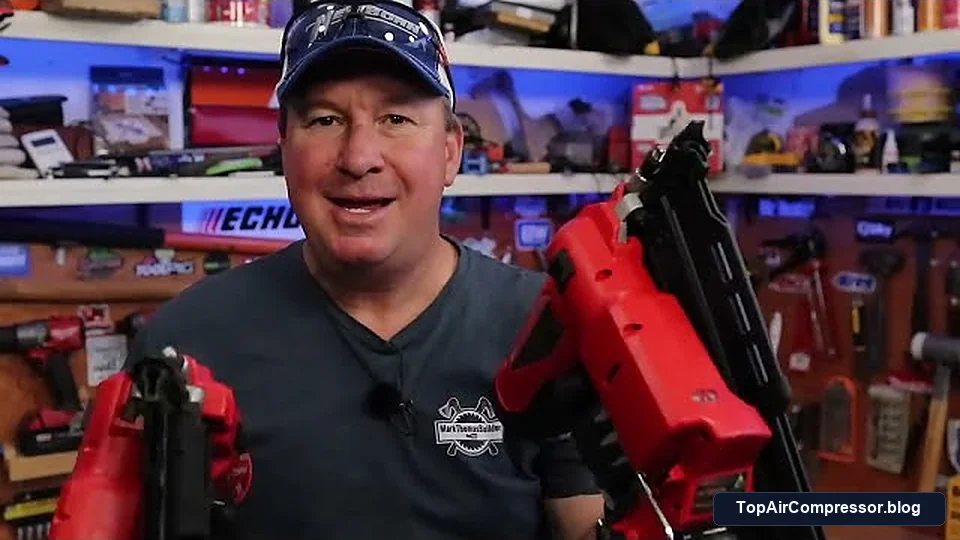
Operating a heavy-duty framing nailer demands steady pneumatic performance to sink large fasteners securely into dense lumber. Understanding true compressor output prevents frustrating stalls on the job site.
Most standard framing nailers consume roughly 0.05 to 0.10 cubic feet of air per single shot at standard operating pressures. Continuous rapid firing multiplies this baseline requirement significantly.
Manufacturers calculate tool ratings using specific duty cycles that do not reflect continuous nailing. You must scale your air supply upward if your crew drives nails in rapid succession.
Ignoring these volume metrics leads to shallow nail sets, damaged workpieces, and premature mechanical wear on your compressor pump. Proper matching guarantees seamless operation throughout your workday.
Framing nailers demand reliable pneumatic power to drive heavy fasteners into dense lumber without stalling. Understanding actual CFM delivery prevents pressure drops during rapid sequential firing on busy residential construction jobsites.
Most standard pneumatic framing nailers consume approximately 0.5 to 1.0 CFM at 90 PSI per hundred shots. However, peak demand spikes significantly higher when professional framers drive nails in rapid succession.
Operating multiple nailers simultaneously requires multiplying baseline air consumption requirements by the total active tool count. Contractors must size their main air supply to handle simultaneous trigger pulls without dropping below operational thresholds.
Ignoring manufacturer specifications leads to delayed fastener seating and increased mechanical wear inside cylinders. Selecting options from our pancake compressors for framing guide ensures consistent driving depth.
- Calculate total volume using per-shot consumption data.
- Account for multi-tool setups running off one central tank.
- Factor in pneumatic line friction and pressure drops.
- Prioritize actual delivery over peak horsepower marketing claims.
Intermittent versus Continuous Air Consumption
Pneumatic nailers operate on an intermittent duty cycle unlike continuous rotary tools such as grinders. This intermittent usage allows smaller tanks to temporarily compensate for low pump CFM.
However, sub-flooring and roof decking installation often push nailers into high-frequency cycling. Your compressor must recover tank pressure faster than your nailing speed depletes it.
- Track your average shots fired per minute accurately.
- Verify compressor recovery time between heavy nailing bursts.
Decoding Cubic Feet per Minute versus Pounds per Square Inch
Many contractors confuse static air pressure with actual volumetric flow when sizing equipment. Using our CFM and tank sizing calculator helps accurately balance system pressure and volume.
A framing nailer requires specific pressure to overcome spring resistance and drive heads flush. Without adequate CFM backing that pressure, the tank empties rapidly during use.
Regulators control the PSI delivered to your hose, but the pump must generate sufficient CFM to replenish the reservoir. Balancing both metrics ensures reliable tool actuation every time.
Always evaluate ratings given at standard operating thresholds rather than maximum unadjusted pressures. Manufacturers typically test tool efficiency at ninety pounds per square inch.
Differentiating between CFM and PSI is vital for maintaining proper pneumatic tool performance on every jobsite. While PSI measures force intensity, CFM determines the actual volume of compressed air delivered over time.
Framing nailers typically operate efficiently within a pressure range of 70 to 120 PSI. Supplying adequate air volume ensures this pressure remains stable even while driving three-inch galvanized nails into engineered lumber.
High PSI ratings mean very little if the compressor pump cannot supply enough cubic feet per minute to replenish the tank. A balanced air delivery system prevents frustrating pressure starvation during heavy framing operations.
Technicians should always evaluate pump displacement alongside Standard Cubic Feet per Minute ratings measured at standard operating pressures. This technical evaluation guarantees your compressor meets the rigorous demands of continuous framing work.
- PSI determines whether the fastener sinks completely.
- CFM determines how fast the compressor refills the tank.
- Low CFM causes unacceptable pressure lag during rapid nailing.
- Check manufacturer specifications for accurate operational baselines.
Interpreting SCFM Ratings on Equipment Labels
Standard Cubic Feet per Minute normalizes airflow measurements across varying atmospheric temperatures and humidities. This standardized metric allows fair comparisons between different compressor models.
Always verify the SCFM at 90 PSI rating rather than displacement figures. Displacement numbers only reflect piston cylinder volume without operational efficiency losses.
- Ignore theoretical pump displacement figures completely.
- Compare standardized delivery rates at working pressures.
Video Walkthrough: How to Use METABO’s Air Compressor and Nail Guns (Brad, Finish \u0026 Framing)
Evaluating Tank Capacities and Duty Cycles Under Load
Tank size acts as an air reservoir that buffers sudden volume demands during heavy nailing sequences. A larger tank prevents the motor from running continuously while framing.
Pancake compressors with two to six gallon tanks work well for minor repairs but struggle with full-scale framing. Larger twin-stack or wheelbarrow units provide necessary volume reserves.
Duty cycle percentages indicate how long a motor can run before requiring a cooling period. Exceeding recommended duty cycles drastically shortens electric motor and pump lifespans.
Job site voltage drops from long extension cords also degrade compressor performance. Ensuring adequate electrical supply protects your investment against premature thermal overloads.
Air receiver tanks act as crucial buffers, storing compressed air to handle sudden volume demands from heavy framing nailers. A larger tank capacity reduces pump run time and stabilizes output pressure during rapid nailing.
Pancake and small twin-stack compressors feature tanks ranging from two to six gallons, suiting quick punch-list framing tasks. Full-scale production framing crews generally require larger portable wheelbarrow tanks holding eight to thirty gallons.
Compressor duty cycle ratings indicate the percentage of time a pump can operate safely before requiring mandatory cooling periods. Selecting a high duty cycle prevents motor burnout when driving thousands of framing nails daily.
Continuous operation pushes electric motors and pump components past safe thermal thresholds without adequate recovery intervals. Proper tank sizing safeguards your pneumatic equipment investment while maintaining steady workflow productivity on large builds.
- Match tank volume to your daily framing production scale.
- Avoid running heavy compressors on undersized extension cords.
- Monitor motor temperature during extended framing operations.
- Drain moisture daily to preserve internal tank structural integrity.
Matching Compressor Types to Heavy Construction Demands
Job site conditions dictate whether an electric or gas-powered compressor suits your framing project best. Remote locations without temporary power require reliable gasoline-driven pneumatic units.
Oil-lubricated cast iron pumps offer superior durability for professional contractors who frame daily. Oil-free models reduce maintenance burdens but wear out faster under heavy workloads.
Twin-tank portable units balance mobility and air storage effectively for residential framing crews. Stationary vertical tanks supply massive volume for permanent workshops and multi-user environments.
Selecting the correct drive configuration ensures your equipment handles harsh weather and rough handling. Professional-grade materials withstand typical construction site impacts without failing.
Jobsite power availability heavily influences whether contractors choose gas-powered, electric, or battery-hybrid air compressors for framing. Gas-driven units deliver maximum CFM output for remote locations lacking permanent electrical grid infrastructure.
Electric-powered compressors offer quieter operation and cleaner exhaust-free performance suitable for residential indoor remodeling and framing tasks. Utilizing dedicated 15-amp circuits prevents nuisance breaker trips when powering heavy-duty compressor motors.
Twin-cylinder oil-lubricated pumps dissipate heat much more effectively than oil-free designs, extending overall equipment operational lifespan significantly. Investing in cast-iron construction ensures reliable performance across demanding commercial framing construction environments.
Rotary screw and large stationary reciprocating compressors serve massive multi-crew prefabrication shops requiring uninterrupted high-volume pneumatic air delivery. Matching compressor architecture to project scope prevents costly bottlenecks during peak construction phases.
- Choose gas power when permanent electrical service is absent.
- Select oil-lubricated pumps for extended daily professional use.
- Evaluate portability requirements for multi-level framing tasks.
- Inspect regulator valves regularly for leaks or structural wear.
Analyzing Air Tool Air Consumption and Intermittent Duty
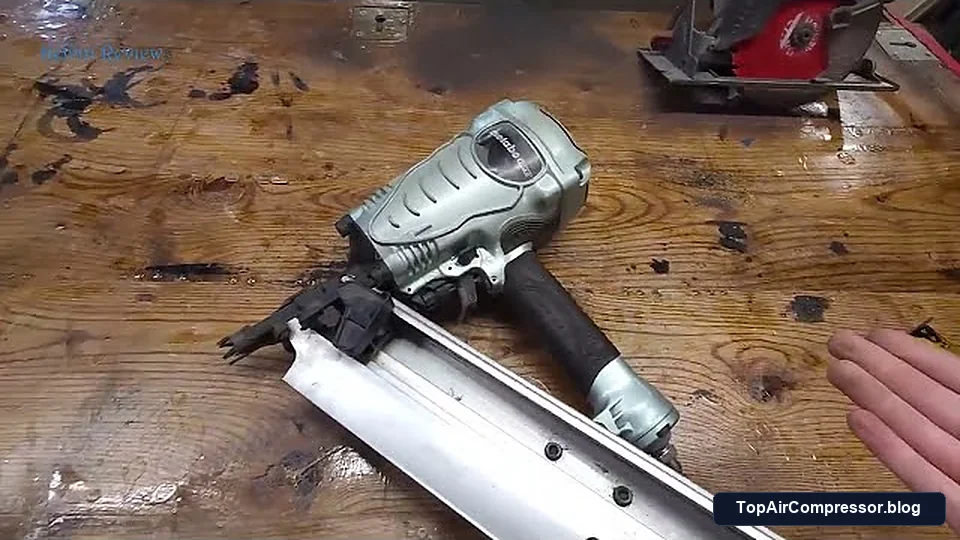
Framing nailers do not demand continuous airflow, which alters standard compressor sizing rules. The tool only consumes air during the brief moment of piston actuation and return.
Because of this cyclic nature, you can operate a nailer requiring two CFM with a slightly smaller compressor. However, simultaneous nailing by multiple crew members changes requirements drastically.
Adding a second framing nailer doubles your instantaneous air volume requirements immediately. Reviewing our framing nailer compressor sizes overview helps prevent dangerous operational pressure drops.
Understanding these operational patterns helps you avoid purchasing oversized industrial equipment while preventing underpowered setups. Precision matching optimizes both budget and job site productivity.
Pneumatic framing nailers operate on an intermittent duty cycle, meaning they consume air in rapid, short bursts rather than continuously. Calculating average air consumption requires factoring in your specific nail firing frequency per minute.
Manufacturers calculate tool air consumption using standardized industry formulas based on cylinder volume and operating pressure. Multiplying this base figure by your expected fastener count reveals true operational air requirements.
Jobsite efficiency drops sharply when technicians ignore thermal expansion and pressure drop across long pneumatic hose runs. Utilizing wide-diameter air hoses minimizes friction loss and preserves usable CFM at the tool connection.
Environmental factors like ambient temperature and high relative humidity also influence compressor efficiency and overall air delivery capability. Monitoring operating pressure gauges helps technicians identify hidden restrictions within the complete pneumatic supply circuit.
- Calculate total tool count running from shared manifolds.
- Factor in potential simultaneous firing by framing partners.
- Use high-flow fittings to eliminate restrictive bottlenecks.
- Maintain proper lubrication inside tool air inlets daily.
Video Walkthrough: Choosing a Compressor
Essential Setup Practices for Optimal Pneumatic Performance
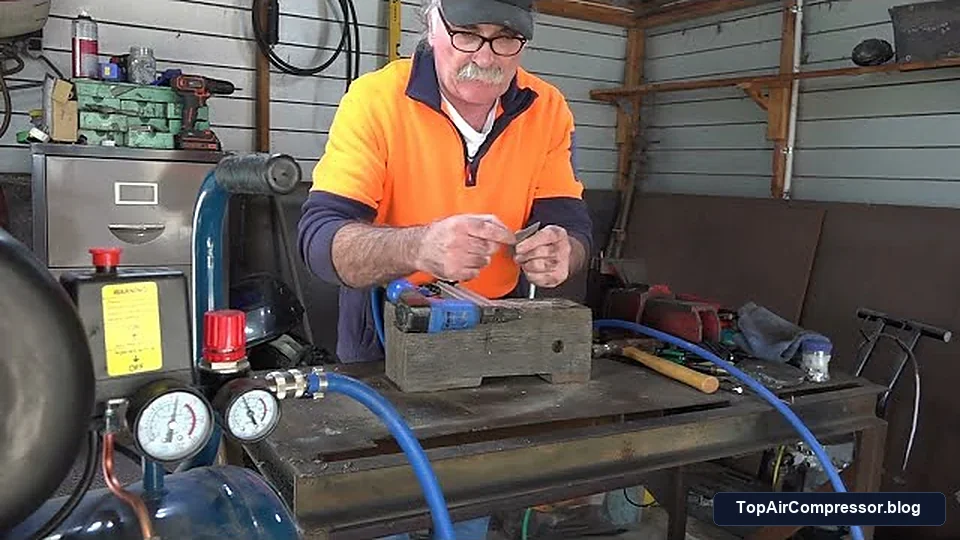
Maximizing your pneumatic system efficiency requires attention to hose diameter and fitting restrictions. Using narrow quarter-inch hoses over long distances starves framing nailers of critical airflow.
Upgrade your distribution lines to three-eighths inch inner diameter hoses for runs exceeding fifty feet. This simple adjustment preserves precious CFM delivery right at the tool handle.
Install moisture filters and automatic oilers to protect internal nailer components from corrosion. Clean, dry air extends seal life and prevents sluggish mechanical cycling in cold weather.
Regularly check quick-disconnect couplers for wear, leakage, or internal flow restrictions. Maintaining an airtight plumbing network ensures peak pressure consistency across all operations.
Correct hose sizing and fitting selection directly impact pneumatic tool velocity and site longevity. Checking our recommended framing air hoses overview helps improve downstream volumetric air delivery.
Moisture accumulation inside storage tanks causes internal corrosion and damages precision internal components within your expensive framing nailers. Routine deployment of water filter separators protects sensitive pneumatic valves from moisture contamination.
Proper lubrication remains mandatory for maintaining seal integrity and preventing premature wear in pneumatic framing tools. Injecting pneumatic tool oil directly into the air inlet ensures smooth piston movement under heavy loads.
Regular inspection of quick-connect fittings, pressure regulators, and safety relief valves prevents unexpected air leaks during critical structural framing phases. Maintaining peak system pressure guarantees reliable fastener depth control on every job.
- Deploy wider hoses to reduce frictional pressure losses.
- Incorporate water separators in humid job site environments.
- Inspect all threaded connections for air leak symptoms.
- Keep pneumatic tool inlets clean and properly lubricated.
Frequently Asked Questions
Can I use a small pancake compressor for framing?
Yes, small pancake units handle occasional stud repairs or minor DIY framing tasks effectively. However, rapid continuous nailing will quickly deplete the tiny tank and overheat the motor.
What size air compressor runs two framing nailers?
Running two framing nailers simultaneously requires at least 4.5 to 5.0 CFM at 90 PSI. A dual-tank or larger wheelbarrow compressor prevents noticeable pressure drops during joint work.
Does hose length affect framing nailer performance?
Long hoses create internal friction that reduces working pressure at the nailer handle. Using three-eighths inch hoses minimizes this pressure drop over extended distances on large framing sites.
Why does my compressor run constantly while framing?
Constant running indicates your compressor CFM output is lower than your total air consumption. Check for hidden air leaks in your fittings or upgrade to a higher-capacity unit.
What PSI should my framing nailer regulator be set to?
Most framing nailers operate efficiently between 100 and 120 PSI depending on lumber hardness. Always consult your specific tool manual before adjusting output pressure regulators.