How Many CFM Needed for Sandblasting?
Master abrasive blasting air delivery. Discover exact CFM metrics to prevent pressure drops.

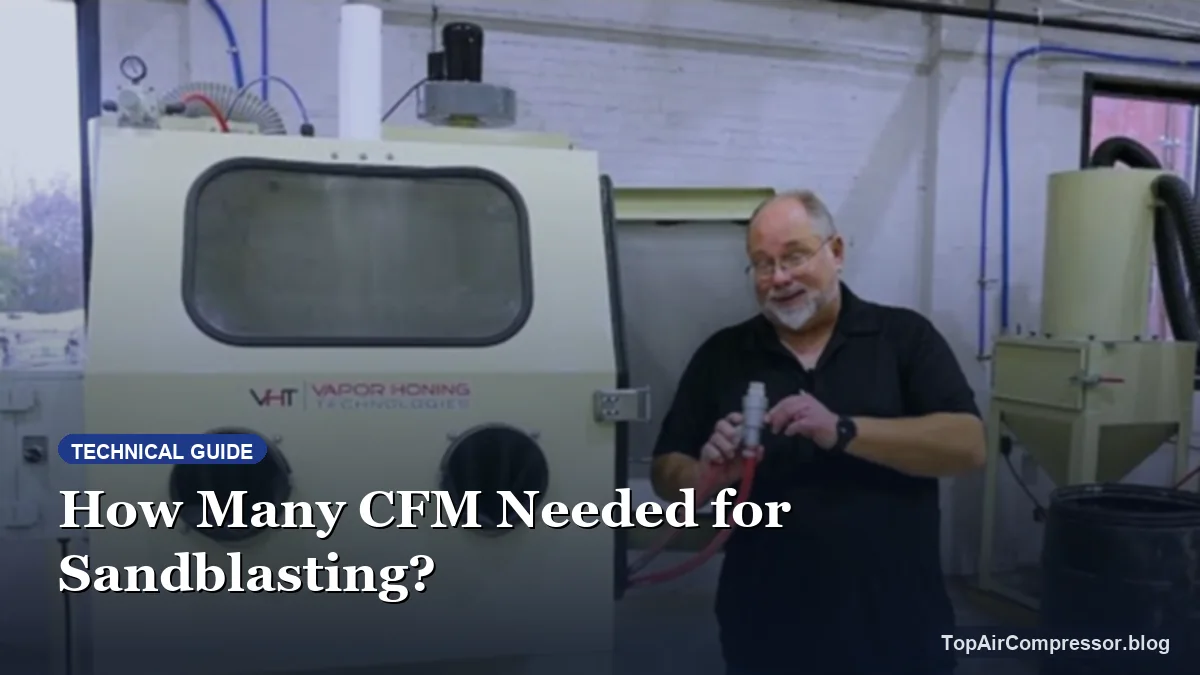
Most siphon setups demand 15 to 25 CFM at 90 PSI, while heavy industrial pressure blasters often require 50 to 100+ CFM depending entirely on your specific nozzle orifice diameter.
Looking for matching picks? See our Best 5 Cfm Air Compressor: Top Workshop Picks.
Practical Quick-Reference Table
| Scenario / Metric | Recommended Target | Why It Matters |
|---|---|---|
| Siphon Cabinet (1/8 inch nozzle) | 15-20 CFM at 80 PSI | Ensures continuous basic media flow. |
| Pressure Pot (3/16 inch nozzle) | 45-55 CFM at 100 PSI | Maintains high production abrasive speed. |
| Industrial Blast Room (1/4 inch) | 90-100 CFM at 100 PSI | Powers large-scale surface prep operations. |
| Duty Cycle Requirement | 100 Percent Continuous | Prevents thermal overloads during long shifts. |
| Air Receiver Tank Size | 80 to 120 Gallons | Buffers pressure drops and cools compressed air. |
| Moisture Filtration | Refrigerated Air Dryer + Filter | Keeps abrasive grit dry and prevents clogs. |
Fundamental Air Delivery Metrics for Abrasive Blasting
Understanding compressed air physics remains critical before selecting any abrasive blasting equipment. A mismatch between your compressor output and blasting demands leads directly to erratic media flow and poor surface finishing results.
Cubic feet per minute measures the raw volume of air delivered by your pump. When evaluating air compressors, look closely at CFM at 90 PSI rather than maximum pressure ratings to judge real capability.
Abrasive blasting requires continuous air consumption unlike intermittent tools like impact wrenches. Consult our best air compressor for sandblasting guide to match sustained volumetric output with your specific blast nozzle requirements.
Always calculate a safety margin above your calculated tool demands to prevent motor strain. Equipment longevity depends on maintaining proper operating headroom during extended commercial restoration and surface preparation tasks.
- Always calculate a twenty percent safety margin above calculated tool demands.
- Verify pump displacement versus actual delivered standard cubic feet per minute.
- Account for altitude and ambient temperature losses when sizing equipment.
- Ensure your motor horsepower matches the required continuous pump displacement.
Evaluating Volumetric Efficiency
Volumetric efficiency determines how well a compressor pump converts physical displacement into usable airflow. Industrial piston and rotary screw units handle continuous abrasive demands very differently.
Rotary screw compressors excel in high-demand sandblasting applications by maintaining steady output temperatures. Piston pumps require larger storage tanks to prevent excessive heat buildup during extended blasting runs.
- Monitor operating temperatures to prevent lubricating oil breakdown.
- Drain condensate tanks daily to protect downstream pneumatic components.
Nozzle Orifice Diameter and Air Volume Calculations
The physical size of your blast nozzle dictates your exact cubic feet per minute requirement. Every incremental increase in orifice diameter exponentially increases the volume of compressed air needed for operation.
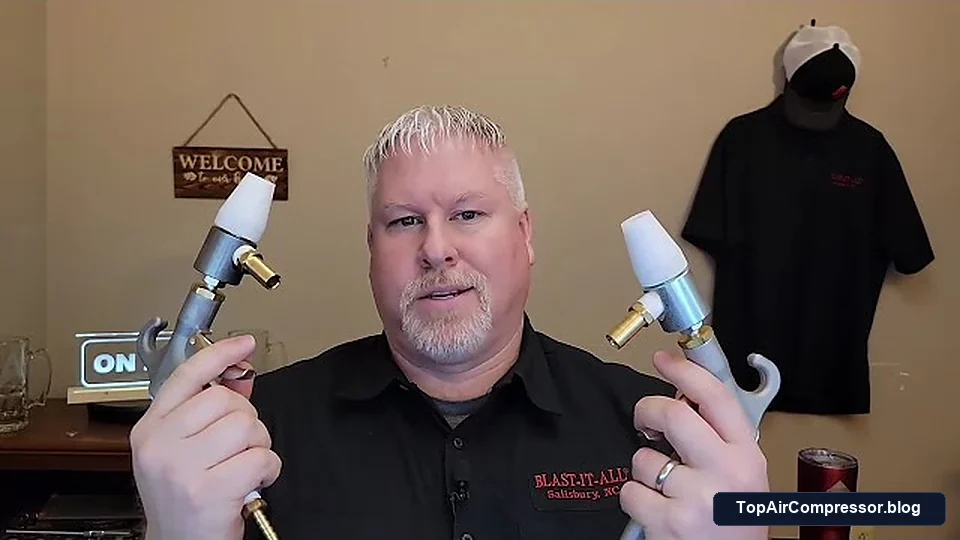
Standard formulas link nozzle bore size directly to working pressure standards. Reviewing our best cfm for air tools breakdown helps determine exactly how a 3/16 inch nozzle demands high continuous airflow.
If you upgrade to a larger orifice to speed up work, your compressor must scale accordingly. Ignoring this math causes sudden pressure starvation, which halts abrasive feed and ruins uniform surface preparation.
Always measure your nozzle wear periodically because enlarged bores consume significantly more air over time. Worn orifices catch operators off guard by quietly exceeding the maximum output of their current compressor.
- Measure nozzle throat diameter regularly with precision drill bit gauges.
- Match hose inner diameters to nozzle requirements to prevent friction losses.
- Replace tungsten carbide inserts before internal wear spikes air consumption.
- Calculate total system pressure drop across long hose runs.
Standard Nozzle Flow Chart Breakdown
A tiny 1/8 inch nozzle requires approximately 20 CFM at 90 PSI for basic tasks. Stepping up to a 1/4 inch variant pushes air demands past 100 CFM instantly.
Professional blasters always size their compressor based on the maximum expected nozzle wear. This proactive engineering prevents sudden equipment failure during critical commercial restoration projects.
- Document baseline airflow metrics for every individual blast nozzle used.
- Avoid restricting hose diameters near the inlet valve connections.
Video Walkthrough: How big of a compressor do I need for sandblasting?
Operating Mechanics: Siphon Versus Pressure Blasting Systems
Blasting system design profoundly influences overall air consumption and compressor selection criteria. Siphon setups use a venturi effect to pull abrasive media into the high-speed airstream, requiring moderate airflow.
Pressure blast systems pressurize the entire media vessel, forcing abrasive directly into the hose. Reviewing our best cfm for spray painting guide helps illustrate why this setup demands robust output.
Choosing a siphon cabinet allows smaller hobbyist compressors to handle light restoration tasks successfully. Commercial restoration shops rely exclusively on pressure pots to maximize material removal rates on heavy steel.
Understanding these mechanical differences prevents costly purchasing mistakes when outfitting a new workshop. Evaluate your daily production goals carefully before committing to a specific abrasive delivery architecture.
- Siphon systems trade high impact velocity for lower equipment acquisition costs.
- Pressure vessels eliminate pressure drop across the media mixing valve.
- Match compressor duty ratings to your preferred abrasive delivery method.
- Inspect pickup tubes regularly for wear in siphon blast cabinets.
Media Feed Dynamics and Air Efficiency
Efficient media metering valves optimize the air-to-abrasive ratio for maximum cutting speed. Poorly tuned valves waste valuable compressed air without improving the underlying surface cleaning rate.
Balancing media volume with available CFM ensures a steady, surging-free spray pattern. Fine-tuning this mixture protects delicate substrates from pitting while maximizing productivity across flat metal panels.
- Calibrate metering valves according to media density and particle size.
- Keep abrasive materials completely dry to maintain smooth feed rates.
Industrial Cabinet Configurations and Internal Air Demographics
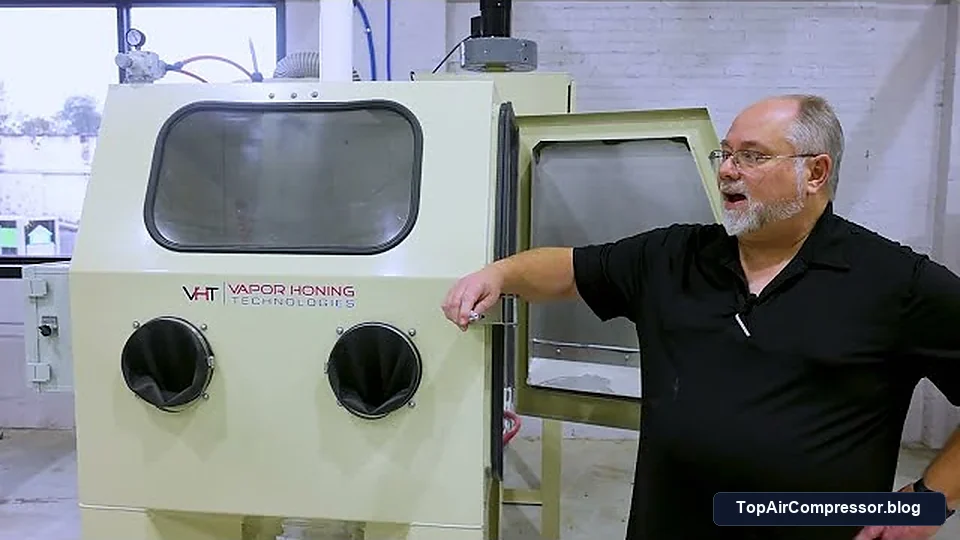
Enclosed blast cabinets introduce unique ventilation and dust collection air demands. Beyond the nozzle consumption, your compressor setup must sometimes power pneumatic door seals and automated media reclaimers.
Cabinet dust collectors require periodic reverse-pulse cleaning using compressed air bursts. These high-volume air demands draw heavily from your primary receiver tank during operation cycles.
Facility layout also dictates how far compressed air travels from the receiver to the cabinet. Long piping runs introduce friction losses that reduce effective pressure at the blast gun inlet.
Always install appropriately sized distribution piping made from approved materials like copper or aluminum. Avoid flexible rubber hoses for permanent main line runs to prevent excessive pressure drops.
- Incorporate drop legs with automatic drains to capture condensation in lines.
- Size main distribution headers larger than compressor outlet connections.
- Isolate blast cabinets from vibration using flexible compressor connection hoses.
- Check cabinet regulators daily to ensure stable working pressure delivery.
Ventilation and Blast Enclosure Demands
Dust collectors pull negative pressure inside cabinets to maintain clear operator visibility. Electric blowers handle most extraction, but ancillary pneumatic controls still rely on stable air delivery.
Maintaining proper cabinet airflow prevents fine dust from obscuring your workpiece during complex restoration steps. Clean visibility ensures uniform surface treatment without missed spots or over-blasting.
- Replace dust collector filter cartridges according to manufacturer operating hours.
- Inspect cabinet window protective sheets regularly for optimal operator vision.
Environmental Air Treatment and Moisture Management Protocols
Moisture contamination destroys abrasive blasting productivity by causing media to clump inside lines. Compressed air naturally generates heavy condensation as hot air cools inside storage tanks.
Installing an efficient refrigerated air dryer protects your abrasive media from humidity clogs. Desiccant drying systems provide even lower dew points for extremely humid regional operating environments.
Coalescing filters must be placed strategically upstream from your blast pot or cabinet regulator. These filters trap microscopic oil aerosols and liquid water before they contaminate the clean abrasive.
Neglecting air treatment protocols ruins delicate blast finishes and causes severe corrosion inside valves. Prioritize robust filtration alongside your raw CFM calculations to guarantee reliable workshop operations.
- Position bulk water separators directly after the compressor tank outlet.
- Monitor filter element differential gauges to schedule timely cartridge replacements.
- Insulate long air lines passing through unheated workshop areas.
- Perform daily manual tank drains if automatic drain valves fail.
Selecting the Right Filtration Train
A complete air treatment train includes a primary separator, refrigerated dryer, and coalescing filter. This multi-stage approach ensures bone-dry media delivery for high-specification industrial coatings.
Skipping air treatment stages leads directly to frequent nozzle clogging and abrasive waste. Investing in proper filtration saves hours of frustrating troubleshooting during important commercial projects.
- Check dryer refrigerant pressures monthly during peak summer operations.
- Use oversized filter housings to minimize internal airflow restriction drops.
Video Walkthrough: What Size Air Compressor Do You Need To Sandblast?
Identifying System Bottlenecks and Insufficient Air Supply
Recognizing the warning signs of an undersized air compressor prevents ruined workpieces. When your blast pressure drops rapidly during use, your compressor cannot match the nozzle demand.
Pulsating media flow and weak abrasive impact indicate severe volumetric starvation. Continuing to blast under these conditions causes premature equipment wear and extremely slow material removal rates.
Check your pressure gauges at the nozzle inlet while actively blasting material. A drop exceeding ten to fifteen pounds per square inch points to restricted piping or inadequate pump capacity.
Upgrading storage tank capacity sometimes resolves minor intermittent pressure drops without buying a new pump. Using our cfm and tank sizing calculator helps determine if volumetric deficits require a larger compressor.
- Monitor tank pressure recovery times after completing a long blast cycle.
- Inspect quick-disconnect fittings for restricted internal port diameters.
- Check drive belts for slippage on belt-driven reciprocating compressor pumps.
- Verify that unloader valves operate correctly during continuous load cycles.
Diagnostic Steps for Pressure Recovery
Time how long your compressor takes to refill the receiver tank from empty. Slow recovery times signal worn piston rings, leaking valves, or an overall undersized pump displacement.
Isolate different sections of your workshop pneumatic network to locate hidden pressure leaks. Fixing minor air leaks preserves valuable CFM for your demanding abrasive blasting operations.
- Use ultrasonic leak detectors to pinpoint hard-to-find pneumatic line leaks.
- Test check valves for backflow leakage during shutdown phases.
Preventive Maintenance for High-Volume Blast Compressors
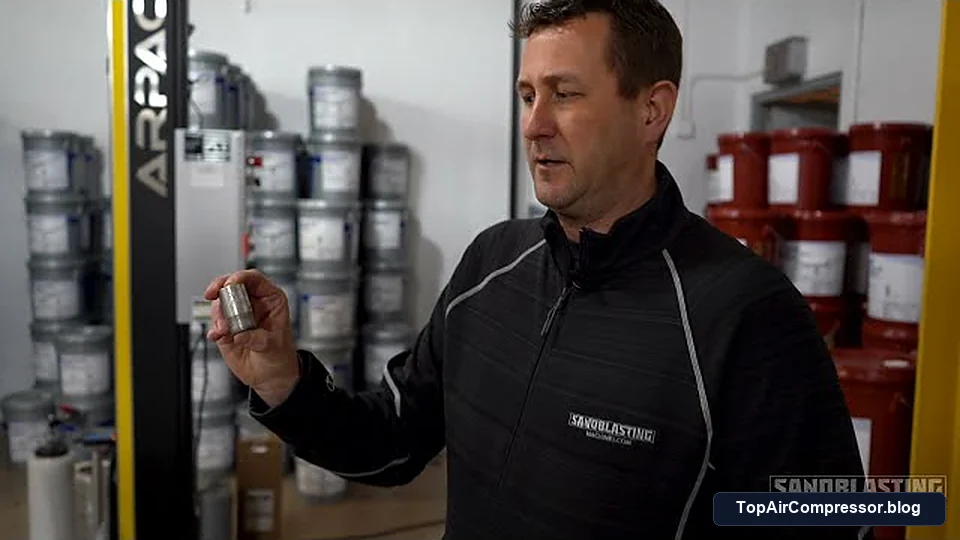
High-volume compressors working in dusty abrasive environments require rigorous maintenance schedules. Abrasive dust particles easily enter intake filters, causing rapid cylinder wall scoring and premature pump failure.
Inspect air intake filter elements weekly and replace them immediately when clogged. Clean intake filters ensure maximum volumetric efficiency and prevent unnecessary strain on electric drive motors.
Change compressor lubricating oil according to heavy-duty industrial operating hours. Synthetic oils resist thermal breakdown better than mineral oils during continuous, high-load abrasive blasting shifts.
Test pressure relief safety valves periodically to ensure proper overpressure protection. Diligent preventive maintenance guarantees consistent CFM output and extends the operational lifespan of your equipment.
- Clean intercoolers and aftercoolers regularly to maintain optimal operating temperatures.
- Check electrical motor amperage draws against nameplate specifications monthly.
- Inspect belt tensions and alignment on reciprocating compressor packages.
- Maintain detailed logs of all completed maintenance procedures.
Managing Thermal Loads and Duty Cycles
Extended blasting sessions generate extreme heat that stresses pump components. Ensure your compressor room features adequate ventilation to dissipate thermal loads effectively during hot weather.
Exceeding recommended duty cycles causes lubricating oil to thin out and lose effectiveness. Protect your capital investment by matching compressor run times to manufacturer thermal specifications.
- Install auxiliary cooling fans if ambient room temperatures exceed limits.
- Monitor thermal overload relays for frequent tripping during heavy use.
Frequently Asked Questions
What size air compressor do I need for a small blast cabinet?
Small benchtop blast cabinets utilizing a 1/8 inch nozzle typically require 15 to 20 CFM at 90 PSI for continuous operation. You should pair this equipment with at least a 60-gallon receiver tank to maintain stable pressure.
Can I use a portable garage compressor for sandblasting?
Standard oil-free garage compressors rated at low CFM cannot handle continuous abrasive blasting demands. Attempting to use them results in immediate pressure drops, constant cycling, and permanent thermal motor overloads.
Why does my blast pressure drop after a few minutes?
Pressure drops usually indicate that your compressor's CFM output is lower than your nozzle consumption rate. Your receiver tank depletes much faster than the pump can replenish the required air volume.
Does hose length affect my sandblasting CFM?
Long air hoses introduce noticeable friction losses that reduce effective working pressure at your blast gun inlet. Using properly oversized supply piping helps minimize these frustrating pressure drops across extended workshop runs.
How does media type affect air compressor requirements?
Heavier abrasive media like steel grit require higher particle velocity and greater pressure to cut effectively. This increases your overall CFM and horsepower demands compared to lighter glass bead media.