How Many SCFM for Impact Wrench?
Selecting the correct airflow capacity ensures continuous fastener removal without pressure drops. Proper matching protects pneumatic tools from premature wear.

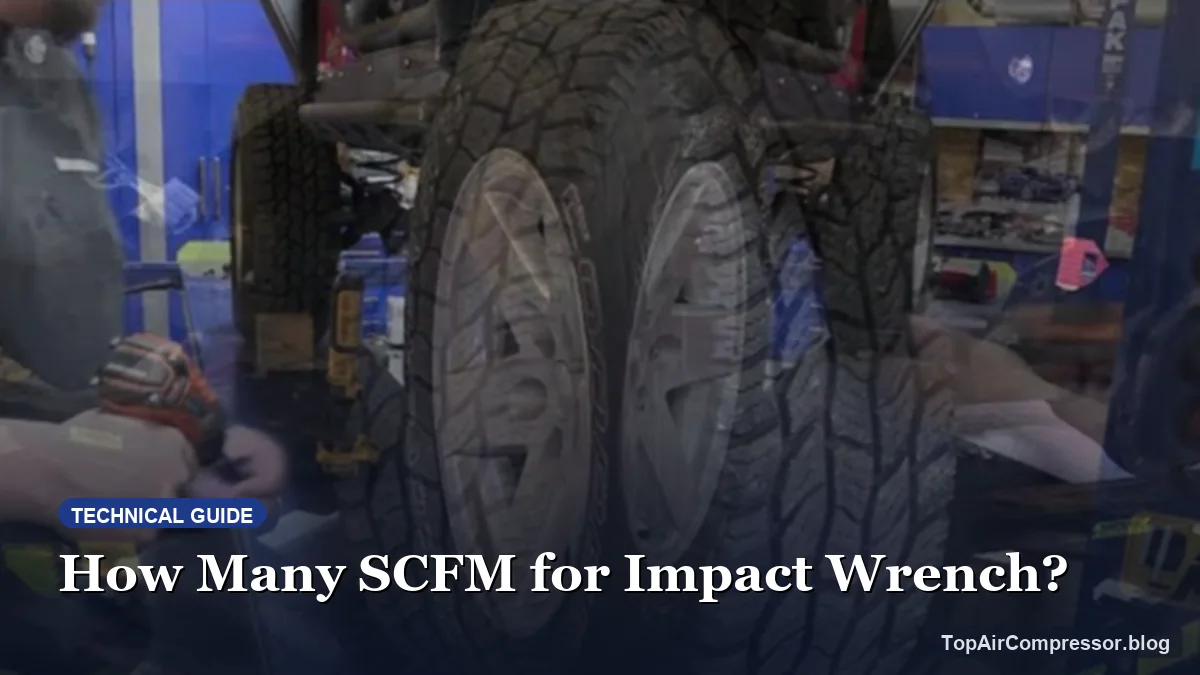
Standard impact wrenches require 4 to 8 SCFM at 90 PSI for continuous operation. Always multiply base tool requirements by a 1.25 safety factor to account for line losses.
Looking for matching picks? See our Best Air Compressor For Impact Wrench: Top Picks.
Practical Quick-Reference Table
| Scenario / Metric | Recommended Target | Why It Matters |
|---|---|---|
| 3/8-inch impact wrench | 3 to 5 SCFM at 90 PSI | Prevents stalling during routine automotive suspension work. |
| 1/2-inch impact wrench | 4 to 8 SCFM at 90 PSI | Provides adequate torque for stubborn lug nuts and bolts. |
| 3/4-inch impact wrench | 10 to 14 SCFM at 90 PSI | Handles heavy commercial truck maintenance without pressure starvation. |
| 1-inch heavy-duty impact | 20 to 30 SCFM at 90 PSI | Delivers continuous high-volume air for industrial structural bolting. |
| Receiver tank volume | 20 to 30 gallons minimum | Buffers intermittent high-demand air usage effectively. |
| Hose internal diameter | 3/8 inch or larger | Reduces friction loss over extended working distances. |
Fundamentals of Pneumatic Airflow and Standard Cubic Feet per Minute
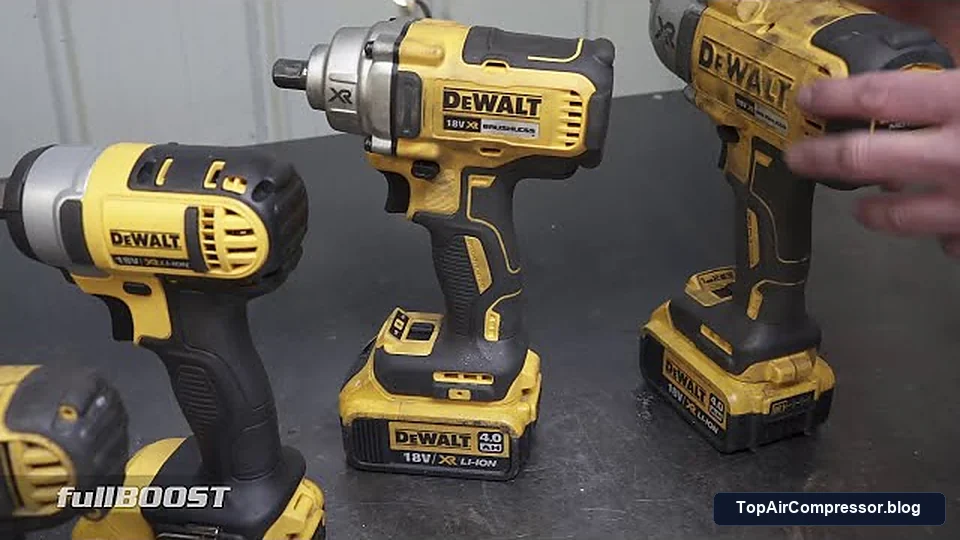
Pneumatic tools rely on steady volumes of compressed air to generate mechanical rotation. Understanding standard cubic feet per minute prevents underpowered setups from stalling during critical fastener removal tasks.
Air compressor pumps store ambient air inside pressurized metal cylinders. Finding the right best air compressor for impact wrench guarantees reliable fastener removal during heavy mechanical work.
Standardized measurements evaluate air delivery at sea level conditions. This baseline ensures technicians compare different compressor models using identical thermodynamic and atmospheric benchmarks.
Ignoring these fundamental airflow ratings often results in rapid pressure decay. Your impact wrench will quickly lose striking power, leaving rusted lug nuts firmly stuck in place.
Standard Cubic Feet per Minute measures volumetric flow rate under standardized baseline conditions of 68 degrees Fahrenheit and sea-level pressure, allowing technicians to compare different compressor outputs consistently across varying ambient shop environments.
Impact wrenches demand high instantaneous volumes because their internal air motors cycle rapidly against heavy spring-loaded hammers, requiring sustained delivery rates that far exceed the average consumption figures printed on consumer packaging.
Restrictive fittings and undersized hoses create massive pressure drops that starve pneumatic tools of necessary mass flow, forcing compressors to work harder while impact torque output plummets dangerously below required fastening thresholds.
Maintaining a minimum operating pressure of 90 PSI directly at the tool inlet ensures that internal vanes actuate fully, delivering the calibrated impact blows required for heavy-duty automotive and structural steel assembly applications.
- SCFM measures gas volume under standardized temperature and pressure parameters.
- Compressed air tools require both adequate pressure and sustained volume delivery.
- Ambient humidity affects atmospheric intake efficiency during high-duty cycles.
- Internal tool friction converts pneumatic energy into mechanical work and heat.
The Role of Atmospheric Pressure in Air Delivery
Ambient atmospheric pressure fluctuates based on local weather patterns and elevation. Higher altitudes reduce the mass of oxygen and nitrogen entering the compressor intake filter.
Compressor pumps must work harder at high elevations to produce equivalent output. Technicians operating in mountainous regions should always increase their compressor capacity safety margins.
- Elevation gains decrease compressor volumetric efficiency significantly.
- Intake air temperature alters the density of delivered pneumatic volume.
Decoding Manufacturer Air Tool Flow Specifications Safely
Interpreting tool manufacturer data requires careful attention to duty cycle ratings. Most impact wrenches operate on an intermittent duty cycle, meaning they consume air in short, powerful bursts.
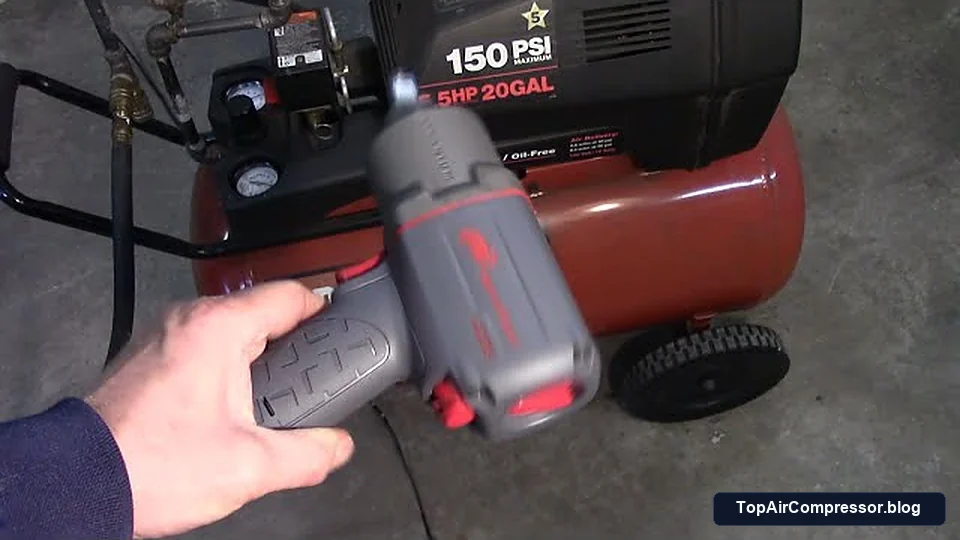
Continuous consumption ratings differ drastically from intermittent requirements. Manufacturers often list free air delivery alongside peak consumption to help technicians size their workshop systems accurately.
Always verify whether the stated CFM is continuous or calculated. Utilizing peak consumption figures prevents unexpected pressure drops during prolonged fastener extraction procedures.
Check operating pressure ratings to ensure your regulator matches tool specifications. Supplying excessive pressure causes internal motor damage, while low pressure reduces impact torque.
Tool manufacturers typically quote air consumption using a 25 percent duty cycle, which assumes the trigger is pulled for only fifteen seconds out of every single operational minute during standard assembly line tasks.
Professional technicians must multiply these baseline consumption figures by at least four when evaluating equipment for continuous production environments where impact wrenches operate under heavy load for extended, uninterrupted maintenance periods.
Always verify whether stated specifications refer to actual operational air consumption or theoretical free air delivery, as misleading marketing metrics can severely compromise pneumatic system design and lead to premature compressor burnout.
Reviewing official engineering data sheets helps prevent costly under-sizing mistakes, ensuring your compressed air infrastructure safely accommodates both peak impact tool demands and auxiliary shop equipment without excessive thermal overload.
- Intermittent ratings assume active trigger time represents twenty percent of operation.
- Continuous CFM ratings apply to grinders or sanders rather than impact wrenches.
- Always confirm pressure values are measured directly at the tool inlet.
- Manufacturer specifications assume clean, dry air supplied via proper piping.
Interpreting Duty Cycle Percentages for Shop Planning
Duty cycle describes the percentage of time a compressor runs safely within a ten-minute window. Exceeding thermal limits leads to premature pump failure and oil breakdown.
Impact wrenches demand high initial starting torque but consume minimal average air. Matching your compressor pump displacement to this duty cycle ensures reliable longevity.
- Standard shop compressors typically feature a fifty percent duty cycle.
- Exceeding thermal ratings triggers automatic thermal overload protection switches.
Video Walkthrough: Tips on Buying Your First Air Compressor | SCFM \u0026 PSI Explained
Evaluating Drive Sizes and Corresponding Air Consumption Rates
Drive size serves as the most reliable indicator of general air consumption. A compact three-eighths inch wrench requires modest airflow because its internal motor chambers are relatively small.
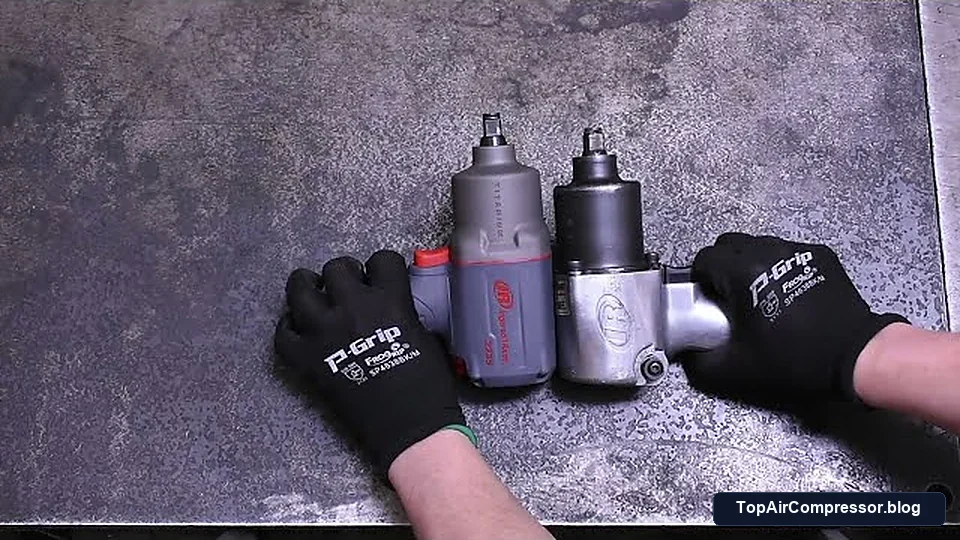
Stepping up to a standard half-inch impact wrench demands significantly higher volume. These versatile tools tackle stubborn suspension fasteners, requiring robust air delivery systems.
Heavy-duty three-quarter-inch and one-inch models consume massive amounts of compressed air. Industrial maintenance operations must utilize multi-stage compressors to maintain stable line pressure.
Matching the correct compressor displacement to your specific drive size prevents frustration. Undersized compressors will constantly cycle while mechanics wait for tank pressure recovery.
Compact quarter-inch and three-eighths-inch impact wrenches typically consume between 3 and 4 SCFM at ninety pounds per square inch, making them ideal for light interior trim work and general fastener removal tasks.
Standard half-inch drive models utilized in automotive repair shops generally demand 5 to 8 SCFM, requiring robust reciprocating compressors equipped with at least thirty-gallon tanks to maintain steady working line pressures.
Heavy-duty three-quarter-inch and one-inch industrial impact wrenches require massive airflow rates exceeding 10 to 14 SCFM, necessitating multi-stage stationary compressors with high horsepower ratings to prevent severe pneumatic starvation during heavy truck maintenance.
Matching the correct drive size to your specific application prevents unnecessary energy waste while guaranteeing sufficient torque delivery for stubborn lug nuts and corroded structural bolts found in heavy equipment yards.
- Small 3/8-inch drives generally need 3 to 5 SCFM at 90 PSI.
- Standard 1/2-inch drives typically consume between 4 and 8 SCFM.
- Industrial 3/4-inch impacts demand up to 14 SCFM for heavy loads.
- Large 1-inch models require 20 or more SCFM for continuous bolting.
Balancing Torque Output With Pneumatic Efficiency
Modern twin-hammer mechanisms maximize impact frequency while minimizing air waste. Selecting efficient internal designs reduces overall compressor capacity requirements in tight workshops.
Older pneumatic designs often leak air internally around worn rotor blades. Routine maintenance restores original tool efficiency and prevents unnecessary compressor runtime.
- Twin-hammer impacts deliver dual strikes per revolution for maximum force.
- Worn rotor vanes allow compressed air to bypass mechanical work areas.
The Critical Relationship Between Tank Volume and Operating Duty Cycle
Receiver tanks act as vital reservoirs for intermittent pneumatic applications. A larger storage tank buffers sudden air demands, allowing smaller pumps to handle heavy impact wrench usage.
When an impact wrench fires, air empties rapidly from the tank. Reviewing the best air impact wrench for small compressor setups helps you match tool consumption to limited tank volumes.
A twenty-gallon tank provides sufficient buffer for light automotive repair work. Heavy commercial applications demand sixty gallons or more to prevent continuous pump cycling.
Relying solely on tank capacity without adequate pump CFM leads to eventual starvation. The compressor must eventually replenish the stored air faster than your tools consume it.
A larger air receiver tank acts as a vital pneumatic reservoir, buffering sudden volumetric demands and preventing the compressor pump from cycling continuously during high-intensity impact wrench operation in busy shops.
Operating a high-draw impact wrench on a tiny six-gallon tank forces the electric motor to run constantly, generating excessive heat that degrades pump oil and drastically shortens overall equipment service life.
Experts recommend pairing industrial impact wrenches with storage tanks of at least 60 gallons to ensure adequate cooling time for the compressor pump and stable downstream operating pressures throughout the workday.
Proper tank sizing stabilizes pressure fluctuations, which directly protects sensitive pneumatic valves inside the impact mechanism and ensures consistent torque delivery across multiple rapid sequential fastening cycles without hesitation.
- Storage tanks cool compressed air and collect harmful condensed moisture.
- Larger receivers reduce motor start frequency and extend electrical longevity.
- Pressure switches control pump activation based on tank pressure levels.
- Drain valves must be opened daily to prevent internal tank corrosion.
Calculating Effective Storage Reserve During Heavy Use
Effective reserve capacity depends on both tank volume and pressure differential. Utilizing a higher pressure band stores more usable air mass within identical physical dimensions.
Regulators downstream ensure your impact wrench receives a steady ninety PSI regardless of tank storage pressure fluctuations during heavy fastening cycles.
- Store air at one hundred seventy-five PSI for greater usable reserve volume.
- Always install secondary regulators to protect sensitive downstream pneumatic tools.
Mathematical Methods for Calculating Multi-Tool Shop Requirements
Professional shops operating multiple air tools simultaneously require careful mathematical planning. Summing the individual SCFM ratings of every tool provides an accurate baseline figure.
Not all tools operate at the exact same moment during routine workflow. Applying a diversity factor prevents technicians from purchasing excessively oversized industrial compressor systems.
Multiply your total combined tool consumption by an efficiency safety margin. This calculation accounts for minor pipeline leaks, friction losses, and aging compressor pump wear.
Documenting peak simultaneous usage guarantees consistent performance across all service bays. Proper system sizing eliminates pressure drops that compromise technician productivity and tool longevity.
Calculating total shop air requirements involves summing the individual SCFM ratings of every pneumatic tool that might operate simultaneously, applying a realistic usage diversity factor based on daily workflow patterns.
For example, running two impact wrenches and one die grinder simultaneously requires multiplying their combined base air consumption by a safety margin coefficient of 1.25 to account for simultaneous peak demands.
Incorporating a 20 percent safety margin into your final calculation protects against future tool additions, unexpected line leakage, and natural compressor pump efficiency degradation over years of demanding industrial service.
Utilizing accurate mathematical formulas ensures your facility avoids costly retrofits, providing reliable pneumatic power that satisfies all current and near-future production demands without unexpected pressure drops or equipment failures.
- Add individual tool SCFM ratings for absolute maximum simultaneous demand.
- Apply a diversity factor between 0.6 and 0.8 for active multi-bay shops.
- Include a twenty percent safety margin for undetected pneumatic line leaks.
- Account for future tool additions when sizing permanent hard-piping layouts.
Factoring Pipeline Restrictions Into Total System Design
Long distribution piping creates internal friction that reduces working pressure. Using undersized copper or aluminum lines chokes airflow before it reaches your impact wrench.
Install smooth-bore piping networks with minimal ninety-degree bends to preserve pressure. Proper pipe sizing ensures maximum SCFM delivery straight to the drop outlets.
- Main distribution loops should feature larger diameters than drop lines.
- Eliminate quick-disconnect fittings with restrictive internal valve orifices.
Video Walkthrough: Impact Wrench With A Small Air Compressor - Is It possible?
Distinguishing Between Actual CFM and Standard Flow Ratings
Marketing materials often display confusing terminology regarding air compressor delivery rates. Actual cubic feet per minute measures true output under real-world ambient operating conditions.
Displacement CFM calculations only measure the physical volume of the cylinder bore. This theoretical number ignores volumetric inefficiencies caused by valve resistance and operating heat.
Always review actual delivery figures rather than raw displacement ratings. Using our cfm tool sizing calculator provides a realistic assessment of how much air your compressor actually delivers.
Understanding these metric distinctions prevents costly purchasing mistakes in professional environments. True performance relies on delivered air mass rather than pump displacement mathematics.
Standard Cubic Feet per Minute measures output under ideal laboratory conditions, whereas Actual Cubic Feet per Minute accounts for real-world environmental variables like ambient humidity, barometric pressure, and operating temperatures.
Because compressed air heats up significantly during the compression stroke, ACFM values provide a much more realistic measurement of the actual mass of air delivered to your heavy-duty impact wrenches.
When sizing compressors, always prioritize manufacturer ratings listed in ACFM or delivery volume at 90 PSI rather than displacement figures, which merely measure total piston displacement without accounting for volumetric efficiency losses.
Understanding this crucial technical distinction prevents professional mechanics from purchasing underpowered machinery that fails to maintain adequate pressure when operating demanding pneumatic tools under heavy, continuous commercial workloads.
- ACFM reflects true volumetric output at specific discharge pressures.
- Displacement ratings exaggerate compressor capability by ignoring thermodynamic losses.
- Standard conditions assume specific temperature, pressure, and humidity parameters.
- Always request certified performance data from reputable equipment manufacturers.
Recognizing Misleading Marketing Terminology in Specifications
Some manufacturers advertise inflated horsepower figures derived from peak electrical currents. These temporary output spikes bear little resemblance to continuous operating mechanical performance.
Focus strictly on delivered SCFM at ninety PSI rather than horsepower claims. Delivered airflow dictates whether your impact wrench will operate without frustrating pauses.
- Peak horsepower ratings occur right before electrical motor stalling.
- Running horsepower provides a reliable metric for electrical consumption.
Avoiding Common Pitfalls During Air Compressor Selection
Many buyers make the mistake of focusing entirely on maximum tank pressure. A two-hundred PSI tank provides little benefit if the pump lacks the required SCFM recovery rate.
Another frequent error involves using restrictive hoses and fittings. Choosing the proper best air hose for impact wrench selections prevents airflow starvation during demanding tightening tasks.
Upgrading to a three-eighths or half-inch hose eliminates unnecessary pressure drops. Ensuring unobstructed airflow pathways allows your impact wrench to deliver maximum torque output.
Neglecting routine maintenance leads to gradual performance degradation over time. Clean air filters and fresh compressor oil preserve volumetric efficiency throughout the service lifespan.
A frequent mistake is buying an air compressor solely based on peak horsepower ratings, ignoring the critical SCFM delivery volume needed to sustain proper pneumatic tool operation under load.
Neglecting pressure drop calculations across long distribution piping networks frequently leads to disappointing tool performance, even when the primary compressor unit meets or exceeds all published factory specifications.
Always install high-flow quick-disconnect couplers and three-eighths-inch inner-diameter hoses rather than restrictive quarter-inch lines to eliminate unnecessary flow restrictions feeding your high-demand industrial impact wrenches.
Establishing a rigorous preventive maintenance schedule, including daily tank moisture draining and regular filter replacements, preserves optimal compressor efficiency and protects your valuable pneumatic inventory from premature internal wear.
- Avoid using excessively long hoses that increase internal friction resistance.
- Replace worn quick-disconnect couplers that leak high-pressure air continuously.
- Inspect air compressor reed valves annually for carbon buildup or wear.
- Maintain proper oil levels in splash-lubricated industrial pump units.
Verifying Electrical Infrastructure Prior to Installation
Large air compressors require dedicated electrical circuits with proper breaker sizing. Inadequate wiring causes voltage drops that overheat motors and trip circuit breakers repeatedly.
Consult a licensed electrician to verify voltage supply before installing heavy-duty units. Proper electrical infrastructure ensures safe, reliable compressor operation under heavy loads.
- Check amperage draws against local electrical code requirements carefully.
- Ensure proper wire gauge thickness for long runs from breaker panels.
Frequently Asked Questions
How many SCFM does a standard half-inch impact wrench need?
A standard half-inch impact wrench typically requires 4 to 8 SCFM at 90 PSI for effective operation. Ensure your compressor exceeds this baseline to account for line losses.
Can I use a small tank compressor with a high-demand impact wrench?
Small tanks drain quickly, forcing the compressor motor to run constantly. While it works for short bursts, a 20-gallon minimum tank provides much better operational stability.
Why does my impact wrench lose power after a few seconds of continuous use?
Loss of power usually indicates inadequate compressor SCFM or restrictive hose diameters. Upgrading to a 3/8-inch air hose often resolves minor pressure drop issues.
What is the difference between SCFM and displacement CFM ratings?
SCFM measures actual delivered air under standardized atmospheric conditions. Displacement CFM merely calculates cylinder bore volume, ignoring real-world thermodynamic inefficiencies and heat losses.
How do I calculate total air requirements for multiple shop tools?
Add the individual SCFM requirements of all tools used simultaneously, then multiply by a 1.25 safety factor. This prevents system starvation during busy maintenance workflows.