How Much SCFM to Blow Out Sprinklers?
Correct compressor sizing prevents catastrophic freezing damage in irrigation networks. Understanding proper volume and pressure dynamics is essential for safe winterization.

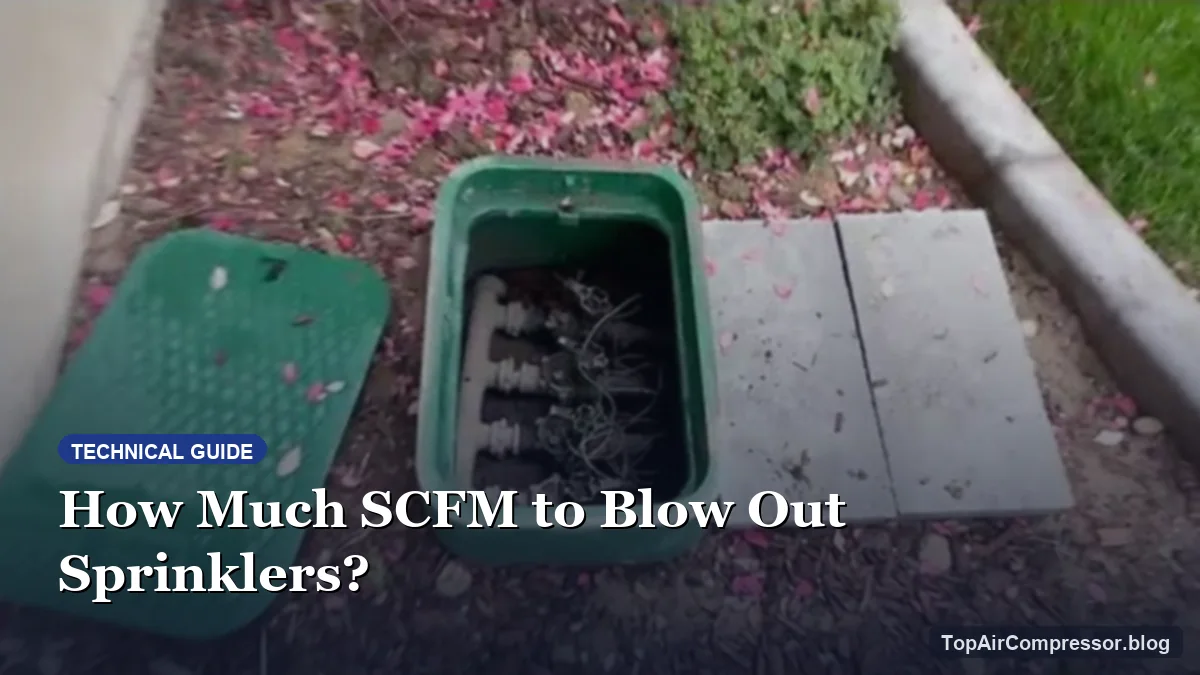
Most residential zones require 5 to 10 SCFM at 50 to 80 PSI. Always match your compressor displacement to the largest zone's requirements to prevent pipe bursting.
Looking for matching picks? See our Best Air Compressor For Sprinkler Blow Out: Top Picks.
Practical Quick-Reference Table
| Scenario / Metric | Recommended Target | Why It Matters |
|---|---|---|
| Residential Pipe Pressure | 50 to 80 PSI | Prevents shattering PVC fittings and glued joints. |
| Residential Air Volume | 5 to 10 SCFM | Clears standard lateral lines without overheating. |
| Commercial Air Volume | 50 to 100 SCFM | Handles massive multi-acre mainline networks efficiently. |
| Zone Run Duration | 1 to 2 Minutes | Ensures complete moisture evacuation without pump burnout. |
| Hose Diameter | 3/4 Inch ID | Minimizes severe pneumatic friction losses over distance. |
| Tank Moisture Drain | Daily / Post-Use | Prevents internal rust corrosion and structural tank failure. |
The Fluid Dynamics of Irrigation Line Winterization
Water remains trapped inside underground polyethylene or PVC piping after irrigation systems shut down for the autumn season. Sub-freezing temperatures cause this retained liquid to expand, destroying fittings.
Air compressors introduce high-volume gas displacement to force residual moisture out through sprinkler heads. Standard garage inflators lack the sustained volumetric output found in our best air compressor to blow out sprinklers review for long pipe runs.
Understanding the relationship between cubic feet per minute and static pressure prevents premature component failure. Irrigation lines operate safely under strict material pressure limits specified by manufacturers.
Physics dictates that compressed air acts like a spring, expanding rapidly when valves open. Controlling this rapid expansion protects delicate heads from spinning out of control.
Effective winterization requires displacing standing water using high-volume airflow rather than extreme pressure. Velocity matters more than raw static pressure to scrub pipe interior walls clean of residual moisture pools.
As compressed air enters the lateral lines, it forces a rolling wave of water toward the lowest elevation heads. Maintaining a minimum air velocity of 35 fps ensures complete mechanical displacement of trapped liquid pockets.
Friction loss coefficients inside poly pipe dictate that longer runs experience severe pressure drops during injection. Technicians must factor in a 10% pressure loss per one hundred feet of standard polyethylene distribution tubing.
Temperature differentials also impact pipe elasticity during high-speed air purging cycles. Cold morning ground temperatures make PVC brittle, necessitating strict adherence to safe operating thresholds below 80 PSI for residential networks.
- Retained water expands aggressively when exposed to freezing winter temperatures.
- High volumetric airflow is necessary to lift water columns uphill.
- Standard automotive tire inflators cannot sustain required continuous CFM output.
- Static pressure must remain strictly controlled to avoid pipe blowouts.
Evaluating Pipe Volume Dynamics
Larger pipe diameters demand significantly higher volumetric flow rates to push water columns effectively. A one-inch mainline holds vastly more liquid than a standard lateral branch.
Technicians must calculate total linear footage before selecting portable or tow-behind pneumatic hardware. Ignoring pipe capacity leads to incomplete evacuation and hidden winter damage.
- Mainlines hold significantly more volume than smaller lateral zones.
- Calculate total system capacity before selecting compressor equipment.
Calculating Required SCFM for Residential Zones
Residential lawn sprinkler networks typically demand between five and ten SCFM for effective water removal. Exceeding this range risks overheating standard piston pumps during extended cycles.
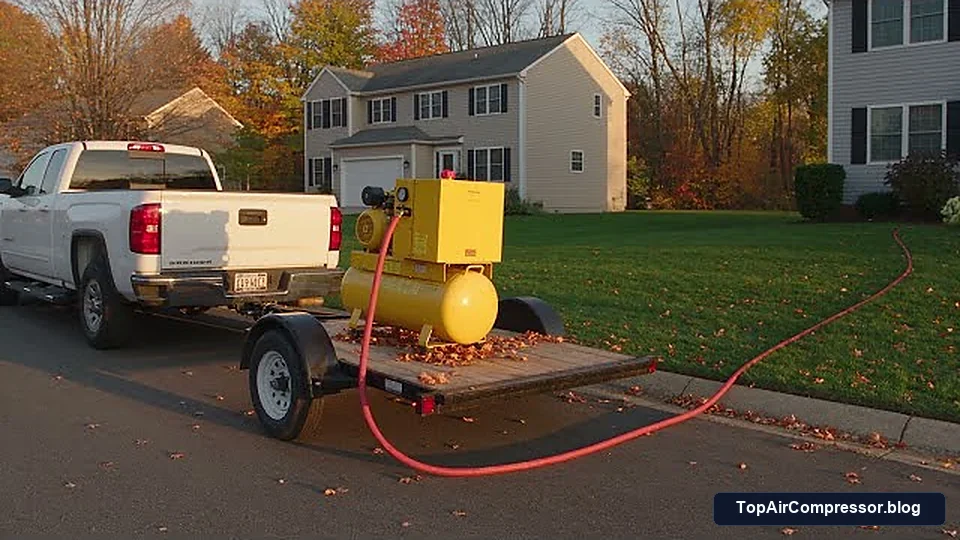
Commercial installations often require fifty to one hundred SCFM due to expansive multi-acre layouts. Contractors rely on tow-behind diesel compressors to deliver continuous high-volume air streams.
Measuring your specific compressor output ensures you never overload the motor or pump head. Check the pump nameplate data to verify rated displacement figures at standard operating pressure.
Running an undersized pancake unit continuously causes thermal overload and premature electrical burnout. Always allow adequate recovery time between flushing individual zones in sequence.
Determining standard cubic feet per minute requirements depends primarily on the largest lateral pipe diameter. A standard three-quarter inch line demands significantly lower compressor output than a sprawling two-inch mainline circuit.
For typical residential systems utilizing 1-inch lateral pipes, your compressor should deliver between 10 and 20 SCFM continuously. Undersized units cause prolonged purging times, which overheats compressor pump heads and ruins valves.
Multiplying the total square inch cross-sectional area of your pipes helps estimate baseline volume needs. Always add a 15% safety margin to your calculated CFM total to account for manifold fitting restrictions.
Never rely solely on receiver tank capacity when calculating blowout capability for large zones. Sustained flow requires adequate pump displacement ratings because stored air depletes within the first fifteen seconds of operation.
- Residential properties generally need five to ten SCFM of airflow.
- Commercial sites demand heavy-duty tow-behind pneumatic displacement.
- Always verify pump nameplate specifications before starting work.
- Avoid continuous operation of undersized direct-drive compressors.
Matching Compressor Types to Zones
Direct-drive units featured in our best air compressor for blowing out sprinklers review suit small residential properties featuring compact zone layouts and minimal elevation changes. Storage tank capacity helps buffer short spikes.
Belt-driven stationary units offer superior duty cycles for sprawling residential yards with many heads. Proper lubrication keeps these pumps running cool during long seasonal maintenance windows.
- Direct-drive units suit compact yards with minimal elevation changes.
- Belt-driven compressors provide better duty cycles for larger properties.
Video Walkthrough: Step 1 Turn off water
Pressure Regulation and Safety Relief Thresholds
Maintaining correct operating pressure is just as critical as maintaining adequate volumetric flow rates. Exceeding eighty PSI can shatter older PVC pipe fittings and compromise glued joints.
Polyethylene tubing tolerates slightly higher stress tolerances but remains vulnerable to excessive pneumatic friction heat. Install an inline pressure regulator directly downstream from your quick-disconnect coupling.
Always verify that your compressor features a functioning ASME-rated pressure relief valve. Safety devices protect operators from catastrophic tank failures during unexpected system blockages.
Never use unregulated shop air pressures directly from industrial receivers without checking gauges. Controlled pressure delivery guarantees a safe and thorough seasonal winterization process.
Controlling air pressure protects delicate sprinkler heads, seals, and threaded PVC fittings from catastrophic failure. Models highlighted in our best air compressor for sprinkler blow out guide help maintain safe pressures below 50 PSI.
High-pressure air injection generates extreme frictional heat that can melt polyethylene tubing connections. Install an inline air cooler or cooling loop if ambient temperatures and prolonged run times threaten system integrity.
Safety relief valves act as the final line of defense against dangerous tank or regulator overpressurization. Inspect your ASME-rated pressure relief valve annually to ensure it trips freely at the designated maximum threshold.
Operators must wear ANSI-approved eye protection throughout the entire compressed air line evacuation process. Debris and shattered plastic parts can project dangerously if an old PVC fitting fractures under sudden load.
- Keep operating pressure below eighty PSI for older PVC networks.
- Always install an inline regulator downstream of your air hose.
- Verify that safety pressure relief valves function properly beforehand.
- Unregulated high-pressure air can cause catastrophic fitting failures.
Connecting to the Main Backflow Prevention Assembly
The backflow prevention assembly provides the safest and most convenient connection point for winterization. Attach your air hose downstream of the main shut-off valve to isolate household plumbing.
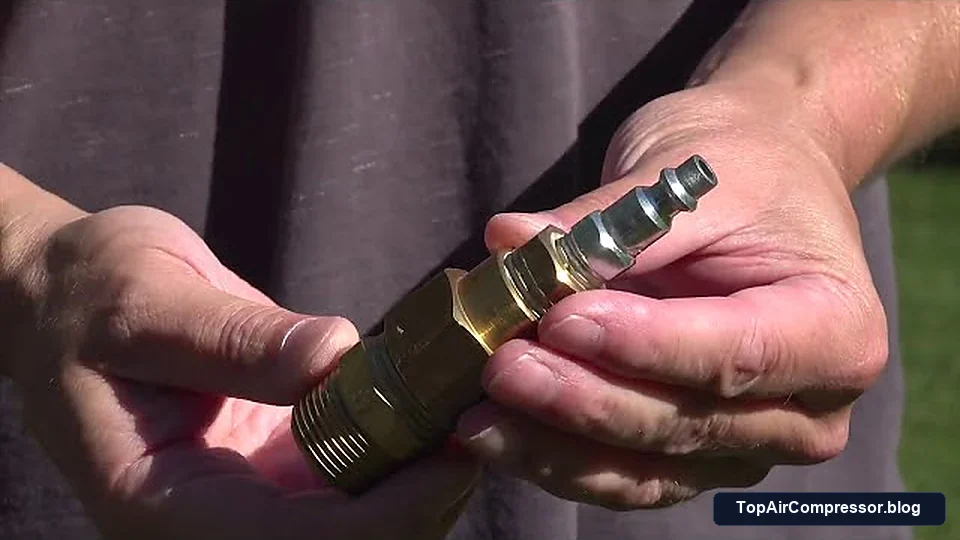
Thread a brass quick-disconnect adapter securely into the test cock or dedicated blowout port. Inspect all rubber seals for cracking before introducing compressed air under pressure.
Close the primary water supply valve completely before attaching any pneumatic equipment to the assembly. Consult our cfm tool sizing calculator to verify that residual mainline water won't overload your compressor tank.
Wrap all threaded fittings with PTFE thread seal tape to prevent irritating pressure leaks. Secure connections ensure maximum volumetric efficiency reaches your underground sprinkler network zones.
Tapping into the irrigation network safely requires utilizing the downstream test cocks on your backflow device. Connect your heavy-duty air supply hose directly to test cock number two using proper brass adapters.
Never inject compressed air upstream through delicate check valves inside standard RPZ or vacuum breaker assemblies. Doing so can warp internal rubber diaphragms and destroy an expensive backflow preventer in seconds.
Ensure all isolation valves remain fully closed during hookup to prevent back-feeding air into municipal water mains. Verify a tight seal using a thread sealant tape rated specifically for high-pressure pneumatic connections.
Quick-disconnect couplings must feature robust locking collars to prevent accidental whipping under live line pressure. Choose industrial-grade Chicago-style fittings for high-flow applications exceeding fifty standard cubic feet per minute.
- Use the backflow preventer assembly as your primary connection point.
- Isolate household plumbing by closing the main water supply valve.
- Inspect rubber seals thoroughly before attaching air fittings.
- Apply PTFE tape to prevent pressure losses at threaded joints.
Executing the Sequential Zone Blowout Procedure
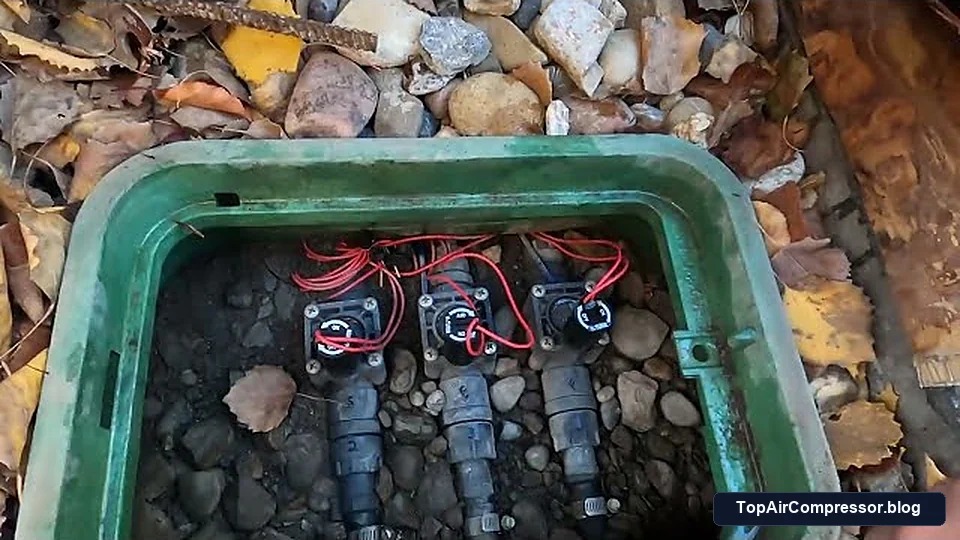
Begin winterization by activating the zone furthest away from your compressor connection point first. Work your way backward systematically through each remaining irrigation zone in order.
Energize the zone valve manually using the irrigation controller or solenoid bleed screw. Allow the air stream to run until no mist escapes from the farthest sprinkler heads.
Limit individual zone activation cycles to two minutes maximum to prevent pump overheating. Extended running times without adequate cooling intervals damage compressor reed valves severely.
Turn off the zone valve immediately once water evacuation stops completely to preserve pressure. Repeat this precise sequence until every single zone across your property is clear.
Systematic execution prevents overloading your air compressor while ensuring every single lateral branch gets cleared properly. Start with the zone located farthest away from your compressor hookup point and work inward.
Energize a single sprinkler zone manually using your irrigation controller or automatic timer interface. Slowly open your main air valve, allowing compressed air to enter the dry lines over a two-minute duration.
Monitor head discharge closely until misting ceases completely across all sprinklers in the active circuit. Continue running air for an additional thirty seconds after visible water stops spraying to guarantee dryness.
De-energize the active zone at the controller before moving on to the next sequential valve location. Never operate multiple zones simultaneously unless your air compressor output vastly exceeds standard residential equipment specifications.
- Start with the zone located furthest from the compressor hookup.
- Run each individual zone until all water mist completely disappears.
- Limit continuous run times to two minutes to prevent overheating.
- Work backward systematically until all zones are fully cleared.
Diagnosing Pressure Drops and Equipment Bottlenecks
Sudden pressure drops during a blowout often indicate an open zone valve or leak. Inspect your manifold connections immediately to locate loose quick-disconnect fittings or worn gaskets.
Undersized air hoses severely restrict volumetric flow, starving your sprinkler heads of necessary energy. Upgrade to three-quarter-inch inner diameter hoses to minimize friction losses over long distances.
Clogged intake filters reduce compressor efficiency and prolong the total winterization working time. Clean or replace paper filter elements annually before beginning heavy autumn equipment maintenance tasks.
Monitor compressor temperature gauges closely during prolonged operations to prevent thermal breakdown. Letting equipment rest between zones preserves pump longevity and ensures consistent airflow output.
Sudden pressure drops during a blowout usually indicate undersized hoses, restricted fittings, or a leaking zone valve. Check your hose inner diameter, ensuring it measures at least three-quarters of an inch.
If receiver pressure plummets instantly upon opening the manifold valve, your compressor lacks sufficient CFM delivery. Renting a towable gas-powered compressor provides the necessary volume to clear stubborn commercial turf systems.
Inspect pneumatic quick-connect couplers for internal restrictions caused by accumulated debris or failing rubber seals. A restricted air filter element can also choke compressor intake flow, reducing overall volumetric efficiency drastically.
Listen carefully for audible air leaks at solenoid valve boxes during the line evacuation procedure. Faulty diaphragms allow air to bypass zones, creating a pressure bottleneck that prevents effective moisture removal.
- Investigate sudden pressure drops for loose fittings or open valves.
- Use large-diameter air hoses to prevent restricting volumetric airflow.
- Clean dirty intake filters to maintain optimal compressor efficiency.
- Monitor pump temperatures to prevent severe thermal breakdown damage.
Preventive Maintenance for Seasonal Air Equipment
Drain moisture from your compressor air receiver tank daily after completing irrigation blowouts. Accumulated water inside steel tanks causes internal rust corrosion and weakens structural integrity over time.
Inspect rubber air hoses for cracking, abrasions, or bulging before every seasonal maintenance task. Damaged hoses present severe safety hazards when subjected to high-pressure pneumatic loads.
Check compressor pump oil levels regularly and replenish with manufacturer-approved synthetic lubricants. Proper lubrication reduces internal friction and extends operating life significantly across harsh operating conditions.
Store your air compressor in a dry, frost-free environment throughout the freezing winter months. Proper off-season storage prevents electrical corrosion and protects sensitive pressure control components from damage.
Protecting your compressor investment requires thorough post-season maintenance immediately after finishing all scheduled property blowouts. Drain all condensed moisture from the receiver tank completely to prevent rust perforation over winter.
Change the pump crankcase oil while it remains warm to suspend particulate contaminants effectively. Refill the unit using synthetic compressor lubricant formulated specifically to resist thermal breakdown during heavy-duty seasonal operations.
Clean or replace paper air intake elements to ensure unobstructed breathing when spring startup arrives. Check all drive belts for proper tension, replacing any worn belts showing signs of cracking or glazing.
Store your equipment in a dry, frost-free environment to protect electrical switches and pressure gauges. Leave the tank drain valve open slightly during storage to vent any residual condensation safely away.
- Drain receiver tank moisture daily to prevent internal rust.
- Inspect hoses for cracking before applying pneumatic pressure.
- Maintain proper oil levels using approved synthetic lubricants.
- Store equipment in dry, frost-free areas during winter months.
Frequently Asked Questions
Can I use a standard 3-gallon pancake compressor?
Standard pancake units lack the continuous SCFM output needed for large zones. They overheat quickly and often leave water trapped inside underground pipes.
What is the ideal PSI for blowing out sprinklers?
Keep pressure between fifty and eighty PSI for residential PVC systems. Higher pressures can shatter fragile plastic fittings and cause dangerous line ruptures.
How long should each zone run during a blowout?
Run each zone for one to two minutes until mist stops appearing. Never exceed two minutes continuously to prevent overheating your compressor pump.
Do I need a special blowout adapter?
Yes, you need a threaded brass fitting that connects your air hose to the backflow preventer. This creates a secure seal for high-volume airflow.
Why is water still spitting from my sprinkler heads?
Residual pooling occurs when compressor airflow is too low for the pipe size. Switch to a higher SCFM displacement source or clear zones individually.