Screw Compressor CFM Calculation
Accurate airflow calculation prevents industrial downtime and lowers energy waste. Learn precise engineering formulas for rotary screw systems.

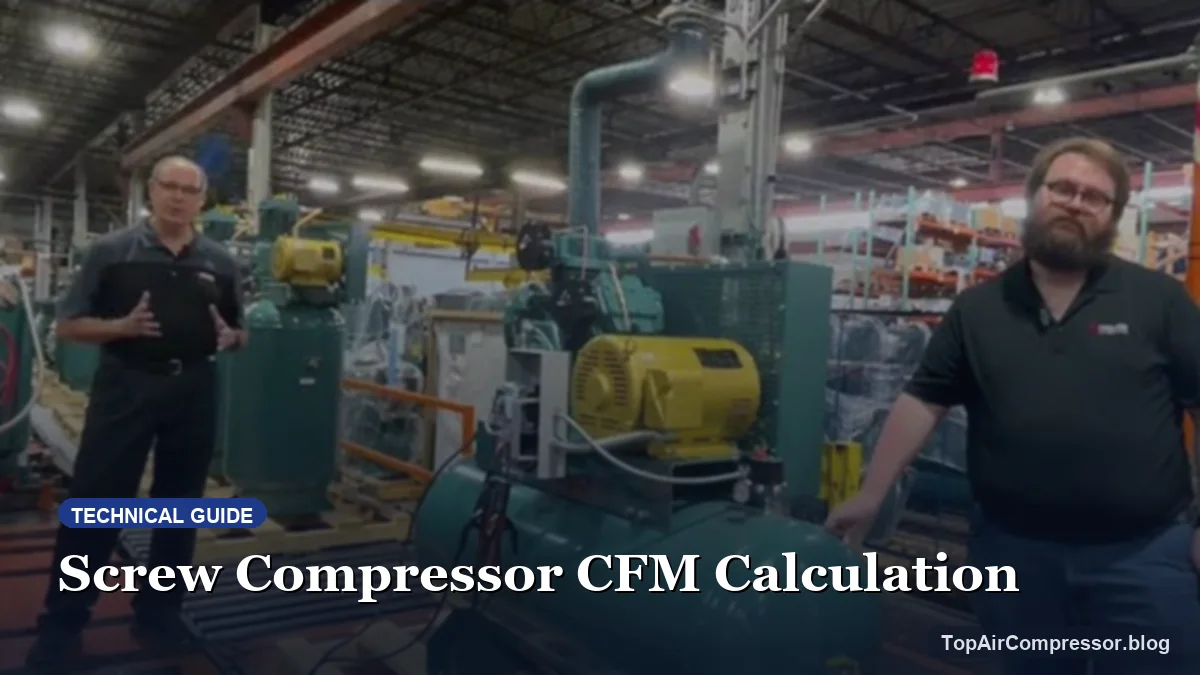
Always calculate total air demand by summing individual tool requirements and applying a safety factor of twenty percent for optimal operational efficiency.
Looking for matching picks? See our Best 5 Cfm Air Compressor: Top Workshop Picks.
Practical Quick-Reference Table
| Scenario / Metric | Recommended Target | Why It Matters |
|---|---|---|
| Peak Air Demand | Sum of all active tools plus 20% | Prevents pressure drops during high-load intervals. |
| Operating Pressure | 100 to 125 PSI for standard plants | Matches pneumatic tool ratings without excessive energy draw. |
| VSD Turndown Range | 20 to 100 percent capacity | Maximizes efficiency during fluctuating facility production shifts. |
| Refrigerated Dryer | Match total compressor CFM output | Removes moisture to protect downstream pneumatic components. |
| Coalescing Filter | 0.01 micron particle retention | Eliminates oil aerosols before they contaminate production lines. |
| System Leakage Rate | Under 10 percent of total CFM | Stops wasted electrical power from unaddressed pipe leaks. |
Mastering Rotary Screw Compressor CFM Calculation
Accurate CFM calculation serves as the literal backbone of any industrial pneumatic system design. Without precise volumetric measurements, facilities risk severe pressure starvation and skyrocketing utility expenses.

Engineers must evaluate actual cubic feet per minute rather than displacement figures. True delivered capacity determines how many tools operate simultaneously without causing operational bottlenecks.
Ignoring duty cycles or future expansion leads to premature equipment wear. A properly sized rotary screw compressor operates within optimal thermal windows for extended operational longevity.
Establishing baseline air requirements begins with cataloging every pneumatic device. For smaller workshops, consulting our best 10 cfm air compressor guide helps identify ideal volumetric output at designated operating pressures.
- Audit every pneumatic tool and production machine currently installed.
- Document manufacturer-specified CFM ratings at required working pressures.
- Account for simultaneous usage patterns across all plant shifts.
- Include a buffer for future plant expansions and workflow growth.
Understanding Volumetric Units and Displacement
Displacement CFM measures theoretical pump cavity volume without accounting for volumetric efficiency. Actual Delivered Air provides the true performance metric for industrial screw compressors.
Temperature and altitude drastically alter air density and compressor output capacity. Corrections must be applied when operating outside standard sea-level conditions.
- Use ISO 1217 standards for verifiable compressor performance metrics.
- Calculate ambient temperature corrections for high-altitude facilities.
Translating Operating Pressure and Flow Metrics

Pressure and flow maintain an inverse relationship in rotary screw systems. Raising discharge pressure usually results in reduced volumetric output from the airend pump.
Operators must distinguish between pressure and flow. If your workshop demands lower volume, check out our best 5 cfm air compressor roundup to understand how PSI force dictates delivered air.
Every single PSI increase above necessary levels burns approximately four percent more electricity. Optimizing pressure targets directly lowers monthly plant utility overhead.
Regulators and drop-down valves help stabilize pressure across expansive facility layouts. Consistent line pressure protects sensitive pneumatic actuators from erratic operational surges.
- Set compressor discharge pressure only as high as the most demanding tool.
- Install point-of-use regulators to manage localized pressure variations safely.
- Monitor pressure differentials across filters to identify restriction issues early.
- Avoid oversizing system pressure to compensate for undersized distribution piping.
Evaluating Pressure Drop in Distribution Lines
Friction inside undersized distribution piping creates unwanted pressure drops. Main headers must feature adequate diameter sizes to maintain smooth airflow velocity.
Keep total distribution pressure loss under ten percent from receiver to tool. Proper loop design prevents starvation during peak facility production intervals.
- Size main distribution headers based on maximum expected plant flow.
- Use smooth-bore aluminum or galvanized steel to minimize wall friction.
Video Walkthrough: How to Select the Right Air Compressor? | CFM \u0026 Pressure Calculation | Compressor CFM Formula Wor...
Evaluating Fixed Speed Versus Variable Speed Systems
Fixed-speed rotary screw compressors operate on a load-unload control scheme. When demand drops, the airend unloads while the motor continues spinning, wasting valuable electrical energy.
Variable speed drive compressors automatically adjust motor RPM to match real-time facility demand. This modulation eliminates wasteful unload cycles and lowers power consumption.
Choosing between fixed and variable speed requires analyzing your facility load profile. Operations with steady, continuous air demand benefit greatly from reliable fixed-speed machines.
Facilities experiencing highly fluctuating demand profiles achieve massive savings with VSD technology. Smooth speed adjustments prevent the mechanical shock associated with sudden load transitions.
- Analyze load profiles over a full two-week operating cycle.
- Calculate potential energy savings using local utility kWh pricing structures.
- Factor in VSD inverter cooling requirements for dusty production environments.
- Assess thermal management during low-speed extended turndown intervals.
Analyzing Load Profiles for Optimal Selection
Data loggers attached to current compressors reveal exact operational duty cycles. Quantifying load versus unload hours clarifies whether a VSD upgrade is financially justified.
A mix of fixed and variable speed units often provides ultimate efficiency. The VSD unit handles trim demand while the fixed speed unit supplies base load.
- Deploy data loggers for a minimum of seven continuous days.
- Map peak, average, and minimum CFM demand phases accurately.
Accounting for Air Quality, Dryers, and Filtration Loads
Compressed air naturally contains moisture, oil aerosols, and solid particulate matter. Treating this air requires correctly sized refrigerated dryers and multi-stage filters downstream.
Undersized air dryers allow condensation to form inside sensitive pneumatic valves. Moisture accumulation causes internal corrosion, premature seal failure, and costly production downtime.
Refrigerated dryers must handle the maximum output of your system. Review our scfm vs cfm comparison to ensure proper sizing before matching pressure dew points to your facility environment.
Filtration packages protect equipment by removing contaminants down to microscopic levels. Coalescing filters trap oil vapor before it can foul delicate instrumentation controls.
- Match dryer flow capacity to maximum compressor output ratings.
- Install particulate filters upstream of refrigerated dryers for protection.
- Monitor differential pressure gauges across all active filter elements.
- Schedule regular condensate drain maintenance to prevent water carryover.
Selecting Desiccant Versus Refrigerated Dryers
Refrigerated dryers achieve pressure dew points suitable for standard industrial workshops. They offer low operating costs and reliable performance in moderate ambient conditions.
Critical applications like electronics manufacturing demand ultra-low dew points. Desiccant dryers remove virtually all moisture vapor through chemical adsorption beds.
- Verify required pressure dew point specifications for your processes.
- Calculate purge air losses when utilizing dual-tower desiccant systems.
Calculating Total Cost of Ownership and Energy Draw
Initial purchase price represents only a small fraction of compressor expenses. Over a ten-year lifespan, electricity accounts for nearly eighty percent of total operational costs.
Calculating annual energy draw requires knowing motor horsepower and operating hours. Factoring in motor efficiency ratings ensures realistic utility expense projections.
Preventative maintenance schedules directly impact overall system reliability and operating efficiency. Routine oil changes and filter replacements keep energy consumption at baseline levels.
Neglected compressors suffer from fouled coolers and internal pressure restrictions. These issues force the motor to work harder, accelerating wear and inflating monthly electric bills.
- Calculate annual kWh consumption using motor brake horsepower formulas.
- Budget for routine oil analysis and separator element replacements.
- Inspect drive belts or direct couplings for signs of slippage.
- Seal facility air leaks promptly to reduce unnecessary compressor runtime.
Quantifying the True Impact of Air Leaks
Unchecked air leaks represent a massive drain on industrial profitability. A single quarter-inch orifice wastes thousands of dollars in electricity annually at standard pressures.
Ultrasonic leak detectors pinpoint hidden pipe joint leaks during production hours. Establishing an ongoing leak management program quickly pays for itself in energy savings.
- Conduct facility-wide ultrasonic leak surveys twice per year.
- Tag and repair identified leaks immediately to conserve power.
Avoiding Critical System Sizing and Calculation Pitfalls
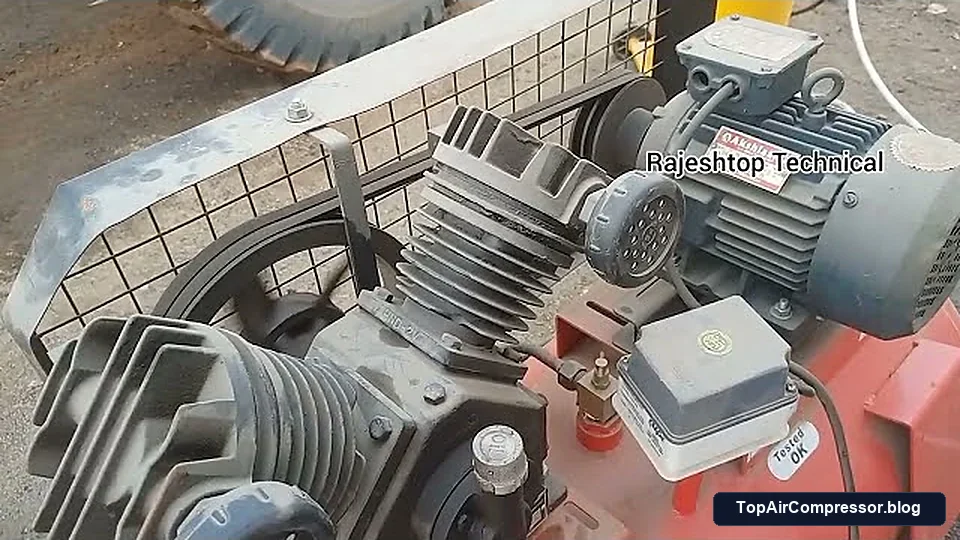
One common sizing mistake involves forgetting to account for atmospheric conditions. High ambient temperatures decrease air density, which directly reduces actual compressor mass flow output.
Another error is failing to include receiver tank volume in calculations. Using our cfm and tank sizing tool prevents rapid motor cycling and stabilizes pressure during demand spikes.
Ignoring future facility growth leads to undersized systems within a few years. Always design your compressed air infrastructure with scalpability and expansion in mind.
Relying solely on rule-of-thumb estimates without performing detailed audits invites disaster. Precision engineering guarantees your rotary screw installation meets every operational demand reliably.
- Never skip actual facility air demand auditing procedures.
- Ensure receiver tanks offer adequate storage for peak transient loads.
- Account for local ambient temperature extremes in compressor rooms.
- Consult certified compressed air specialists for complex plant layouts.
Designing Proper Compressor Room Ventilation
Rotary screw compressors generate significant thermal energy during operation. Inadequate compressor room ventilation causes high-temperature shutdowns and premature oil degradation.
Ducting exhaust air outside during summer months keeps ambient room temperatures manageable. Intake louvers must provide sufficient cross-sectional area for unrestricted airflow.
- Calculate required room ventilation CFM based on heat rejection data.
- Install thermostatically controlled exhaust fans for seasonal management.
Frequently Asked Questions
How do I calculate CFM requirements for a rotary screw compressor?
Sum the CFM ratings of all tools operating simultaneously and add a twenty percent safety buffer for future growth. This ensures your system maintains stable pressure during peak operational demand.
Why is actual delivered air more important than displacement CFM?
Displacement only measures theoretical pump cavity volume without efficiency losses. Actual delivered air accounts for internal leakage and compression heat, giving true performance data.
What is the primary advantage of a variable speed drive compressor?
VSD units automatically match motor speed to fluctuating plant air demand. This eliminates wasteful unload cycles and yields substantial electrical energy savings over fixed speed models.
How does operating pressure impact total energy consumption?
Every unnecessary PSI increase raises power consumption by roughly four percent. Setting discharge pressure to the lowest effective operational threshold minimizes monthly utility costs.
What role do air dryers play in CFM calculation and setup?
Dryers must match the maximum CFM output of the compressor to prevent moisture damage. Proper sizing ensures clean, dry air protection for sensitive downstream pneumatic machinery.