What Bar Should My Tyres Be?
Maintain optimal vehicle safety and fuel efficiency by understanding manufacturer bar specifications. Accurate inflation prevents premature tread wear and ensures predictable handling.


Most passenger vehicles require between 2.2 and 2.5 bar of pressure under standard operating conditions. Always consult your vehicle door jamb placard for precise manufacturer specifications before inflation.
Looking for matching picks? See our Best Tyre Air Compressor: Top Picks for Reliable Roadside Safety.
Practical Quick-Reference Table
| Scenario / Metric | Recommended Target | Why It Matters |
|---|---|---|
| Standard Hatchback | 2.2 to 2.4 bar | Balances ride comfort with rolling resistance. |
| Compact SUV | 2.4 to 2.6 bar | Supports heavier vehicle weight and cargo loads. |
| Bar to PSI Conversion | 1 bar equals 14.504 psi | Ensures precise gauge reading compatibility. |
| Cold Tyre Check | Done before driving | Prevents false high readings from heat friction. |
| Under-Inflated Tyre | Below 1.8 bar | Increases fuel consumption and sidewall flex. |
| Over-Inflated Tyre | Above 3.0 bar | Reduces contact patch and center tread wear. |
Decoding Your Vehicle Tyre Pressure Placard and Metric Bar Values
Finding the correct bar rating for your vehicle requires checking the manufacturer placard located inside the driver door jamb. This vital sticker displays precise operating pressures in kilopascals and bar units for daily driving.
When you see a figure like 240 on your placard, it represents 240 kilopascals, converting directly to 2.4 bar of pressure. Reviewing pneumatic fundamentals through what is scfm vs cfm helps clarify gas delivery rates.
Ignoring these factory placards can lead to compromised braking distances and uneven tyre wear across all four wheels. Always verify both front and rear axle requirements, as vehicles often specify different pressures for each axle.
Reviewing a visual tyre inflation infographic helps clarify where different measurements apply to your specific vehicle layout. Manufacturers engineer these precise figures to optimize vehicle dynamics under normal loading and highway conditions.
- Locate the metal or plastic placard inside the driver door sill.
- Identify metric figures listed in kilopascals or bar values.
- Note different front and rear axle pressure specifications.
- Account for maximum vehicle payload ratings when adjusting air.
Interpreting Placard Metrics and Load Indices
Vehicle placards also detail the exact tyre size required to maintain the listed pressure ratings safely. Using non-standard replacement tyres can invalidate these factory bar recommendations and alter your handling characteristics.
Always cross-reference the load index printed on your sidewall with the manual guidelines to ensure safe operation.
- Match replacement tyre size exactly with placard data.
- Verify load index ratings before mounting new rubber.
- Consult professional fitters if modifying rim dimensions.
Converting Between Bar, PSI, and Kilopascals for Accurate Inflation
Different regional markets use varying pressure units, requiring drivers to convert between bar, pounds per square inch, and kilopascals frequently. Knowing the exact conversion math prevents costly inflation errors and tyre damage.
One bar is mathematically equivalent to 14.504 psi or 100 kilopascals in standard atmospheric measurements. Digital tyre inflators and workshop gauges often allow you to toggle between these units for maximum operational convenience.
Using a reliable tyre pressure converter eliminates guesswork when dealing with imported vehicles or older analog pressure gauges. Always double-check your gauge settings before attaching the compressor hose to the valve stem.
Precision matters greatly because an error of just 0.3 bar can noticeably impact your vehicle fuel efficiency. Keep a conversion chart handy in your glove box if your gauge only displays imperial measurements.
- Multiply bar values by 14.5 to find equivalent PSI.
- Divide kilopascals by 100 to get exact bar readings.
- Toggle digital inflator screens to preferred metric units.
- Calibrate analog gauges periodically against known standards.
Understanding Conversion Limits and Calculator Mechanics
Online pressure tools utilize standard atmospheric algorithms to translate manufacturer data into usable formats. Pairing these with our cfm & tank sizing calculator ensures precise pneumatic requirements are fully met.
Always rely on exact decimal calculations rather than rough mental estimates when inflating high-performance tyres.
- Avoid aggressive rounding during metric conversions.
- Use certified digital tools for high-precision checks.
- Account for gauge tolerance limits during inflation.
Video Walkthrough: STOP Using 32 PSI — The Tire Pressure That ACTUALLY Works in 2026
Standard Tyre Inflation Pressures Across Different Body Styles
Vehicle weight and chassis design dictate the baseline bar requirements for safe everyday driving and braking performance. Smaller hatchbacks usually operate efficiently around 2.2 to 2.4 bar on standard road surfaces.

Larger crossover utility vehicles and compact SUVs demand higher pressures, typically ranging from 2.4 to 2.8 bar to support increased axle loads. Electric vehicles also require specialized attention due to heavy battery pack weights.
An electric car service often includes a thorough inspection of tyre pressure to compensate for immediate torque loads. Heavier commercial vans require even higher bar ratings, frequently exceeding 3.0 bar on rear dual wheels.
Never apply a universal pressure number to every vehicle in your household fleet. Each chassis design interacts uniquely with the asphalt, requiring tailored inflation targets for optimal safety.
- Compact cars typically require 2.2 to 2.4 bar.
- Mid-size sedans generally function well at 2.3 bar.
- SUVs and crossovers often need 2.5 bar or higher.
- Electric vehicles demand precise adjustments for battery weight.
Accounting for Passenger Loads and Luggage Weight
When traveling with a full cabin of passengers and heavy luggage, you must increase baseline pressure values. Manufacturers usually provide secondary higher load specifications on the door placard for highway trips.
Adjusting your bar levels back down after heavy trips helps restore normal ride comfort and tread wear.
- Check placard for fully loaded pressure columns.
- Add 0.2 to 0.3 bar for extended highway hauling.
- Reset pressures once cargo weight is removed.
Technical Consequences of Running Incorrect Inflation Levels
Operating your vehicle with under-inflated tyres creates excessive sidewall flex, generating dangerous internal heat buildup. This thermal stress significantly increases the risk of sudden tread separation and catastrophic blowout incidents.
Under-inflation also increases rolling resistance, forcing your engine to burn more fuel and release higher emissions. Conversely, running pressures above 3.0 bar causes the center tread to wear out prematurely.
Over-inflation reduces the available contact patch between the rubber and the road surface, weakening braking traction. You will notice a harsher ride quality and diminished steering responsiveness when tyres are overfilled.
Maintaining correct bar levels ensures even weight distribution across the entire width of the tread pattern. Regular checks prevent uneven feathering and extend the overall operational lifespan of your rubber.
- Under-inflation causes excessive shoulder wear and heat.
- Over-inflation ruins center tread and reduces grip.
- Incorrect pressure severely compromises emergency braking distances.
- Balanced inflation optimizes fuel economy and tyre longevity.
Mastering Cold Tyre Measurement Principles and Reliable Gauge Usage
To get accurate readings, measure your tyre pressure only when cold. Driving friction heats internal air, raising pressures by 0.3 to 0.5 bar. Using the best air compressor for car tyres ensures reliable inflation at home.
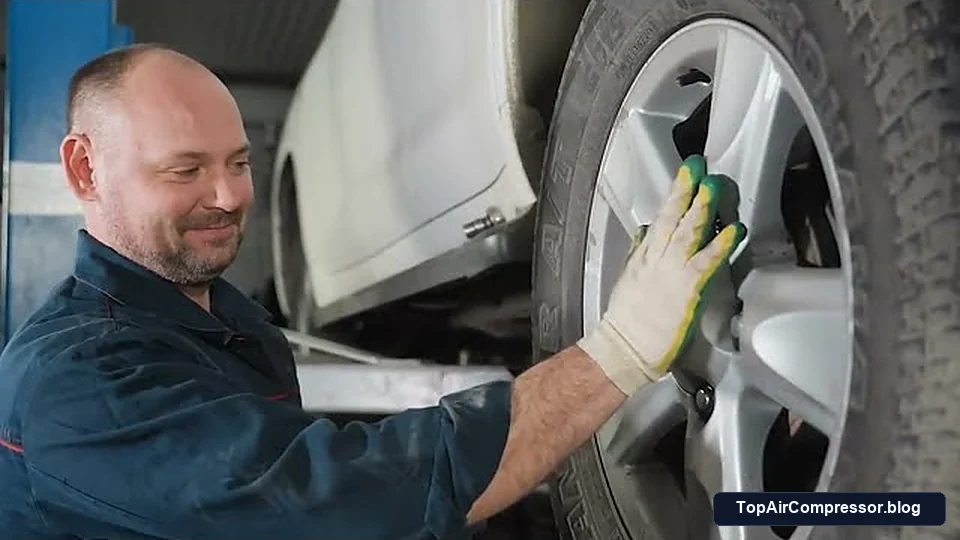
A cold tyre is defined as one that has driven less than two miles or sat parked for hours. Using your own calibrated gauge ensures you are not relying on erratic service station equipment.
Press a quality tyres pressure gauge firmly onto the valve stem until the hissing sound stops completely. Digital gauges provide clear numerical readouts, whereas analog dial gauges require careful eye-level alignment.
Always replace missing valve caps promptly to keep moisture and road debris away from the core. A damaged valve core will cause slow leaks that gradually reduce your bar levels over time.
- Measure only before driving or after extended parking.
- Account for temporary heat-induced pressure increases.
- Invest in a personal digital gauge for accurate readings.
- Inspect valve stems for cracks and missing caps.
Video Walkthrough: STOP Setting Tire Pressure to 32 PSI! (You're Destroying Your Car)
Decoding DOT Codes and Inspecting Structural Tyre Health Safely
Beyond maintaining correct bar pressure, you must inspect the structural integrity of your rubber components regularly. The Department of Transportation code stamped on the sidewall reveals the exact manufacturing date.
The DOT code features a four-digit stamp where the first two numbers indicate the production week. For example, a code ending in 2422 means the tyre was manufactured during the twenty-fourth week of 2022.
Tyres older than six years require careful inspection for rubber hardening, cracking, and sidewall dry rot. Even if the tread depth appears adequate, degraded compounds can fail unexpectedly at highway speeds.
Look for bulges, cuts, or embedded foreign objects while adjusting bar levels. Choosing the best air compressor for caravan tyres prevents dangerous roadside blowouts during long journeys across remote highways.
- Locate the four-digit DOT manufacturing date code.
- Replace rubber compounds older than six years.
- Inspect sidewalls visually for cuts and bulges.
- Check tread depth indicators alongside air pressure.
Regulatory Compliance, TPMS Warnings, and Periodic Vehicle Inspections
Modern vehicles feature Tyre Pressure Monitoring Systems designed to alert drivers when pressure drops significantly. A persistent dashboard warning light indicates that one or more tyres have fallen below safe bar thresholds.
During annual inspections, such as a UK MOT test, a malfunctioning TPMS warning light results in an automatic failure. Technicians check both sensor functionality and actual inflation levels to ensure full roadworthiness compliance.
Never ignore a dashboard warning light, even if the vehicle feels stable during low-speed suburban driving. Pull over safely to check pressures with your portable gauge and restore proper bar levels immediately.
Integrating monthly pressure checks into your routine maintenance schedule keeps your vehicle safe and legally compliant. Proper compressor maintenance ensures you are always ready to correct minor pressure drops.
- Respond immediately to dashboard TPMS warning lights.
- Ensure TPMS functions correctly before MOT testing.
- Inspect sensors during seasonal tyre rotation services.
- Keep portable inflation equipment accessible in your trunk.
Frequently Asked Questions
What bar should my tyres be for normal driving?
Most standard passenger cars require between 2.2 and 2.5 bar for safe driving. Always verify your specific vehicle requirements by reading the placard located inside the driver door jamb.
How does ambient temperature affect my tyre pressure in bar?
Cold weather causes internal air to contract, dropping pressure by about 0.1 bar for every 10 degrees of temperature drop. You must reinflate your tyres during seasonal temperature shifts to maintain safety.
Can I check my tyre pressure immediately after driving on the highway?
No, driving friction heats the air inside the tyre and creates false high readings. Always check and adjust your pressures only when the vehicle has been parked for several hours.
What happens if my tyre pressure is too high?
Excessive pressure above 3.0 bar reduces your tyre contact patch and accelerates center tread wear. This condition also creates a harsh ride and diminishes overall vehicle braking traction.
Will a faulty TPMS warning light fail a vehicle safety inspection?
Yes, an illuminated or malfunctioning tyre pressure monitoring system indicator will cause an automatic MOT inspection failure. Ensure all sensors and inflation levels are corrected prior to testing.