What CFM Do I Need to Run Air Tools?
Calculating accurate cubic feet per minute prevents tool starvation. Master this critical sizing metric before purchasing pneumatic equipment.

Always multiply your total required tool CFM by 1.5 for safety margin. This prevents motor overheating and pressure drops during continuous operation.
Looking for matching picks? See our Best 5 Cfm Air Compressor: Top Workshop Picks.
Practical Quick-Reference Table
| Scenario / Metric | Recommended Target | Why It Matters |
|---|---|---|
| Brad Nailer CFM | 0.5 to 1.0 CFM at 90 PSI | Low air demand allows small pancake compressors. |
| Impact Wrench CFM | 4.0 to 5.0 CFM at 90 PSI | Requires mid-size twin-tank or vertical units. |
| DA Sander CFM | 12.0 to 15.0 CFM at 90 PSI | Demands large two-stage industrial compressors. |
| Safety Margin Multiplier | 1.5x standard requirement | Accounts for line losses and pump wear. |
| Hose Diameter | 3/8 inch for high flow | Prevents severe pressure drops over long runs. |
| Operating Pressure | 90 PSI standard rating | Standard testing baseline for pneumatic tools. |
Understanding Cubic Feet Per Minute In Pneumatic Systems
Cubic feet per minute measures the volume of air a compressor delivers. Knowing this rating dictates which pneumatic tools your setup can power efficiently.
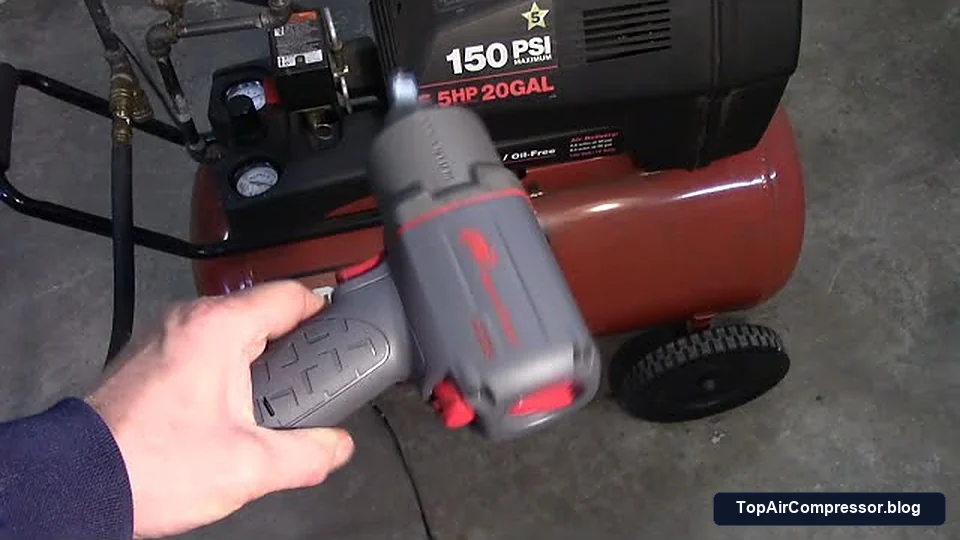
Pneumatic tools require specific volume and pressure to function correctly. Ignoring volumetric output leads to sluggish performance and permanent tool motor damage.
Air compressors draw in ambient air and compress it into a storage tank. The pump must replenish this air faster than your tools consume it.
Manufacturers test delivery rates under controlled laboratory conditions. Real-world conditions like temperature and altitude alter these official performance metrics significantly.
Cubic feet per minute measures air volume delivered under specific conditions. Consult our best air compressor to run tools guide to ensure your pneumatic devices receive adequate power.
Pneumatic equipment relies on steady pressure and continuous airflow to function correctly. If your compressor cannot match the tool requirement, internal motors stall and pneumatic cylinders fail to cycle properly.
Industrial facilities measure air delivery in standard cubic feet per minute to account for atmospheric variations. This standardized metric creates a reliable baseline for comparing different pump models accurately.
Ignoring these volumetric measurements often leads to premature equipment wear and reduced operational efficiency. Always verify your total air consumption before connecting large pneumatic grinders or sanders to the system.
- CFM defines volumetric delivery speed over time.
- Pressure alone cannot run high-demand pneumatic tools.
- Pumps must outpace total tool consumption rates.
- Ambient conditions affect actual pump efficiency.
Why Volume Outweighs Pressure In Air Tools
Many beginners focus heavily on maximum pressure ratings instead of volume. Most tools operate standard mechanisms at ninety pounds per square inch.
Once pressure drops below required thresholds, mechanical output plummets. Maintaining adequate volumetric flow is the secret to sustained pneumatic power.
- Pressure sets the force, volume sustains motion.
- Volume starvation stops pneumatic tools instantly.
Mastering SCFM Versus Actual Delivery Metrics
Standard cubic feet per minute standardizes measurements across various environments. This baseline assumes specific humidity and temperature levels for fair performance comparisons.
Actual cubic feet per minute reflects real-world performance under specific working conditions. ACFM ratings are always lower than SCFM because environmental factors reduce output.
Smart technicians rely on ACFM data when sizing industrial equipment. Disregarding actual delivery metrics leads to unexpected compressor overloads on demanding job sites.
Always review equipment specification sheets for delivery curves. Understanding these technical nuances prevents costly compressor upgrades down the road.
Standard cubic feet per minute measurements assume strict laboratory conditions with defined temperature and humidity. Real workshop environments rarely match these baselines, requiring technicians to evaluate actual displacement data.
Actual cubic feet per minute reflects practical performance under normal operating pressures and ambient temperatures. Manufacturers calculate this metric to provide a realistic output expectation for workshop compressors.
When reviewing technical specifications, always look for ratings listed at ninety pounds per square inch. Comparing units using standardized pressure ratings prevents costly sizing errors during equipment purchases.
Ignoring temperature differences can cause unexpected drops in total system efficiency during hot summer months. Proper compressor placement ensures intake air remains cool and dense for maximum volumetric output.
- SCFM provides a controlled laboratory baseline.
- ACFM reflects true job-site delivery performance.
- Environmental humidity reduces total pump output.
- Spec sheets reveal true operational capabilities.
Interpreting Manufacturer Specifications Correctly
Manufacturers often market peak horsepower rather than continuous delivery. Real operational planning requires examining delivery at ninety psi specifically.
Compare pump displacement against actual free air delivery. High displacement does not guarantee superior volumetric output efficiency.
- Ignore inflated peak horsepower marketing metrics.
- Focus strictly on delivery at ninety psi.
Video Walkthrough: Air Compressors \u0026 Pneumatic Tools
Calculating Tool Demands And The Safety Factor Rule
Calculating total air demand starts with listing every tool. Reviewing our best CFM ratings guide helps you accurately determine your baseline system requirement.
Running multiple tools simultaneously multiplies your total air volume needs. Neglecting simultaneous operation leads to severe pressure drops and interrupted workflow.
Apply the essential one point five safety multiplier to your total. This buffer accounts for line friction, worn piston rings, and unanticipated air demands.
For example, a sander requiring ten CFM needs fifteen CFM. Building this capacity cushion protects your investment against premature thermal fatigue.
Determining total air consumption requires summing the individual requirements of every tool running simultaneously. Multiply this raw aggregate number by a safety multiplier to account for line losses.
Most standard workshop applications operate effectively when applying a standard safety factor of one point five. This extra capacity prevents motor burnout during extended heavy workloads.
Continuous production environments demand even higher safety margins, often multiplying base requirements by two full integers. Failing to include these buffers results in pressure starvation across active workstations.
Always check manufacturer data sheets rather than relying on general averages for specific equipment classes. Accurate arithmetic guarantees your compressor operates within safe thermal limits throughout the day.
- Sum individual tool CFM ratings for totals.
- Account for simultaneous multi-tool operation.
- Multiply final totals by one point five.
- Buffer protects against mechanical wear.
Handling Simultaneous Multi-Tool Operations
Busy shops rarely operate just one pneumatic tool at a time. Totaling demands requires anticipating peak usage windows across all active technician stations.
Size your primary distribution lines to match combined volumes. Undersized piping chokes airflow regardless of compressor pump capacity.
- Calculate peak simultaneous technician usage.
- Ensure distribution piping matches total volume.
Matching Compressor Size Classes To Specific Shop Applications
Small portable units handle light fastening and inflation tasks. These compact machines typically deliver one to three CFM at working pressure.
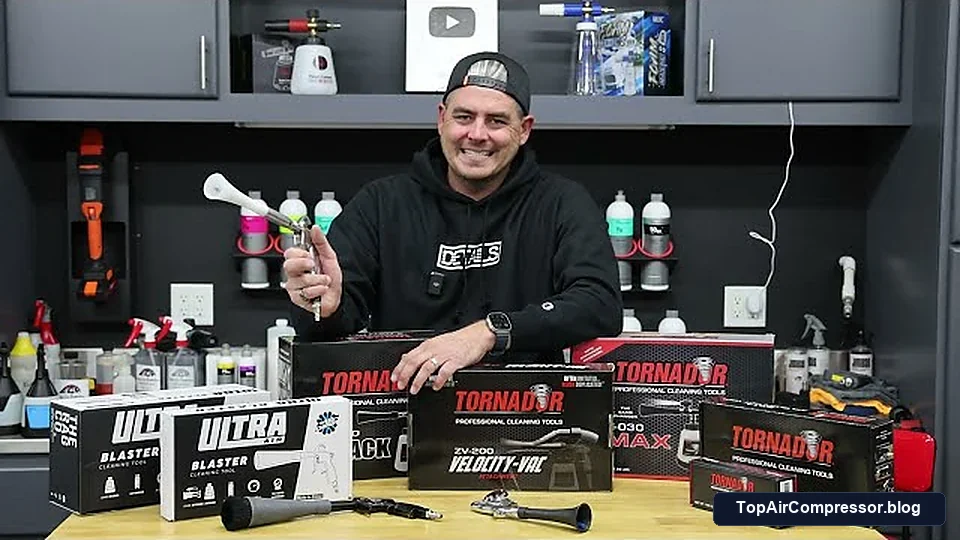
Mid-size twin-tank units power standard automotive impact wrenches. They provide adequate recovery for intermittent mechanical workshop duties without tripping breakers.
Professional automotive shops require large vertical two-stage compressors. These heavy-duty machines deliver twenty or more CFM for continuous industrial sanding operations.
Choosing the correct size class eliminates unnecessary electrical expenses. Over-sizing wastes capital while under-sizing destroys motors through constant thermal overload.
Small portable compressors suit basic inflation tasks and light brad nailers requiring minimal volume. These compact units usually provide between two and four units of standard airflow.
Medium garage units handle impact wrenches, ratchets, and paint sprayers with moderate duty cycles. Selecting a twin cylinder pump ensures stable delivery for automotive repair tasks.
Professional fabrication shops require heavy stationary units delivering over fifteen units of volume. These robust systems easily support simultaneous operation of multiple pneumatic tools.
Industrial manufacturing facilities utilize heavy rotary screw compressors designed for continuous daily production schedules. Such equipment maintains absolute pressure stability across massive facility piping networks.
- Portable units suit light fastening tasks.
- Twin-tank compressors power impact wrenches.
- Vertical two-stage units drive heavy sanders.
- Proper sizing prevents motor burnout.
Evaluating Portable Versus Stationary Air Compressors
Portable units like popular pancake models offer job-site mobility. However, their limited tank capacity causes frequent pump cycling during extended tasks.
Stationary units provide massive receiver storage and superior cooling. Permanent installation suits high-demand environments requiring steady commercial airflow.
- Pancake compressors prioritize job-site mobility.
- Stationary units deliver superior cooling capacity.
Intermittent Versus Continuous Duty Pneumatic Operations
Intermittent tools like impact wrenches consume air in short bursts. Their low duty cycle allows smaller compressors to recover pressure adequately between fasteners.
Continuous tools like grinders and sanders drain tanks rapidly. These applications demand compressors rated for heavy continuous duty cycles to prevent failure.
Duty cycle percentages indicate how long a motor can run safely. Exceeding recommended duty ratings causes rapid oil breakdown and catastrophic thermal failure.
Always verify pump duty ratings before tackling continuous restoration work. Matching tool style to compressor capability ensures long equipment service life.
Receiver tanks store compressed air to help bridge gaps during peak demand spikes. A larger tank prevents the motor from cycling constantly, protecting internal electrical components from overheating.
Tank size alone cannot replace adequate pump displacement for continuous tools. Using our CFM and tank sizing calculator prevents rapid pressure decay during prolonged tasks.
Vertical tanks save valuable floor space while maintaining identical storage volume compared to horizontal models. Ensure your installation area provides adequate clearance for routine tank inspections.
Draining condensed moisture daily prevents internal corrosion and preserves the structural integrity of your vessel. Neglecting this maintenance step shortens the service life significantly.
- Impact wrenches use intermittent air bursts.
- Sanders require continuous high-volume airflow.
- Duty ratings dictate safe running times.
- Matching tools prevents catastrophic motor failure.
Managing Thermal Limits In High-Demand Workshops
Heavy sanding generates extreme heat within compressor pump cylinders. Industrial models utilize cast iron construction and aftercoolers to dissipate heat safely.
Allowing adequate ventilation around stationary units prevents thermal shutdown. Proper airflow is essential for maintaining consistent volumetric output.
- Cast iron pumps manage thermal loads better.
- Ventilation prevents unexpected compressor shutdowns.
Video Walkthrough: Introduction to CFM
Evaluating Receiver Tank Capacity Versus Air Delivery
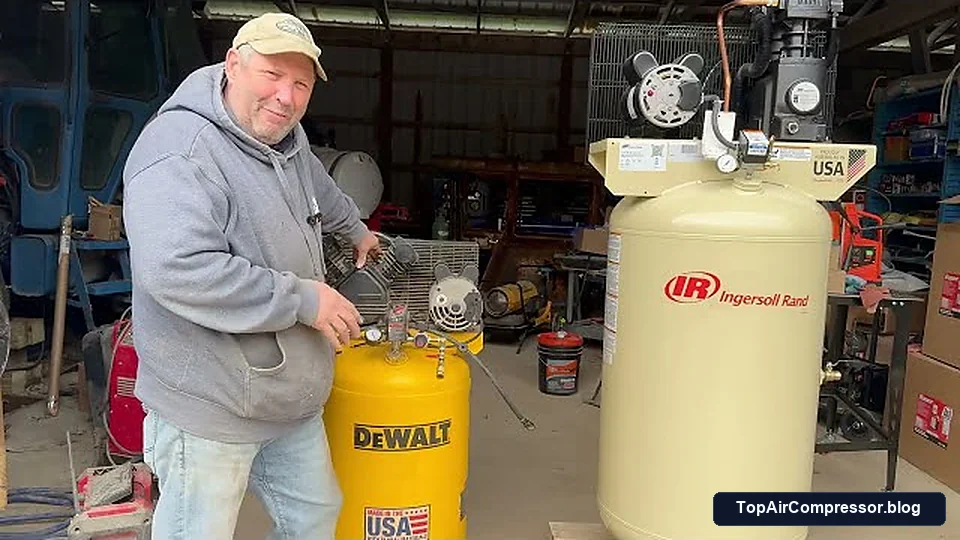
Receiver tanks store compressed air for immediate tool deployment. Larger tanks buffer peak demands, but they do not increase pump CFM output.
A sixty-gallon tank prevents the pump from cycling constantly. However, a weak pump will still deplete a large tank during extended grinding tasks.
Tank size must complement pump recovery speed for optimal efficiency. Relying solely on storage volume masks underlying inadequate pump displacement issues.
Drain moisture from your receiver tank after every working session. Accumulated water reduces storage capacity and promotes internal corrosion and failure.
Intermittent tools like nail guns use air in short bursts. Our portable air compressor recommendations highlight units offering adequate motor cooling time.
Continuous applications require equipment rated for one hundred percent duty cycles to prevent thermal overload. Grinders and sanders demand an uninterrupted supply of pressurized air.
Operating an intermittent compressor continuously forces the pump to run hot, damaging seals and valves. Match your equipment purchase directly to your intended operational style.
Carefully reviewing duty cycle ratings on manufacturer nameplates helps professional technicians avoid buying underpowered machinery for demanding commercial projects. Proper matching extends overall system reliability.
- Tanks store air but cannot boost pump CFM.
- Large reservoirs prevent excessive motor cycling.
- Pump recovery speed matters more than storage.
- Routine draining prevents internal tank corrosion.
The Relationship Between Tank Volume And Recovery
Storage tanks buy time while pumps work to catch up. Balancing tank volume with CFM ensures your system maintains stable operating pressure.
Smaller tanks force motors to run hotter and more frequently. Upgrading tank size improves overall pneumatic system efficiency and reduces mechanical wear.
- Storage tanks provide temporary operational buffers.
- Balanced systems eliminate excessive motor cycling.
Eliminating Common Air Delivery Mismatches And Restrictions
Restricted airlines choke airflow before it reaches your tools. Using quarter-inch hoses for high-demand equipment causes severe downstream pressure drops.
Upgrade to three-eighths or half-inch flexible hoses for demanding tools. Quality fittings like Milton industrial plugs ensure unrestricted volumetric delivery rates.
Check all quick-disconnect couplings for internal restriction bottlenecks. Worn or undersized fittings quietly sabotage an otherwise expensive compressor installation.
Inspecting your entire distribution network guarantees maximum tool efficiency. Addressing minor flow restrictions saves energy and extends pneumatic equipment life.
Undersized air hoses create severe flow restrictions that starve tools of necessary volume. Upgrading to larger inner diameters eliminates unnecessary pressure drops across long runs.
Restrictive quick couplers also limit maximum airflow despite having a large compressor feeding the line. Use high flow fittings to maintain optimal operating speeds.
Regularly inspect filter regulators and lubricators to ensure clean air reaches sensitive internal components. Clogged filtration elements restrict total volumetric output and reduce tool efficiency.
Identifying tiny leaks within the distribution network saves energy and prevents the compressor from running overtime. Routine pressure decay tests quickly pinpoint hidden plumbing faults.
- Undersized hoses restrict vital volumetric airflow.
- Use larger lines for high-demand tools.
- Inspect fittings for internal flow bottlenecks.
- Eliminate restrictions to maximize tool power.
Optimizing Hose Length And Fitting Selections
Long hose runs create friction that diminishes working pressure. Keep runs short or increase line diameter to offset frictional losses.
Select high-flow couplers that match your tool requirements. Proper hardware selection eliminates hidden pressure drops across every connection point.
- Long hoses introduce significant frictional losses.
- High-flow couplers maintain required system pressure.
Frequently Asked Questions
What CFM do I need for a basic impact wrench?
Most standard half-inch impact wrenches require four to five CFM at ninety PSI. Ensure your compressor exceeds this rating with a safety buffer.
Can a small pancake compressor run a paint gun?
Spray guns demand continuous airflow ranging from eight to twelve CFM. Small pancake units lack the volume required for professional painting tasks.
Why does my air tool lose power during use?
Pressure drops happen when tool consumption exceeds pump delivery. Check for undersized supply hoses or restricted quick-disconnect fittings.
Does a bigger tank increase compressor CFM output?
Receiver tanks only store compressed air and do not alter pump CFM. You must evaluate actual pump displacement when sizing tools.
What is the 1.5x rule for air compressors?
Multiply your total tool CFM requirement by one point five for safety. This accounts for line losses and pump wear over time.