What Does SCFM Stand For On An Air Compressor
Master compressed air terminology to evaluate pneumatic equipment accurately. Understanding standardized flow metrics prevents costly sizing mistakes.

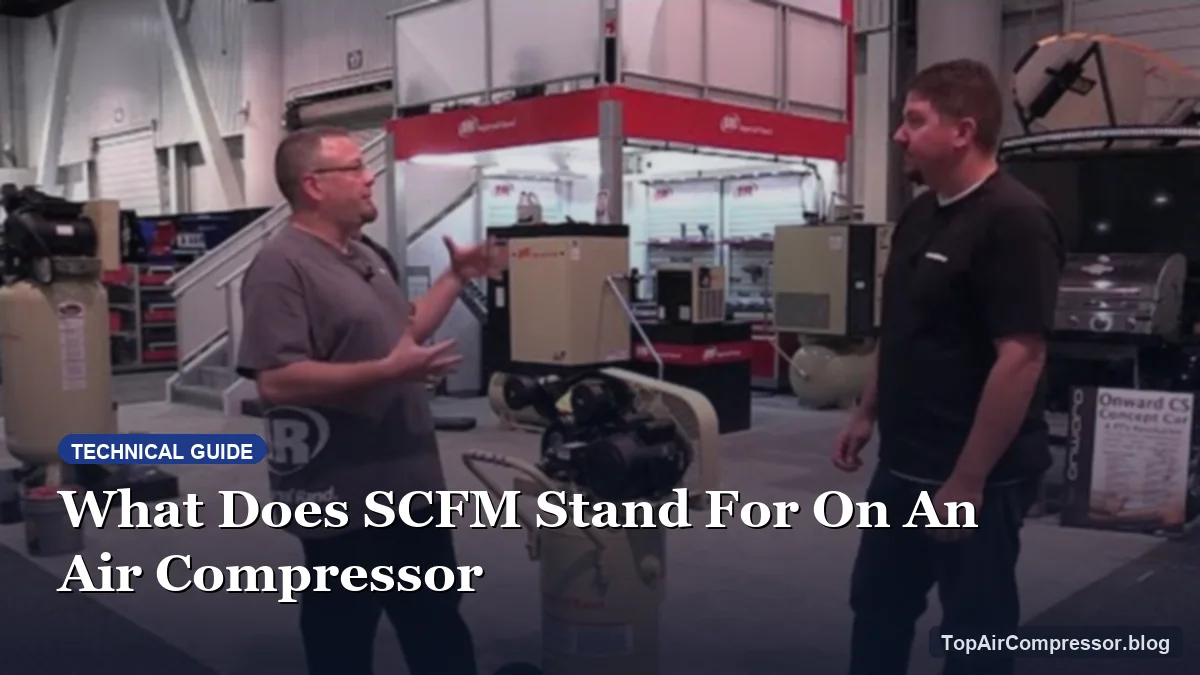
SCFM stands for Standard Cubic Feet Per Minute, providing a standardized measurement of air volume delivered under specific baseline atmospheric and temperature conditions.
Looking for matching picks? See our Best Stand Up Air Compressor: Top Picks Compared.
Practical Quick-Reference Table
| Scenario / Metric | Recommended Target | Why It Matters |
|---|---|---|
| Baseline Temperature | 68°F | Establishes a uniform testing standard globally. |
| Sea-Level Pressure | 14.7 PSI | Factors baseline atmospheric weight into calculations. |
| Standard Humidity | 36% | Eliminates moisture variables from laboratory ratings. |
| Altitude De-rate | 3% per 1,000 ft | Accounts for air density loss at higher elevations. |
| Tool Duty Factor | 60% to 100% | Prevents undersizing during continuous industrial operations. |
| Safety Margin | 20% Buffer | Accommodates future facility expansion without pressure drops. |
Decoding Standard Cubic Feet Per Minute
Understanding compressed air ratings requires looking closely at flow metrics. SCFM stands for Standard Cubic Feet Per Minute, representing a standardized measurement of air volume delivered under specific baseline atmospheric conditions.
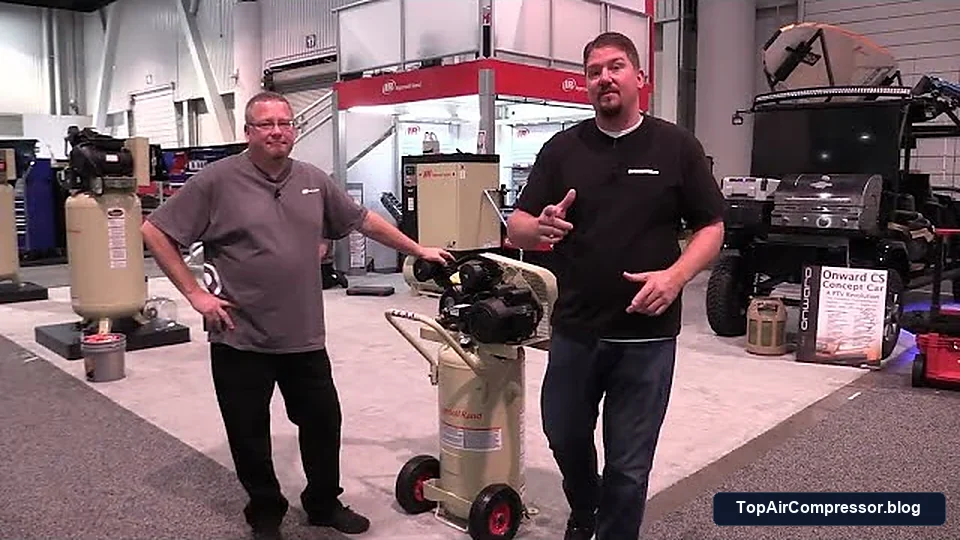
Manufacturers use this metric to establish a uniform testing baseline. Without standardization, fluctuating ambient temperatures and barometric pressures would make comparing different pneumatic compressor outputs nearly impossible across various geographic regions.
Standard conditions typically assume an ambient temperature of sixty-eight degrees Fahrenheit. They also factor in a relative humidity of thirty-six percent and a sea-level pressure of 14.7 pounds per square inch.
When evaluating technical specifications on nameplates, always verify the stated flow rate. Disregarding standardized conditions can lead to severe undersizing, causing severe pressure drops during heavy industrial pneumatic operations.
SCFM stands for Standard Cubic Feet Per Minute, a standardized metric used to measure compressed air delivery. It normalizes flow rates against specific atmospheric conditions to ensure reliable equipment comparisons.
This measurement assumes an ambient temperature of 68 degrees Fahrenheit, a relative humidity of 36 percent, and a barometric pressure of 14.7 pounds per square inch. Without this baseline, performance varies.
Industrial engineers rely on this standardized metric because real-world weather and altitude shift constantly. Establishing a fixed laboratory baseline allows accurate rating of pneumatic machinery regardless of local climate.
When evaluating reciprocating or rotary screw compressors, verifying the SCFM rating at targeted working pressures—such as 90 PSI—prevents underpowered setups that stall during heavy continuous shop operations.
- SCFM standardizes air volume measurements globally.
- Baseline references use 68°F temperature metrics.
- Pressure calculations factor in 14.7 PSI sea-level.
- Humidity is fixed at 36% for testing.
Ambient Variables and Baseline Testing
Environmental factors heavily influence how a pneumatic machine performs outdoors. Testing laboratories maintain strict controls to eliminate variables like seasonal humidity spikes and altitude changes.
Mechanics must remember that field performance rarely matches laboratory sheets. Real-world humidity and higher elevations alter air density, reducing overall volumetric efficiency during continuous tool operation.
- Altitude increases decrease volumetric efficiency.
- Humidity adds moisture affecting calculations.
Differentiating Between Standard and Actual Flow
Many operators confuse standard flow with actual volume delivery. ACFM, or Actual Cubic Feet Per Minute, measures the true output under specific job-site conditions rather than controlled laboratory baselines.
While standard metrics help compare different machine capacities equally, actual numbers matter more for daily tasks. Your pneumatic tools demand real-world volume to maintain proper operating pressure under load.
Temperature increases inside the compression chamber cause air to expand significantly. This thermal expansion means actual output volume differs from the rigid standard measurements established during factory certification.
Always look past simple marketing numbers to find true delivery capabilities. Consulting the manufacturer data sheets prevents costly miscalculations when running high-demand sandblasters or pneumatic grinders.
Actual Cubic Feet Per Minute, or ACFM, measures delivered air volume under real conditions. Similar to vetting air compressors for car tires, you must factor in localized temperature and humidity fluctuations.
While SCFM provides a controlled laboratory baseline, ACFM reflects how the machine performs inside your specific facility under extreme ambient temperatures and variable barometric pressures every single day.
Failing to account for the gap between these metrics often leads to pressure drops across long iron piping networks, starving downstream pneumatic impact wrenches and sanding tools of vital energy.
Always cross-reference the manufacturer’s volumetric output curves to ensure the delivered cubic feet meet or exceed your application demands without overheating the pump or tripping thermal breakers.
- ACFM reflects true job-site environmental output.
- Factory tests use controlled laboratory baselines.
- Thermal expansion alters raw volume delivery.
- Tool performance depends on actual flow.
Converting Between Flow Measurements
Engineering formulas allow technicians to convert standard metrics into actual output figures. Applying these mathematical corrections requires accurate site data regarding local barometric pressure and ambient operating temperatures.
Ignoring these mathematical conversions often leads to unexpected compressor stalling. Proper system design accounts for both figures to ensure adequate pneumatic power remains available during peak shifts.
- Collect local temperature and pressure data.
- Apply correction factors carefully.
Video Walkthrough: Tips on Buying Your First Air Compressor | SCFM \u0026 PSI Explained
Calculating Requirements for Pneumatic Tools
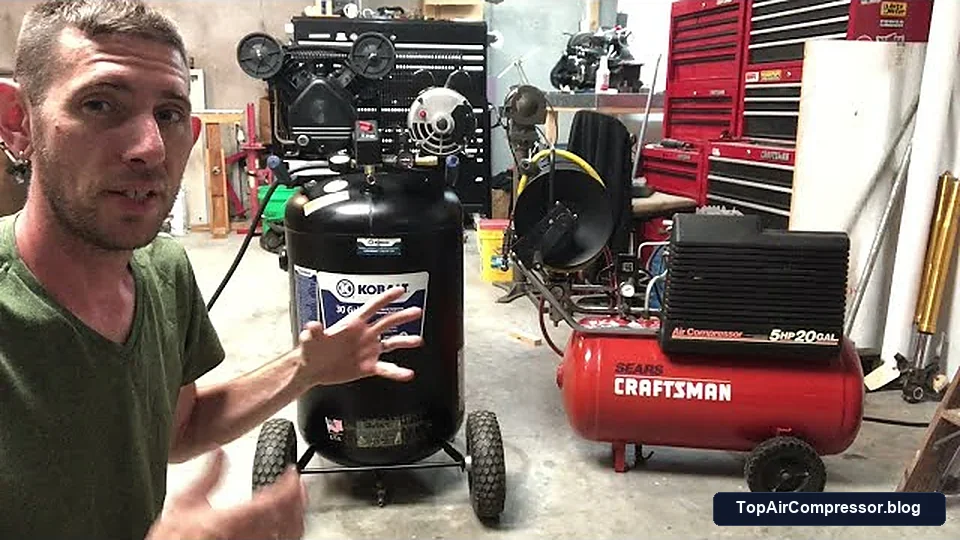
Sizing an air compressor requires summing requirements across connected devices. When picking portable air compressors for tools, always list your pneumatic items and identify their individual air consumption ratings.
Never assume all tools run simultaneously during a normal work shift. Apply a realistic usage factor, usually around sixty percent, to account for intermittent trigger pulls and tool handling time.
Continuous-duty applications like sanders or grinders demand one hundred percent capacity. For these heavy industrial tasks, match your compressor output directly to the maximum rated tool consumption.
Adding a safety margin prevents premature motor burnout and excessive tank cycling. Experts recommend increasing your final calculated requirement by at least twenty percent for future facility expansion.
Accurately calculating total air consumption requires summing the individual CFM requirements of every tool you plan to operate simultaneously on the same production line or maintenance bay.
Intermittent tools like ratchet wrenches only consume air roughly 25 percent of the time, allowing shops to apply a duty cycle multiplier rather than sizing solely for peak usage.
Continuous-demand equipment such as heavy industrial sanders or automated blast cabinets require compressors capable of delivering 100 percent duty cycle output without dropping below required operating pressures.
Always add a safety margin of 20 to 30 percent to your final volumetric calculations to compensate for natural system leaks, worn hoses, and future shop expansions over time.
- Sum individual tool air consumption rates.
- Apply a 60% duty cycle factor.
- Continuous tools need 100% capacity match.
- Include a 20% facility safety margin.
Managing Intermittent Versus Continuous Loads
Intermittent tools allow storage tanks to replenish between brief operational cycles. Impact wrenches and nail guns fit this category, requiring lower continuous pump output than rotary equipment.
Continuous loads drain storage receivers rapidly without adequate pump displacement. Industrial facilities must install larger rotary screw systems to maintain steady pressure during heavy manufacturing processes.
- Storage tanks buffer intermittent tool demands.
- Continuous loads require larger displacement pumps.
Environmental Factors Influencing Volumetric Output
Atmospheric pressure drops significantly as facility elevation increases above sea level. This thinning air reduces the mass of oxygen and nitrogen entering the intake filter on every stroke.

Compressors operating at high altitudes suffer a noticeable loss in overall efficiency. Technicians must de-rate pump capacity by roughly three percent for every thousand feet of elevation gain.
Ambient intake temperatures also dictate how much air a pump can process. Colder intake air is denser, yielding higher mass flow rates compared to hot summer operating conditions.
Proper ventilation prevents heat buildup and efficiency losses. When installing air compressors for home garage setups, drawing outside air directly into the intake helps maintain optimal volumetric performance year-round.
Ambient temperature directly impacts air density, meaning a compressor operating in a hot summer warehouse will yield fewer standard cubic feet than during a crisp winter morning.
High altitude reduces barometric pressure significantly, dropping volumetric efficiency by roughly 3 percent for every 1,000 feet of elevation gain above sea level due to thinner air molecules.
Relative humidity also introduces moisture into intake filters, requiring robust refrigerated or desiccant dryers to protect downstream pneumatic components from corrosion and premature internal seal failure.
Installing dedicated cold-air intake ducting from outside the building envelope helps mitigate thermal expansion, restoring vital compressor volumetric output in sweltering manufacturing environments.
- Elevation increases reduce atmospheric air density.
- De-rate capacity by 3% per 1,000 feet.
- Cold intake air improves mass flow.
- Ventilation prevents compressor room overheating.
Intake Filtration and Restriction Impacts
Clogged air filters create a pressure drop across the compressor intake valve. This restriction starves the compression chamber, lowering the overall volumetric output delivered downstream to your tools.
Establishing a strict maintenance schedule for filter replacement protects system efficiency. Clean media ensures maximum airflow and prevents premature wear on critical internal valves and pistons.
- Inspect intake filters on a weekly schedule.
- Replace clogged media promptly.
Common Errors When Interpreting Compressor Specs
Many buyers make the mistake of prioritizing peak horsepower over true airflow. Motor horsepower ratings often reflect theoretical maximums rather than the actual mechanical work delivered under load.
Another frequent error involves ignoring pressure ratings while focusing solely on volume. A machine might produce high flow numbers at low pressure, but fail to operate high-pressure pneumatic equipment.
Always check the pressure rating associated with the volumetric output figure. Manufacturers usually list maximum flow at a specific threshold, such as ninety pounds per square inch.
Misunderstanding these specifications leads to purchasing undersized equipment that struggles constantly. Educated buyers look at the complete performance curve rather than single, highlighted marketing numbers on brochures.
A frequent mistake involves confusing maximum tank pressure with working pressure at the regulator. Using our cfm tool sizing calculator prevents severe tool starvation during demanding fabrication or automotive repair tasks.
Marketing literature sometimes highlights peak horsepower rather than running horsepower, masking the true electrical draw and the actual SCFM output capabilities of smaller consumer-grade piston units.
Overlooking pressure drop across undersized quick-disconnect fittings and coiled polyurethane hoses can silently slash effective tool performance by up to twenty pounds per square inch downstream.
Ignoring the stated pressure rating—such as measuring SCFM at 40 PSI instead of the standard 90 PSI benchmark—results in wildly inaccurate performance expectations for industrial operations.
- Never rely solely on peak horsepower.
- Match both pressure and flow ratings.
- Verify test pressure thresholds like 90 PSI.
- Examine complete manufacturer performance curves.
Evaluating Displacement Versus Delivered Air
Piston displacement measures the physical cylinder volume swept during operation. This theoretical number is always higher than the actual delivered air due to inherent volumetric losses and clearance gaps.
Smart technicians always look for delivered volume specifications on technical data sheets. Relying on displacement figures results in severe capacity shortages when powering heavy factory automation lines.
- Displacement is a purely theoretical calculation.
- Delivered volume reflects real-world output capabilities.
Video Walkthrough: What is SCFM
Comparing Different Compressor Technologies
Rotary screw compressors excel at providing continuous airflow for demanding industrial operations. Their continuous-meshing rotors eliminate reciprocating inertia, delivering steady volume without massive pressure fluctuations in the line.
Reciprocating piston machines work exceptionally well for intermittent shop applications. They build pressure quickly in smaller tanks but require cool-down periods to prevent overheating during extended heavy cycles.
Centrifugal compressors handle massive volume requirements in large chemical processing facilities. These dynamic machines utilize high-speed impellers to accelerate air, providing massive flow capacity for continuous baseload demands.
Selecting the right technology depends entirely on your specific duty cycle needs. Matching the compressor type to your operational profile ensures long service life and minimal energy consumption.
Single-stage reciprocating compressors typically compress air to maximum pressure in one stroke, delivering lower maximum SCFM volumes suited primarily for light-duty automotive and hobbyist applications.
Two-stage piston configurations use an intercooler between cylinders to cool the air, boosting volumetric efficiency and achieving higher working pressures required by commercial auto repair shops.
Rotary screw compressors utilize interlocking helical rotors to provide continuous air delivery, maintaining high continuous duty cycles necessary for large manufacturing facilities running around the clock.
Selecting the correct technology requires matching your facility’s duty cycle and peak cubic feet requirements against the manufacturer’s specified thermal and mechanical operating limitations.
- Rotary screws suit continuous industrial operations.
- Pistons fit smaller, intermittent repair shops.
- Centrifugals handle massive chemical plant volumes.
- Match technology to your duty cycle.
Maintenance Requirements Across Technologies
Different compressor designs require specific upkeep routines to maintain rated output. Rotary units need periodic fluid separator changes, while piston models require regular reed valve inspections and oil changes.
Adhering to manufacturer maintenance intervals prevents catastrophic failures and efficiency drops. Routine service keeps volumetric delivery near factory specifications throughout the operating lifespan of the equipment.
- Change rotary fluid separators on schedule.
- Inspect reciprocating valves for carbon buildup.
Frequently Asked Questions
What does SCFM stand for on an air compressor specification sheet?
SCFM stands for Standard Cubic Feet Per Minute. It measures air volume delivered under controlled baseline atmospheric and temperature conditions.
Why is SCFM different from ACFM during operation?
ACFM measures actual output under specific job-site environmental conditions. Temperature and pressure changes alter air density, causing real-world performance to differ from factory tests.
How do I calculate the required SCFM for my air tools?
Sum the consumption ratings of all connected devices and apply a usage factor. Adding a twenty percent safety margin prevents equipment overloading during peak demand periods.
Does high altitude affect air compressor SCFM output?
Atmospheric pressure drops at higher elevations, reducing intake air density. Technicians must de-rate pump capacity by roughly three percent for every thousand feet of altitude gain.
Why do manufacturers rate SCFM at specific pressure levels?
Flow volume changes depending on operating pressure thresholds. Manufacturers test at specific ratings like 90 PSI to give buyers a reliable baseline comparison metric.