What Gallon Air Compressor Do I Need?
Selecting an air compressor requires matching tank capacity to your specific tool requirements. Proper sizing prevents pressure drops and premature motor failure during operation.

Always size your compressor based on SCFM requirements at specified PSI ratings rather than relying solely on tank gallon capacity or peak horsepower claims.
Looking for matching picks? See our Best 6 Gallon Air Compressor: Top Picks for 2026.
Practical Quick-Reference Table
| Scenario / Metric | Recommended Target | Why It Matters |
|---|---|---|
| Brad Nailers / Staples | 1 to 6 Gallons | Provides enough stored air for intermittent light framing and trim work. |
| Impact Wrenches | 15 to 30 Gallons | Maintains steady pressure during high-torque fastener removal applications. |
| Paint Spraying | 30 to 60 Gallons | Delivers continuous volume necessary to prevent finish sputtering and flaws. |
| Rotary Sanders | 60+ Gallons | Supports high-consumption continuous air tools without dropping line pressure. |
| Electrical Supply | 120V vs 240V | Matches motor amperage draw to standard workshop or dedicated circuit breaker ratings. |
| Duty Cycle | 50 to 100 Percent | Determines how long the pump runs before requiring a cool-down interval. |
Decoding CFM, PSI, and Tank Volume Fundamentals
Navigating air compressor specifications requires understanding how pressure and volume interact. PSI measures force while CFM delivers the actual volume of air required by pneumatic equipment.
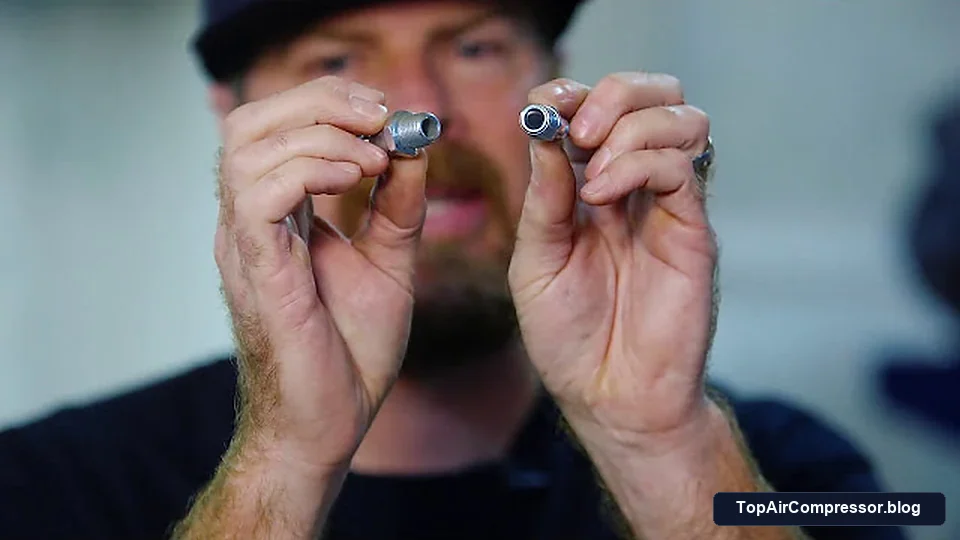
Tank volume acts as a reservoir to handle sudden demands. A larger tank provides a buffer, but the pump must still generate adequate CFM to sustain ongoing tool operation.
Many buyers mistakenly focus exclusively on horsepower ratings. True pneumatic performance depends entirely on delivered SCFM at standard operational pressures like ninety pounds per square inch.
Ignoring these fundamental metrics leads to stalling tools and frustrating workflow interruptions. Use our CFM tool sizing calculator to evaluate manufacturer specifications against your most demanding pneumatic accessory.
Understanding compressed air requires analyzing cubic feet per minute alongside pounds per square inch. Tank volume acts as a buffer, preventing the motor from running constantly during short pneumatic tool bursts.
Standard measurements calculate CFM at specific pressures, typically ninety PSI for most shop equipment. If your tool demands more volume than the pump delivers, pressure drops rapidly, causing inconsistent performance.
Selecting a larger reservoir helps stabilize air delivery during peak workloads. Consult our best 20 gallon air compressor roundup to compare mid-size reservoirs for garage tasks.
Always calculate a safety margin by adding twenty-five percent to your tool manufacturer's CFM requirement. This accounts for line friction losses, fitting restrictions, and natural volumetric efficiency drops over time.
- PSI dictates maximum force available at the regulator outlet.
- CFM measures volumetric airflow output at specific working pressures.
- Tank size buffers transient demands rather than dictating continuous tool capacity.
- SCFM standardizes airflow measurements across varying atmospheric conditions.
Evaluating Pressure Drop Dynamics
Pressure drop occurs when air consumption exceeds pump delivery. Long hoses and undersized fittings exacerbate this issue by restricting overall airflow.
Maintaining proper line pressure requires matching regulator settings to tool requirements. High-flow couplers minimize restriction throughout your distribution network.
- Check hose inner diameters for optimal airflow capacity.
- Install appropriate regulators to stabilize downstream pressure.
Analyzing Air Tool Demands and Continuous Consumption
Different pneumatic tools consume compressed air at drastically varying rates. Brad nailers require very little air volume, whereas grinders demand massive continuous CFM delivery.
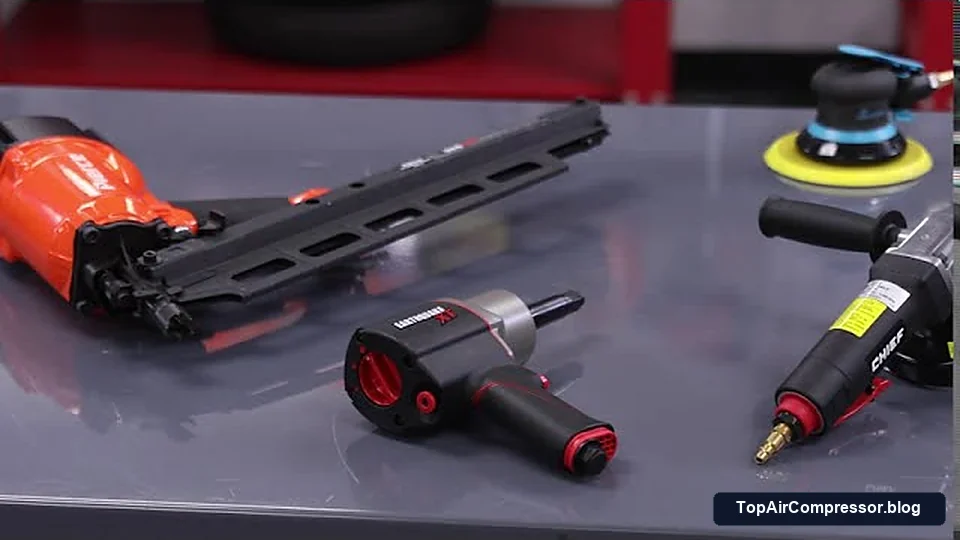
Intermittent tools allow storage tanks to refill between operational cycles. Staplers and impact wrenches fall into this category because they operate in brief bursts.
Continuous-demand tools run for extended periods without stopping. Review our best 6 gallon air compressor rankings before attempting heavy sanding or spraying tasks with compact units.
Calculating total air consumption involves adding individual tool requirements. Always multiply your highest tool requirement by a safety factor of 1.5 for reliability.
Different pneumatic devices have vastly different consumption rates, distinguishing between intermittent triggers and continuous rotation tools. Sanders, grinders, and paint guns drain receivers much faster than standard framing nailers.
Reviewing the manufacturer rating plate ensures your compressor matches the tool air consumption. Operating a rotary sander requires maintaining at least four CFM at ninety PSI to prevent stalling.
Continuous consumption tools demand compressors with high pump recovery capabilities. Pairing a small six gallon tank with a high-draw grinder forces the motor into a continuous duty cycle.
Checking hose internal diameter prevents restrictive air delivery bottlenecks. Upgrading from a quarter inch hose to a three-eighths line significantly improves effective tool operating pressure and volume.
- Intermittent tools permit smaller tank capacities and lower CFM pumps.
- Continuous tools demand high-output stationary compressors with large reservoirs.
- Safety margins prevent the compressor pump from running constantly.
- Always review manufacturer CFM ratings at specific operational pressures.
Calculating Aggregate Air Demand
Running multiple tools simultaneously multiplies your total volumetric requirement. Add individual CFM ratings together before selecting an appropriate compressor model.
Factor in potential air leaks within older distribution plumbing. Preventative maintenance ensures your compressor meets calculated aggregate demands reliably.
- Sum up maximum CFM ratings for all simultaneously operated tools.
- Add a twenty percent buffer for system leakage and wear.
Video Walkthrough: What Air Compressor Do You Need? | Harbor Freight
Matching Tank Sizes to Workshop and Jobsite Tasks
Selecting the correct tank capacity depends heavily on your mobility needs and application intensity. Ultra-compact tanks under six gallons serve finish carpenters and upholsterers exceptionally well.
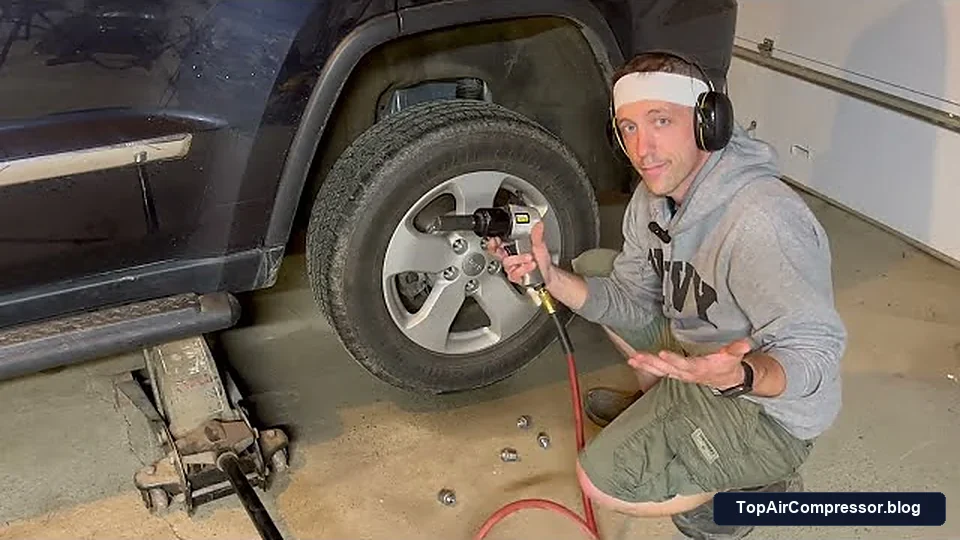
Medium tanks ranging from fifteen to thirty gallons bridge the gap. They support automotive repair tasks, impact wrenches, and medium-duty sanding operations without excessive weight.
Stationary tanks exceeding sixty gallons anchor professional workshops. These large vessels handle heavy pneumatic grinding, blasting cabinets, and multi-user industrial environments effortlessly.
Consider physical space limitations and transport requirements before buying. Larger tanks offer superior performance stability but eliminate jobsite portability entirely.
Jobsite framing tasks prioritize portability over massive air storage reservoirs. Contractors frequently rely on twin stack configurations because they easily fit inside service trucks while delivering adequate pressure.
Stationary automotive workshops require significantly larger air storage capacities. Installing an eighty gallon vertical unit ensures stable pressure for pneumatic lifts, heavy impact wrenches, and pneumatic sandblasting cabinets.
Home garages used primarily for inflating tires and occasional nailing require modest equipment. A portable twenty gallon horizontal compressor strikes an ideal balance between weight and operational reserve capacity.
Evaluating physical workspace footprints helps determine your ideal tank orientation. Vertical tanks save precious floor space, whereas horizontal models offer greater stability against accidental tipping on uneven surfaces.
- Pancake and twin-stack units prioritize lightweight portability for trim work.
- Wheelbarrow tanks offer mobility across rugged jobsite terrain.
- Vertical stationary tanks save valuable floor space in tight workshops.
- Large horizontal tanks provide maximum stability for heavy industrial pumps.
Balancing Portability and Air Storage
Jobsite environments demand lightweight equipment that fits in service vehicles. Compact pancake designs sacrifice air storage for easy transport and rapid deployment.
Stationary vertical units maximize storage capacity within minimal floor footprints. Dedicated workshops benefit from permanent piping networks connected to these large reservoirs.
- Assess vehicle loading limits for portable jobsite compressors.
- Secure stationary units safely to concrete workshop floors.
Evaluating Horsepower Realities and Motor Electrical Loads
Marketing claims frequently exaggerate electric motor horsepower ratings significantly. Running horsepower matters far more than peak or starting horsepower measurements listed on labels.
True continuous mechanical output is limited by standard electrical circuit capacities. Standard household outlets cannot safely supply the current required for motors exceeding two horsepower.
Heavy-duty compressors require dedicated electrical circuits operating at higher voltages. Two-hundred-thirty-volt configurations reduce current draw and prevent tripped breakers during startup.
Always verify electrical infrastructure before purchasing a large compressor. Upgrading workshop wiring often costs more than the compressor unit itself if neglected.
Marketing claims regarding peak horsepower often exaggerate true motor electrical output capabilities. Real running horsepower is strictly limited by standard household electrical circuits and circuit breaker amperage limits.
A standard fifteen-amp receptacle safely supports a maximum of two horsepower under continuous operating loads. Exceeding this threshold causes immediate breaker trips unless you install dedicated heavy-duty wiring.
Industrial workshops utilize two hundred thirty volt circuits to safely power larger five-horsepower motors. This higher voltage reduces amperage draw, preventing overheating and extending overall electrical component operational longevity.
Inspecting extension cord gauges prevents dangerous voltage drops that burn out electric motors. Using a twelve gauge cord over long distances ensures the compressor receives adequate starting current safely.
- Ignore inflated peak horsepower claims found in promotional materials.
- Verify standard running horsepower ratings for realistic performance expectations.
- Match motor amperage requirements to existing breaker panel capacities.
- Consult licensed electricians before installing heavy stationary equipment.
Understanding Voltage and Amperage Limits
Standard household circuits max out safely at fifteen or twenty amps. Drawing excessive current causes thermal overload and trips protective breakers instantly.
Industrial compressors necessitate dedicated high-voltage supply lines. Proper wire sizing prevents voltage drop over long electrical runs in large workshops.
- Calculate total circuit load including auxiliary workshop lighting.
- Use heavy-duty extension cords sparingly to prevent voltage drops.
Assessing Duty Cycles and Operating Temperature Limits
Duty cycle specs indicate how long a compressor pump can run safely. A fifty percent duty cycle means the pump must rest for every minute it operates.
Exceeding recommended duty cycles causes rapid internal wear and overheating. Commercial applications require continuous duty pumps designed to run indefinitely without failure.
Ambient temperature heavily influences thermal management and compressor efficiency. Operating in hot environments reduces oil viscosity and accelerates component degradation rapidly.
Proper ventilation around the compressor housing prevents premature thermal shutdowns. Ensure adequate clearance from walls to maintain optimal airflow across cooling fins.
Duty cycle ratings dictate the exact percentage of time a compressor pump can safely operate. A fifty percent duty cycle means the pump must rest for every minute it runs.
Exceeding recommended thermal limits accelerates internal wear on piston rings and valve plates. Operating in ambient temperatures above one hundred degrees Fahrenheit drastically reduces overall pump operational longevity.
Proper ventilation around the motor shroud prevents premature thermal overload switch activation. Ensuring adequate clearance from workshop walls allows cooling fans to dissipate compressor heat efficiently during operation.
Commercial applications require industrial pumps rated for continuous duty operations. Selecting a cast iron two-stage pump prevents overheating during extended operational shifts in busy commercial automotive repair facilities.
- Check manufacturer duty cycle ratings before tackling large projects.
- Allow intermittent pumps sufficient cool-down time between heavy cycles.
- Maintain clean cooling fins to dissipate frictional heat effectively.
- Avoid running compressors inside completely sealed, unventilated enclosures.
Managing Thermal Overload Protection
Built-in thermal switches protect motors from burning out during overloads. When triggered, these sensors shut down the unit until internal temperatures drop safely.
Frequent thermal trips indicate an undersized compressor or restricted ventilation. Investigate the root cause rather than bypassing built-in safety mechanisms.
- Allow tripped thermal switches adequate time to cool down.
- Clear debris from motor housing vents to restore airflow.
Comparing Oil-Lubricated Versus Oil-Free Pump Designs
Oil-lubricated pumps feature internal splash or pressure lubrication systems. These units operate significantly quieter and last much longer under heavy daily workloads.
Oil-free compressors utilize coated piston rings to eliminate liquid maintenance. They offer convenient maintenance-free operation and perform reliably in cold weather environments.
Oil-free models tend to generate higher decibel levels during operation. The PTFE coatings also wear down faster, shortening overall pump lifespan compared to oiled units.
Consider your maintenance habits and application sensitivity before choosing. Spray painting and delicate finishing tasks often demand oil-free air to prevent contamination.
Oil-free compressors utilize coated piston rings, eliminating maintenance while reducing overall equipment weight significantly. These units provide clean air outputs ideal for interior finish carpentry and delicate pneumatic painting.
Oil-lubricated pumps feature traditional sumps that require periodic fluid level checks and changes. This design ensures superior mechanical lubrication, resulting in extended pump life compared to oil-free alternatives.
Noise generation levels differ markedly between these two common pump construction styles. Oil-free units typically produce higher decibel ratings, whereas low-RPM oil pumps operate much quieter in enclosed workshops.
Climate considerations affect oil viscosity during winter garage operations. Using synthetic compressor oil with a thirty weight rating ensures smooth cold-weather motor startup without blowing internal seals.
- Oiled pumps provide superior longevity and quieter operational decibel levels.
- Oil-free pumps eliminate messy fluid checks and cold-weather starting issues.
- Use inline oil separators if running finish tools on lubricated compressors.
- Evaluate expected daily run times to determine ideal pump longevity.
Maintenance Routines for Pump Longevity
Oil-lubricated units require regular fluid level inspections and changes. Using synthetic compressor oil improves performance across wide temperature ranges.
Oil-free pumps require diligent air filter replacements to prevent debris ingestion. Keeping intake paths clean protects internal cylinder walls from premature scoring.
- Inspect sight glasses or dipsticks before every major startup.
- Change compressor oil according to manufacturer running-hour schedules.
Understanding Stationary Versus Portable Compressor Form Factors
Form factor dictates how and where you deploy your pneumatic equipment. Portable units prioritize lightweight mobility for framing crews and mobile service technicians.
Stationary compressors remain anchored in dedicated workshop locations. These heavy units deliver high-volume airflow through permanent copper or aluminum distribution piping networks.
Wheelbarrow and vertical configurations balance capacity with mobility. Pneumatic tires make moving larger medium-duty compressors across rough jobsite terrain much easier.
Assess your physical workspace layout before selecting a form factor. Permanent installations eliminate setup time but require dedicated floor space and plumbing.
Stationary air compressors are bolted permanently to concrete shop floors for maximum stability. Check our best 30 gallon air compressor selections featuring vertical tanks designed to minimize spatial footprints.
Portable wheeled compressors allow contractors to move high-pressure air directly to the work zone. Pneumatic tires absorb jobsite bumps, protecting internal regulators and pressure gauges from severe impact damage.
Tank mounting hardware requires heavy-duty vibration isolation pads to reduce structural noise transmission. Securing stationary units with anchor bolts prevents destructive harmonic resonance throughout your workshop building frame.
Drain valve accessibility remains a critical factor for daily maintenance routines. Selecting units with extended drain extensions makes purging moisture accumulation effortless without requiring awkward crawling beneath tanks.
- Portable pancake units excel at quick residential service calls.
- Stationary vertical tanks optimize floor space in professional shops.
- Wheelbarrow models navigate gravel and construction debris effortlessly.
- Permanent piping networks reduce pressure loss across large workshops.
Designing Permanent Air Distribution Piping
Permanent workshops benefit from rigid metal or approved polymer piping. Proper slope design ensures condensed moisture drains away from tool drops.
Installing multiple drop locations improves workshop ergonomics and efficiency. Avoid restrictive quick-connect fittings where maximum airflow is critical.
- Incline distribution lines toward designated moisture drain valves.
- Secure piping firmly to walls using approved structural brackets.
Managing Noise Levels and Workspace Power Requirements
Compressor noise levels impact workplace safety and user comfort significantly. Traditional direct-drive units often exceed eighty-five decibels, requiring mandatory hearing protection.
Ultra-quiet compressor designs utilize slow-running pump heads and acoustic enclosures. These modern units operate below sixty decibels, permitting indoor residential use.
Electrical supply demands dictate where you can safely run larger motors. High-amperage draw requires dedicated circuits to prevent voltage drops and equipment damage.
Evaluate local noise ordinances and workshop acoustics before installing equipment. Sound-dampening mats reduce transmitted vibration and lower overall ambient noise levels.
Excessive decibel levels can cause permanent hearing damage during extended workshop equipment usage. Modern quiet compressors utilize enclosed dual piston pumps that restrict operational noise below seventy decibels effectively.
Installing remote air lines helps isolate compressor noise away from primary work areas. Running rigid copper piping through attic spaces delivers clean air while keeping noisy motors outside.
Electrical circuit planning requires calculating total starting amps to prevent nuisance breaker trips. Motor starting surges frequently exceed running loads by three times, demanding heavy-duty slow-blow fuses.
Grounding safety is paramount when operating high-voltage stationary workshop equipment. Always verify that your electrical supply includes a verified equipment ground to prevent dangerous electrical shock hazards.
- Ultra-quiet models protect hearing and enable indoor residential operation.
- Install anti-vibration rubber pads beneath heavy stationary compressor feet.
- Verify circuit breaker ratings to prevent accidental electrical overloads.
- Construct acoustic enclosures for loud industrial pumps when necessary.
Mitigating Vibration and Acoustic Resonance
Compressor motors generate significant mechanical vibration during operation. Isolated mounting pads prevent floors and walls from amplifying structural resonance.
Flexible leader hoses connect stationary pumps to rigid piping networks. This prevents vibration fatigue from cracking metal distribution lines over time.
- Install rubber vibration pads under all four compressor feet.
- Use flexible braided stainless steel lines for primary connections.
Frequently Asked Questions
What size air compressor do I need for automotive impact wrenches?
Impact wrenches require a minimum fifteen to thirty gallon tank to maintain consistent pressure during high-torque fastener removal. Ensure your pump delivers at least four SCFM at ninety PSI.
Can I run a paint spray gun on a small six-gallon compressor?
Spray guns demand continuous airflow that will quickly deplete small tanks. You need at least a thirty-gallon compressor to prevent finish sputtering and pressure drops during painting.
Why does my compressor motor trip the circuit breaker during startup?
Motors draw high starting current that easily overwhelms standard household circuits. Upgrading to a dedicated high-voltage circuit typically resolves persistent electrical tripping issues.
What is the difference between SCFM and CFM ratings?
SCFM standardizes airflow measurements across specific environmental conditions for accurate comparison. Always rely on SCFM ratings when calculating your actual pneumatic tool requirements.
Do I need an oil-lubricated or oil-free compressor for my workshop?
Oil-lubricated pumps offer superior longevity and quieter operation for daily professional use. Choose oil-free models if you require zero fluid maintenance and cold-weather starting reliability.