What Is a Scroll Air Compressor?
Scroll air compressors use interlocking spiral elements to deliver continuous, oil-free airflow for sensitive applications. Understanding their unique mechanics ensures reliable facility operation.

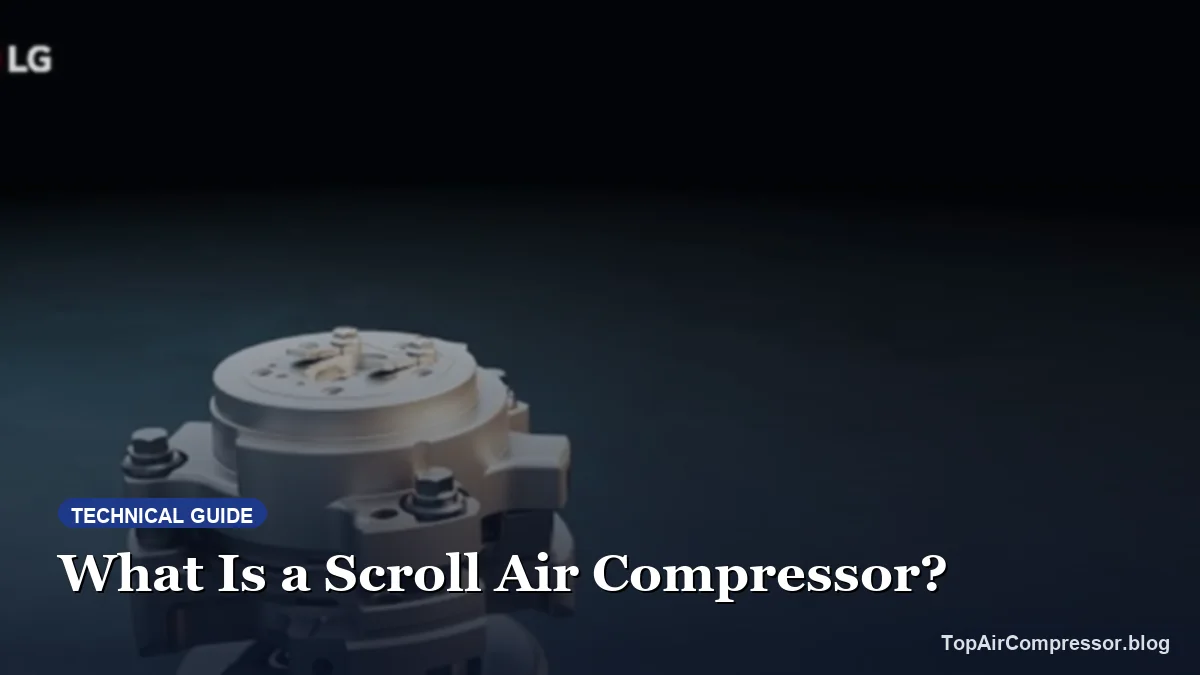
A scroll compressor uses one fixed spiral and one orbiting scroll to compress air smoothly without metal-to-metal contact. This design produces ultra-clean air with minimal vibration and noise.
Looking for matching picks? See our Best Scroll Compressor: Top Picks for Pro Shops & HVAC.
Practical Quick-Reference Table
| Scenario / Metric | Recommended Target | Why It Matters |
|---|---|---|
| Ambient Room Temp | Below 104°F | Prevents thermal overloads and seal degradation. |
| Intake Filter Service | 1,000 - 2,000 Hours | Ensures unrestricted airflow and motor protection. |
| Tip Seal Inspection | Every 2,000 Hours | Maintains volumetric efficiency and rated CFM output. |
| Air Purity Standard | ISO 8573-1 Class 0 | Guarantees 100% oil-free air for sensitive uses. |
| Duty Cycle Rating | 100% Continuous | Supports heavy industrial workloads without resting. |
| Sound Pressure Level | Below 60 dB(A) | Enhances workplace ergonomics and safety. |
Defining the Scroll Compression Architecture
Scroll compressors represent a distinct class of positive displacement machinery utilized extensively in modern industrial facilities. They eliminate traditional reciprocating pistons in favor of interlocking spiral geometries to compress air efficiently.
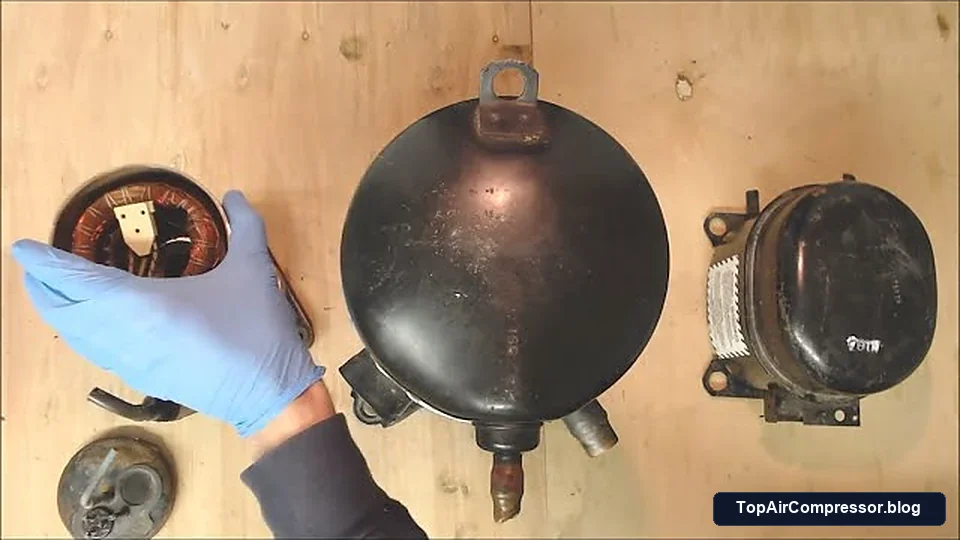
The core design relies on two identical spiral wraps offset by one hundred and eighty degrees. One scroll remains completely stationary while the other executes a precise orbital motion driven by a dedicated motor.
While stationary scroll systems power large facilities, technicians requiring mobile pneumatic solutions often explore our best portable tire air compressor options for quick emergency roadside inflating tasks.
Facility engineers choose these units when absolute oil-free air is mandatory for downstream processes. Medical laboratories, food processing plants, and electronics manufacturers rely heavily on scroll technology to prevent contamination.
- Positive displacement design utilizing twin spiral elements.
- Stationary scroll paired with an orbiting drive scroll.
- Zero metal-to-metal contact inside the compression chamber.
- Continuous discharge flow without severe pressure pulsation peaks.
Historical Evolution and Design Scalability
Originally patented decades ago for refrigeration use, scroll mechanisms transitioned successfully into pneumatic systems. Modern manufacturing techniques now allow tighter machining tolerances and enhanced volumetric efficiencies across various horsepower ranges.
Scalability remains a primary advantage when facility demand fluctuates throughout daily operational shifts. Engineers can easily manifold multiple scroll aireends together to match exact CFM requirements without wasting electrical energy.
- Adapts easily to multi-module manifold configurations.
- Machining tolerances measured in microns.
- Optimized for variable demand pneumatic loops.
Internal Mechanics and Working Principles
The operational cycle begins as ambient air enters the outermost suction pocket. Buyers seeking garage equipment can review our best air compressor selections to find reliable models for varied workshop applications.
As the orbital motion continues, the trapped air pocket seals completely from the outside atmosphere. The orbiting scroll drives the pocket inward along the spiral curve, systematically reducing the available internal volume.
Volume reduction directly correlates with a proportional increase in absolute air pressure according to thermodynamic laws. This continuous compression phase avoids the abrupt valve actions found in traditional piston pumps.
The final high-pressure air converges at the exact center of the scrolls for immediate discharge. A dedicated check valve prevents reverse flow when the motor stops, maintaining system line pressure effectively.
- Suction pocket seals atmosphere at outer spiral radius.
- Orbital motion reduces pocket volume toward center.
- Thermodynamic compression occurs without mechanical inlet valves.
- Discharge air exits through a centrally located port.
The Orbiting Kinematics and Anti-Rotation Design
Maintaining correct orbital motion requires an Oldham coupling or specialized crankcase mechanism. This critical assembly prevents the orbiting scroll from spinning on its own axis, ensuring perfect geometric alignment.
Without anti-rotation hardware, the spiral wraps would collide and catastrophically destroy the internal pumping chamber. Precision engineering guarantees smooth kinetic transfer and long operational lifespans under heavy duty cycles.
- Oldham coupling locks rotational degrees of freedom.
- Prevents catastrophic scroll wrap interference.
- Ensures consistent kinematic power transfer.
Video Walkthrough: Why You Should Love Scroll Compressors | Uncover the Secrets of Quiet Air Compressors
Anatomy of Critical Internal Components
Every scroll aireend incorporates tightly toleranced components designed to operate under sustained thermal stress. The fixed scroll body mounts rigidly to the main crankcase using high-strength steel fasteners.
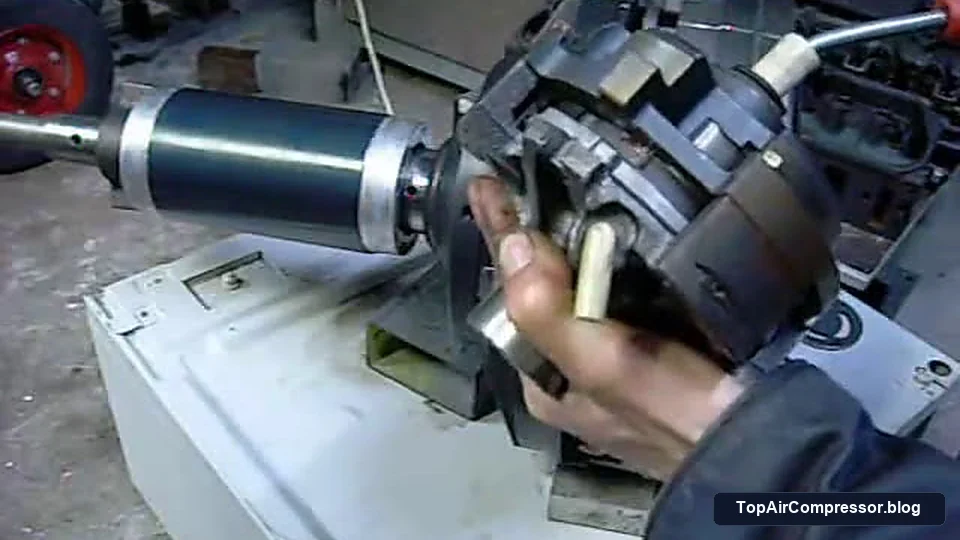
The orbiting scroll features specialized tip seals fitted into machined grooves along the spiral edge. These durable polymer seals maintain airtight compartment separation while withstanding constant sliding friction.
Drive shafts utilize heavy-duty ball bearings to support radial and axial loads generated during compression. Proper lubrication of these mechanical bearings is essential for preventing premature wear and thermal seizure.
Crankcases often feature extensive cooling fins or integrated liquid jackets to dissipate compression heat rapidly. Effective thermal management protects polymer tip seals and maintains optimal volumetric output.
- Fixed scroll housing secured with heavy-duty fasteners.
- Polymer tip seals maintain airtight compression pockets.
- Radial and axial bearings support the main drive shaft.
- Integrated cooling fins dissipate internal frictional heat.
Tip Seal Maintenance and Replacement Intervals
Polymer tip seals represent the primary wear items within an oil-free scroll compressor assembly. Technicians must inspect these components periodically to detect microscopic groove degradation or thermal glazing.
Replacing worn tip seals restores lost CFM output and prevents efficiency drops across the pneumatic system. Following manufacturer guidelines for inspection intervals guarantees reliable plant air delivery.
- Inspect tip seals every two thousand operating hours.
- Look for thermal glazing or excessive edge wear.
- Restore original CFM by installing fresh polymer inserts.
Operational Advantages and Efficiency Metrics
Scroll compressors offer distinct operational advantages over reciprocating and rotary screw alternatives in specific niches. Their completely oil-free compression chambers eliminate the risk of hydrocarbon contamination in downstream piping.
Acoustic performance remains exceptionally high, with operating sound levels often dropping below sixty decibels. This quiet operation allows facility managers to install units directly inside workspaces without costful acoustic enclosures.
Mechanical balance is inherently superior due to the smooth, continuous orbital motion of the components. Minimal vibration transfer protects sensitive facility electronics and reduces the need for specialized concrete foundations.
Energy efficiency shines in part-load conditions when multi-module units cycle compressors independently. Operators match actual plant air demand precisely, avoiding the massive energy penalties of unloaded running modes.
- Completely oil-free air output protects sensitive downstream processes.
- Extremely low noise levels enhance workplace acoustic ergonomics.
- Minimal vibration eliminates heavy foundation pad requirements.
- Multi-module cycling optimizes power consumption during partial loads.
Duty Cycle Capabilities and Thermal Limits
Most commercial scroll compressors are engineered for continuous one hundred percent duty cycle operation. However, ambient room temperatures must remain within specified operating thresholds to prevent thermal tripping.
Exceeding maximum ambient limits causes internal scroll growth and accelerates tip seal wear significantly. Operators must ensure adequate ventilation in compressor rooms to maintain long-term equipment reliability.
- Engineered for continuous 100% duty cycle workloads.
- Maintain ambient room temperatures below 104 degrees Fahrenheit.
- Ensure proper ventilation to prevent thermal overloads.
Air Quality Management and Filtration Systems
Although scroll aireends operate without oil lubrication, atmospheric moisture still requires diligent management downstream. Compressing ambient air concentrates humidity, necessitating reliable aftercoolers and efficient water separators.
Refrigerated air dryers must integrate into the pneumatic loop to protect downstream equipment. Mechanics working on job sites frequently rely on our best portable air compressor for tools guide to ensure consistent pneumatic performance.
Inlet air filtration is vital because microscopic abrasive dust particles can destroy scroll wraps. Heavy-duty intake filters capture particulate matter before it reaches the precision-machined spiral surfaces.
Differential pressure gauges across intake filters alert maintenance personnel when replacement elements are required. Neglected filters restrict airflow, forcing compressors to work harder and reduce overall efficiency.
- Downstream dryers eliminate condensed moisture from compressed air.
- High-efficiency inlet filters protect internal scroll wraps from dust.
- Differential gauges monitor intake filter restriction levels.
- Meets strict ISO air purity classifications for sensitive applications.
Condensate Management and Environmental Compliance
Condensate discharge from separators contains trace airborne pollutants and must be treated properly. Facilities should install oil-water separators or compliant drainage systems to meet local environmental regulations.
Automatic electronic drain valves prevent standing water accumulation inside receiver tanks and piping networks. Reliable drainage protects downstream equipment from sudden liquid slugs and microbial growth hazards.
- Treat condensate to satisfy local environmental discharge codes.
- Install electronic auto-drains on air receiver tanks.
- Prevent liquid carryover into sensitive pneumatic tooling.
Routine Maintenance Protocols and Service Schedules
Preventive maintenance for scroll compressors focuses primarily on filtration, cooling, and seal inspections. Technicians must establish strict service schedules based on operating hours and environmental severity.
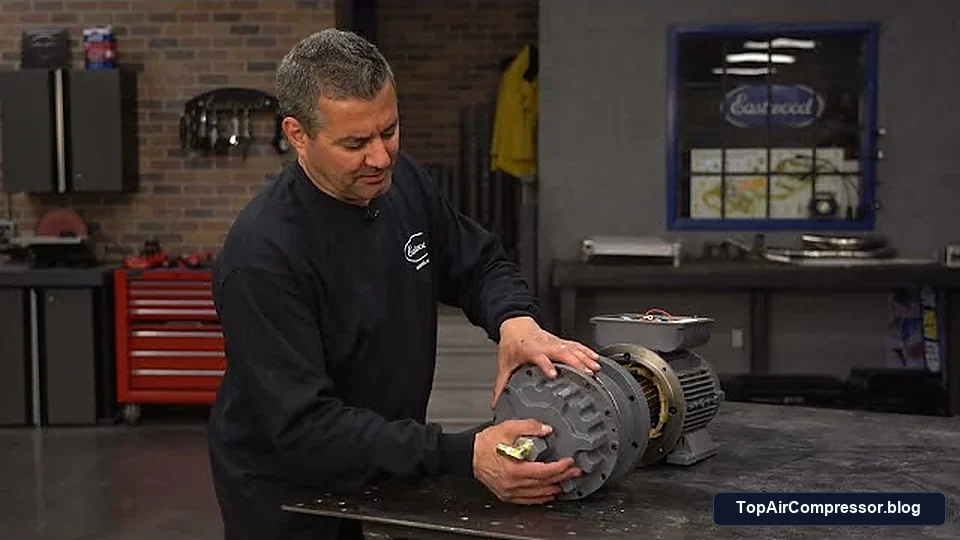
Intake filter elements typically require replacement every one thousand to two thousand operating hours. Clean filters ensure unrestricted airflow and prevent thermal stress on the scroll drive motor.
Drive belt tensions, electrical connections, and safety shut-off switches demand regular quarterly evaluations. Proactive electrical checks prevent unexpected downtime and protect expensive control board assemblies.
Air receiver tanks require daily manual or automatic blowing to expel accumulated condensate moisture. Routine tank inspections safeguard against internal corrosion and maintain structural integrity under maximum working pressures.
- Replace intake filters every 1,000 to 2,000 hours.
- Inspect electrical connections and safety cut-offs quarterly.
- Test automatic condensate drains daily for proper function.
- Perform annual vibration and thermal imaging checks.
Annual Overhaul and Bearing Inspections
Annual servicing should include a comprehensive check of all internal tip seals and bearings. Professional technicians evaluate bearing play and verify that motor amperage draws remain within nominal factory specifications.
Documenting all maintenance activities in a facility logbook helps track component wear trends over time. Thorough record-keeping ensures timely overhauls before minor issues escalate into catastrophic hardware failures.
- Verify motor amperage draw against nameplate data.
- Inspect bearings for unusual acoustic resonance or play.
- Maintain detailed service logs for warranty compliance.
Industrial Applications and Duty Cycle Requirements
Scroll air compressors excel across industries requiring absolute contamination control and quiet mechanical performance. Dental clinics utilize these systems to supply clean, dry air directly to patient treatment chairs.
Pharmaceutical manufacturing facilities rely on scroll technology to power automated packaging and sorting equipment safely. The absence of oil eliminates any possibility of batch contamination in sensitive drug production.
Craft breweries and beverage bottling plants implement scroll units for actuation and purging tasks. Clean compressed air protects product taste profiles by avoiding oily residues in valves and piping.
Laboratory environments use multi-core scroll setups to operate precision analytical instrumentation and pneumatic slides. Consistent pressure delivery ensures accurate experimental results and protects costly scientific hardware.
- Dental practices demand oil-free air for patient safety.
- Pharmaceutical plants prevent product contamination during automated packaging.
- Breweries protect beverage flavor profiles from hydrocarbon residues.
- Laboratories power sensitive analytical instruments reliably.
Sizing and Selecting Multi-Core Scroll Systems
Selecting the correct compressor involves calculating peak airflow demands. Technicians can use our CFM and tank sizing calculator to determine accurate volumetric requirements for complex multi-core installations.
Engineers must factor in altitude, ambient temperatures, and duty cycle patterns during the sizing process. Proper sizing prevents short-cycling and maximizes the operational efficiency of the pneumatic installation.
- Calculate maximum simultaneous CFM demand accurately.
- Use multi-core setups for flexible capacity scaling.
- Account for ambient temperature and altitude derating.
Frequently Asked Questions
What makes scroll compressors completely oil-free?
Scroll compressors use interlocking spiral elements that operate with zero metal-to-metal contact inside the compression chamber. This unique design eliminates the need for oil lubrication in the airstream entirely.
How often should polymer tip seals be replaced?
Polymer tip seals generally require inspection every two thousand operating hours to check for wear. Replacing worn seals restores original volumetric efficiency and prevents drops in compressed airflow.
Can scroll compressors run continuously without stopping?
Most commercial scroll units are engineered for a one hundred percent duty cycle under proper ambient conditions. However, adequate room ventilation is required to prevent overheating and thermal shutdowns.
Why are multi-core scroll compressors used in industry?
Multi-core systems allow facilities to scale airflow capacity and handle fluctuating demand efficiently. Individual aireends cycle on and off independently, optimizing power consumption during partial load conditions.
Do scroll compressors require special foundation pads?
Scroll compressors feature inherently balanced mechanical motion that generates very minimal vibration. Consequently, heavy concrete foundation pads are rarely necessary, allowing for straightforward installation on standard commercial flooring.