What Is Normal Tire Pressure for a Car?
Maintaining correct inflation keeps your vehicle safe and fuel-efficient. Understanding standard operating metrics prevents premature tire wear.

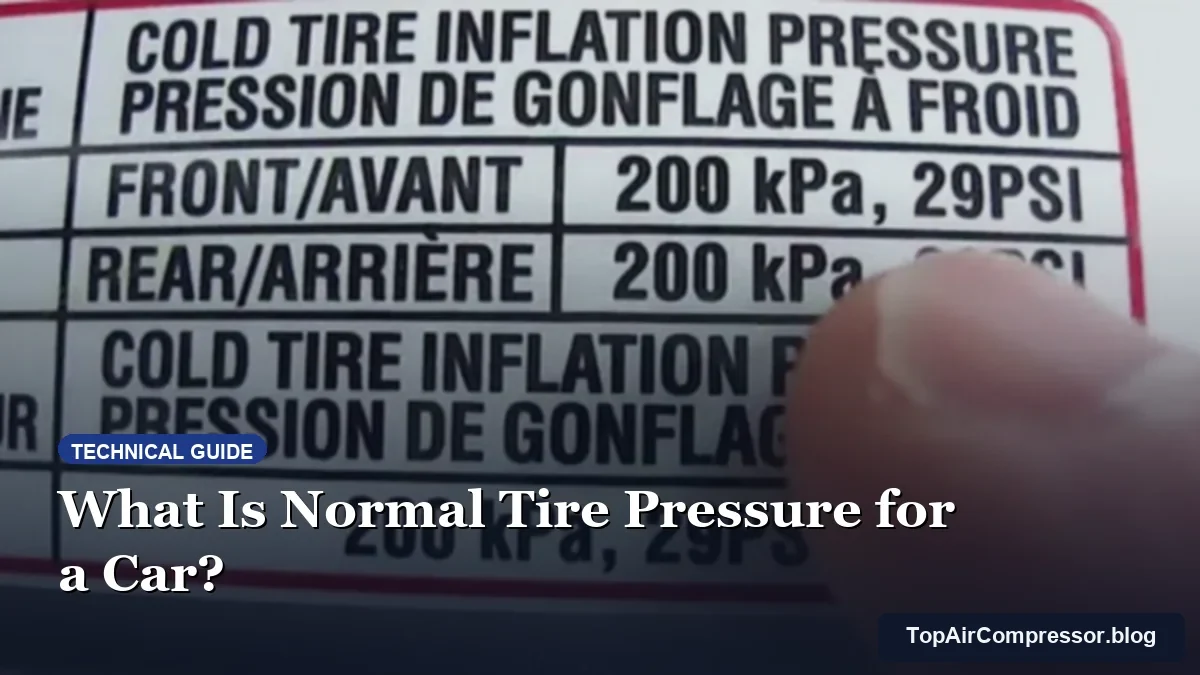
Most passenger cars require 32 to 35 PSI when tires are cold. Always verify your specific vehicle placard located inside the driver door jamb.
Looking for matching picks? See our Best Air Compressor For Car Tires: Top Rated Picks.
Practical Quick-Reference Table
| Scenario / Metric | Recommended Target | Why It Matters |
|---|---|---|
| Compact Sedan | 30 - 32 PSI | Supports lighter gross vehicle weight efficiently. |
| Midsize Passenger Car | 32 - 35 PSI | Balances ride comfort and cornering stability. |
| Full-Size SUV | 35 - 38 PSI | Carries heavier passenger and cargo loads safely. |
| Light Truck / Van | 38 - 45 PSI | Prevents sidewall flexing under heavy towing. |
| Cold Temperature Drop | +1 PSI per 10°F drop | Compensates for natural air density loss. |
| Maximum Rated Pressure | Check Sidewall | Indicates structural limit, never normal operating target. |
Decoding Standard Vehicle Tire Pressure Specifications
Proper inflation ensures optimal contact patch geometry between the rubber and the asphalt. Maintaining these specific levels maximizes your braking efficiency and prevents dangerous hydroplaning conditions during wet weather driving scenarios.
Standard passenger vehicles generally operate safely within a narrow band of 32 to 35 PSI. Exceeding these baseline metrics can drastically alter your vehicle handling characteristics and reduce overall ride comfort significantly.
Passenger safety relies heavily on consistent tire maintenance and accurate pressure gauges. Neglecting these fundamental checks often leads to catastrophic structural failures during high-speed highway travel or sudden emergency maneuvers.
Modern pneumatic maintenance requires understanding the precise relationship between load capacity and inflation pressure. Heavier loads demand higher pressure values to support the gross vehicle weight rating safely and effectively.
Most standard passenger vehicles operate efficiently on a cold tire inflation range between 32 to 35 PSI. Maintaining this exact baseline ensures optimal contact patch geometry, predictable braking distances, and balanced tread wear distribution.
Automakers calculate these specific cold inflation pressures using gross axle weight ratings and structural curb weights. You can easily maintain these correct levels using our best small tire inflator for car selections.
Exceeding these baseline specifications by even five pounds per square inch drastically reduces your tire footprint. This center-tread overload accelerates rubber degradation, diminishes cornering traction, and generates a noticeably harsher ride quality over road imperfections.
Conversely, dropping below the manufacturer threshold creates excessive internal friction through tire flexing. This dangerous heat buildup frequently causes belt separation, catastrophic structural failure, and significantly reduced fuel economy during highway commuting speeds.
- Check tire pressure monthly using a calibrated digital gauge.
- Always measure when tires are completely cold before driving.
- Never bleed air from hot tires after extended highway driving.
- Inspect sidewalls for cracking, bulges, or embedded foreign objects.
- Always measure tire pressure before driving more than one mile.
- Use a calibrated digital gauge for maximum measurement accuracy.
Baseline Passenger Car PSI Ranges
Compact sedans and midsize hatchbacks typically utilize lower pressure settings due to reduced gross vehicle weights. These lighter platforms frequently specify 30 to 33 PSI for optimal daily commuting efficiency.
Larger sedans and station wagons require slightly higher inflation targets to support increased cargo capacities. Vehicle manufacturers tune suspension geometry around these specific baseline operating numbers for balanced handling.
- Verify door jamb placards for exact front and rear axle specifications.
- Account for persistent passenger loads when adjusting baseline cold pressure levels.
Cold Inflation Measurement Protocols
Always measure your tire pressure when the vehicle has rested for at least three hours. Driving generates friction heat, which artificially inflates internal PSI readings by two to six psi above true ambient values.
- Park on a flat, level surface before attaching pressure gauges.
- Remove valve stem caps carefully and store them in a secure pocket.
Analyzing Variations Across Different Vehicle Classes
Different vehicle architectures demand vastly different pneumatic pressures to function correctly. Sports cars often utilize wider tires requiring unique pressure profiles to maintain cornering grip during aggressive driving maneuvers.

Crossovers and utility vehicles feature higher center of gravity profiles requiring robust inflation values. Maintaining proper pressure in these heavier platforms prevents excessive body roll and improves overall rollover resistance.
Pickup trucks present unique challenges because their rear axle loads fluctuate dramatically between empty and loaded states. Drivers must adjust rear tire pressures accordingly when hauling heavy cargo loads.
Electric vehicles introduce additional weight burdens due to heavy battery pack assemblies integrated into the chassis floor. Manufacturers specify higher baseline pressures to offset this substantial stationary mass.
Subcompact cars and lightweight hatchbacks usually require lower inflation metrics, often specified around 30 to 32 PSI. Their reduced gross weight places minimal structural demands on the tire sidewalls during routine daily driving maneuvers.
Midsize sedans and crossover utility vehicles typically transition to a slightly higher baseline requirement of 33 to 36 PSI. This upward adjustment accommodates increased passenger capacities and heavier drivetrain configurations found in modern family transport.
Heavy full-size pickup trucks and commercial vans demand significantly elevated pressure ratings, frequently requiring 35 to 80 PSI depending on load ranges. Heavy-duty applications utilize stiff carcass plies to support massive cargo payloads safely.
Performance sports cars utilize wide, low-profile tires that demand precise pressure tuning. Deviating outside the narrow 32 to 38 PSI factory window severely compromises high-speed lateral grip and predictable steering response characteristics.
- Match your inflation routine to your specific vehicle chassis category.
- Consult specialized load tables for towing or heavy hauling applications.
- Account for instant torque characteristics on EV tire wear rates.
- Inspect high-performance rubber compounds more frequently for wear patterns.
- Check door placards whenever changing vehicle load configurations.
- Heavy towing requires verified rear axle pressure increases.
Performance and Sport Utility Vehicle Metrics
High-performance sports cars often demand staggered tire setups with distinct front and rear pressures. This configuration optimizes oversteer and understeer characteristics during high-speed cornering.
Utility vehicles require vigilant monitoring because owners frequently exceed standard payload limits without realizing the impact on structural tire integrity.
- Check both front and rear axles independently during maintenance.
- Adhere strictly to manufacturer recommendations for staggered fitments.
Load Range Classifications
Always verify your specific tire placard when changing tire replacement classes. Installing standard load tires where Extra Load (XL) variants are required risks immediate underinflation under maximum vehicle payload conditions.
- Match replacement tire load indexes to factory specifications.
- Never install lower load-rated tires on utility vehicles.
Video Walkthrough: Search filters
Understanding Ambient Temperature Effects on Inflation
Environmental temperature swings dramatically alter internal tire pressure without any loss of physical air volume. Ambient air contracts in cold weather, causing a predictable drop in measured pressure values.
As a reliable rule of thumb, tires lose approximately one PSI for every ten degrees Fahrenheit drop in ambient temperature. Neglecting this seasonal shift leads to chronic underinflation during winter months.
Conversely, hot summer asphalt and friction from rolling resistance cause internal air to expand rapidly. This thermal expansion increases pressure significantly during extended road trips across desert highways.
Monitoring pressure seasonal shifts prevents premature tread wear and maintains optimal fuel economy regardless of external weather conditions.
Ambient temperature fluctuations exert a direct physical influence on internal pressure. To combat seasonal air loss effectively, consult our comprehensive best air compressor for car tires buyer guide.
This thermodynamic principle explains why dashboard tire pressure monitoring systems trigger widespread warning lights during the first autumn frost. The sealed air molecules contract rapidly, reducing overall density and measured force against the liner.
Summer heat waves create the opposite mechanical reaction, causing trapped air to expand exponentially. Driving at sustained highway speeds can artificially elevate tire pressures by four to six psi, demanding careful pre-trip pressure adjustments.
Professional technicians recommend adjusting tire pressures seasonally to account for local climate shifts. Failing to add air in winter or bleed excess air in summer compromises your braking distance and overall vehicle handling stability.
- Add air to tires whenever seasonal temperatures drop significantly.
- Measure cold pressure early in the morning before direct sunlight hits.
- Remember that driving generates friction heat that artificially raises PSI readings.
- Never release air from hot tires during summer road trips.
- Inspect pressures monthly during seasonal weather transitions.
- Keep a reliable 12-volt inflator in your trunk for emergencies.
Winter Versus Summer Pressure Management
Winter weather demands proactive air replenishment to offset continuous thermal contraction effects. Skipping monthly winter checks guarantees your vehicle will operate on underinflated tires.
Summer driving requires careful pre-trip inspections to ensure heat buildup does not push your tires past safe operating parameters.
- Keep a portable 12V air compressor in your trunk for emergencies.
- Adjust baseline pressures during major seasonal climate transitions.
Thermal Expansion Formulas
The ideal gas law governs this relationship between temperature and pressure inside sealed pneumatic chambers. Monitoring ambient shifts prevents both extreme underinflation hazards and dangerous overinflation blowout risks during extreme weather changes.
- Account for temperature drops when parking vehicles outside overnight.
- Re-check pressures after moving vehicles from climate-controlled garages.
Navigating Pressure Conversions Between PSI, Bar, and kPa
International vehicle standards often utilize metric units like Bar or kilopascals instead of standard pounds per square inch. Understanding these mathematical conversions prevents costly inflation errors during equipment setup.
One Bar equals roughly 14.5038 PSI, representing standard atmospheric pressure at sea level. Most European vehicle placards display pressure metrics in both Bar and PSI simultaneously for clarity.
Kilopascals offer a finer metric scale where one Bar equals one hundred kilopascals. Translating these numbers accurately ensures your digital air compressor delivers the exact required charge.
Using digital inflators with selectable units eliminates manual math errors and guarantees precise pressure delivery every single time.
International automotive standards often require technicians to convert pressure metrics between imperial and metric units. One Bar equals approximately 14.5038 PSI, serving as the primary measurement standard used across European vehicle manufacturers and service facilities.
Kilopascals represent another common metric measurement found on international door placards, where one Bar equals 100 kPa. To convert PSI into kilopascals quickly, simply multiply your target imperial pressure reading by a factor of 6.895.
Digital pressure gauges simplify complex mathematical conversions by offering instant unit toggles. You can also verify pneumatic requirements efficiently using our dedicated CFM and tank sizing calculator for shop equipment.
Precision matters immensely when dealing with high-performance vehicle setups or heavy commercial transport equipment. Always double-check your gauge display settings before connecting the air chuck to avoid severe misreading disasters on the highway.
- Memorize basic conversion factors for emergency reference on foreign vehicles.
- Utilize digital pressure gauges capable of switching metric units instantly.
- Double-check placard decimals when converting Bar to imperial measurements.
- Calibrate analog gauges periodically against certified digital standards.
- Keep a quick conversion chart inside your glove compartment.
- Verify digital gauge battery strength prior to critical readings.
Quick Conversion Reference Guidelines
Converting 32 PSI yields approximately 2.2 Bar or two hundred twenty kilopascals of force. Keeping this mental benchmark handy simplifies foreign vehicle maintenance tasks.
Always verify whether foreign manuals reference cold or hot operating metrics before applying conversion formulas.
- Write common conversions down inside your vehicle owner manual.
- Avoid estimating conversions on high-performance tire installations.
Quick Conversion Reference
Memorizing basic conversion benchmarks prevents calibration errors in professional shop environments. For instance, a standard 32 PSI passenger car requirement translates directly to roughly 2.2 Bar or 221 kPa of internal force.
- 1 Bar equals 14.5 PSI for standard mental math estimates.
- 100 kPa equals approximately 14.5 PSI of air pressure.
Locating and Interpreting Your Manufacturer Placard Data
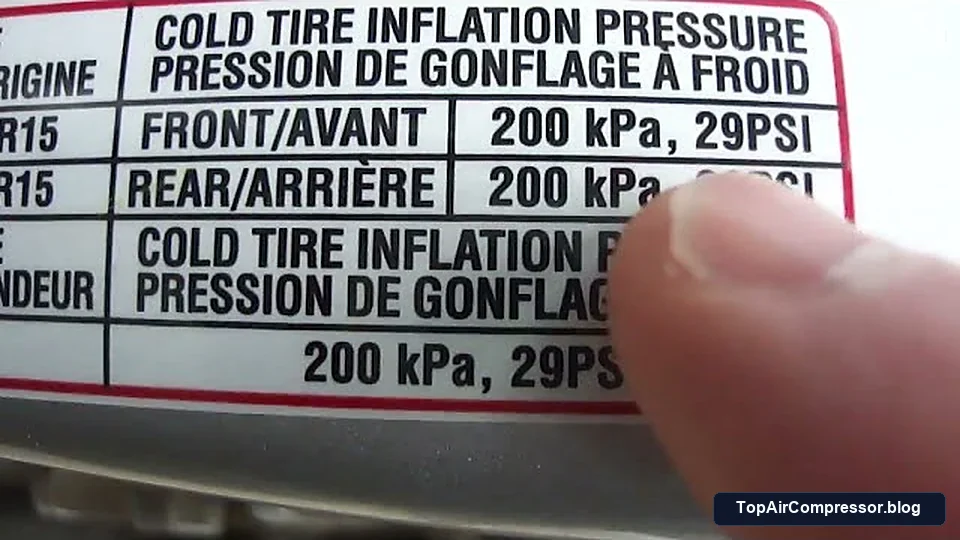
The most accurate source for your vehicle tire pressure is the manufacturer placard. This certification label is typically affixed to the driver-side door pillar or latch post.
Do not rely on the maximum pressure number stamped on the tire sidewall. That sidewall figure represents the absolute structural limit of the casing, not your normal operating target.
Vehicle engineers calculate placard numbers based on vehicle weight distribution, suspension design, and braking dynamics. Following these factory specifications ensures optimal stopping distances and tread life.
Some placards provide separate front and rear axle recommendations to account for uneven weight distribution across the chassis.
Every production automobile features a federally mandated tire information placard affixed permanently to the driver-side door jamb. This vital sticker displays the official gross vehicle weight rating and recommended cold inflation pressures for optimal safety.
Never rely on the maximum pressure stamped onto the flexible tire sidewall rubber. That specific figure represents the absolute structural limit of the casing, not the ideal operating metric engineered for your specific chassis design.
Some vehicle manufacturers provide dual pressure recommendations depending on whether you are driving at sustained high speeds or carrying maximum payloads. Review these secondary payload charts carefully before embarking on long interstate family road trips.
Commercial fleet operators and regular drivers should inspect these door labels annually to verify readability. Faded or damaged placards must be cross-referenced immediately against official owner manuals to maintain strict federal safety compliance.
- Open the driver door and locate the white and yellow certification sticker.
- Ignore the maximum PSI rating printed along the tire outer sidewall.
- Note any alternative loading recommendations listed for sustained highway speeds.
- Replace damaged or faded door placards through authorized dealership parts departments.
- Clean door jamb stickers gently using mild automotive soap.
- Consult dealership parts departments if factory placards are missing.
Deciphering Door Jamb Certification Labels
Certification labels contain critical data including Gross Vehicle Weight Ratings and official tire sizing codes. Reviewing these details ensures you purchase correct replacement tires.
Pay close attention to recommended cold inflation pressures listed for both normal and maximum load conditions.
- Match replacement tire load indices exactly to placard requirements.
- Keep a photo of your door placard stored safely on your smartphone.
Door Jamb Verification Steps
Open the primary driver door and locate the black and yellow certification label near the latch. Match your specific front and rear axle requirements against the printed PSI values before operating any inflation equipment.
- Note front and rear axle pressure differences immediately.
- Record placard specs in your vehicle maintenance logbook.
Recognizing Underinflation and Overinflation Warning Signs
Operating on underinflated tires causes excessive sidewall flexing and dangerous internal heat buildup. This thermal stress frequently leads to sudden tread separation and catastrophic blowout events.
Underinflation also ruins fuel economy by increasing rolling resistance across the entire contact patch. You will notice accelerated shoulder wear on both edges of the tread pattern.
Overinflation creates a rigid, harsh ride quality and reduces the total surface area touching the road. This condition concentrates wear exclusively down the center rib of the tread.
Recognizing these distinct wear patterns early allows you to correct pressure issues before destroying expensive replacement tires.
Underinflated tires exhibit distinct wear patterns characterized by excessive shoulder scrubbing on both outer tread edges. This abnormal friction accelerates rubber breakdown, generates dangerous internal heat, and causes a noticeable drop in fuel economy.
Conversely, severely overinflated tires wear down rapidly across the narrow center section of the tread face. This concentrated contact patch significantly reduces your vehicle stopping traction on wet roads and creates a jarring, uncomfortable ride.
Modern tire pressure monitoring systems utilize wheel-speed sensors or direct valve-stem transmitters to alert drivers of pressure drops. Any sudden illumination of this dashboard symbol warrants an immediate manual check using a calibrated dial gauge.
Performing a simple visual inspection combined with a monthly physical pressure check prevents catastrophic highway failures. Catching minor pressure anomalies early saves expensive tread replacement costs and protects your passengers from sudden blowout hazards.
- Inspect tread depths across the inner, middle, and outer shoulders monthly.
- Listen for abnormal road hum caused by distorted tire contact patches.
- Address dashboard pressure warnings immediately rather than ignoring them.
- Rotate tires regularly to promote even wear across all four corners.
- Examine tire sidewalls regularly for bulges or cracking.
- Test tread depth using the traditional penny measurement test.
Diagnostic Tread Wear Indicators
Edge wear points directly to chronic underinflation or aggressive cornering habits on low pressure. Center wear confirms excessive inflation beyond manufacturer guidelines.
Use a dedicated tread depth gauge to monitor wear progression across the entire width of the tire.
- Perform penny or depth gauge tests across multiple tread grooves.
- Consult a professional alignment technician if wear patterns appear asymmetrical.
Tread Wear Diagnostics
Inspect your tire tread depth across all four grooves using a specialized digital tread gauge. Uneven wear anomalies almost always point directly toward chronic improper inflation pressures or neglected wheel alignment suspension geometry.
- Check inner and outer shoulders for cupping or feathering.
- Rotate tires every 5,000 miles to promote even wear.
Utilizing Portable Air Compressors for Accurate Inflation
Owning a reliable 12-volt unit empowers you to maintain correct tire pressure anywhere. Regular maintenance is simple when you choose a top-rated tool from our best portable tire compressor for car reviews.
Connect your compressor securely to the valve stem and monitor the integrated digital pressure gauge closely. Stop inflation immediately once your target cold PSI measurement is achieved.
Always store your compressor in a clean, dry compartment inside your vehicle trunk. Regular equipment checks ensure your emergency inflation gear functions perfectly when needed.
Investing a few minutes each month in pneumatic maintenance protects your investment and ensures maximum road safety.
Operating a 12-volt portable air compressor requires connecting the power leads securely to your vehicle battery or accessory socket. Always start your engine prior to operation to prevent draining the battery during extended inflation cycles.
Secure the brass tire chuck firmly onto the valve stem to eliminate audible air leaks during the inflation process. Monitor the integrated pressure gauge continuously to avoid overshooting your target vehicle manufacturer specification by accident.
Modern portable compressors feature automatic shut-off digital controls that halt airflow once the preset PSI is reached. This advanced safety feature eliminates guesswork and ensures precise, repeatable inflation accuracy for every vehicle tire.
Allow your portable air compressor to cool down completely before stoking it away in its storage bag. Proper equipment maintenance guarantees reliable emergency performance whenever roadside tire adjustments become necessary during long trips.
- Select a compressor with an auto-shutoff feature for precision inflation.
- Verify power cord lengths reach all four vehicle tires effortlessly.
- Keep spare valve stem caps in your glove box to prevent dirt intrusion.
- Test compressor operation annually before embarking on major road trips.
- Keep compressor air filters clean from dust and road debris.
- Store electrical cables neatly to prevent internal wire breakage.
Best Practices for Mobile Air Equipment
Always let your vehicle engine run while operating heavy-duty 12V compressors to prevent draining the battery. Secure all hose connections tightly to prevent pressure leakage.
Allow hot compressor motors to cool down completely before packing them away into storage bags.
- Connect power leads directly to accessory sockets or battery terminals securely.
- Inspect rubber air hoses regularly for cracking, kinks, or pinhole leaks.
Hose and Fitting Maintenance
Inspect your compressor rubber air hoses and brass quick-connect fittings regularly for cracks or leaks. Applying a lightweight silicone lubricant to O-rings prevents air loss and extends the operational lifespan of your pneumatic accessories.
- Check threaded brass connections for secure physical engagement.
- Replace worn rubber hoses immediately upon noticing air leaks.
Frequently Asked Questions
What is the standard tire pressure for most passenger cars?
Most standard passenger cars require 32 to 35 PSI when tires are completely cold. Always confirm your exact requirements by checking the official placard sticker located inside your driver door jamb.
Should I check my tire pressure when tires are hot?
You should always check and adjust tire pressure when tires are cold before driving. Driving generates friction heat that artificially inflates PSI readings by several pounds.
Why does cold weather cause my tire pressure warning light to turn on?
Ambient temperature drops cause internal air to contract and lose density rapidly. Tires typically lose one PSI for every ten-degree drop in outdoor temperature.
Can I use the maximum PSI listed on the tire sidewall for daily driving?
You should never use the maximum sidewall rating for daily driving pressures. That number represents the absolute structural limit of the tire casing, not your vehicle manufacturer specification.
How often is it necessary to check vehicle tire pressure?
You should inspect your vehicle tire pressure at least once a month using a calibrated gauge. Regular monthly checks catch slow leaks and seasonal pressure drops early.