What Is the Correct PSI for My Tyres?
Maintaining proper inflation ensures optimal fuel economy, braking performance, and tread longevity. Knowing your exact PSI requirements prevents premature wear.


Always reference the driver doorjamb placard for your vehicle's designated cold inflation pressure rather than relying on maximum sidewall limits.
Looking for matching picks? See our Best Tyre Air Compressor: Top Picks for Reliable Roadside Safety.
Practical Quick-Reference Table
| Scenario / Metric | Recommended Target | Why It Matters |
|---|---|---|
| Standard Passenger Car | 32 to 35 PSI | Balances ride comfort, fuel efficiency, and uniform tread wear across highways. |
| Light Truck / SUV | 35 to 40 PSI | Supports heavier vehicle weight loads and towing demands without overheating sidewalls. |
| Cold Tire Baseline | Ambient Temp Check | Ensures accurate measurement before internal air temperatures rise from friction. |
| Winter Temperature Drop | Add 1 PSI per 10°F | Compensates for natural air density loss during freezing weather shifts. |
| Sidewall Maximum | Absolute Limit | Indicates the maximum pressure threshold, not the manufacturer's recommended daily driving PSI. |
| Checking Frequency | Every 30 Days | Cattains gradual air loss before structural tire damage or safety risks occur. |
Understanding Why Correct Tire Inflation Protects Your Vehicle
Proper tire inflation is vital for maintaining vehicle control, stopping distance, and structural integrity. Incorrect pressure accelerates tread degradation and forces your engine to burn extra fuel.
Underinflated tires create excessive sidewall flexing, generating dangerous internal heat that can lead to sudden tread separation. Overinflated tires reduce the contact patch, diminishing grip.
Balanced pressure distributes vehicle weight evenly across the entire tread surface. This promotes even wear patterns and extends the operational lifespan of your tire investment.
While precise pressure control is vital for hobbies like finding the best psi for airbrushing models, automotive tire maintenance directly safeguards emergency braking responsiveness and overall cornering stability on slick highways.
Maintaining correct tire inflation directly preserves structural integrity by ensuring the contact patch distributes vehicle weight evenly across the asphalt, preventing premature shoulder wear and dangerous internal cord separation during highway driving.
Under-inflated rubber flexes excessively, generating extreme internal heat that breaks down synthetic polymers and steel belts. This thermal degradation frequently causes catastrophic tread separation at sustained highway speeds exceeding sixty-five miles per hour.
Conversely, over-inflation reduces your functional contact patch to the center tread band, drastically reducing braking traction in wet conditions and causing harsh ride quality that transmits shock directly into delicate suspension components.
Optimized pressure also maximizes rolling efficiency, reducing mechanical drag on your drivetrain. This scientific optimization directly improves fuel economy by up to three percent, lowering operational costs and reducing unnecessary carbon emissions.
- Prevents dangerous internal heat buildup during high-speed highway driving.
- Optimizes rolling resistance to maximize overall fuel efficiency and vehicle range.
- Preserves emergency stopping traction across wet, dry, and slippery road surfaces.
- Protects wheel rims from impact damage caused by potholes and sharp debris.
The Direct Link Between PSI and Fuel Economy
Low tire pressure increases rolling resistance, requiring your engine to burn additional fuel to maintain speed. Correct PSI eliminates this drag.
Keeping tires properly inflated saves hundreds of dollars annually in fuel costs while simultaneously reducing harmful vehicle carbon emissions.
- Reduces engine workload during acceleration phases.
- Minimizes unnecessary drivetrain stress and premature component fatigue.
Locating Your Vehicle Manufacturer Official Pressure Specification
Finding your correct tire pressure does not require guessing. When evaluating pneumatic equipment requirements beyond basic inflation, our CFM tool sizing calculator helps determine exact compressor specifications.
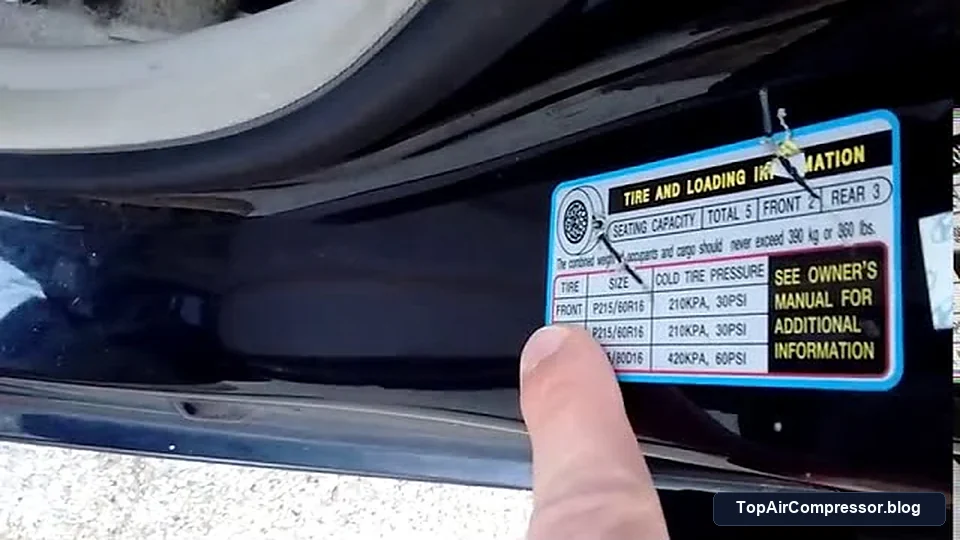
Open the driver-side door and examine the inner pillar or doorjamb area. You will find a white and yellow federal certification placard.
This manufacturer placard lists the exact front and rear cold PSI specifications tailored specifically for your vehicle weight and suspension setup.
Ignore any numbers printed on the tire sidewall when determining your daily driving pressure. The placard values are the ultimate engineering standard.
Your vehicle manufacturer determines the ideal pressure through rigorous engineering tests, accounting for gross vehicle weight rating, suspension geometry, and braking dynamics. Never guess this baseline figure or rely on generic estimates found online.
The primary reference point is the federal certification label, commonly known as the doorjamb placard. This metal or vinyl sticker is permanently affixed to the driver-side B-pillar or the inside edge of the door frame.
Inspecting this placard reveals exact cold inflation pressures for both front and rear axles, along with the specified original equipment tire size and maximum load capacity ratings established during final vehicle assembly and safety certification.
If your vehicle door label is missing due to body repair or age, consult your owner manual or authorized dealership parts department using your unique seventeen-digit vehicle identification number to retrieve factory specifications.
- Locate the federal certification label on the driver door pillar.
- Note the designated front and rear PSI values for stock tire sizes.
- Check inside the glove box or fuel filler door if the placard is missing.
- Consult your vehicle owner manual for specific towing pressure adjustments.
Alternative Placard Locations on Unique Vehicle Models
Certain sports cars and older vehicles place the tire pressure placard inside the glove box compartment. Check there if the doorjamb is bare.
Commercial vans and heavy-duty trucks often display multiple pressure ratings depending on current cargo weight loads and trailer towing configurations.
- Inspect the fuel filler flap on select European import vehicles.
- Review specialized towing tables in heavy-duty truck manuals.
Video Walkthrough: What is the Proper Tire Pressure?
Deciphering Sidewall Markings Versus Doorjamb Placards Safely
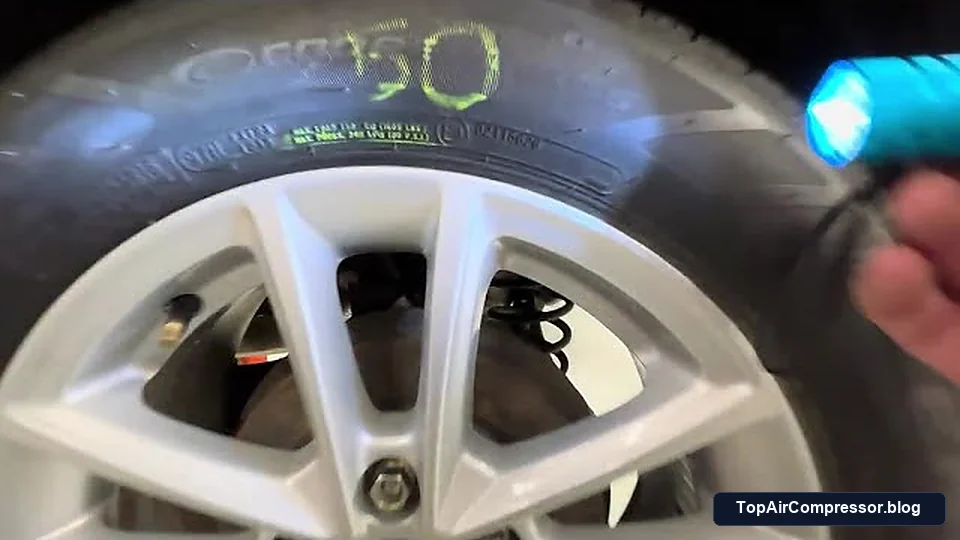
Many drivers mistakenly inflate their tires to the maximum PSI number printed on the rubber sidewall. This dangerous habit creates a harsh, bouncy ride.
The sidewall inscription represents the absolute maximum pressure the tire can handle structurally when supporting its highest possible weight limit.
Using the sidewall maximum as a daily driving target causes center tread wear, reduces braking traction, and strains suspension components unnecessarily.
Always rely on the vehicle manufacturer doorjamb placard for everyday commuting pressure rather than the tire manufacturer maximum limit.
A common and dangerous mistake involves inflating tires to the maximum pressure stamped on the rubber sidewall. That figure represents the absolute limit for maximum load capacity, not your specific daily driving vehicle specification.
Reading the tire sidewall requires understanding standardized formatting, such as P215/65R16 98T. The trailing numbers indicate load indices and speed ratings, while the fine print explicitly states the cold pressure limit for that specific casing.
Always prioritize the vehicle placard over sidewall limits because the manufacturer balances ride comfort, tread wear, and handling stability specifically for your vehicle weight distribution rather than generalized tire capabilities across various platforms.
Ignoring this distinction causes dangerously harsh rides and uneven tread wear. For heavy-duty garage inflation tasks, check out the best 60 gallon air compressor for the money to service multiple vehicles efficiently.
- Sidewall specs show maximum load limits, not comfort targets.
- Doorjamb placards account for vehicle weight and ride dynamics.
- Over-inflation from sidewall reading causes harsh vibrations.
- Always match your inflation target to the vehicle, not the tire brand.
Establishing True Cold Pressure Readings Before Inflation
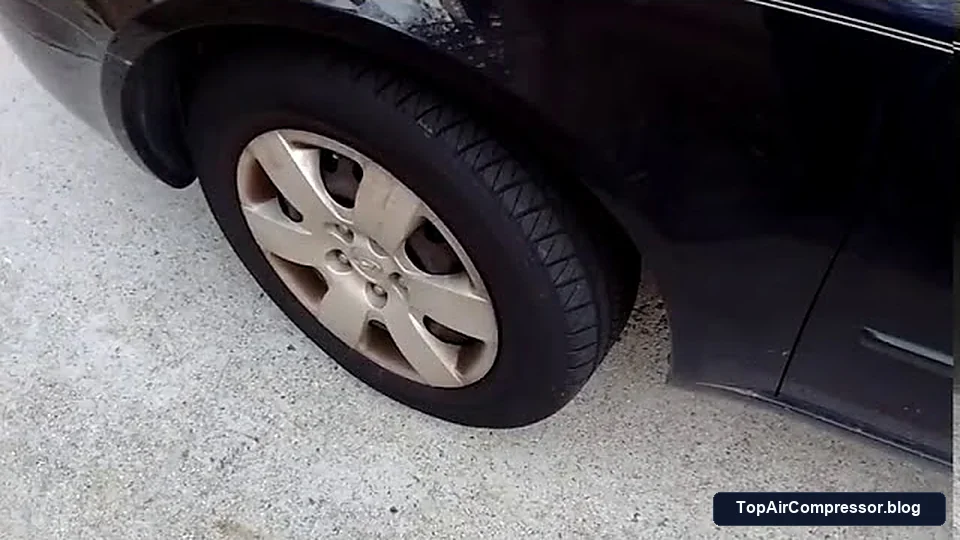
Accurate pressure measurements require measuring tires when they are completely cold. Driving generates friction that heats internal air and raises PSI.
A cold tire is defined as a vehicle that has been parked for at least three hours or driven less than one mile at low speeds.
Checking tires after highway driving yields falsely elevated pressure readings. You might mistakenly let air out of a tire that is actually underinflated.
Always attach your digital pressure gauge to the valve stem before starting your journey in the morning for the most reliable baseline measurement.
Accurate pressure measurements require truly cold tires. Technicians define cold tires as vehicles that have been stationary for at least three hours or driven less than one mile at moderate speeds before attaching any gauge.
Driving generates frictional heat that causes internal air molecules to expand rapidly, artificially inflating your pressure gauge readings by four to six pounds per square inch and hiding a dangerous under-inflation condition.
Never bleed air from warm tires after highway driving because cooling down later will leave them severely under-inflated. Wait until ambient environmental temperatures stabilize, typically early in the morning before direct sunlight hits your parking area.
Use a high-quality digital or dial pressure gauge with a calibrated brass chuck to verify measurements. Press the chuck firmly onto the valve stem until the hissing stops to secure an airtight seal.
- Park vehicle for three hours before taking pressure measurements.
- Avoid direct sunlight exposure which can artificially heat up one side.
- Use a calibrated digital gauge for precise reading accuracy.
- Keep valve stem caps tightly secured to prevent dirt intrusion.
Compensating for Morning Ambient Temperature Shifts
Early morning temperatures provide the truest ambient baseline for your tire pressure checks. Weather changes throughout the day alter internal air density.
Establish a routine of checking your baseline pressures during weekend mornings to maintain consistent handling across all four vehicle wheels.
- Record morning baseline numbers during seasonal transitions.
- Account for garage versus outdoor temperature differentials.
Applying Seasonal Temperature Fluctuations to Your PSI Target
Air pressure fluctuates naturally with ambient weather changes. For every ten degrees Fahrenheit drop in temperature, tires lose about one PSI.
Winter cold snaps routinely trigger dashboard warning lights because ambient air contracts inside the rubber chamber, dropping overall pressure significantly.
Summer heat waves cause air to expand, raising PSI numbers above normal levels. Regular monthly checks keep your tires balanced across seasonal shifts.
Adjust your inflation targets proactively during autumn and spring to offset rapid outdoor temperature swings before they impact your daily commute.
Ambient temperature changes drastically alter internal tire pressure due to fundamental gas laws. For every ten-degree drop in outside air temperature, your tires will lose approximately one pound of pressure per square inch.
Seasonal transitions demand proactive monitoring during autumn and winter months. Failing to adjust pressures as weather cools transforms a properly inflated summer setup into a critically under-inflated hazard by the time first frosts arrive.
Conversely, intense summer heat waves can push tire pressures safely above placard minimums, but you must avoid intentionally releasing air during hot afternoons unless readings exceed the absolute maximum sidewall threshold.
Check and adjust your pressures monthly during seasonal shifts, compensating for regional weather variations to maintain optimal contact patches, prevent sidewall stress, and extend overall tread life expectancy significantly across all wheels.
- Expect one PSI loss for every ten-degree drop in outdoor temperature.
- Add air during the first major cold snap of the winter season.
- Bleed excess pressure during extreme summer heat waves if necessary.
- Check pressures monthly as seasons transition between extremes.
Utilizing Standard Vehicle Inflation Charts and Reference Data
Reference charts provide generalized pressure guidelines across common passenger car, crossover, and light truck categories when door placards are faded.
Standard sedans typically require between thirty-two and thirty-five PSI for optimal daily driving comfort, fuel economy, and uniform tread wear characteristics.
Larger SUVs and utility vehicles demand higher PSI ratings, often ranging from thirty-five to forty PSI, to support increased chassis weight loads.
Always verify chart recommendations against your specific vehicle doorjamb placard to ensure complete safety and accuracy for your exact trim level.
Professional mechanics rely on standardized inflation conversion charts when dealing with plus-sized aftermarket tire upgrades or custom wheel modifications that alter original equipment specifications and dynamic load indexes on commercial vehicles.
These reference tables correlate load-carrying capacities with specific pressure levels, ensuring that alternative tire sizes maintain adequate structural support without compromising safety margins or causing excessive internal flexing during high-speed highway transit.
When swapping to heavier load range ratings, consulting official load and inflation tables prevents over-inflation harshness while safeguarding against the structural failures associated with running mismatched pressures on modern light trucks.
Keep a physical or digital reference chart in your glove compartment alongside your tire gauge to quickly cross-reference non-standard tire upgrades against factory load requirements during routine maintenance checks.
- Standard sedans generally utilize thirty-two to thirty-five PSI.
- Midsize SUVs usually require thirty-five to thirty-eight PSI.
- Light trucks often specify higher rear PSI for cargo hauling.
- Always cross-reference generic charts with your door placard.
Interpreting the Tire Pressure Monitoring System Dashboard Indicator
Modern vehicles feature a Tire Pressure Monitoring System designed to alert drivers when pressure drops twenty-five percent below recommended levels.
The dashboard warning light resembles a flat horseshoe shape with an exclamation point in the center, signaling an urgent pressure loss.
Never ignore this indicator light. A glowing TPMS symbol means one or more tires have reached a dangerous underinflation threshold.
Check all four tires immediately using a reliable gauge when the warning light illuminates, even if the tires appear visually normal.
Modern vehicles feature direct or indirect tire pressure monitoring systems designed to alert drivers when pressure drops twenty-five percent below the recommended cold specification on the doorjamb placard.
A solid yellow dashboard warning light shaped like an exclamation point inside a horseshoe indicates immediate inspection is required across all four positions using a reliable manual pressure gauge.
Flashing warning lights typically signal an electronic sensor failure, dead internal battery within the valve stem module, or a system calibration error requiring professional diagnostic scanning at a certified service center.
Never ignore a persistent warning light even if tires look visually normal, because radial construction hides low internal pressures effectively until structural damage or catastrophic deflation occurs at high speeds.
- TPMS activates when pressure drops twenty-five percent below target.
- Horseshoe warning symbol indicates urgent attention required.
- Check all four tires, as the sensor may not identify the specific wheel.
- Reset system according to manual instructions after correcting pressure.
Locating Reliable Public Air Sources and Equipment Near You
Maintaining correct tire pressure requires access to a dependable compressed air source near your home, workplace, or travel route.
Local service stations and repair shops offer public access, but owning a reliable unit from our best air compressor for the money roundup ensures constant inflation readiness at home.
Many modern fuel stations feature digital air machines where you can preset your target PSI, and the unit automatically fills and stops.
Investing in a portable 12-volt DC inflator for your trunk allows you to check and adjust tire pressure anywhere without visiting stations.
Maintaining proper pressure requires access to reliable compressed air infrastructure, found at local fuel stations, professional automotive service shops, and specialized truck stops equipped with commercial air compressors.
Public inflators often feature built-in mechanical dial gauges, but these units suffer from calibration drift due to weather exposure and rough public handling. Always cross-verify readings with your own handheld gauge.
Consider investing in a compact 12-volt portable air compressor that plugs directly into your vehicle auxiliary power outlet or battery terminals, enabling precise inflation adjustments directly in your home driveway.
Regularly inspect your portable inflator hose, brass fittings, and electrical fuses to ensure dependable emergency performance whenever seasonal temperature drops or slow punctures trigger your dashboard pressure warning light.
- Identify local service stations with functional air compressor units.
- Look for automated digital inflators that stop at target PSI.
- Carry a portable 12-volt air compressor in your vehicle trunk.
- Keep a reliable tire pressure gauge inside your glove compartment.
Frequently Asked Questions
Where can I find the correct tire pressure for my specific vehicle?
Always check the white and yellow federal placard located on the driver-side doorjamb. This sticker lists the exact recommended cold PSI for your vehicle.
Should I inflate my tires to the maximum PSI printed on the sidewall?
No, never use the sidewall number for daily driving. That figure represents the maximum structural limit of the tire, not your vehicle manufacturer specification.
Why does my tire pressure drop when outside temperatures get colder?
Cold weather causes air molecules to contract, reducing internal pressure. You typically lose one PSI for every ten degrees Fahrenheit drop in outdoor temperature.
When is the best time of day to check and inflate my vehicle tires?
Check your tires in the morning before driving or after the vehicle has been parked for three hours. This ensures you get an accurate cold pressure baseline.
What does the dashboard TPMS warning light actually mean when it turns on?
The horseshoe icon indicates that at least one tire has dropped twenty-five percent below the manufacturer recommended cold inflation pressure threshold limit.