What Is The PSI For A Car Tire: Technical Inflation Guide
Proper tire pressure ensures optimal vehicle handling, braking performance, and fuel efficiency. Maintaining exact inflation levels protects your tread integrity across diverse road surfaces.

Most standard passenger car tires require between 32 and 35 PSI when cold. Always verify the manufacturer placard located inside the driver-side door jamb before inflating.
Looking for matching picks? See our Best Air Compressor For Car Tires: Top Rated Picks.
Practical Quick-Reference Table
| Scenario / Metric | Recommended Target | Why It Matters |
|---|---|---|
| Standard Passenger Car | 32 to 35 PSI | Ensures even tread wear and optimal fuel economy |
| Light Truck / SUV | 35 to 45 PSI | Supports heavier payload capacities safely |
| Compact Spare Tire | 60 PSI | Provides emergency load-bearing capability |
| Cold Temperature Drop | Minus 1 PSI per 10°F | Prevents unexpected under-inflation during winter |
| Maximum Sidewall Rating | Varies by Tire (e.g., 51 PSI) | Never exceed this absolute safety threshold |
| Track / Performance Use | Manufacturer Specific | Optimizes rubber grip under high thermal loads |
Understanding Passenger Vehicle Tire Pressure Fundamentals
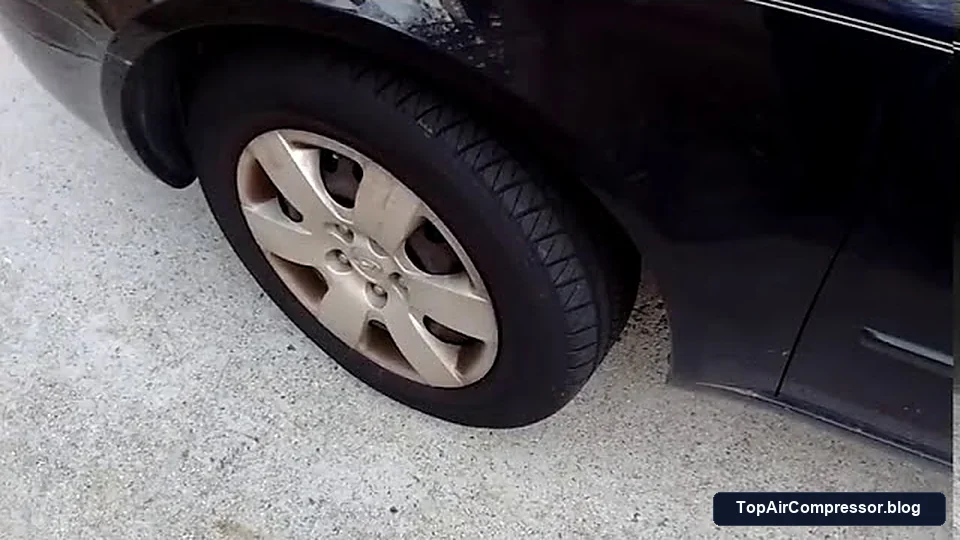
Maintaining correct pounds per square inch ensures your vehicle handles predictably during emergency maneuvers. Under-inflated rubber generates excessive internal heat, which drastically increases the risk of sudden tread separation.
Over-inflation reduces your tire's contact patch with the pavement, diminishing traction and braking capability. Using tools like our CFM tool sizing calculator helps manage pneumatic systems effectively for optimal vehicle efficiency.
Engineers calculate ideal pressure requirements based on vehicle weight distribution and braking dynamics. Following these strict technical guidelines prevents premature shoulder wear and structural carcass fatigue over time.
Proper tire pressure ensures optimal contact patches, maximizing vehicular safety, precise braking response, and fuel efficiency across standard highway speeds. Maintaining correct PSI prevents premature tread wear.
Passenger cars typically operate between 32 to 35 PSI when cold, though heavy SUVs and commercial light trucks require significantly higher inflation metrics to safely support gross vehicle weight ratings.
Under-inflation generates excessive internal casing heat, often leading to catastrophic tread separation and structural sidewall failure. Conversely, over-inflation reduces traction, harshens ride quality, and accelerates central tread wear.
- Calculated for vehicle weight limits
- Prevents dangerous sidewall flexing
- Optimizes braking distance metrics
- Protects internal steel belt layers
The Physics of Air Volume
Compressed air inside a sealed pneumatic chamber acts as a primary load-bearing spring. Changing ambient temperatures directly alter this internal kinetic energy without any loss of actual gas molecules.
- Thermal expansion alters pressure
- Molecules dictate net force
- Volume remains relatively constant
Locating Accurate Specification Placards On Modern Automobiles
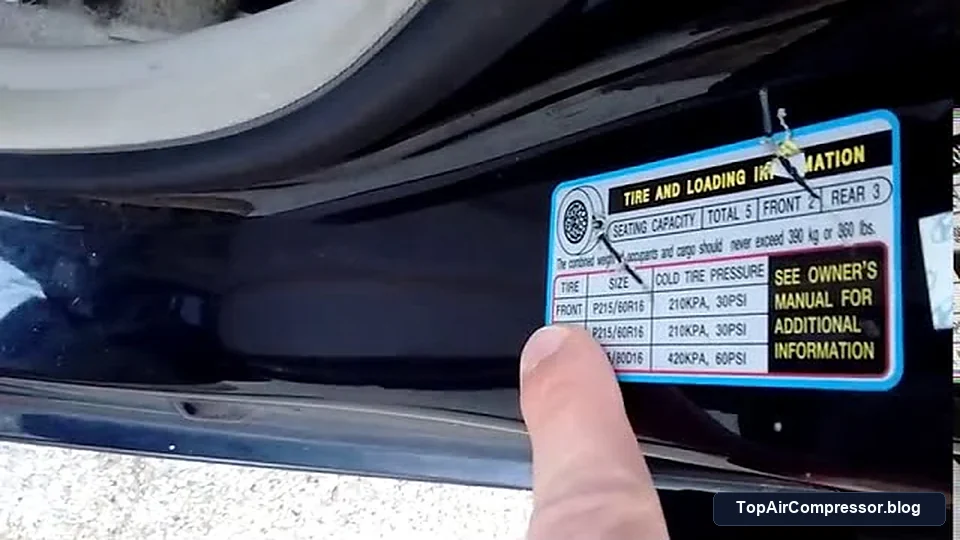
Never rely exclusively on the maximum pressure stamped along the tire sidewall. Choosing a reliable unit from our best small tire inflator picks guarantees optimal vehicle operating pressure.
Open the driver-side front door and inspect the metal or paper placard affixed to the B-pillar. This manufacturer label details precise front and rear cold inflation metrics for original equipment tires.
Some vehicles also display tire data inside the fuel filler flap or within the glove compartment. Cross-reference these numbers to guarantee you apply the exact pressure specified by vehicle designers.
Manufacturers print the exact cold inflation PSI recommendations on a federally mandated certification label affixed securely to the driver-side B-pillar or the inner door jamb area of modern automobiles.
Never rely on the maximum pressure stamped along the rubber sidewall, because that specific numerical figure represents the absolute structural limit rather than the ideal vehicle tuning metric.
Checking vehicle owner manuals provides secondary verification, especially for automobiles equipped with staggered wheel setups requiring distinctly different front and rear tire pressures for neutral handling dynamics.
- Check driver door B-pillar first
- Ignore sidewall maximum ratings
- Account for front axle differences
- Verify load rating requirements
Video Walkthrough: What Is The 4 PSI Rule For Tires?
Essential Air Compressor Equipment Setup And Pressure Calibration
Position your selected unit from our best portable tire compressor guide on a stable surface near the vehicle. Verify that your electrical power source provides reliable operating voltage.
Inspect the delivery hose for microscopic cracks, abrasions, or weakened fittings before starting the motor. A secure quick-connect chuck prevents unwanted pressure leaks during active inflation cycles.
Calibrate your inline analog or digital pressure gauge against a known laboratory standard periodically. Accurate feedback prevents accidental over-pressurization when working with sensitive passenger car tires.
Connect your electric air compressor to a grounded 120V outlet or 12V DC vehicle socket, ensuring the delivery hose is free from kinks and structural cracks.
Calibrate your inline analog or digital pressure gauge against a certified reference tool to guarantee accuracy within plus or minus one PSI before starting any inflation task.
Inspect standard quick-connect brass couplers and rubber O-rings for wear. A leaking pneumatic connection wastes compressor capacity and extends overall inflation cycles unnecessarily across all four wheels.
- Inspect hoses for wear cracks
- Ensure secure electrical connections
- Verify reliable chuck engagement
- Calibrate inline pressure gauges
Executing The Inflation Process With Precision Gauges

Remove the plastic valve stem cap and store it safely in your pocket to prevent loss. Press the air chuck firmly onto the threaded metal stem until hissing stops completely.
Trigger the compressor motor in short, controlled bursts rather than running it continuously. Monitor the pressure gauge reading closely to avoid overshooting your target specification by a wide margin.
Release the trigger and check the static pressure reading once the air flow pauses momentarily. Repeat this controlled process until the gauge matches your door placard recommendation precisely.
Remove the threaded valve stem cap, press the air chuck squarely onto the Schrader valve, and engage the locking lever to establish an airtight pneumatic seal.
Trigger the compressor in short, controlled bursts while monitoring the gauge face closely to avoid over-shooting your target vehicle PSI specification by any unsafe margin.
If you accidentally inject too much air, depress the mechanical bleed valve button to vent excess pressure until the needle settles perfectly on the required placard measurement.
- Remove valve caps carefully
- Push chuck straight onto stem
- Use short inflation bursts
- Recheck static pressure levels
Temperature Fluctuations And Their Impact On PSI Metrics
Atmospheric temperature shifts alter tire pressure at a predictable rate of roughly one PSI per ten degrees Fahrenheit. Winter cold drops your pressure, while summer heat increases internal gauge readings.
Always measure and adjust your tire pressure when the vehicle is completely cold. Driving for more than a mile heats the internal air mass, artificially inflating your pressure readings.
Compensate for seasonal weather transitions by checking pressures monthly during transitional autumn and spring months. This disciplined habit eliminates dangerous pressure deficits caused by sudden morning frost events.
Ambient temperature shifts drastically alter internal tire pressures, dropping approximately one PSI for every ten degrees Fahrenheit decrease in outdoor weather conditions experienced during cold winter months.
Always measure and adjust your pressures when the tires are completely cold, meaning the automobile has sat motionless for at least three hours before initial inflation.
Driving friction generates internal heat that expands trapped air, temporarily elevating pressure readings by four to six PSI above baseline values during active highway transit operations.
- Measure only on cold tires
- Factor in seasonal temperature drops
- Avoid driving before pressure checks
- Account for solar radiation heating
Preventive Maintenance Protocols For Mobile Air Compressors
Drain accumulated condensation from your compressor storage tank after every heavy use cycle to prevent internal rust. Moisture buildup compromises tank integrity and contaminates sensitive pneumatic delivery lines.
Clean external intake air filters regularly to maintain peak volumetric efficiency and prevent particulate ingestion. Inspect electrical cords for exposed copper or damaged insulation before storing the equipment away.
Store your equipment in a dry environment to prevent corrosion. Choosing an option from our recommended car tire compressor roundup guarantees reliable emergency performance whenever you service your vehicle.
Drain accumulated moisture from your tank via the bottom petcock valve after every heavy use to prevent internal corrosion and rust contamination of sensitive pneumatic tools.
Replace worn air filter elements annually to keep abrasive dust particles out of the compressor piston cylinder, preserving pump efficiency and extending total equipment operating lifespan significantly.
Store portable units in dry, temperature-controlled environments to protect rubber hoses from ozone degradation, cracking, and premature structural failure during extended cold storage intervals.
- Drain tank moisture daily
- Clean air intake filters
- Inspect power cord insulation
- Store in dry environments
Troubleshooting Common Inflation Failures And Valve Leaks
If your compressor runs but fails to increase tire pressure, inspect the chuck connection for air leaks. A worn rubber seal inside the quick-connect fitting often causes significant pressure loss.
Apply a soapy water solution to the valve stem core to detect bubbling gas leaks easily. Replace defective Schrader valves using a specialized removal tool if they fail to seal properly.
Verify that your compressor motor thermal overload switch has not tripped due to extended operation. Allow overheated units to cool completely before attempting further inflation tasks on your vehicle.
If your automobile tire refuses to accept air, check for a stuck or corroded Schrader core inside the metal stem using a dedicated valve core tool.
Apply a soapy water solution around the valve stem base and bead seat to detect microscopic bubbles indicating a slow leak or unseated rubber rim.
Replace missing valve stem caps immediately to keep road salt, moisture, and debris from fouling internal sealing mechanisms and causing unexpected pressure losses over time.
- Check chuck O-rings for wear
- Test valve cores with soap
- Replace faulty Schrader valves
- Reset thermal overload switches
Frequently Asked Questions
What is the standard psi for most car tires?
Most passenger vehicles require between 32 and 35 PSI for normal daily driving conditions and recommended cargo loads. Always check the official certification placard located inside your driver door jamb for exact manufacturer specifications.
Relying on these factory-calculated guidelines ensures optimal braking performance, uniform tread wear, and maximum fuel economy across all highway and city speeds.
Can I use the maximum psi printed on the tire sidewall?
Never inflate your tires to the maximum pressure listed on the outer sidewall. That figure represents the absolute structural limit of the casing rather than the recommended operating level set by vehicle engineers.
Using that maximum rating will cause harsh ride quality, severe center tread wear, and reduced traction during emergency braking maneuvers on wet roads.
Why does my tire pressure drop when the weather gets cold?
Ambient temperature drops cause the air molecules inside your pneumatic chamber to contract and lose kinetic energy. You typically lose about one PSI for every ten degrees Fahrenheit drop in outdoor temperature.
Checking and adjusting your tire pressures during seasonal weather shifts prevents dangerous under-inflation and uneven tread deterioration throughout the winter months.
Should I check my tire pressure when the tires are warm?
Always check and adjust your tire pressure when the tires are completely cold before driving. Driving generates internal friction that heats the air inside, artificially inflating your pressure readings by several PSI.
Adjusting warm tires often results in severe under-inflation once the rubber cools down completely overnight in your home driveway during cold weather.
How often should I check my car tire pressure?
Inspect your vehicle tire pressures at least once every month using a reliable digital gauge. Regular monthly checks catch slow leaks early and protect your tread longevity against unexpected pressure losses.
Additionally, always verify your inflation levels before embarking on long highway road trips or when transporting exceptionally heavy passenger and cargo loads.