What Is the Standard Tire Pressure for a Car?
Master the fundamentals of vehicle tire pressure management. Ensure optimal fuel efficiency and safe handling with precise air compressor calibration.

Standard car tire pressure typically ranges from 32 to 35 PSI for most passenger vehicles. Always verify the exact specification listed on your driver door jamb placard.
Looking for matching picks? See our Best Air Compressor For Car Tires: Top Rated Picks.
Practical Quick-Reference Table
| Scenario / Metric | Recommended Target | Why It Matters |
|---|---|---|
| Standard Passenger Car | 32 - 35 PSI | Ensures balanced tread wear and optimal fuel economy. |
| Light Truck or SUV | 35 - 40 PSI | Supports heavier loads and maintains proper sidewall rigidity. |
| Cold Inflation Check | Morning baseline | Provides accurate PSI readings before tire friction generates heat. |
| High-Speed Highway Driving | +3 PSI over base | Reduces excessive tire flex during prolonged sustained velocities. |
| Compact Spare Tire | 60 PSI | Ensures emergency readiness when standard load capacity is needed. |
| Low Pressure Warning | Below 25 PSI | Triggers TPMS sensor alerts and risks internal structural damage. |
Decoding Manufacturer Tire Pressure Specifications
Finding the correct air pressure for your vehicle requires looking beyond the sidewall markings. The maximum rating on the rubber indicates absolute limits, not the ideal daily driving specification.
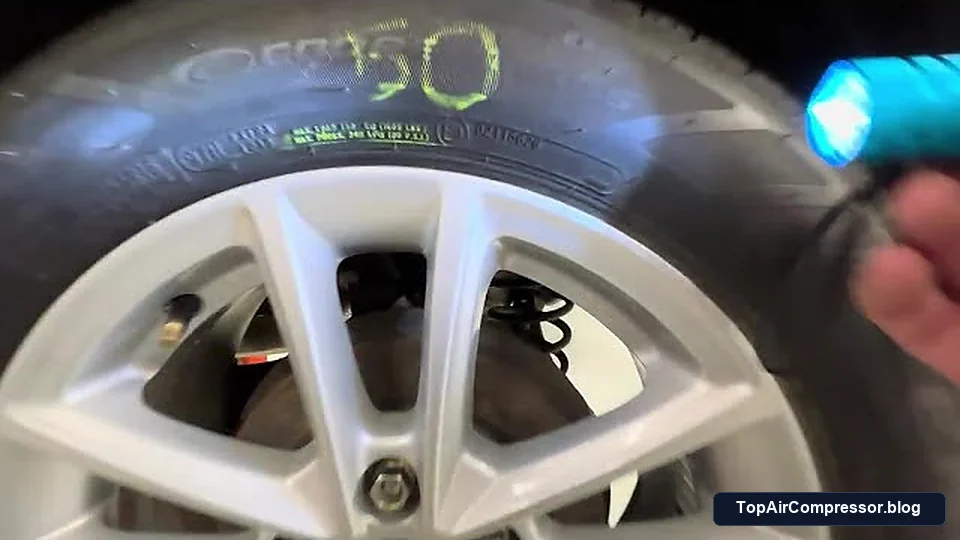
Automotive engineers calculate ideal PSI using vehicle weight distribution and suspension tuning. Using a reliable best small tire inflator for car model ensures accurate inflation and maximizes braking performance.
Ignoring factory guidelines can lead to premature tread wear, decreased fuel economy, and compromised safety margins. Always rely on certified engineering data rather than generic rules of thumb.
Your vehicle placard serves as the definitive legal standard for daily driving. Checking this placard ensures your tires perform safely across varying highway and city driving conditions.
- Locate the vehicle placard on the driver side door jamb.
- Ignore the maximum pressure rating stamped on the tire sidewall.
- Account for gross vehicle weight ratings when carrying heavy cargo.
- Consult the owner manual for specialized towing or winter recommendations.
Understanding the Door Jamb Placard
The permanent metal or sticker placard provides exact cold PSI values for front and rear axles. Manufacturers occasionally specify different pressures for front and rear tires.
Reviewing this placard guarantees your vehicle meets federal safety compliance and optimal tire contact patch dimensions under normal operating loads.
- Note separate front and rear axle pressure requirements.
- Verify the production date matches your specific vehicle chassis.
Analyzing Cold Inflation Pressure Fundamentals
Accurate tire pressure measurements must always be taken when tires are completely cold. A cold tire is defined as one that has driven less than one mile.
Driving generates internal friction that heats the compressed air inside the tire chamber. This thermal expansion increases pressure readings by several PSI, masking underlying under-inflation issues.
Ambient temperature swings also impact internal air volume significantly. Consulting our best air compressor for car tires roundup helps you select tools that easily combat seasonal pressure drops.
Establishing a consistent early morning routine for pressure checks prevents false readings. This practice ensures your pneumatic maintenance aligns with true manufacturer safety baselines.
- Perform pressure checks after the vehicle has sat for three hours.
- Avoid adjusting pressures immediately following aggressive highway commuting.
- Factor in seasonal ambient temperature drops during autumn and winter.
- Use a calibrated digital gauge for dependable cold baseline readings.
The Physics of Thermal Expansion
Compressed air molecules move faster and push outward harder when exposed to high heat. Direct sunlight on one side of a car can skew pressure measurements noticeably.
Park your vehicle in a shaded garage or wait until evening to measure pressures accurately. Accounting for thermal shifts prevents accidental over-inflation during hot summer months.
- Shade the vehicle before conducting manual tire inspections.
- Recognize sun-facing tire pressure discrepancies during summer days.
Video Walkthrough: Paano Malaman ang TAMANG PSI ng Gulong Mo?
Proper Air Compressor Selection and Setup
Selecting the right equipment simplifies routine maintenance and prevents strain. Choosing a top-rated best portable tire compressor for car unit ensures convenient roadside adjustments during unexpected emergencies.
Workshop pancake compressors offer higher CFM output and stable tank reserves for rapid multi-tire inflation tasks. Ensure your equipment features an integrated pressure regulator and clear gauge.
Inspect your air hose and chuck connections for worn rubber gaskets or air leaks. A secure seal prevents pressure loss and ensures efficient airflow into the valve stem.
Position your compressor on a flat, stable surface away from loose debris that could enter intake vents. Proper equipment preparation guarantees reliable pneumatic performance every time.
- Choose between portable 12V units and heavy-duty garage tank compressors.
- Inspect air delivery hoses for cracks, kinks, and loose fittings.
- Verify that built-in pressure gauges are properly calibrated and legible.
- Keep moisture drain valves closed securely before starting inflation.
Hose and Chuck Maintenance Basics
Locking air chucks create a tight seal over standard Schrader valves without requiring manual holding. This ergonomic design reduces hand fatigue during multi-vehicle maintenance sessions.
Apply thread seal tape to threaded pneumatic fittings to prevent annoying air leaks. Maintaining an airtight delivery system protects your compressor pump from continuous cycling.
- Upgrade to quick-release locking chucks for seamless valve attachment.
- Replace damaged rubber O-rings inside quick-connect couplers promptly.
Step-by-Step Tire Inflation and Calibration Protocol
Begin your inflation session by removing the protective plastic cap from the valve stem. Keep this cap in a safe pocket to prevent loss during the maintenance process.
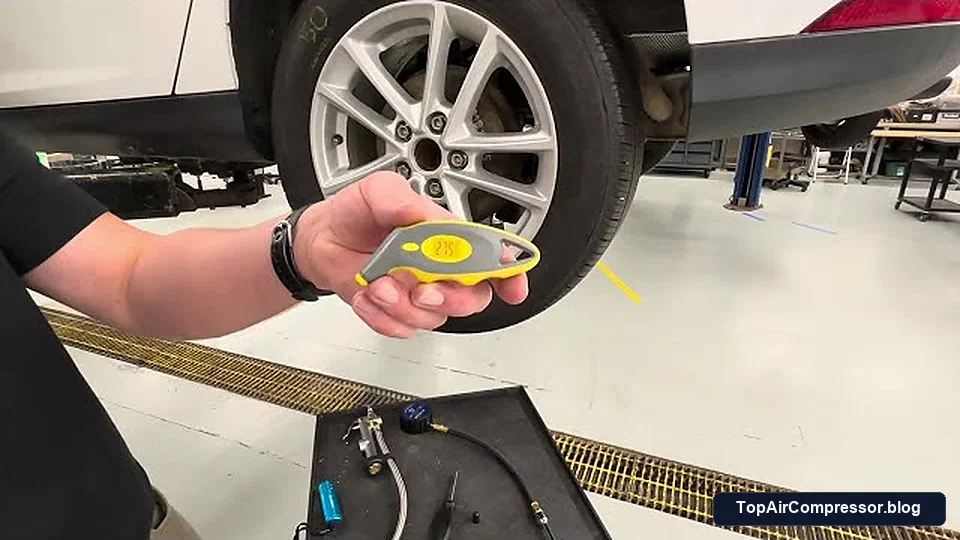
Press the compressor chuck firmly onto the valve stem until the escaping hiss stops. A solid connection ensures direct airflow and prevents erratic pressure gauge fluctuations.
Activate your compressor and monitor the pressure gauge in short bursts. Avoid continuous inflation without checking the actual static pressure to prevent dangerous over-pressurization.
Release the trigger and check the digital reading once target pressure is reached. Detach the chuck quickly and reinstall the valve stem cap to block road moisture.
- Remove valve caps carefully and store them in a secure location.
- Press the air chuck straight onto the stem to avoid bending pins.
- Monitor pressure increments closely to avoid exceeding the target PSI.
- Reinstall valve caps tightly to keep out dirt, salt, and moisture.
Fine-Tuning Target Pressures
If you accidentally overshoot your target pressure, use the bleed valve button. Bleeding small amounts of air lets you dial in the exact manufacturer specification.
Double-check all four tires plus the emergency spare to ensure uniform vehicle handling. Comprehensive checks prevent subtle pulling tendencies during highway driving.
- Utilize the deflation button on your gauge to lower excessive PSI.
- Verify all tires match placard specifications before driving away.
Environmental Factors and Seasonal Pressure Fluctuations
Weather extremes demand vigilant tire pressure monitoring to maintain vehicle safety margins. Seasonal temperature swings alter internal tire pressure without any physical air loss.
Winter storms cause significant pressure drops, frequently triggering dashboard TPMS warning lights on cold mornings. Drivers must add air when ambient temperatures plummet rapidly.
Conversely, summer heatwaves elevate tire pressures, increasing the risk of blowouts on hot asphalt. Check your tires more frequently during sudden heat spikes.
Altitude changes also impact apparent tire pressure relative to atmospheric conditions. Mountain driving requires careful baseline checks before ascending steep elevations.
- Add air during the first major cold snap of the winter season.
- Release minor amounts of air if summer temperatures spike drastically.
- Monitor pressure monthly as seasonal weather patterns transition.
- Account for high altitude driving effects on tire carcass tension.
Managing TPMS Sensor Warnings
Modern tire pressure monitoring systems alert drivers when pressure drops below twenty-five percent. Never ignore these dashboard warnings during sudden cold weather events.
Inspect all tires immediately when a TPMS light illuminates on your instrument cluster. Proper inflation restores sensor equilibrium and normal dashboard indicator status.
- Identify indirect versus direct TPMS sensor warning indicators.
- Reset system calibration buttons after correcting all tire pressures.
Common Inflation Mistakes and Troubleshooting Techniques
Over-inflation reduces the tire contact patch, causing harsh ride quality and rapid center tread wear. Balanced inflation prevents these costly tire degradation patterns entirely.
Under-inflation increases rolling resistance, generates excessive internal heat, and ruins fuel economy. Neglected tires face catastrophic structural failure under high highway loads.
Using inaccurate pressure gauges leads to improper calibration and false security. Always cross-reference cheap pencil gauges against a certified digital reference standard.
Failing to check spare tires leaves motorists vulnerable during roadside emergencies. Inspect your spare tire pressure twice a year to ensure reliability.
- Avoid trusting worn mechanical pencil gauges with sticky internal rods.
- Never exceed the maximum sidewall pressure limits during inflation.
- Check inner dual wheels on trucks for hidden pressure loss issues.
- Inspect valve cores regularly for slow leaks caused by debris.
Diagnosing Slow Valve Leaks
A persistent slow leak is often caused by a faulty Schrader valve core. Apply soapy water to the open valve stem to detect bubbling air leaks.
Replace damaged valve cores using an inexpensive valve core tool kit. This quick repair saves you from purchasing an unnecessary new tire.
- Test valve stems with soapy water to locate micro-leaks.
- Keep spare valve cores and a removal tool in your toolbox.
Routine Maintenance and Safety Standards
Establishing a monthly tire maintenance routine extends tread life and protects vehicle occupants. Inspect tread depth and sidewall condition alongside your pressure checks.
Wear personal safety glasses when operating air compressors and handling high-pressure lines. Debris can dislodge from tire treads during rapid inflation sequences.
Keep your air compressor intake filter clean to maintain optimal pneumatic efficiency. Store hoses properly to prevent kinks and premature rubber deterioration.
Adhering to established safety protocols ensures your equipment operates reliably for years. Proactive maintenance remains the cornerstone of safe automotive ownership.
- Incorporate pressure checks into your monthly fuel stop routine.
- Wear protective safety eyewear during active air compressor use.
- Store portable compressors in dry environments away from moisture.
- Recalibrate analog and digital pressure gauges annually.
Long-Term Equipment Storage
Drain moisture from compressor storage tanks after every major workshop project. Utilizing our precise cfm and tank sizing calculator ensures your hardware setup meets daily operational demands safely.
Coil air hoses loosely without sharp bends to preserve internal braiding. Proper storage prevents frustrating kinks and extends accessory lifespan.
- Drain condensate water from metal air receiver tanks.
- Store flexible air hoses away from direct ultraviolet sunlight.
Frequently Asked Questions
What is the standard tire pressure for most passenger cars?
Most passenger cars require between 32 and 35 PSI for optimal safety and handling. Always check your specific driver door placard for exact numbers.
How often should I check my car tire pressure?
Check your tire pressure at least once a month and before long road trips. Consistent monitoring prevents uneven tread wear and poor fuel economy.
Why does tire pressure drop in cold weather?
Cold ambient temperatures cause air molecules to contract and lose density. You generally lose about one PSI for every ten-degree drop in temperature.
Should I inflate my tires to the number printed on the sidewall?
No, the sidewall lists the maximum allowable pressure limit, not the ideal setting. Follow the vehicle manufacturer recommendation found on the door jamb sticker.
What should I do if my tire pressure warning light stays on?
Inspect all four tires with a digital gauge and inflate them to proper specs. If the light persists, visit a professional to check your sensors.