What Oil Does a Compressor Take?
Understanding proper compressor lubrication prevents premature pump failure. Selecting the correct oil viscosity protects mechanical components during heavy industrial operations.


Most standard reciprocating compressors require non-detergent ISO 100 or ISO 68 compressor oil. Always verify your manufacturer manual specifications before adding any new lubricants to the sump.
Looking for matching picks? See our Best Oil Less Air Compressor: Top Picks & Buying Guide.
Practical Quick-Reference Table
| Scenario / Metric | Recommended Target | Why It Matters |
|---|---|---|
| Standard Reciprocating Pump | ISO 68 Non-Detergent | Prevents carbon buildup on valves |
| Heavy Duty Industrial Piston | ISO 100 Lubricant | Handles high ambient temperatures safely |
| Rotary Screw Compressor | Synthetic ISO 32 or 46 | Resists thermal breakdown under continuous load |
| Cold Weather Operation | Synthetic ISO 32 | Ensures reliable cold starts without high friction |
| Oil Change Interval (Piston) | 500 Operating Hours | Removes accumulated moisture and metallic wear debris |
| Oil Change Interval (Screw) | 4000 to 8000 Hours | Maintains additive package integrity in synthetics |
Understanding Oil-Lubricated Air Compressor Mechanics
Oil-lubricated compressors rely on specialized fluid dynamics to maintain smooth mechanical operation. The internal pump components experience extreme friction during regular compression cycles every single day.
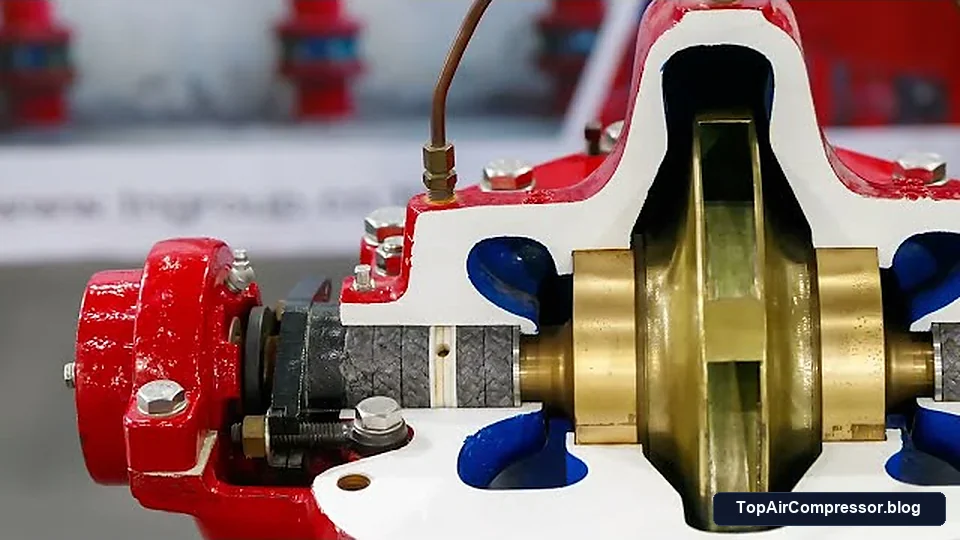
Without proper lubrication, metal components rub together rapidly. Choosing models from our best oil lubricated air compressor guide ensures you get robust systems built to prevent friction and excessive heat.
Engineering standards require specific base stocks to handle these harsh environments. Selecting the right fluid ensures your system maintains pressure while minimizing internal wear over time.
Modern air compressor pumps utilize splash lubrication or positive displacement pumps. These systems circulate oil continuously across bearings, crankshafts, and cylinder walls without failure.
Oil-lubricated compressors rely on a continuous fluid film to separate moving metal parts within the crankcase. Operating clearances between pistons and cylinders often measure just 0.001 to 0.003 inches for efficiency.
Splash lubrication systems use a dipper arm attached to the connecting rod. This arm flings oil droplets upward with every rotation to coat wrist pins, cylinder walls, and main bearings uniformly.
Pressure lubrication uses an internal gear pump driven by the crankshaft. This pump forces oil through drilled internal galleries directly to high-load bushings under pressures exceeding 40 pounds per square inch.
Thermal management is another core mechanical duty inside the compressor pump. Continuous fluid circulation absorbs intense frictional heat generated during compression, routing it toward external cooling fins or coolers.
- Reduces friction between moving metallic surfaces inside the pump housing.
- Dissipates thermal energy away from high-stress compression chambers efficiently.
- Seals microscopic gaps between piston rings and cylinder walls for pressure.
- Carries microscopic wear particles away toward the bottom oil sump.
Internal Pump Design Variations
Piston compressors splash oil upward from the crankcase using dippers. Rotary screw units flood the compression chamber directly with large volumes of specialized fluid.
Each mechanical design demands unique fluid characteristics to ensure longevity. Ignoring these distinct architectural differences often leads to catastrophic pump failure.
- Splash systems require stable base oils with good wetting properties.
- Flooded rotary units need robust demulsibility to separate water quickly.
Primary Functions of Lubricating Fluids in Pumps
Compressor lubricants perform multiple critical engineering functions simultaneously. Beyond simple friction reduction, the fluid acts as a vital thermal transfer medium within the system.
If thermal management isn't your primary concern, evaluating options in our best oil less air compressor roundup might simplify maintenance. Otherwise, circulating oil absorbs thermal energy efficiently.
Another vital role involves sealing internal clearances against pressure loss. High-viscosity fluids fill tiny microscopic imperfections between mating metal surfaces for maximum volumetric efficiency.
Corrosion protection remains a top priority for internal metallic components. Additives neutralize harmful acids and moisture that naturally condense inside the hot crankcase.
Minimizing friction between sliding iron and steel components prevents premature scoring and catastrophic wear. A specialized lubricant creates a resilient hydrodynamic barrier that stops direct metal contact under heavy loads.
Sealing compression chambers is another vital task performed by the fluid in rotary screw units. The oil fills microscopic gaps between meshing rotors, ensuring high volumetric efficiency and optimal pressure ratios.
Corrosion protection shields internal crankcases from moisture created by condensing atmospheric humidity. Additives in compressor oils neutralize acidic byproducts and coat steel surfaces with a protective chemical film.
Cleaning contaminants away from critical wear zones prevents abrasive particle buildup. Detergents and dispersants suspend microscopic debris until it passes through the oil filter element or settles downward.
- Absorbs heavy thermal loads from continuous compression cycles.
- Creates a fluid seal around piston rings to maintain high PSI.
- Inhibits rust formation caused by condensed atmospheric humidity.
- Suspends oxidation byproducts until the next scheduled fluid change.
Managing Moisture and Condensation
Ambient air drawn into the intake always contains varying amounts of moisture. When compressed, this water vapor condenses directly inside the warm oil sump.
Quality compressor oils feature special demulsifying agents. These additives help water separate from the oil so it can be drained off safely.
- Prevents milky emulsion formation inside the crankcase.
- Allows simple drainage via the bottom oil plug.
Video Walkthrough: What’s the Difference between Motor and Compressor Oil?
Viscosity Classifications and Selecting the Right Grade
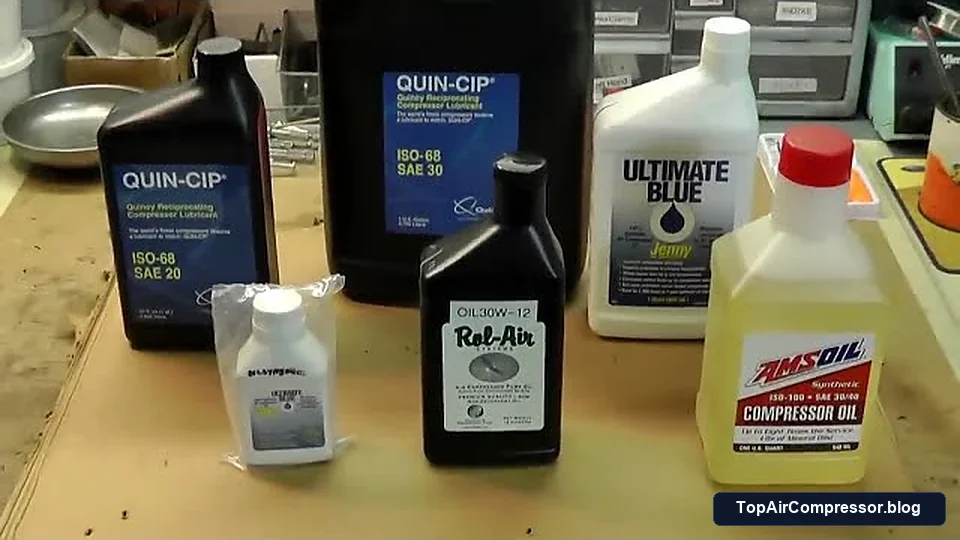
Viscosity measures a fluid's resistance to flow at specific temperatures. Using the correct ISO viscosity grade ensures adequate film strength under peak operating loads.
Too thin an oil results in metal-on-metal contact and rapid wear. Conversely, overly thick oil causes sluggish startup behavior and excessive internal fluid friction.
Most standard shop compressors operate effectively using ISO 68 or ISO 100 weights. Always match your local ambient temperature ranges to the manufacturer viscosity chart.
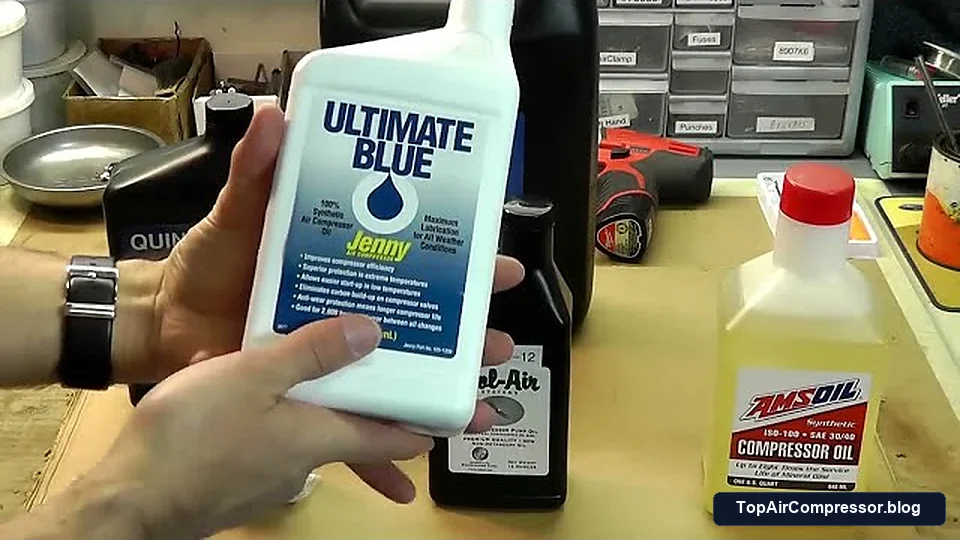
Synthetic oils maintain stable viscosity across a much wider temperature spectrum. This makes them ideal for demanding commercial environments with fluctuating weather conditions.
Viscosity measures a fluid's resistance to flow at specific operating temperatures. Choosing the correct ISO viscosity grade, such as ISO 68 or ISO 100, ensures proper film thickness under demanding conditions.
Ambient workshop temperatures heavily influence your choice of compressor lubricant grade. Cold environments require lower viscosity oils to prevent sluggish startup torque, whereas hot climates demand heavy-duty thermal stability.
Synthetic formulations maintain their intended viscosity across a much broader temperature spectrum than mineral oils. This stability reduces equipment wear during initial cold weather startups and prevents thermal thinning.
Always consult your equipment owner manual before substituting alternative lubricant weights. Using an incorrect viscosity rating can lead to oil starvation, accelerated bearing wear, and voided equipment warranties.
- ISO 32 and ISO 46 suit cold environments and rotary screws.
- ISO 68 fits standard single-stage and two-stage piston pumps.
- ISO 100 handles heavy industrial heat and large displacement pumps.
- Synthetic formulations resist thinning out during extreme summer heat.
Ambient Temperature Impact on Viscosity
Cold winter shops require thinner oils to prevent motor overload during startup. Heavy oils thicken significantly when exposed to freezing temperatures overnight.
Hot summer operations demand heavier viscosity grades to prevent thinning out. Maintaining proper film strength protects bearings from severe shock loading.
- Check local minimum and maximum ambient shop temperatures.
- Select synthetic blends for extreme seasonal temperature swings.
Reciprocating Versus Rotary Screw Lubricant Requirements
Reciprocating piston compressors and rotary screw units have vastly different lubrication needs. Piston pumps require non-detergent oils to prevent harmful carbon deposits.
Rotary screw units inject fluid directly into the air-oil separator loop. Selecting options from our best synthetic air compressor oil guide ensures long service lives and low carryover rates.
Using automotive motor oil in a reciprocating compressor is dangerous. Motor oils contain detergents that create sticky carbon varnish on internal reed valves.
Rotary units often run continuously for thousands of hours per year. Their fluids must resist thermal degradation and oxidation under constant high pressure.
Reciprocating compressors experience intermittent high-pressure cycles that demand robust anti-wear additive packages. These piston units typically require non-detergent mineral oils or specialized synthetic equivalents to avoid valve carbon buildup.
Rotary screw compressors operate continuously under high thermal loads, demanding exceptional oxidation resistance. Their fluids remain in contact with hot compressed air, requiring long-life synthetic PAO or PAG fluid blends.
Mixing reciprocating and rotary oils creates severe operational hazards for your facility. Rotary fluids often contain specialized demulsifiers and seal conditioners that will damage standard piston compressor gaskets.
Food-processing applications mandate specialized H1-rated food-grade lubricants for both compressor types. These non-toxic fluids meet strict safety standards while handling the rigorous thermal demands of industrial compression.
- Piston pumps need ashless, non-detergent compressor formulations.
- Rotary screws require specialized polyolester or PAO synthetic blends.
- Automotive oils cause valve sticking and dangerous carbon fires.
- Rotary fluids demand advanced foam suppression and demulsibility.
Dangers of Detergent Additives in Pistons
Automotive engine oils contain detergents designed to hold soot in suspension. In an air compressor, these additives react with heat to form hard carbon.
This carbon buildup prevents discharge valves from closing properly. Consequently, pump efficiency drops and operating temperatures rise to dangerous levels.
- Carbon acts as an insulator, trapping heat inside valves.
- Stuck valves cause backpressure and potential motor failure.
Routine Fluid Checking and Proper Sump Topping Procedures
Regular inspection of your compressor oil level prevents catastrophic mechanical failures. Always check the sight glass or dipstick before starting your daily operations.
The oil level should sit precisely at the center of the red circle. Running a pump with low fluid causes rapid bearing failure and scoring.
When topping up, ensure you use the exact same brand and grade. Mixing different oil formulations can cause chemical reactions and additive precipitation.
Clean the area around the fill plug before opening the crankcase. Preventing dirt ingestion protects precision internal components from abrasive wear.
Inspecting fluid levels before every daily startup prevents catastrophic dry running damage. Locate the sight glass on the side of the crankcase and verify the oil sits squarely at the red center dot.
Shut down equipment completely and relieve internal pressure before removing fill plugs. Before sizing pneumatic loads using our cfm and tank sizing calculator, always prioritize safe maintenance.
Clean around the fill port thoroughly prior to adding fresh lubricant to prevent dirt entry. Pour replacement fluid slowly using a dedicated clean funnel to achieve the exact manufacturer specification.
Never mix different oil brands or viscosity weights during routine sump topping procedures. Incompatible chemical packages can react adversely, causing sludge formation, filter clogging, and premature pump failure.
- Inspect the oil sight glass before every single work shift.
- Never overfill the crankcase past the recommended maximum line.
- Wipe fill ports clean to keep environmental debris outside.
- Document all added fluid volumes in your maintenance log.
Step-by-Step Sump Replenishment Guide
Turn off the electrical power supply and relieve all tank pressure. Unscrew the fill plug slowly while watching for any residual trapped air.
Pour the fresh fluid using a clean funnel to avoid spills. Reinstall the plug securely and wipe down any excess exterior residue.
- Verify complete depressurization before opening any ports.
- Use a clean funnel dedicated solely to compressor fluids.
Video Walkthrough: Air Compressor Oil Change For Beginners
Oil Sampling Protocols and Laboratory Analysis Schedules
Scheduled oil sampling provides deep insight into internal pump health. Laboratory analysis detects microscopic wear metals before they cause catastrophic component failure.
Extract fluid samples while the compressor is warm and running. This ensures the sample accurately represents suspended particles circulating through the system.
Send samples to a certified tribology lab for viscosity and contamination testing. Tracking these metrics over time helps predict precise maintenance windows.
High silicon levels indicate air filter failure letting dust inside. Elevated copper or iron points directly to accelerated bearing and cylinder wear.
Scheduled fluid analysis provides an early warning system for internal mechanical wear. Extract representative oil samples from operating units every 500 operating hours to track microscopic metal accumulation.
Laboratory testing measures viscosity breakdown, moisture contamination, and total acid number changes. Detecting elevated silicon levels usually indicates a failing inlet air filter allowing abrasive dust ingestion.
Keep detailed historical logs of all previous oil analysis reports for trend tracking. Observing gradual upward spikes in copper or iron particles helps technicians schedule proactive component rebuilds.
Proper sample collection requires drawing fluid from a warm, running compressor system. Avoid taking samples from drain plugs where settled sludge can distort laboratory wear metal metrics.
- Sample oil every five hundred operating hours for industrial units.
- Use clean vacuum extraction tubing to pull mid-sump fluid.
- Log operating hours and oil type on every sample bottle.
- Review laboratory viscosity trends to catch thermal breakdown early.
Interpreting Common Lab Report Metrics
Spectrochemical analysis measures parts per million of wear metals. Sudden spikes in iron, lead, or chromium require immediate mechanical inspection.
Water contamination percentage alerts you to failed seals or coolers. Addressing moisture early prevents acidic corrosion inside the pump housing.
- Watch for abnormal increases in elemental wear markers.
- Monitor Total Acid Number to determine fluid replacement timing.
Environmental Stewardship and Safe Disposal Guidelines
Used compressor oil requires careful handling and responsible disposal practices. Disposing of lubricants improperly harms local water supplies and violates environmental regulations.
Collect spent oil in clean, sealed containers during scheduled drain intervals. Never dump fluid down municipal drains or onto open soil surfaces.
Take your drums of used oil to certified recycling facilities. Many automotive shops and municipal waste sites accept used industrial lubricants freely.
Wipe up any minor spills immediately using absorbent shop pads. Proper waste management keeps your workspace safe and environmentally compliant.
Used compressor oil contains heavy metals and toxic hydrocarbons that harm local ecosystems. Never pour waste lubricants down drain systems, onto bare ground, or into municipal trash receptacles.
Store used fluids in designated, leak-proof containers labeled clearly with hazardous waste warnings. Maintain secondary containment basins around storage drums to capture accidental spill volumes safely.
Partner with certified environmental waste management companies for regular recycling pickups. Most commercial recyclers reprocess waste oil into reusable heating fuel or base lubricating stock.
Comply strictly with local, state, and federal environmental protection agency regulations regarding fluid management. Keeping meticulous disposal manifests protects your facility from costary compliance fines.
- Store used fluids in clearly labeled, leakproof containers.
- Consult local environmental protection agency rules for guidance.
- Contract licensed recycling services for large industrial volumes.
- Recycle oil-soaked absorbent materials according to local codes.
Handling Spills and Workplace Safety
Keep spill kits stocked near your compressor maintenance area. Quick containment prevents slippery floors and minimizes environmental contamination risks.
Wear appropriate chemical-resistant gloves when handling used lubricants. Prolonged skin contact with waste oil can cause dermatological irritation.
- Keep oil-absorbent pads ready for accidental drips.
- Wear nitrile gloves and eye protection during drains.
Frequently Asked Questions
Can I use standard motor oil in my air compressor?
Never use standard automotive motor oil in reciprocating compressors. Automotive oils contain detergents that create carbon deposits on critical discharge valves.
How often should I change my compressor oil?
Standard piston pumps require oil changes every five hundred operating hours. Rotary screw units using synthetic fluids often run up to eight thousand hours.
What happens if I mix different compressor oil weights?
Mixing different viscosities or base formulations can cause chemical incompatibility. This reaction often leads to additive precipitation and reduced lubrication performance.
Is synthetic oil worth the extra cost for small shops?
Synthetic oils resist thermal breakdown much better than mineral oils. They provide extended service life and superior performance during extreme temperature swings.
How do I know what viscosity grade my compressor needs?
Always consult your original equipment manufacturer manual for exact specifications. Most shop compressors require either ISO 68 or ISO 100 non-detergent oil.