What Oil for Ingersoll Rand Air Compressor?
Selecting the correct fluid protects internal compressor components. Proper viscosity ensures optimal thermal stability and extends operational lifespan.

Always use OEM-approved synthetic lubricants matching your specific compressor type. Mixing mineral and synthetic oils causes severe varnishing and mechanical failure.
Looking for matching picks? See our Best Oil Less Air Compressor: Top Picks & Buying Guide.
Practical Quick-Reference Table
| Scenario / Metric | Recommended Target | Why It Matters |
|---|---|---|
| Rotary Screw Units | IR T30 / All-Season Select | Prevents varnish and oxidation |
| Reciprocating Units | IR 20V / ISO 68 Mineral | Ensures piston ring seal |
| Ambient Temperature > 90°F | ISO 100 Viscosity Grade | Maintains film strength under heat |
| Cold Weather Start < 32°F | Full Synthetic ISO 32/46 | Prevents low-temperature motor overload |
| Rotary Change Interval | 8,000 Hours or 1 Year | Removes accumulated moisture and acids |
| Reciprocating Change Interval | 500 Hours or 3 Months | Protects close-tolerance crankshaft journals |
Decoding Ingersoll Rand Lubrication Requirements

Selecting proper fluids for your industrial pneumatic equipment directly impacts overall performance. Ingersoll Rand designs specific formulations to handle extreme internal pressures and high operating temperatures safely.
Standard automotive motor oils lack essential anti-foaming agents and demulsibility characteristics. For smaller workshop models, check our Ingersoll Rand Garage Mate review to see how proper lubrication prevents mechanical failure.
Industrial air systems require specialized lubricants that resist thermal breakdown. Ingersoll Rand machines demand specific additive packages to neutralize acids and separate moisture efficiently during continuous duty cycles.
Modern screw and reciprocating compressors operate under intense mechanical stress. Utilizing precise viscosity grades prevents metal-to-metal contact and minimizes friction across all critical moving parts.
- Consult your equipment nameplate for exact fluid requirements.
- Never substitute automotive oils in industrial air compressors.
- Verify compatibility before switching between mineral and synthetic formulations.
- Maintain strict adherence to manufacturer lubrication guidelines.
Evaluating Factory-Approved Fluid Formulations
Factory-approved synthetic fluids undergo rigorous testing to ensure maximum thermal stability. These specialized oils resist carbon formation and maintain stable film thickness across wide temperature ranges.
Premium synthetic formulations significantly extend drain intervals compared to standard petroleum oils. This reduces overall maintenance downtime and lowers long-term operational costs for industrial facilities.
- Factory synthetics resist high-temperature varnish buildup.
- Extended drain intervals lower facility maintenance costs.
- Specialized additives protect against rust and corrosion.
Rotary Screw Compressor Lubricant Selection
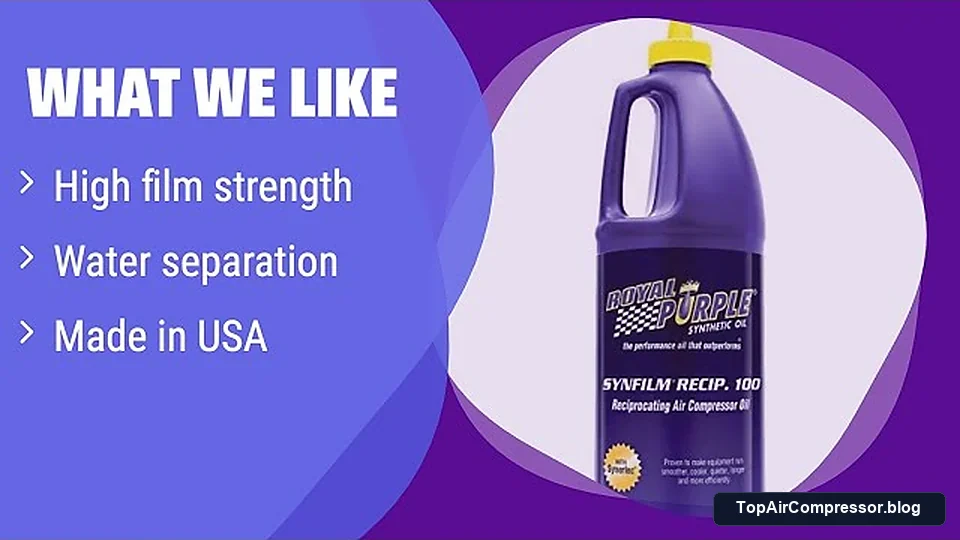
Rotary screw compressors generate intense heat through continuous air compression. When comparing brands, you should read our Quincy vs. Ingersoll Rand comparison to understand specialized synthetic coolant requirements.
Using standard petroleum oil in rotary screw machines causes rapid varnish accumulation. Varnish coats critical internal components, restricting oil cooler passages and causing dangerous thermal shutdowns.
Synthetic coolants like All-Season Select provide superior oxidation resistance in rotary systems. These advanced fluids prevent sludge formation and maintain proper viscosity during heavy industrial operating shifts.
Operators must monitor fluid levels daily using the onboard sight glass. Maintaining proper oil levels ensures effective air-oil separation and prevents downstream contamination in your compressed air network.
- Rotary units demand high-performance synthetic coolants.
- Petroleum oils cause rapid varnish and thermal shutdown.
- Monitor oil sight glasses daily for proper levels.
- Prevent downstream contamination via effective separation.
Understanding Rotary Coolant Change Intervals
Premium rotary synthetic fluids typically last up to eight thousand operating hours. However, harsh environmental conditions like high humidity require more frequent fluid analysis and replacement.
Always drain old fluid while the compressor is warm to suspend contaminants. Complete thorough system flushes when transitioning between different oil types to prevent chemical reactions.
- Target eight thousand hours for synthetic fluid changes.
- Drain oil while warm to remove suspended contaminants.
- Perform system flushes when changing oil types.
Video Walkthrough: Search filters
Reciprocating Air Compressor Oil Specifications
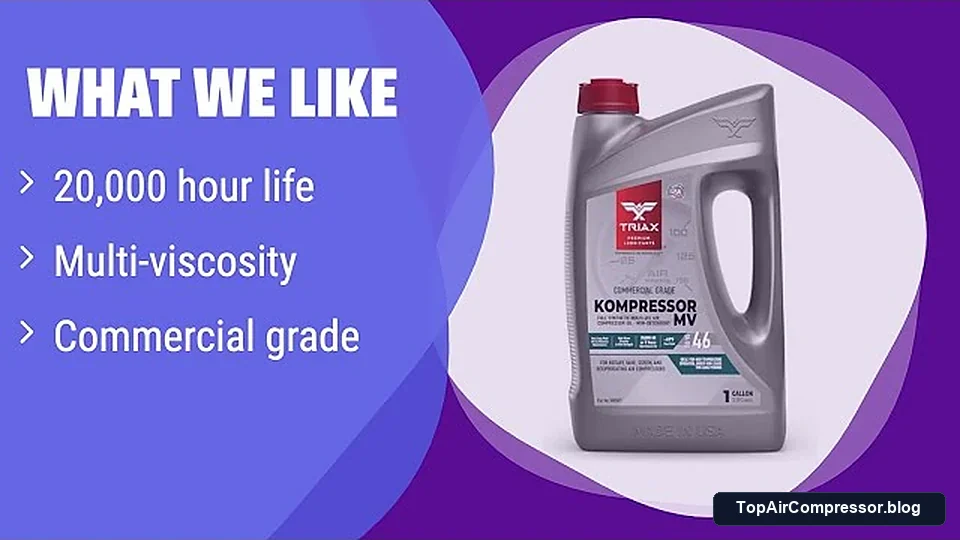
Reciprocating piston compressors rely on splash lubrication or positive displacement pumps. Consult our Ingersoll Rand vs Eaton comparison to evaluate specific ISO viscosity grades ensuring adequate piston ring sealing.
Single-stage and two-stage reciprocating units usually operate best on ISO 68 mineral oils. In cooler environments, lighter ISO 32 or ISO 46 formulations ensure reliable cold-weather motor startups.
Synthetic reciprocating oils are available for heavy-duty commercial applications operating continuously. These synthetic variants reduce carbon buildup on reed valves and extend compressor valve assembly lifespans.
Checking oil levels before every startup prevents catastrophic pump seizure. Low oil levels quickly damage connecting rods, wrist pins, and cast-iron cylinder walls under normal operating loads.
- Reciprocating compressors utilize splash or positive displacement lubrication.
- Standard units perform well on ISO 68 mineral oils.
- Synthetic reciprocating oils reduce carbon on valves.
- Inspect crankcase oil levels before every daily startup.
Managing Reciprocating Crankcase Maintenance
Reciprocating compressor crankcases accumulate condensation rapidly due to ambient temperature shifts. Changing crankcase oil every five hundred hours removes moisture before internal corrosion occurs.
Clean the crankcase breather cap regularly to prevent internal pressure buildup. Clogged breathers force oil past piston rings and contaminate downstream air treatment filter elements.
- Change reciprocating oil every five hundred operational hours.
- Clean crankcase breathers to prevent internal pressure buildup.
- Prevent oil blowby into downstream air lines.
Environmental Factors and Viscosity Selection
Ambient workshop temperature heavily influences your choice of compressor lubricating fluid. High ambient heat thins lubricating films, while freezing winter temperatures cause conventional mineral oils to thicken dangerously.
Facilities located in hot climates must utilize heavier viscosity grades to maintain film strength. Conversely, unheated winter job sites require multi-viscosity synthetic oils to prevent motor overload conditions.
High humidity environments accelerate moisture emulsification within the compressor separator tank. Use our CFM and tank sizing calculator while selecting fluids with excellent demulsibility characteristics for reliable everyday operations.
Dust and airborne particulate matter can contaminate open compressor oil reservoirs quickly. Ensure intake filters are maintained properly to prevent abrasive particles from entering the lubrication circuit.
- Ambient temperature dictates required fluid viscosity grades.
- Hot climates demand heavier oil weights for film strength.
- Demulsibility prevents moisture emulsification in humid environments.
- Protect oil reservoirs from abrasive airborne dust particles.
Temperature Limits for Synthetic Lubricants
Synthetic lubricants maintain stable viscosity across extreme thermal operating spectrums. They resist thinning at high temperatures and flow freely during sub-zero equipment startups in winter.
Operating compressors outside recommended temperature windows triggers thermal protection switches. Always verify facility ambient conditions match the operating envelope specified by equipment engineers.
- Synthetics provide stable viscosity across extreme thermal spectrums.
- Avoid operating outside manufacturer temperature design windows.
- Verify facility conditions match engineering specifications.
Preventing Contamination and Oil Degradation
Oil degradation occurs naturally due to oxidation, thermal stress, and particulate accumulation. Regular fluid sampling identifies microscopic wear metals and additive depletion before mechanical failure takes place.
Mixing incompatible lubricant types causes immediate chemical reactions and severe sludging. Always flush the complete system thoroughly when transitioning from standard mineral oil to premium synthetic coolants.
Keep storage containers tightly sealed to prevent environmental moisture absorption and dust intrusion. Store drums indoors on pallets away from direct sunlight and extreme temperature fluctuation zones.
Replace oil filters during every scheduled fluid change to capture harmful contaminants. Old filters retain degraded fluid that quickly ruins fresh lubricant charges added to the compressor.
- Fluid sampling detects wear metals and additive depletion.
- Incompatible oil mixes cause severe chemical sludging.
- Store lubricant drums indoors away from temperature extremes.
- Always replace oil filters during fluid changeovers.
Recognizing Signs of Lubricant Breakdown
Darkened oil color, pungent burning odors, and heavy foaming indicate advanced thermal breakdown. Immediate fluid replacement is mandatory when these visual or olfactory warning signs appear.
Excessive oil consumption often signals worn piston rings or failing shaft seals. Inspect the compressor immediately if you notice sudden drops in reservoir fluid levels without leaks.
- Dark oil color indicates advanced thermal breakdown.
- Pungent burning odors require immediate fluid replacement.
- Investigate sudden oil consumption drops without visible leaks.
Troubleshooting Common Lubrication System Issues
Low oil pressure warnings require immediate shutdown to prevent permanent compressor damage. Inspect oil pump functionality, check fluid levels, and verify filter cleanliness before restarting equipment.
High oil carryover into air lines typically results from overfilling the reservoir. It can also stem from blocked scavenging lines or damaged air-oil separator elements failing prematurely.
Foaming lubricants reduce cooling efficiency and accelerate mechanical wear across bearings. Check for water contamination or incorrect fluid formulations if persistent foam appears in the sight glass.
Temperature control valves must operate correctly to maintain proper fluid operating ranges. A stuck thermal valve prevents oil from reaching the cooler, causing rapid overheating and shutdown.
- Shut down immediately upon receiving low oil pressure warnings.
- High oil carryover indicates overfilling or failing separators.
- Foaming lubricants point to water contamination or wrong fluids.
- Verify thermal valve operation to prevent compressor overheating.
Correcting Scavenging Line Blockages
Blocked scavenging lines trap separated oil inside the air-oil separator tank housing. Clean orifice restrictions regularly to ensure proper oil return flow back to the compressor block.
Damaged separator elements allow excessive oil mist to travel down plant air lines. Replace saturated separator elements according to differential pressure gauges or operating hour recommendations.
- Clean scavenging line orifices to restore proper oil return.
- Replace saturated air-oil separator elements promptly.
- Monitor differential pressure across separator filter housings.
Frequently Asked Questions
Can I use standard automotive motor oil in my Ingersoll Rand compressor?
Never use standard automotive motor oils in your industrial air compressor under any operational circumstances.
These commercial automotive formulations completely lack critical anti-wear additives and will quickly create hazardous carbon deposits that cause severe valve fires, regulator damage, and permanent mechanical failure across your pneumatic system.
How often should I change the oil in my rotary screw unit?
Rotary screw compressors operating on factory synthetic coolants typically require complete fluid changes every eight thousand operating hours or once per calendar year.
However, harsh operating environments characterized by high ambient humidity or heavy particulate loads demand much more frequent fluid analysis, filter changes, and premature oil replacement cycles.
What is the difference between mineral and synthetic compressor oil?
Mineral oils are standard petroleum-based fluids that require frequent maintenance changes and tend to form stubborn varnish deposits at elevated operating temperatures.
Premium synthetic oils offer vastly superior thermal stability, aggressively resist oxidation, and provide significantly longer service intervals for demanding industrial facilities.
What happens if I mix different types of compressor oils?
Mixing incompatible mineral oils and synthetic lubricants triggers adverse chemical reactions that produce thick sludge and heavy varnish throughout the system.
This severe contamination quickly clogs oil coolers, restricts internal filter passages, and frequently causes catastrophic compressor pump seizures requiring expensive professional overhauls.
Why is my compressor oil turning dark or milky?
Dark oil coloration clearly indicates advanced thermal breakdown or severe oxidation resulting from excessive operating temperatures. Milky white oil signals dangerous moisture contamination caused by excessive condensation buildup within the crankcase or air-oil separator tank during humid weather shifts.