What PSI Should Car Tires Be?
Discover the engineering principles behind correct vehicle tire pressure. Master accurate inflation techniques for optimal safety and longevity.

Always inflate your tires to the vehicle placard PSI located on the driver door jamb rather than the maximum pressure listed on the tire sidewall.
Looking for matching picks? See our Best Air Compressor For Car Tires: Top Rated Picks.
Practical Quick-Reference Table
| Scenario / Metric | Recommended Target | Why It Matters |
|---|---|---|
| Standard Passenger Sedan | 32 to 35 PSI cold | Balances fuel efficiency with ride comfort. |
| Full-Size SUV or Truck | 35 to 45 PSI cold | Supports heavier loads and prevents sidewall flex. |
| Winter Temperature Drop | Add 1 PSI per 10°F drop | Counters natural pressure loss from cold weather. |
| Tire Sidewall Rating | Maximum safe limit only | Exceeding this risks structural tire failure. |
| Warm Tire Check | Add 4 PSI to placard | Accounts for heat expansion during active driving. |
| Compact Spare Tire | 60 PSI standard | Ensures emergency readiness under heavy loads. |
Decoding Manufacturer Placards Versus Maximum Sidewall Limits
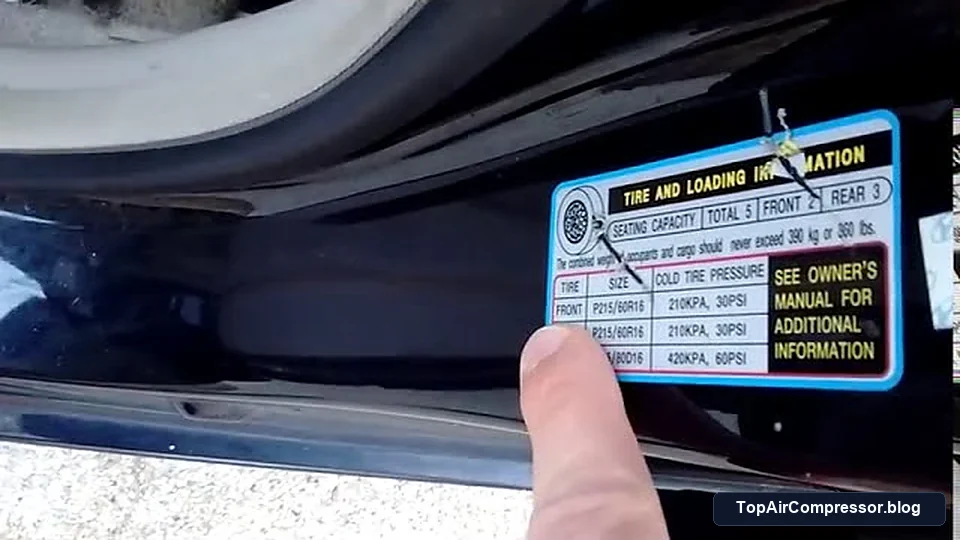
Automotive engineers calculate precise cold inflation pressure for every vehicle model. This metric appears on a certification label attached securely to the driver-side door jamb.
Relying on this specific placard guarantees optimal braking performance, uniform tread wear, and stable handling characteristics. Ignoring these factory specifications compromises your overall vehicle safety.
Many drivers mistakenly assume the number stamped directly onto the rubber sidewall represents the ideal daily operating pressure. That figure actually denotes the maximum load limit pressure.
Inflating your tires to that absolute maximum sidewall rating creates an overly stiff ride. It also accelerates center tread wear and reduces critical tire contact patch area.
Vehicle door jamb placards provide the correct cold inflation pressure recommended by engineers. Never use the maximum pressure limit printed on the tire sidewall for daily street driving applications.
The sidewall figure indicates the absolute structural threshold for holding a bead under maximum load capacity. Exceeding placard specifications alters your contact patch geometry and drastically reduces overall tread life.
Suspension tuning, vehicle weight distribution, and braking dynamics rely strictly on the factory placard recommendations. Ignoring these guidelines introduces severe handling instabilities during sudden emergency evasive steering maneuvers.
Always locate the federal certification label on the driver door pillar before adjusting any compressed air lines. This ensures your pressures match exact gross axle weight ratings specified for your vehicle chassis.
- Locate the yellow and white placard inside the driver door opening.
- Ignore the maximum PSI rating printed on the outer rubber sidewall.
- Always measure tire pressure when the vehicle has been parked for hours.
- Match front and rear pressures if the factory placard specifies identical values.
Locating and Interpreting Your Vehicle Placard
Open the driver door and look for the rectangular federal certification label. This sticker displays recommended front and rear pressures alongside gross vehicle weight ratings.
Some vehicle models also print these essential technical figures inside the fuel filler door. Always defer to these official cabin sources over generic online charts.
- Check the driver door pillar for the federal certification sticker.
- Verify tire size matches factory specifications before setting pressure.
Understanding Sidewall Markings Safely
Tire sidewalls display extensive manufacturing data, including load index ratings and speed symbols. The pressure figure listed here is a structural safety threshold, not a target.
Exceeding this operational boundary during inflation can damage internal steel belts. Treat the sidewall limit as a strict ceiling you should never cross.
- Read the fine print near the bead to identify maximum pressure.
- Never use the sidewall figure for routine weekly maintenance routines.
Technical Consequences of Operating Underinflated or Overinflated Tires
Underinflated tires flex excessively while the vehicle moves down the highway. This continuous structural flexing generates extreme internal heat that damages casing integrity.
Excessive heat buildup dramatically increases the probability of sudden tread separation or catastrophic blowout events. Furthermore, low pressure increases rolling resistance and wastes fuel.
Conversely, severely overinflated tires reduce the available contact patch with the pavement. This reduction compromises emergency stopping distances and diminishes cornering traction.
Overinflation also transmits harsh road shocks directly into your suspension components. Over time, this constant vibration damages steering racks, control arms, and shock absorbers.
Underinflation flexes the casing excessively, generating internal heat that leads to sudden tread separation. Low pressure increases rolling resistance, which forces your engine to burn more unnecessary fossil fuel.
Conversely, overinflation reduces the tire contact patch to a narrow strip along the center tread. This causes accelerated wear and drastically compromises your vehicle stopping distance on wet asphalt surfaces.
Extreme overinflation also subjects suspension components to harsh impacts, transmitting shock loads directly into bushings and ball joints. Proper inflation maintains optimal structural load distribution across the tread.
Monitoring tire pressure monthly prevents catastrophic failures associated with casing fatigue and structural cord damage. Maintaining correct inflation protects your investment and ensures predictable vehicle handling dynamics.
- Low pressure causes shoulder wear and overheats internal rubber layers.
- High pressure concentrates wear in the center of the tread pattern.
- Improper inflation severely degrades wet weather braking performance.
- Both extremes lead to premature tire replacement and higher expenses.
The Dangers of Chronic Underinflation
Underinflated rubber flattens out under vehicle weight, forcing the sidewalls to bear abnormal stresses. This structural abuse destroys casing cords and ruins tire durability.
Fuel economy drops noticeably because the engine must work harder to overcome rolling resistance. Monitoring your pressure prevents these costly mechanical failures.
- Check for sluggish steering response caused by low pressure.
- Inspect outer tread edges for feathering and rapid wear.
Handling Risks of Excess Tire Pressure
Overinflated tires bounce across road imperfections instead of absorbing impacts smoothly. This bouncing reduces directional stability during high-speed emergency maneuvers.
Drivers will notice a harsher, noisier ride quality along with diminished traction on loose gravel. Maintain proper calibration to preserve predictable handling.
- Avoid filling tires past the manufacturer recommended cold threshold.
- Test vehicle stability on safe roads after pressure adjustments.
Video Walkthrough: How to Know the Correct Tire Pressure for Your Car
Accounting for Ambient Temperature and Seasonal Pressure Fluctuations
Ambient air temperature exerts a powerful physical influence on internal tire pressure. Browse our best air pumps for car tires selection to find reliable tools that counteract thermal pressure drops.
Winter weather frequently triggers dashboard pressure warnings because cold air contracts inside the sealed cavity. You must manually add air as autumn transitions into freezing winter months.
Conversely, rising summer temperatures cause compressed air to expand rapidly inside the rubber. Driving long distances on hot asphalt can increase tire pressure by several PSI.
Never bleed air from hot tires during a summer road trip to compensate for expansion. That temporary pressure increase is entirely normal and expected by design.
Ambient temperature shifts alter tire pressure significantly, dropping roughly one pound per square inch for every ten-degree drop. Cold winter mornings require immediate pressure adjustments to correct underinflated conditions.
Heat expands compressed air inside the casing, raising reading values during hot summer afternoons or sustained highway driving. Always measure your pressures when tires are completely cold before driving.
Seasonal transitions demand proactive monitoring routines to combat the natural gas volume loss associated with dropping temperatures. Neglecting seasonal changes invites uneven shoulder wear and poor fuel economy figures.
Keep a reliable digital pressure gauge and a portable 12-volt inflator in your trunk for field corrections. Quick adjustments maintain optimal contact patch integrity regardless of external weather shifts.
- Add one PSI for every ten degrees Fahrenheit drop in ambient air.
- Check tire pressures monthly when seasonal temperatures shift drastically.
- Never deflate warm tires on the highway during hot weather.
- Park in shaded areas when taking accurate baseline pressure readings.
Winter Inflation Best Practices
Cold mornings provide the most accurate baseline for measuring your winter tire pressure. Always adjust your pressures before embarking on long cold-weather journeys.
Inspect valve stems for ice accumulation that could prevent proper sealing during freezing weather conditions. Keep valve caps securely installed to block moisture.
- Measure cold pressure before driving in freezing morning hours.
- Ensure valve cores are completely free of dirt and ice.
Managing Summer Heat Expansion
High asphalt temperatures transfer significant thermal energy directly into your vehicle tires. This heat causes gas molecules to expand and elevate internal pressure.
Trust that factory placard ratings account for normal operational heat buildup. Focus exclusively on setting correct cold pressures before moving the car.
- Perform pressure checks early in the morning before direct sunlight.
- Account for higher highway speeds generating additional friction heat.
Specialized Pressure Requirements for Sedans, SUVs, and Heavy Trucks

Different vehicle categories demand vastly different internal pressures based on their weight distribution. A lightweight commuter sedan typically operates efficiently around thirty-two PSI.
Large SUVs and pickup trucks carry significantly higher gross vehicle weights and require much stiffer sidewalls. Their placards frequently mandate pressures ranging from thirty-five to forty-five PSI.
Commercial delivery vans and towing vehicles often utilize specialized light truck tires. These robust applications require precise load-inflation tables to determine accurate operating targets.
Always consult the specific vehicle placard rather than applying generalized pressure rules across different automobile classes. Incorrect pressure in heavy vehicles causes dangerous sway.
Compact sedans typically operate between thirty and thirty-two PSI, prioritizing ride comfort and uniform tread wear. Heavier vehicles require significantly higher pressures to support their increased gross weights.
Modern SUVs often demand thirty-five to thirty-eight PSI to handle higher center-of-gravity loads during cornering. Commercial light trucks utilizing LT-metric tires require careful adherence to load inflation tables.
Heavy-duty towing applications mandate increased rear axle pressures to prevent dangerous sidewall deflection under heavy tongue loads. Always consult specialized towing charts when hauling heavy cargo loads.
Matching tire specifications to vehicle classification guarantees structural integrity and prevents premature failure under demanding operational loads. Verify specific placard values for front and rear axle positions.
- Passenger cars generally require thirty-two to thirty-five PSI.
- Full-size trucks and heavy SUVs often need thirty-five to forty PSI.
- Always verify placard numbers when switching between different tire types.
- Heavy cargo loads require temporary pressure increases per manufacturer charts.
Passenger Car Calibration Standards
Standard commuter vehicles prioritize ride comfort and balanced handling over heavy load capacity. Their suspension geometry relies on moderate tire pressures for stability.
Maintaining proper calibration ensures predictable steering response during sudden emergency lane changes on crowded multi-lane highways.
- Verify both front and rear axle requirements on commuter sedans.
- Check tire pressures during every routine oil change interval.
Heavy Utility Vehicle Demands
Pickup trucks and large utility vehicles experience dramatic shifts in gross vehicle weight. Towing heavy trailers requires higher cold inflation pressures to support loads.
Refer to the towing section of your owner manual to find specialized pressure adjustments for hauling heavy cargo safely across long distances.
- Adjust rear tire pressures higher when towing heavy utility trailers.
- Inspect load range ratings on truck tires before setting inflation.
Step-by-Step Procedure for Accurate Cold Inflation Pressure Checks
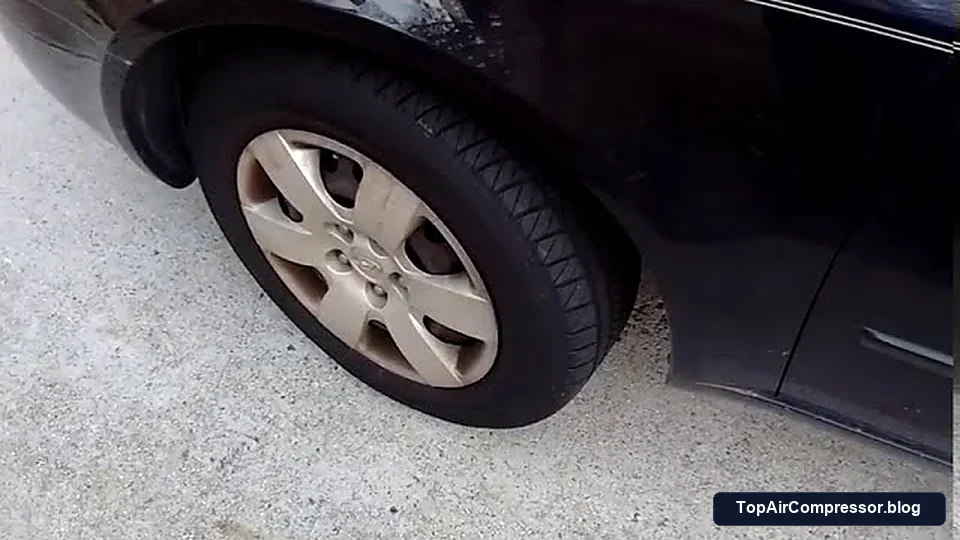
Accurate pressure measurement requires tires to be completely cold before you attach any gauge. A tire is considered cold after the vehicle has been parked for three hours.
Begin by removing the protective plastic valve cap from the designated tire valve stem. Keep this small cap in a safe pocket so it does not get lost.
Firmly press a calibrated digital or dial pressure gauge onto the open valve stem. Listen for a brief hiss of escaping air until the internal seal seats properly.
Read the digital display or mechanical needle to record the exact internal pressure value. Compare this measurement immediately against your vehicle door placard target.
Perform pressure checks only after the vehicle has been parked for at least three hours. Driving generates friction heat that artificially inflates internal air pressure readings.
Remove the valve stem cap and press your calibrated pressure gauge firmly onto the metal stem. Listen for a brief hiss indicating a proper seal without excessive air loss.
Compare your gauge measurement against the recommended placard figures located on the driver door jamb. Add compressed air or release pressure until your exact target PSI level is reached.
Securely reinstall all valve stem caps to prevent moisture infiltration and dust accumulation inside the core mechanisms. Never skip checking your spare tire assembly during routine maintenance intervals.
- Park vehicle for at least three hours to obtain cold readings.
- Remove valve caps and store them securely during the process.
- Press the gauge squarely onto the valve stem to prevent air loss.
- Reinstall tight valve caps securely after completing adjustments.
Choosing Quality Measurement Tools
Invest in a reliable dial gauge or digital pressure meter for maximum measurement accuracy. While testing pneumatic systems alongside our cfm tool sizing calculator, remember that cheap pencil gauges often stick and provide misleading readings.
Store your pressure gauge in a clean interior compartment to protect internal calibration springs from moisture and extreme temperature swings.
- Calibrate or replace old gauges periodically for accuracy.
- Digital gauges offer clear numerical readouts in low light.
Executing Precision Air Additions
Attach your air compressor chuck firmly to the valve stem to add required air volume. Short bursts of air allow you to monitor pressure climbs closely.
Check the reading frequently using your handheld gauge to avoid overshooting the target placard specification during the inflation process.
- Use regulated compressed air sources for controlled inflation.
- Bleed excess air using the gauge deflation pin if overfilled.
Evaluating Air Compressor Types for Precise Vehicle Maintenance
Maintaining correct vehicle tire pressure at home requires dependable compressed air equipment. Portable twelve-volt inflators plug directly into auxiliary vehicle power outlets easily.
These compact 12V units offer excellent roadside mobility and store neatly inside trunk compartments for emergency travel situations. However, they typically feature slower duty cycles.
Direct battery clamp inflators connect straight to your car terminals to deliver higher electrical current. Consult our best air compressor for car tires guide when choosing heavy-duty portable units.
Standard workshop electric air compressors offer unmatched speed, tank capacity, and versatility for home garages. They make routine tire maintenance fast and effortless year-round.
Portable 12-volt compressors plug directly into accessory outlets, offering convenient roadside repairs for passenger vehicles. Ensure your unit features a reliable built-in pressure gauge for accurate monitoring.
Direct-drive or belt-driven workshop air compressors deliver superior CFM output, making quick work of larger truck tires. Install a moisture filter to keep condensed water out of your pneumatic air lines.
Regulate output pressure carefully to avoid over-pressurizing delicate passenger car tires during rapid inflation. Check out our best 12v air compressor for car tires roundup featuring advanced models with auto-shutoff features.
Maintaining your air compressor equipment ensures consistent performance and reliable pressure delivery for all garage tasks. Drain the storage tank regularly to prevent internal rust and corrosion damage.
- Portable 12V inflators provide convenient emergency roadside utility.
- Battery clamp models deliver strong electrical power for large truck tires.
- Workshop tank compressors offer rapid inflation speeds for home use.
- Always verify maximum pressure output matches your vehicle requirements.
Assessing Portable 12V Inflator Performance
Plug-in 12V units are engineered specifically for emergency top-offs and routine maintenance tasks. Their small motors require mandatory cooling breaks during prolonged use.
Select models equipped with automatic digital shutoff features to prevent accidental over-inflation of sensitive passenger car tires.
- Monitor operating temperatures during multi-tire inflation tasks.
- Choose units featuring programmable automatic shutoff controls.
Utilizing Workshop Tank Compressors
Stationary electric tank compressors store pressurized air ready for instant delivery whenever needed. This stored volume allows rapid inflation without running a motor continuously.
Drain moisture from the air storage tank regularly to prevent internal corrosion and deliver clean, dry air to your tire valves.
- Drain storage tank condensate drains after heavy garage use.
- Use inline moisture filters to protect tire pressure monitoring sensors.
Frequently Asked Questions
Where can I find the correct tire pressure for my car?
Look for the federal certification placard located on the driver-side door jamb. This official sticker lists the exact recommended cold PSI for your specific vehicle.
Should I inflate my tires to the maximum PSI listed on the sidewall?
Never use the sidewall number because it represents a maximum safety threshold. Always follow the lower vehicle manufacturer placard specification for comfortable driving.
How does cold weather affect my car tire pressure?
Drop in ambient temperature causes air inside the tire to contract. You lose approximately one PSI for every ten-degree drop in outside temperature.
Is it safe to check tire pressure immediately after driving?
Driving generates friction heat that artificially inflates internal pressure readings. Always measure tires when they are completely cold after parking for three hours.
What happens if I drive with severely underinflated tires?
Underinflation causes excessive sidewall flexing and dangerous heat buildup. This condition increases fuel consumption and raises the risk of sudden blowout failures.