What PSI Should Mercedes A Class Be?
Finding the correct inflation pressure for your compact luxury hatchback prevents uneven wear. Proper vehicle maintenance guarantees optimal highway handling and braking performance.

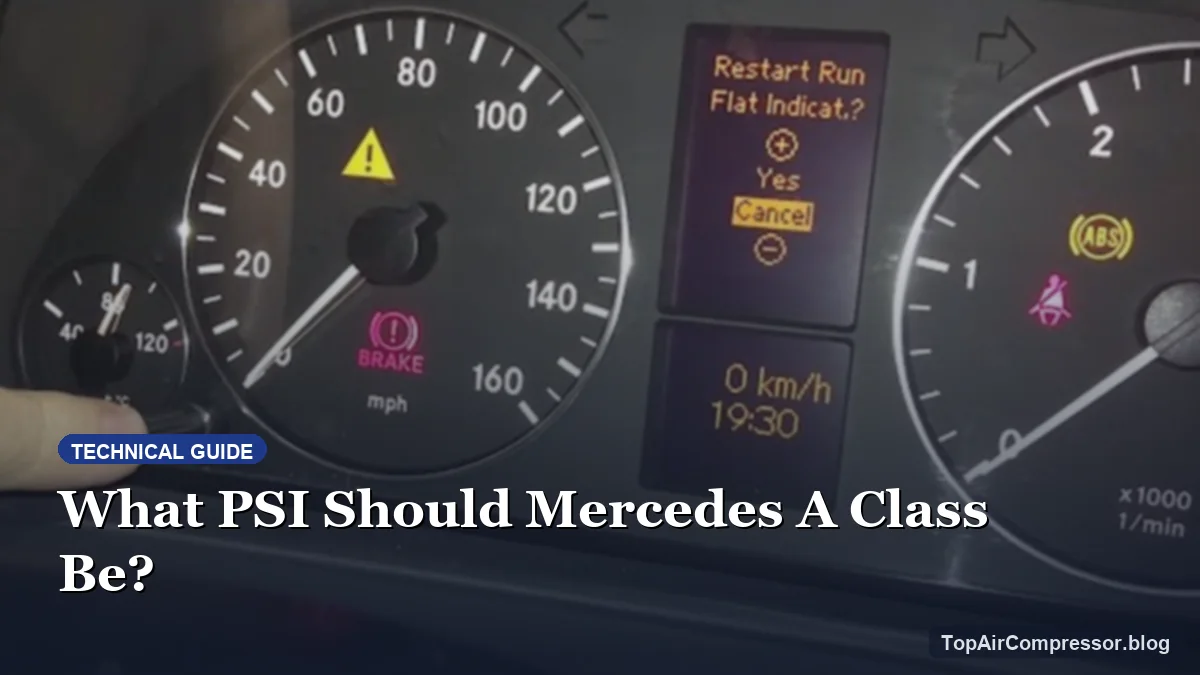
Most Mercedes-Benz A-Class vehicles require between 32 to 38 PSI depending on load. Always consult the driver door jamb placard for exact specifications before inflation.
Looking for matching picks? See our Best 150 Psi Air Compressor: Top Garage Picks (2026).
Practical Quick-Reference Table
| Scenario / Metric | Recommended Target | Why It Matters |
|---|---|---|
| Normal Load Driving | 32 to 35 PSI | Ensures balanced contact patch and comfort. |
| Full Passenger Load | 36 to 38 PSI | Prevents sidewall overload during heavy hauling. |
| High-Speed Autobahn | 38 to 41 PSI | Reduces internal tire heat buildup significantly. |
| Metric Conversion | 1 BAR equals 14.5 PSI | Translates European metrics to US standards. |
| kPa Measurement | 220 to 260 kPa | Provides precise digital gauge calibration values. |
| Cold Check Baseline | Before driving 2 miles | Delivers accurate uncompromised pressure readings. |
Determining Correct PSI Requirements for Mercedes-Benz A-Class Tires
Modern compact luxury vehicles demand precise inflation levels to perform safely. The manufacturer door placard lists exact cold pressures for your specific wheel configuration.
Payload capacity changes required pounds per square inch drastically. When adjusting output, reviewing cfm vs psi specifications prevents dangerous sidewall damage under heavy cargo loads.
Factory wheel diameters range from sixteen to nineteen inches across variants. Larger low-profile performance options generally require slightly higher pressures than standard touring setups.
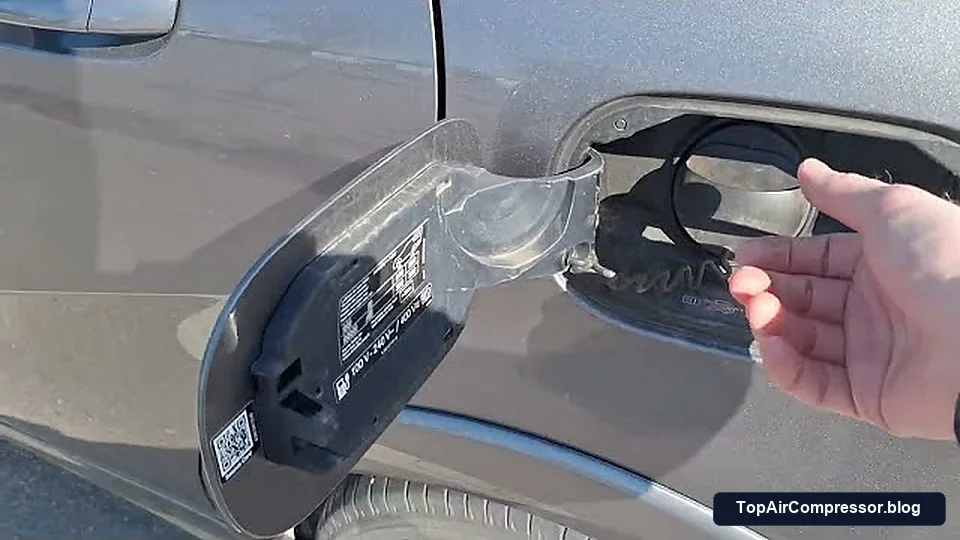
Checking the structural sticker inside the fuel filler flap offers a secondary verification. Always rely on these engineering specifications rather than generic sidewall maximums.
- Locate the primary placard on the driver side B-pillar.
- Distinguish between normal loads and maximum gross vehicle weight.
- Account for specific wheel diameters ranging from 16 to 19 inches.
- Verify dual reference guidelines inside the fuel filler door.
Interpreting Placard Load Ratings
Factory placards categorize inflation thresholds by passenger counts and luggage weight. Adhering to these tiered targets preserves structural tire integrity over rough roads.
Ignoring placard guidelines can cause premature tread separation or blowout risks. Proper calibration maximizes overall vehicle safety during emergency braking maneuvers.
- Match passenger counts to listed pressure values.
- Adjust target numbers before embarking on long highway trips.
Decoding Measurement Units: PSI, BAR, and Kilopascals Explained
Automotive specifications often utilize international measurement systems alongside standard imperial values. Understanding these conversions prevents dangerous inflation mistakes during maintenance tasks.
Pounds per square inch remains the dominant metric across North American garages. European manuals frequently list identical pressures using the metric BAR unit instead.
One BAR equals roughly fourteen point five pounds per square inch of force. Multiplying your target BAR value by this factor yields the correct PSI setting.
Kilopascals represent another precise metric scale found on digital inflators. Knowing how to switch gauge units ensures accurate inflation across diverse toolsets.
- Convert BAR measurements by multiplying by fourteen point five.
- Utilize kilopascals for precise digital compressor readouts.
- Double-check gauge settings before connecting air supply hoses.
- Avoid guessing conversion ratios when utilizing imported equipment.
Using Digital Gauges for Accurate Calibration
Digital pressure gauges eliminate the guesswork associated with spring-loaded analog tools. They display exact readings across multiple units to match your vehicle manual.
Calibrating your air compressor regulator prevents accidental over-inflation during routine maintenance checks. Using a reliable 200 psi air compressor model ensures consistent pressure delivery across heavy-duty automotive applications.
- Select the desired measurement unit on your digital gauge.
- Verify calibration against a known reference tool periodically.
Video Walkthrough: Mercedes Tyre Pressure Guide
Step-by-Step Procedure for Inspecting and Inflating A-Class Tires
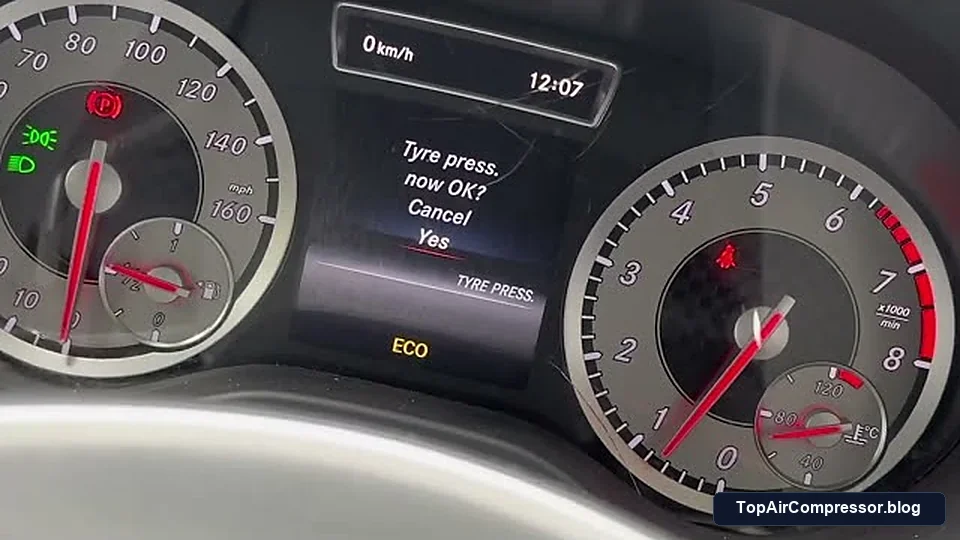
Accurate pressure checks require tires to be completely cold before starting. Driving more than two miles heats the internal air and skews gauge readings upward.
Remove the protective plastic valve stem cap and store it securely. Firmly press your digital inflator nozzle straight onto the exposed metal stem.
Monitor the pressure readout on your compressor display in real-time. Reviewing what is scfm vs cfm metrics ensures your tool delivers sufficient airflow volume during continuous inflation tasks.
Reinstall the valve stem cap tightly to prevent moisture and debris ingress. Repeat this methodical inspection process across all four vehicle wheels consistently.
- Perform checks only when tires are completely cold.
- Keep valve stem caps in a safe pocket during inflation.
- Push the air chuck straight to prevent annoying air leaks.
- Reinstall caps securely to protect internal valve cores.
Managing Compressor Airflow and Pressure Regulators
Adjust your workshop compressor regulator output slightly above target tire pressure. This ensures steady airflow without overwhelming delicate rubber valve components.
Bleed excess air carefully if you accidentally overshoot your target pressure. Modern digital inflators often feature automatic bleed valves for precise adjustments.
- Set workshop regulators slightly above target inflation levels.
- Use bleed valves to correct minor over-inflation errors.
Environmental Factors and Temperature Impacts on Vehicle Tire Pressures
Ambient outdoor temperatures drastically influence internal pneumatic pressure fluctuations daily. Running our cfm tool sizing calculator helps determine precise air demand requirements for seasonal workshop maintenance tasks.
Seasonal weather shifts demand frequent monitoring to maintain factory specifications. Neglecting winter pressure drops leads to sluggish handling and reduced fuel economy.
Direct sunlight can artificially inflate one side of a parked vehicle. Always account for thermal solar radiation when checking tires outdoors on sunny afternoons.
Park in a shaded garage overnight to obtain reliable baseline cold measurements. This eliminates thermal interference and guarantees accurate pressure adjustments every single time.
- Anticipate a one PSI drop for every ten degree temperature decrease.
- Compensate for seasonal weather transitions proactively.
- Account for direct sunlight heating up one vehicle side.
- Park in shaded areas for reliable morning baseline checks.
Winter Weather Inflation Strategies
Sub-zero winter conditions require vigilant monitoring of all pneumatic chambers. Cold air contracts rapidly, causing significant pressure loss during overnight freezes.
Check your tires weekly during severe cold snaps to prevent bead leaks. Maintaining proper winter pressure ensures maximum contact patch grip on slippery roads.
- Increase inspection frequency during severe winter weather.
- Prevent bead leaks caused by extreme temperature drops.
Long-Term Safety Implications of Incorrect Inflation Levels
Under-inflated tires flex excessively, generating dangerous internal heat that can cause tread separation. This structural failure puts vehicle occupants at severe risk on highways.
Over-inflation reduces the available rubber contact patch significantly, compromising emergency stopping distances. It also causes accelerated center tread wear across your expensive wheels.
Balanced pressure distributions extend tread longevity and improve overall fuel efficiency noticeably. Maintaining correct figures protects your suspension components from premature mechanical wear.
Routine pneumatic inspections form the backbone of responsible vehicle ownership practices. Never skip monthly checks if you want to maximize your tire investment lifespan.
- Prevent dangerous heat buildup from under-inflation.
- Avoid stopping distance penalties caused by over-inflation.
- Extend overall tread longevity through balanced pressure.
- Protect sensitive suspension components from premature shock.
Recognizing Abnormal Wear Patterns Early
Inspect your tread blocks regularly for signs of edge or center wear. Visual cues often indicate chronic inflation neglect long before sensors trigger.
Uneven shoulder wear typically points to persistent under-inflation habits over time. Correcting pressure issues early prevents premature replacement expenses down the road.
- Examine shoulder blocks for under-inflation wear signatures.
- Look for center rib smoothing caused by excess pressure.
Video Walkthrough: What is optimal tyre pressure for Mercedes B-Class W246 (2011-2019)?
Comparing A-Class Pressures Against Other Mercedes Vehicle Classes
Compact hatchbacks require significantly different PSI values than heavy luxury sedans. The lighter weight of an A-Class demands lower baseline targets than a larger SUV.

Mid-size executive models utilize stiffer sidewall specifications to support greater payload limits. Always verify class-specific placards rather than assuming uniform Mercedes pressure standards.
Performance AMG variants often feature staggered wheel setups requiring unique pressures. Front and rear axles on sports models frequently demand distinct PSI calibrations.
Cross-referencing your specific model variant prevents dangerous handling imbalances on highways. Keep vehicle-specific reference notes inside your glove compartment for easy access.
- Distinguish compact hatchback requirements from heavy SUVs.
- Verify executive sedan placards before adjusting pressures.
- Account for staggered wheel setups on performance variants.
- Store vehicle-specific reference notes in your glove box.
Understanding AMG Staggered Wheel Pressures
Performance AMG models often feature wider rear wheels than fronts. This mechanical configuration requires specialized pressure tuning to maintain neutral cornering balance.
Consult your dedicated AMG supplement manual for exact axle specifications. Standard door placards may not cover specialized high-performance wheel and tire combinations.
- Check dedicated AMG supplements for staggered setups.
- Maintain unique front and rear axle pressure targets.
Frequently Asked Questions
What is the standard recommended tire pressure for a Mercedes-Benz A-Class?
Most models require between 32 to 38 PSI depending on your cargo load. Always verify these numbers on the driver door jamb placard.
How often should I check the tire pressure on my Mercedes A-Class?
Inspect your pressures at least once a month using a cold tire baseline. Seasonal temperature shifts also demand immediate calibration adjustments.
Can I use BAR units instead of PSI when inflating my tires?
Yes, many European manuals list measurements in BAR units. Remember that one BAR equals 14.5 PSI for accurate conversion calculations.
Why does my tire pressure drop when ambient temperatures fall?
Cold air contracts and reduces internal pneumatic pressure significantly. You can expect a one PSI loss for every ten degree drop.
Should I check tire pressures when the tires are warm from driving?
No, driving heats internal air and gives falsely elevated gauge readings. Always check and inflate tires before driving two miles.