What Size Air Tank for Air Tools?
Proper air tank sizing prevents pressure drops during heavy tool operation. Understanding volumetric capacity ensures your workshop stays fully productive.

Choosing the correct air receiver tank requires matching tool CFM demands with pump output capacity. Always size your tank to handle peak intermittent air surges safely.
Looking for matching picks? See our Best Size Air Compressor For Air Tools: Top Workshop Picks.
Practical Quick-Reference Table
| Scenario / Metric | Recommended Target | Why It Matters |
|---|---|---|
| Brad Nailer & Stapler | 1 to 3 Gallons | Extremely low air volume requirements for trim work. |
| Automotive Impact Wrench | 20 to 30 Gallons | Sustains high torque demands during fastener removal. |
| Continuous Die Grinder | 60+ Gallons | Prevents rapid compressor cycling under continuous loads. |
| Paint Spraying Setup | 26 to 60 Gallons | Ensures steady atomization pressure and dry air delivery. |
| Maximum Working Pressure | 125 to 175 PSI | Accommodates standard workshop pneumatic tool tolerances. |
| Tank Drain Interval | Daily (Every Use) | Prevents interior corrosion and structural failure hazards. |
Understanding Air Tank Sizing Fundamentals for Pneumatic Tools
Air compressor tanks store compressed air to handle peak demand spikes. An undersized reservoir forces the pump to run constantly, causing excessive thermal wear.
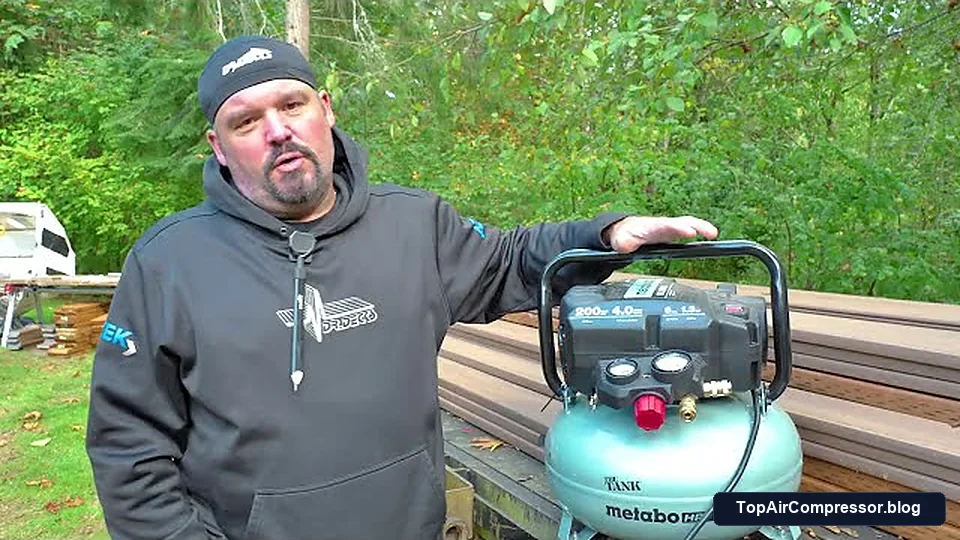
The primary function of an air receiver is cooling the air and removing moisture. Larger tanks provide thermal mass, condensing water vapor before it enters tools.
Workshop applications dictate whether you need a portable pancake unit or a stationary vertical tank. Static industrial setups require significantly greater storage volume for stability.
Understanding the relationship between cubic feet per minute and tank volume is essential. Compressor efficiency relies heavily on matching storage capacity to actual application loads.
Selecting the correct air receiver requires balancing your pump output against tool demands. Review our best size air compressor for air tools guide to match proper storage capacities.
Tanks act as thermal buffers, cooling hot compressed air before it enters distribution lines. This passive cooling drops moisture out of suspension, protecting downstream regulators and air tools from premature internal wear and rust.
Standard ASME-certified steel tanks withstand operating pressures up to 200 PSI, providing a safe margin above standard shop requirements. Always verify your tank rating matches or exceeds your compressor's maximum output pressure safely.
Industrial setups often integrate auxiliary tanks downstream to boost total storage capacity without upgrading the main compressor pump. This strategy stabilizes line pressure when multiple technicians operate high-consumption grinding equipment simultaneously.
- Store compressed air to smooth out intermittent heavy tool demands.
- Provide essential cooling time to protect internal pump components.
- Buffer pressure fluctuations to maintain consistent operational torque levels.
- Condense ambient moisture before air reaches sensitive pneumatic devices.
Portable Versus Stationary Tank Designs
Portable pancake and twin-tank models offer mobility for job sites. Limited storage capacity restricts these units to low-CFM fasteners and inflation tasks.
Stationary vertical tanks maximize floor space while offering substantial volume. Heavy industrial applications demand these larger configurations for uninterrupted workflow performance.
- Evaluate job site mobility requirements against shop air volume needs.
- Secure stationary vertical tanks properly to reinforced concrete workshop floors.
Calculating CFM Requirements and Consumption Rates
Cubic feet per minute dictates how much air a tool consumes during operation. Every pneumatic device lists a specific CFM rating at standard pressure values.
Intermittent tools like nailers use very little cumulative air volume. Exploring options via our best portable air compressor for tools roundup helps match continuous tools like sanders safely.
Failing to calculate total system consumption leads to frustrating pressure starvation issues. Accurate math prevents purchasing equipment that cannot keep up with workflow demands.
Multiply your tool requirements by a safety factor of 1.25 for reliability. Proper sizing margins ensure your pump rests adequately between operational cycles.
Accurately determining your pneumatic load begins by compiling the individual cubic feet per minute ratings for every tool you intend to use. Continuous tools require exact matches, while intermittent tools utilize duty cycles.
Multiply the manufacturer-specified CFM rating at 90 PSI by the estimated runtime percentage to find your realistic air consumption. Failing to account for pressure drops will cause unexpected tool starvation during critical tasks.
Rotary screw and reciprocating compressors calculate volumetric efficiency differently, impacting how fast your storage tank replenishes. Ensure your pump delivers at least twenty percent more CFM than your highest-consuming pneumatic device.
Ambient temperature and elevation alter air density, directly affecting mass flow rates and compressor volumetric output. High-altitude workshops must oversize both compressor pumps and air tanks to compensate for thinner atmospheric air.
- Locate the specific CFM rating stamped on your pneumatic tool.
- Account for duty cycles when calculating total compressed air consumption rates.
- Apply a twenty-five percent safety margin to prevent equipment overheating.
- Verify pressure ratings match maximum compressor regulator output limits.
Video Walkthrough: Top 5 Best Air Compressors For Air Tools ✅Power Up Your Workshop✅
Matching Compressor Tank Capacities to Specific Workshop Tasks
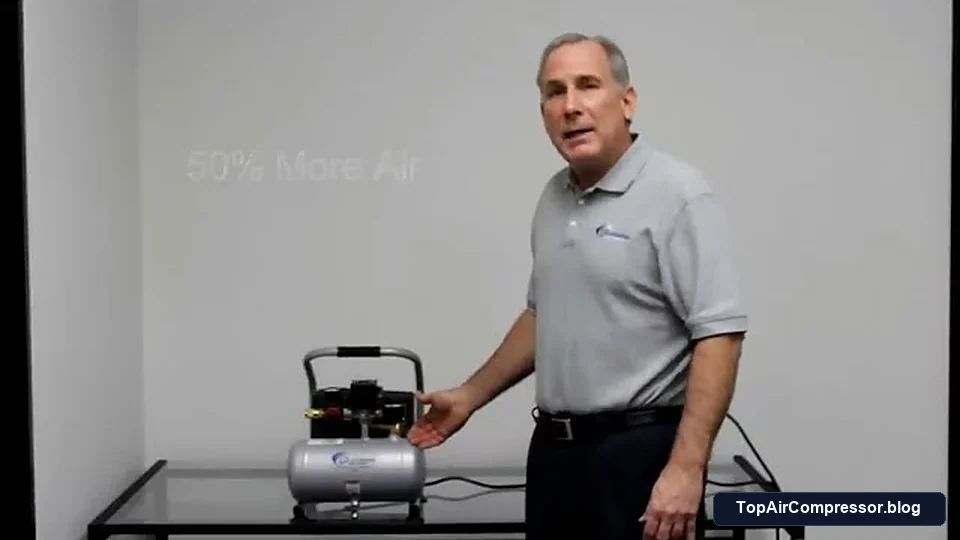
Automotive repair shops demand larger tanks to run impact wrenches effectively. High torque outputs require substantial volume reserves to prevent sudden pressure drops.
Woodworking finish carpentry relies on lightweight pneumatic nailers. Choosing from our best air compressor for pneumatic tools options ensures smaller storage tanks suffice for intermittent fastener release.
Sandblasting and heavy grinding represent the extreme end of air consumption. Industrial abrasive operations necessitate huge multi-stage compressors and massive storage tanks.
Evaluating your specific task profile prevents both underbuying and overspending. Targeted equipment selection optimizes operational efficiency across all daily workshop activities.
Light-duty garage tasks like tire inflation and brad nailing need minimal reserves, making two to six gallon pancake tanks ideal. These portable units prioritize maneuverability over extended runtime during rapid fastening applications.
Automotive repair shops operating impact wrenches and ratchets require at least a thirty gallon vertical tank to prevent severe pressure drops. Higher air volume ensures consistent torque delivery during prolonged bolt removal sessions.
Heavy industrial sandblasting and continuous spray painting demand eighty gallon or larger ASME reservoirs to sustain high-volume air delivery. Without this massive buffer, your compressor motor would run continuously, risking thermal overload.
Woodworking operations involving random orbital sanders sit in a middle tier, typically requiring twenty to sixty gallons. These tools demand sustained airflow, making tank capacity nearly as critical as pump displacement.
- Match light trim nailers with one to three gallon tanks.
- Equip automotive garages with twenty to thirty gallon reservoirs.
- Select sixty gallon systems for continuous rotary tool applications.
- Calculate peak simultaneous tool usage before purchasing receiver tanks.
Step-by-Step Pressure Calibration and Regulator Setup
Proper pressure calibration protects both your tools and your compressor tank. Using our cfm tool sizing calculator helps with adjusting the regulator correctly to hit target PSI.
Always drain your air lines completely before adjusting mechanical pressure control valves. Accurate gauge readings depend on static pressure measurements taken without active flow.
Locate the primary tank pressure gauge to monitor internal structural limits. Never exceed the maximum pressure rating stamped on the steel receiver label.
Test secondary output lines for leaks using soapy water detection methods. Sealing micro-leaks preserves compressor life and reduces unnecessary motor activation cycles.
Install a high-flow industrial regulator directly downstream from the main tank to maintain stable working pressure. Adjust the control knob slowly while the system is actively flowing air to prevent false static pressure readings.
Set your primary tank pressure switch to cut in at 100 PSI and cut out at 135 PSI for standard workshop applications. This differential prevents excessive electrical strain while providing adequate headroom for tools.
Secondary point-of-use regulators allow technicians to run different tools simultaneously at distinct working pressures. For instance, you can drop line pressure down to 70 PSI for a staple gun while keeping spray equipment higher.
Calibrate analog and digital pressure gauges annually against a certified reference gauge to ensure accurate output readings. Inaccurate gauges lead to improper tool lubrication, excessive wear, and substandard surface finishing results.
- Check primary tank pressure gauges before starting daily shop operations.
- Adjust downstream regulators to match specific tool manufacturer pressure specifications.
- Inspect quick-disconnect fittings for worn O-rings and air leaks.
- Test pressure relief safety valves manually on a regular schedule.
Comprehensive Maintenance Procedures for Compressed Air Reservoirs
Routine maintenance extends the structural integrity of your air receiver tank. Moisture accumulation inside the steel shell creates severe internal corrosion risks over time.
Drain the tank daily using the bottom valve to expel condensed water. Releasing trapped water prevents rust perforation and catastrophic tank rupture hazards.
Inspect the exterior powder coating for chips, scratches, or early rust. Prompt touch-up painting stops surface oxidation from penetrating the structural steel walls.
Test the automatic or manual pressure relief valve monthly for freedom. Safety valve failure can lead to dangerous over-pressurization during pump malfunction events.
Drain condensed moisture from your air receiver daily using a manual ball valve or an automated electronic timer drain. Neglecting this step leads to rapid internal corrosion and catastrophic structural failure of the steel tank.
Inspect the exterior tank surface monthly for signs of rust, pitting, or structural damage along the welded seams. Never attempt to weld or repair a compromised pressure vessel; replace the entire unit immediately for safety.
Test the ASME-certified pressure relief valve quarterly by manually pulling the ring to verify it opens and reseats properly. A stuck safety valve can allow tank pressure to exceed dangerous structural design limits.
Perform a thorough thickness check using ultrasonic testing equipment if your industrial air receiver exceeds ten years of continuous operation. Preventive inspections prevent unexpected ruptures and ensure compliance with OSHA guidelines.
- Open tank drain valves completely at the end of each workday.
- Install extension drain tubes for safer, more accessible moisture purging.
- Check tank mounting bolts for vibration-induced loosening on a monthly schedule.
- Keep compressed air storage areas clean, dry, and well ventilated.
Video Walkthrough: Finding the Right Air Compressor
Critical Safety Standards and Moisture Management Protocols
Compressed air systems store immense mechanical energy that demands absolute respect. Exceeding rated pressures compromises tank integrity and invites catastrophic structural failure events.
Moisture management remains vital for preventing internal oxidation and tool damage. Refrigerated air dryers or inline desiccant filters remove harmful humidity effectively.
Never weld or modify a pressurized steel air receiver tank. Unauthorized modifications void safety certifications and create extreme explosion hazards in your workshop.
Wear appropriate eye and hearing protection around high-pressure pneumatic equipment. Safety compliance protects operators from flying debris and sudden hose detachment accidents.
Compressed air systems store immense mechanical energy that can cause severe injury if safety protocols are ignored during operation. Always wear ANSI-approved eye protection and verify fittings are secure before pressurizing distribution lines.
Install refrigerated air dryers downstream of the receiver tank to reduce the relative humidity of your pneumatic supply. Dry air prevents internal corrosion in tools and eliminates moisture blemishes during precision automotive painting tasks.
Never exceed the maximum allowable working pressure stamped on the tank nameplate, regardless of specific tool demands. Exceeding this rating voids certifications and violates critical OSHA safety standards for unfired pressure vessels.
Anchor stationary vertical air receivers securely to reinforced concrete floors using heavy-duty vibration pads and anchor bolts. Proper anchoring eliminates destructive harmonic vibrations that stress welded tank brackets and copper piping joints.
- Adhere strictly to ASME boiler and pressure vessel safety codes.
- Never attempt repairs on damaged or rusted compressed air tanks.
- Install inline moisture filters to protect downstream pneumatic tool internals.
- Depressurize the entire system completely before performing any maintenance tasks.
Troubleshooting Common Pressure Drops and Air Delivery Flaws
Experiencing sudden pressure drops usually indicates an undersized supply line. Upgrading pipe diameters eliminates friction losses between the compressor and the tool.
Check for restricted intake filters if your compressor struggles to reach pressure. Dirty air filters starve the pump of intake volume, reducing overall efficiency.
Listen carefully for audible hissing sounds indicating active air leaks. Unresolved leaks force the compressor to cycle continuously, increasing thermal stress significantly.
Inspect internal check valves if air bleeds back through the pressure switch. Faulty check valves cause motor stalling and prevent normal system startup sequences.
Sudden pressure drops across your compressed air network usually indicate undersized distribution piping or restricted quick-disconnect fittings. Upgrade main headers to three-quarter inch copper or aluminum tubing to minimize friction losses significantly.
Check all threaded joints and hose connections for microscopic air leaks using a specialized soapy water detection solution. Even small leaks force your compressor pump to run constantly, driving up electricity bills and accelerating wear.
If your tank pressure cycles too rapidly, your compressor pump displacement may be mismatched with storage volume. Adding an auxiliary surge tank solves short-cycling issues and extends the operational lifespan of your electric motor.
Clean clogged intake air filters monthly to prevent airflow restriction that starves the compressor pump of necessary volume. Restricted intake air reduces volumetric efficiency and increases compression temperatures, leading to premature failure.
- Measure supply line inner diameters to ensure adequate airflow capacity.
- Clean or replace clogged compressor air intake filters monthly.
- Inspect check valves and unloader lines for carbon buildup.
- Test pressure switches for accurate cut-in and cut-out threshold settings.
Frequently Asked Questions
What size air tank do I need for standard automotive impact wrenches?
Automotive impact wrenches generally require a tank capacity of at least twenty to thirty gallons to maintain adequate working torque during heavy removal operations.
Choosing this specific volume prevents the compressor pump from running continuously while delivering reliable performance across all demanding automotive jobs.
Can I use a small pancake tank for framing nail guns?
Yes, a compact one to three gallon pancake tank provides more than enough air volume for framing and finish nailers.
Because nail guns only consume air when discharging fasteners, small portable receivers handle intermittent duty cycles effortlessly without pressure starvation issues.
Why does my air compressor tank accumulate so much water moisture?
Atmospheric humidity enters the intake filter and condenses as compressed air cools inside the steel storage receiver tank. Daily draining through the bottom valve is critical to expel this accumulated liquid and prevent dangerous internal rust perforation.
What happens if I install an air tank that is too small?
An undersized tank forces the compressor pump to cycle continuously to keep up with tool CFM demands during operation. This excessive cycling generates high internal temperatures, accelerates mechanical wear, and leads to premature motor failure across your system.
Is it safe to weld or repair a leaking compressed air tank?
Never attempt to weld or patch a damaged, corroded, or leaking pressure vessel under any circumstances. Structural modifications violate safety codes and create extreme explosion hazards that can result in severe personal injury or property damage.