What Size Compressor for Pneumatic Tools?
Selecting the correct air compressor size prevents pressure drops and tool starvation. Master the core metrics required for reliable workshop performance.

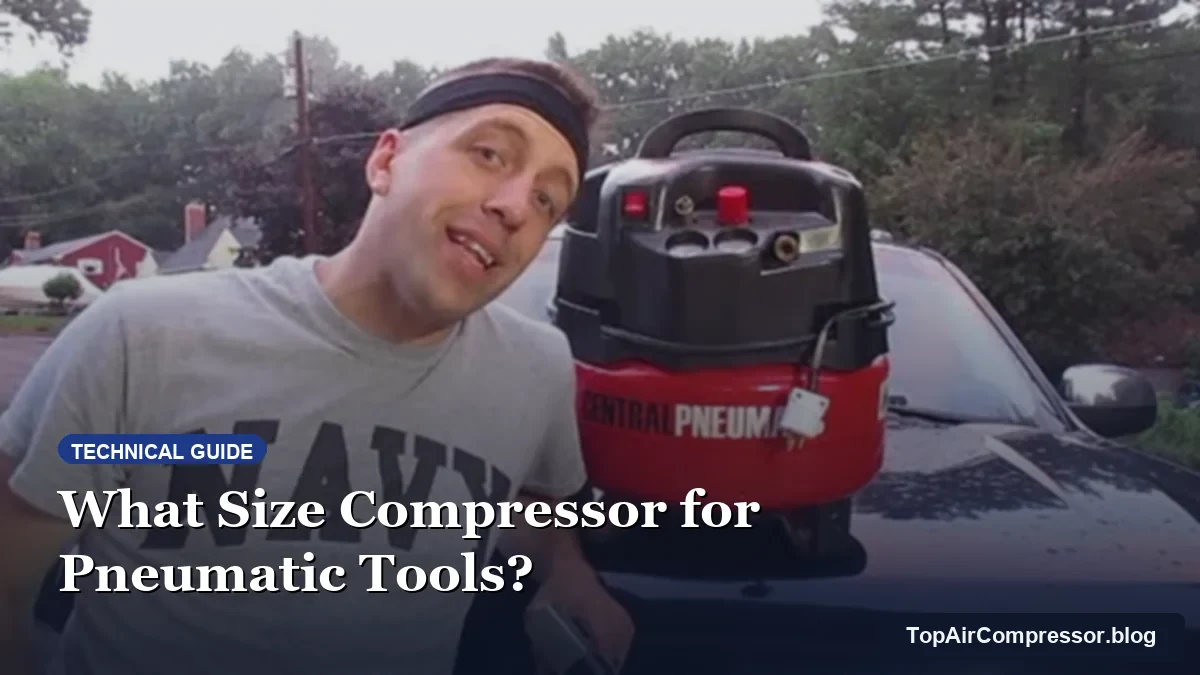
Always match your compressor output to the highest CFM requirement of your tools at 90 PSI, adding a safety margin for continuous operation.
Looking for matching picks? See our Best Air Compressor For Pneumatic Tools: Top Power Picks.
Practical Quick-Reference Table
| Scenario / Metric | Recommended Target | Why It Matters |
|---|---|---|
| Brad Nailer & Stapler | 2.0 Gallons at 90 PSI | Low air volume tools require minimal tank capacity and basic recovery rates. |
| Impact Wrench | 4.0 CFM at 90 PSI | High torque intermittent tools demand steady working pressure during fastener removal. |
| HVLP Spray Gun | 9.0 to 12.0 CFM at 40 PSI | Continuous finish spraying requires massive sustained volume without pressure fluctuations. |
| Standard Workshop | 30 to 60 Gallon Tank | Large tanks prevent the motor from running constantly during heavy tool usage. |
| Electrical Supply | 230V Dedicated Circuit | Higher voltage motors draw lower amperage and run cooler under heavy workshop loads. |
| Duty Cycle Limit | 50 Percent Maximum | Limiting run time prevents premature thermal overload and mechanical compressor failure. |
Demystifying Pneumatic Air Delivery Mechanics
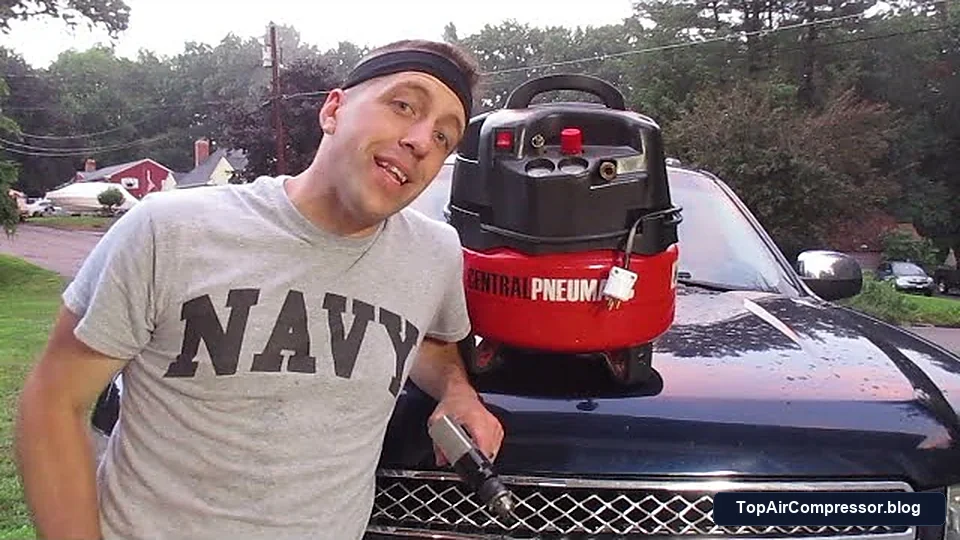
Choosing the right air compressor begins with understanding how atmospheric air converts into usable pneumatic power. Compressors draw in ambient air, compress it via pistons or rotary screws, and store it inside a heavy steel receiver tank.
This stored energy drives impact wrenches, nailers, and paint sprayers safely across your workshop.
Many buyers mistakenly focus exclusively on horsepower ratings printed on marketing labels. True system performance depends on the interaction between CFM output, operating pressure, and tank volume.
Ignoring these fundamental engineering metrics leads directly to frequent pressure drops and stalled pneumatic tools during critical tasks.
Air tools require a consistent supply of compressed air to maintain optimal rotational speed. Choosing an option from our best air compressor for pneumatic tools guide prevents sudden internal pressure drops.
Understanding these mechanical principles ensures you select equipment capable of handling demanding job site applications effortlessly.
Pneumatic systems convert electrical or mechanical energy into potential energy stored within compressed air molecules. This process relies on positive displacement pumps to force atmospheric air into a sealed pressure vessel.
As molecules crowd the tank interior, molecular collision rates spike, generating substantial thermal energy. Compressors must dissipate this heat efficiently using intercoolers and aftercoolers to prevent moisture condensation and downstream equipment seal damage.
Delivering this air requires minimizing pressure drops across distribution manifolds. Using appropriately sized industrial piping and high-flow quick-connect fittings ensures your pneumatic tools receive steady force without starving the downstream actuator motors.
- Atmospheric air converts to compressed energy via mechanical pistons or screws.
- Receiver tanks store compressed volume to smooth out pressure delivery spikes.
- Horsepower ratings matter less than actual delivered CFM performance metrics.
- Consistent pressure prevents erratic tool operation and premature internal wear.
The Core Triad of Air Compression Specs
Evaluating any compressor requires analyzing three distinct measurements working in unison. CFM defines volume, PSI determines force, and tank capacity establishes your reserve air supply. Neglecting any single metric compromises the efficiency of your entire pneumatic setup.
Manufacturers test CFM delivery at specific pressures like 90 PSI. Always verify these ratings rather than relying on displacement figures. True delivered volume dictates which pneumatic tools your compressor can realistically operate without interruption.
- CFM measures volumetric air delivery rate per minute.
- PSI dictates the sheer force delivered to your tool.
- Tank size acts as an operational buffer for short bursts.
Evaluating Cubic Feet Per Minute Ratings
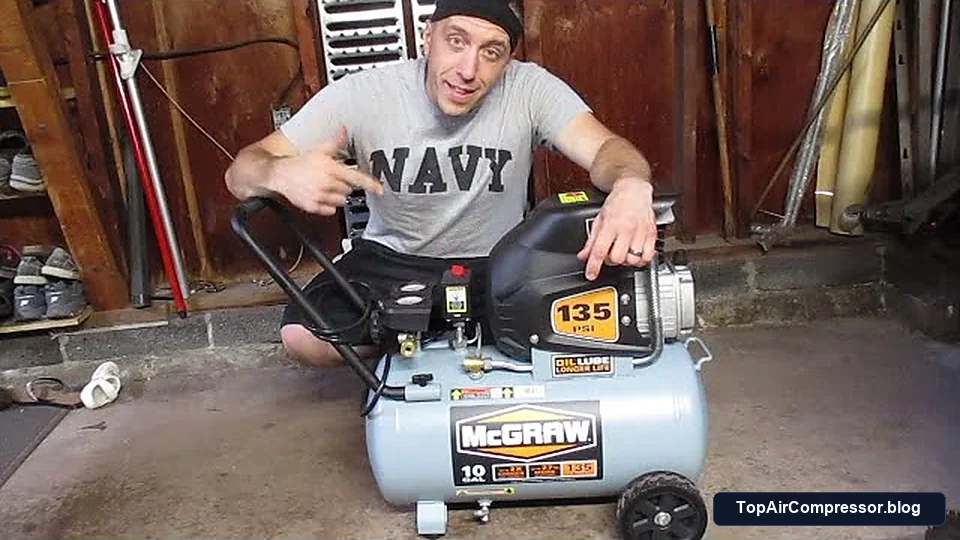
Cubic Feet Per Minute represents the absolute volume of compressed air a unit delivers at a given pressure. If your pneumatic tool demands five CFM, your compressor must supply at least that amount continuously.
Failing to meet this threshold causes your air tools to lose power instantly.
Continuous tools like grinders and sanders consume massive volumes of air compared to intermittent nailers. You must calculate the highest air consumption rate among your collection of tools.
Always add a fifty percent safety margin to account for line losses and aging pump efficiency.
Pay close attention to how manufacturers state their CFM specifications during your evaluation. Standard Cubic Feet Per Minute normalizes testing conditions for accurate comparisons across different brands.
Never rely on raw displacement numbers because they fail to account for volumetric efficiency losses.
True compressor performance is measured in actual cubic feet per minute rather than displacement volume. ACFM ratings account for volumetric efficiency losses caused by compression heat and internal mechanical friction during operation.
Manufacturers often test output at standard reference conditions, but jobsite elevations alter air density significantly. High-altitude operations reduce volumetric delivery, requiring a safety margin multiplier of 1.2 to maintain reliable pneumatic tool performance.
Continuous-duty tools demand exact CFM matching, whereas intermittent fasteners rely heavily on tank reserves. Using our cfm tool sizing calculator prevents unexpected pressure drops during fastener sequencing.
- CFM is the most critical specification for running pneumatic equipment successfully.
- Continuous tools demand much higher volumetric output than intermittent fasteners.
- Add a safety margin to prevent constant motor engagement during tasks.
- Always verify SCFM ratings rather than raw displacement measurements.
Calculating Multi-Tool Air Consumption Safely
Operating multiple pneumatic tools simultaneously requires adding their individual CFM requirements together. A busy shop running two nailers and an impact gun needs massive aggregate volume. Undersized compressors will cycle constantly and overheat quickly under these heavy loads.
Plan your workshop layout to accommodate the highest anticipated simultaneous tool demand. This prevents production bottlenecks and protects your investment from thermal stress caused by continuous over-cycling during busy work shifts.
- Sum the CFM requirements of all simultaneously active tools.
- Account for future workshop expansion when sizing your compressor pump.
- Prevent thermal overload by maintaining adequate volumetric headroom.
Video Walkthrough: Search filters
Understanding Pounds Per Square Inch Pressure
Pounds Per Square Inch measures the actual force exerted by the compressed air inside your system. Most standard pneumatic hand tools operate efficiently at ninety PSI during active engagement.
Regulators allow you to dial down incoming pressure for delicate finish nailers.
Higher maximum pressure ratings do not automatically mean better tool performance or higher volume. Operating a tool above its rated maximum pressure causes rapid internal seal degradation and safety hazards.
Match your regulator output strictly to manufacturer guidelines for every attached accessory.
Pressure drops occur naturally over long hose runs and through restrictive fittings. Using wider inner diameter hoses and high-flow couplers minimizes friction losses. Maintaining proper line pressure ensures your pneumatic tools deliver their rated torque and speed.
Pressure represents the force exerted per square inch against internal tank walls. Most standard pneumatic impact wrenches and ratchets operate efficiently at 90 PSI, which balances high torque output with component longevity.
Regulators play a vital role by stepping down high storage pressures to safe operating thresholds. Adjusting your line pressure too high causes premature internal seal wear and can shatter brittle pneumatic motor vanes.
Always verify the maximum pressure rating stamped on your tool housing before connecting quick-disconnect hoses. Exceeding manufacturer limits compromises structural integrity and violates essential OSHA safety guidelines for compressed air systems.
- Most standard pneumatic tools require steady pressure at ninety PSI.
- Do not confuse high maximum tank pressure with high volumetric CFM delivery.
- Regulators protect sensitive pneumatic equipment from excessive line pressure damage.
- Minimize pressure drops using high-flow fittings and wider hoses.
Tank Capacities and Reserve Air Volume
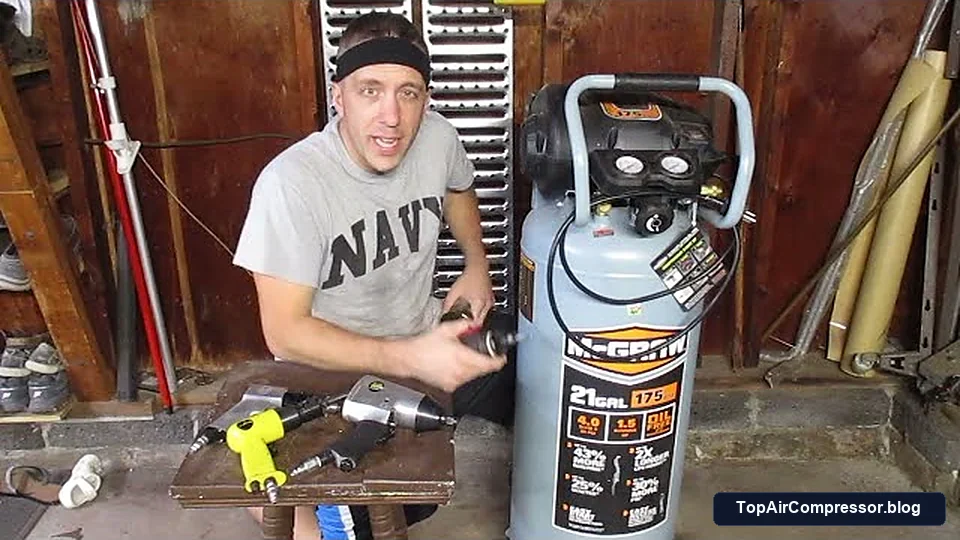
Receiver tanks serve as energy reservoirs that smooth out pressure spikes and reduce motor wear. A larger tank stores more compressed air, allowing intermittent tools to operate without cycling the motor constantly. Small pancake tanks suit quick nailing tasks perfectly.
Heavy grinding and spraying applications drain small receiver tanks almost instantly. Selecting a thirty to sixty-gallon stationary tank provides the necessary thermal buffer for demanding workshop environments. Reserve volume keeps your shop productive during sustained cutting operations.
Moisture accumulation inside steel receiver tanks represents an unavoidable physical reality of compression. Always drain accumulated water daily using bottom ball valves to prevent internal corrosion. Quality tanks feature protective coatings and ASME safety certifications for reliable operation.
Air receivers act as thermal buffers and volumetric reservoirs that smooth out pump pulsation. A larger tank capacity prevents the electric motor from cycling continuously during high-demand framing or continuous sanding tasks.
Smaller pancake tanks provide adequate volume for brief brad nailer bursts but struggle with rotary sanders. Selecting a vertical ASME tank maximizes floor space while supplying sufficient reserve air for heavy shop workflows.
Condensation management inside the receiver is critical to prevent internal corrosion and rust flaking. Daily operation requires draining moisture through the bottom ball valve to preserve air purity and extend vessel service life.
- Tank size determines the reserve volume available for short high-demand tasks.
- Small pancake tanks work well for roofing and finish nailing jobs.
- Stationary tanks prevent motors from running continuously during heavy grinding.
- Drain accumulated moisture daily to prevent internal tank rust formation.
Pancake Versus Stationary Tank Applications
Portable pancake units offer unmatched mobility for residential trim carpentry and roofing tasks. Their compact form factor fits easily inside service vehicles without sacrificing essential framing utility. However, their limited volume cannot support continuous rotary sanding operations.
Stationary vertical tanks maximize workshop floor space while providing massive air reserves. These robust systems accommodate heavy air ratchets and automotive impact tools effortlessly. Choose stationary configurations whenever your work remains anchored to a dedicated garage space.
- Pancake compressors prioritize portability for mobile finish carpentry tasks.
- Vertical stationary units save floor space while offering massive air reserves.
- Match your mobility needs carefully against your required air volume.
Analyzing Tool-Specific Air Consumption Rates
Different pneumatic tools demand vastly different air volumes to function correctly on the job. Selecting units from our best portable air compressor for tools roundup ensures adequate CFM delivery.
Automotive impact wrenches require high initial bursts of volume to break stubborn lug nuts loose. While the average consumption seems manageable, sustained trigger pulls quickly exhaust small receiver tanks. Always verify your wrench requirements under actual load conditions.
Spray painting requires entirely different pneumatic considerations than fastening or driving hardware. Moisture traps and oil filters become mandatory additions to prevent finish contamination. Clean, dry air delivery is just as critical as maintaining proper working pressure.
Different pneumatic devices consume air at drastically different volumetric rates under load. Heavy-duty grinders and sanders demand up to fourteen CFM, whereas standard finish nailers require less than one CFM per cycle.
Reviewing manufacturer specifications helps technicians calculate exact duty cycles for multi-tool workshops. Multiplying individual tool ratings by expected usage frequency factors prevents unexpected compressor stalls during critical project deadlines.
Air consumption compounds rapidly when multiple technicians operate tools simultaneously from a single manifold. Sizing your system for peak simultaneous demand requires summing every connected unit plus a twenty percent buffer.
- Brad and finish nailers have extremely low daily CFM requirements.
- Die grinders and sanders demand continuous, high-volume air delivery.
- Impact wrenches need high torque bursts from adequate tank reserves.
- Spray guns require dedicated filtration to prevent coating defects.
Electrical Demands and Power Supply Realities
Compressor motor size directly dictates the electrical infrastructure required in your workshop. Small portable units plug easily into standard one hundred twenty volt outlets without modification. Larger industrial pumps demand dedicated heavy-duty circuits to prevent tripped breakers.
Exceeding the amperage limits of standard household circuits causes severe voltage drop and motor burnout. Heavy-duty stationary compressors typically require two hundred thirty volt service with dedicated copper wiring. Consult a licensed electrician before installing large shop equipment.
Extension cords introduce dangerous electrical resistance that starves compressor motors of necessary startup current. Always position your compressor near a proper outlet or use appropriately sized heavy-gauge extension cords. Protecting your motor electrical windings ensures long operational lifespans.
Heavy-duty air compressors draw substantial electrical current upon startup to overcome motor inertia. Connecting large units requires dedicated circuits with properly rated circuit breakers to prevent frequent thermal overloads and voltage drops.
Running high-horsepower motors on long, undersized extension cords causes severe voltage sag and motor burnout. Always adhere to strict wire gauge charts to ensure adequate amperage delivery for commercial workshop compressors.
Professional shops frequently upgrade from single-phase to three-phase power supplies for superior efficiency. Three-phase motors deliver smoother rotational torque, reducing electrical stress and extending the overall service life of the pump.
- Small portable compressors run safely on standard household electrical circuits.
- Industrial stationary units require dedicated high-voltage electrical service.
- Avoid long extension cords to prevent damaging motor voltage drops.
- Verify breaker amperage ratings before installing new workshop equipment.
Environmental Factors Affecting Compressor Output
Ambient temperature and operational altitude dramatically influence real-world compressor performance metrics. Thin mountain air reduces volumetric pump efficiency, lowering total CFM delivery compared to sea-level ratings. High ambient temperatures also increase motor operating loads significantly.
Humidity levels dictate how much moisture enters your intake filtration and receiver tank. High humidity requires aggressive aftercoolers and automatic drain valves to protect downstream pneumatic tools. Keeping your compressor in a well-ventilated space prevents overheating.
Cold winter temperatures thicken compressor pump oil and stiffen internal reed valves. Allow oil-lubricated units a brief warm-up cycle before placing them under heavy mechanical loads. Proper environmental placement guarantees consistent year-round workshop productivity.
Ambient temperature and relative humidity directly influence overall compressor volumetric output and efficiency. Operating units in high-humidity environments introduces excessive moisture into the lines, necessitating refrigerated air dryers for protection.
High ambient temperatures reduce air density, forcing the intake system to draw fewer oxygen molecules per stroke. Proper workshop ventilation ensures intake filters remain clear of sawdust and thermal overload thresholds are avoided.
Cold winter conditions thicken compressor crankcase oil, making initial startup difficult for splash-lubricated pumps. Using synthetic multi-viscosity oils improves cold-weather performance and protects internal bearings from premature metal fatigue.
- High altitudes reduce the effective volumetric efficiency of air pumps.
- Elevated ambient temperatures increase the risk of thermal motor overloads.
- High humidity demands robust moisture separation equipment and filtration.
- Cold weather thickens compressor oil and requires careful startup procedures.
Troubleshooting Undersized System Performance Issues
Selecting units featured in our best size air compressor for air tools guide prevents motor overload. Recognizing these early warning signs protects your shop from permanent mechanical damage.
If your compressor pump runs hot and emits burning odors, it is working beyond its designed capacity. Upgrading your receiver tank or adding a secondary auxiliary tank provides temporary relief. However, replacing an inadequate pump remains the ultimate solution.
Checking for hidden air leaks in your distribution piping saves considerable energy and reduces motor wear. Use soapy water around fittings to detect escaping pressure during idle periods. A tight system maximizes the efficiency of your existing compressor setup.
Undersized compressors struggle to maintain steady pressure, leading to sluggish tool performance and incomplete fastener drives. Monitoring line pressure drop during active tool use reveals immediate capacity bottlenecks within your system layout.
Frequent motor cycling indicates a combination of small tank capacity and excessive downstream air consumption. Adding an auxiliary air receiver or upgrading supply lines often resolves pressure recovery delays without replacing the pump.
Checking for compressed air leaks across fittings and hoses is an essential maintenance task. Fixing minor joint leaks prevents wasted energy and ensures your pneumatic setup operates at peak system efficiency daily.
- Continuous motor operation indicates an severely undersized air compressor.
- Frequent thermal switch tripping points to excessive thermal and electrical load.
- Check all hose fittings regularly for hidden pressure leaks.
- Upgrading pump capacity solves chronic tool starvation issues permanently.
Frequently Asked Questions
What size air compressor do I need for standard framing and roofing nailers?
A compact two to six gallon compressor easily powers standard nailers. These intermittent tools require minimal CFM volume and low tank capacity.
Can I run an automotive impact wrench with a small portable air compressor?
Small portable units can remove a few lug nuts using stored tank reserves. However, continuous fastening demands at least a thirty gallon tank for reliable performance.
Why does my air compressor motor run constantly while I am using my tools?
Your tool is consuming air faster than the pump can replenish it. This indicates an undersized CFM output or a significant pressure leak in the system.
Do I need an oil-lubricated or oil-free air compressor for my home workshop?
Oil-lubricated units offer longer operational lifespans and quieter operation for permanent workshops. Oil-free models provide maintenance-free portability for light job site duties.
How does altitude affect the actual CFM performance of my air compressor?
Thin mountain air reduces volumetric intake efficiency and lowers delivered CFM output. You should purchase a larger compressor model if you operate at high elevations.