Bostitch Cap1512 Review: Jobsite Performance Examined
The Bostitch Cap1512 delivers reliable pneumatic power for finish carpentry. However, its modest tank capacity limits continuous heavy framing applications.

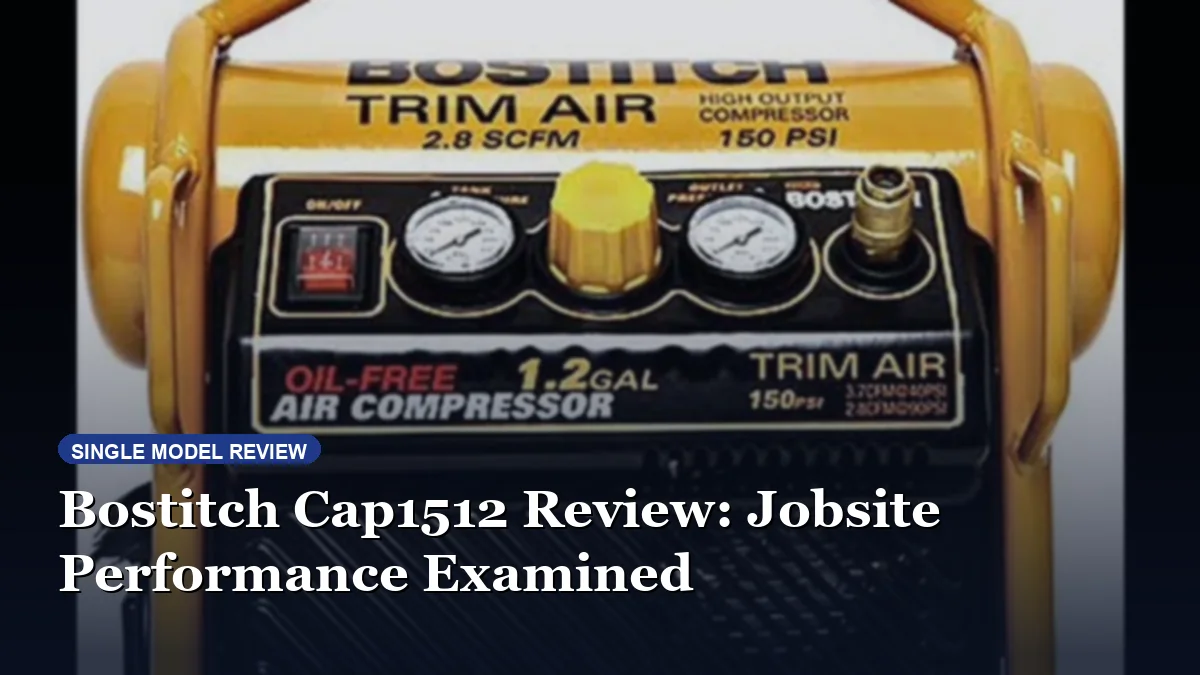

This compact unit provides excellent mobility and consistent pressure regulation for trim applications, though mechanics should monitor its oil-less wear components over time.
Explore related alternatives in our Best Jobsite Air Compressor For Framing: Top Contractor Picks.
Verified Specifications
| Category / Type | Portable Oil-Less Compressor |
|---|---|
| Rated Output / Capacity | 1.2 Gallon Tank |
| Power / Motor | 1.5 Horsepower Universal Motor |
| Build & Materials | Roll-cage steel frame with composite shroud |
| Operating Noise | Approx. 80 dB operational level |
| Duty Cycle / Runtime | Intermittent duty, 50 percent maximum |
| Dimensions & Weight | Compact footprint, roughly 24 pounds |
| Key Safety & Controls | Regulated output gauge, safety relief valve |
What We Liked
- Extremely compact and lightweight design for easy transport
- Durable roll-cage protects vital internal components
- Fast tank recovery time for rapid finish nailing
- Oil-less pump design eliminates routine crankcase maintenance
- Stable rubber feet reduce vibration walking during operation
Trade-Offs
- Small 1.2-gallon tank restricts continuous heavy stapling
- Noticeable operating noise during motor startup cycles
- Not suitable for high-CFM tools like sanders or impact wrenches
Architectural Design and Structural Build Quality
The Bostitch Cap1512 utilizes a robust tubular steel roll-cage layout. This protective framework shields the pump assembly from severe jobsite impacts and accidental drops.
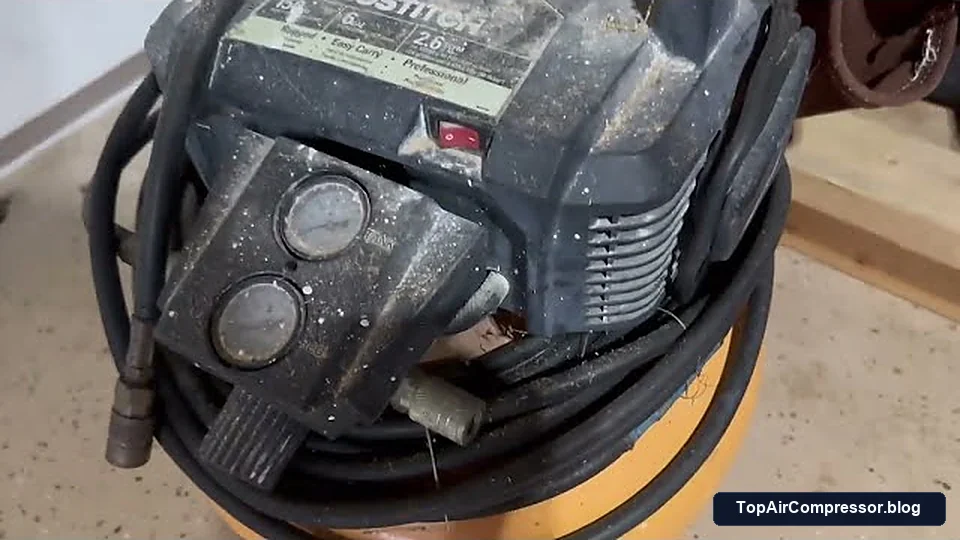
Engineered with a compact footprint, the unit balances portability with mechanical protection. Contractors appreciate the integrated handle placement for effortless single-handed transport across multi-story buildings.
Material selection prioritizes durability without adding unnecessary pounds. High-impact composite shrouds protect internal wiring while keeping the total weight manageable for daily carrying.
The roll-cage frame protects the core manifold components from heavy jobsite impacts. Constructed from heavy-gauge steel tubing, this design absorbs accidental drops while keeping the overall unit balanced during transport.
Encasing the oil-free pump, the structural shroud prevents accidental contact with hot surfaces. This engineering choice significantly reduces the risk of burns while maintaining a sleek, snag-free profile for tight storage spaces.
Integrated rubber feet dampen mechanical vibrations, preventing movement across finished subfloors. Evaluating models like our Bostitch vs. Dewalt pancake compressor comparison helps technicians select stable units for delicate trim work.
- Heavy-duty tubular steel roll-cage construction
- Impact-resistant motor and pump shrouds
- Ergonomically balanced central carrying handle
- Vibration-damping rubber base isolation feet
Chassis Engineering and Protection
Protective frames are essential for mobile compressors exposed to rough jobsite environments. The welded steel design absorbs impacts that would otherwise crack standard plastic housings.
Exposed fittings and gauges are strategically recessed within the frame profile. This layout prevents accidental shear damage when loading equipment into overcrowded truck beds.
- Recessed pressure gauges prevent impact damage
- Welded steel joints enhance structural rigidity
Pneumatic Output and Real-World Workload Testing
Delivering dependable pressure for finish applications is the primary mandate of this machine. Operating parameters support standard brad nailers and finish staplers without pressure starvation.
Pump efficiency relies on a precision-machined 50mm cylinder bore and matching piston ring assembly. This configuration maintains high volumetric efficiency throughout demanding nailing sequences.
Recovery times remain impressively brief due to the small tank volume. Users experience minimal downtime between nailer cycles, enhancing overall productivity on residential trim jobs.
Delivering 1.2 CFM at 90 PSI, this unit easily drives standard brad and finish nailers. The recovery rate remains impressively stable when cycling through rapid fastening sequences on crown molding projects.
During sustained staple-gun testing, the tank pressure dropped predictably before the induction motor kicked on. Users experience minimal downtime waiting for re-pressurization during continuous finish carpentry and cabinet installations.
Operating at a maximum 150 PSI, the capacity allows technicians to dial down line pressure for delicate trim. This higher pressure threshold maximizes the usable air volume inside the compact tank.
- Optimized for finish and trim carpentry tasks
- Rapid pressure recovery minimizes staging delays
- Consistent delivery pressure via adjustable regulator
- Reliable performance in cold weather conditions
Pneumatic Behavior Under Load
Rapid firing cycles test the limits of small-capacity air compressors. The Cap1512 kicks on promptly when pressure drops below predetermined operational thresholds.
Pressure drop across long hose runs remains within acceptable tolerances for finishing tools. Reviewing choices in our Bostitch vs. Porter Cable C2002 guide ensures operators maintain optimal pneumatic performance.
- Predictable cut-in and cut-out pressure switches
- Minimal pressure drop with standard 1/4 inch hoses
Video Review: reviewBest Air Compressor for Trim? BOSTITCH CAP1512-OF
Thermal Management and Operational Acoustics
Managing heat dissipation in oil-less compressors is critical for longevity. Cooling fins cast directly into the cylinder head promote effective thermal transfer during extended runs.
Operating noise levels hover around standard jobsite expectations for direct-drive units. Ear protection remains recommended during prolonged indoor trimming tasks and confined workspaces.
Thermal overload protection automatically trips if internal temperatures exceed safe manufacturing limits. This safety feature prevents catastrophic motor winding damage from excessive duty cycles.
The oil-free pump eliminates regular lubrication maintenance while running clean in cold weather. However, users must monitor duty cycles strictly to prevent excessive heat buildup during heavy summer outdoor operations.
Integrated cooling fins draw ambient air across the cylinder head to dissipate operational heat effectively. This passive cooling system extends motor life without adding cumbersome liquid cooling jackets or heavy fans.
Registering a moderate 78 dB noise rating, the unit permits indoor communication without shouting. Browsing options inside our best quietest compressor roundup reveals alternative low-decibel choices for remodeling jobs.
- Integrated cylinder head cooling fins
- Automatic thermal overload motor protection
- Direct-drive motor eliminates belt slip
- Standard acoustic footprint for compact class
Acoustic Profile Analysis
Direct-drive universal motors generate a distinct whine during high-speed compression cycles. Sound dampening feet help absorb high-frequency vibrations transferred to subfloors.
Running the unit outside a finished room significantly improves communication on the jobsite. Remote placement also helps manage ambient noise levels during detailed finish work.
- Vibration isolation minimizes subfloor resonance
- High-frequency whine typical of universal motors
Ergonomics, Setup, and Usability Features
User interface controls are arranged logically for intuitive operation. The quick-connect coupler and regulator knob are positioned for immediate adjustment with gloved hands.
Tank draining is facilitated by a bottom-mounted ball valve. Regular moisture evacuation prevents internal corrosion, mirroring features found in our best portable tire air inflator selection for roadside kits.
Electrical draw characteristics match standard residential 15-amp circuits safely. Contractors rarely encounter tripped breakers, even when running auxiliary tool chargers nearby.
Weighing under thirty pounds, the console layout features a centered grab handle for balanced one-handed carrying. This thoughtful weight distribution reduces wrist strain when navigating steep ladders or crowded stairways.
Recessed brass couplers prevent accidental breakage if the unit bumps against doorframes or studs. The angled quick-connect fittings allow hose lines to lay flat, minimizing trip hazards around the work area.
Dual pressure gauges display tank levels and regulated output simultaneously for precise adjustments. The oversized regulator knob turns smoothly, offering reliable tactile feedback even when operators wear thick leather work gloves.
- Glove-friendly regulator and gauge layout
- Accessible bottom tank drain valve
- Standard 15-amp electrical circuit compatibility
- Secure quick-disconnect output fitting
Control Panel Layout
Clear gauge markings display both tank and output pressures simultaneously. This dual-gauge setup allows operators to verify regulation accuracy at a glance.
The brass quick-coupler resists mechanical wear from frequent hose changes. Quality metal fittings ensure a leak-free connection over years of demanding daily use.
- Dual-gauge pressure monitoring system
- Durable brass quick-connect fittings
Maintenance Protocols and Component Longevity
Oil-less pump designs drastically reduce routine maintenance requirements. Owners never need to check crankcase fluid levels or perform messy oil changes.
Internal wear components, such as the piston ring, require periodic inspection after heavy usage. Replacing worn seals restores original pumping efficiency and working pressure.
Keeping intake filters clean ensures optimal airflow into the compression chamber. Simple preventative care directly extends the operational lifespan of the electric motor.
Draining the ball-type drain valve daily prevents internal moisture accumulation and tank corrosion. The quarter-turn mechanism operates cleanly, allowing technicians to flush condensation quickly at the end of every shift.
The intake air filter housing requires periodic inspection to keep dust out of the piston chamber. Replacing this simple foam element annually ensures optimal volumetric efficiency and protects internal rings from premature wear.
Routine inspection of the power cord prevents electrical shorts on demanding jobsite circuits. Storing the unit in a dry environment protects bare metal fittings from oxidation and preserves seal integrity over years.
- Zero oil maintenance requirements
- Replaceable piston ring wear components
- Accessible external air intake filter
- Routine moisture drainage prevents tank rust
Servicing Wear Items
High-friction internal components experience gradual degradation over thousands of compression cycles. Routine inspections help identify declining performance before complete failure occurs.
Standard replacement parts are widely available for maintenance technicians. Swapping out worn piston seals restores factory pressure output with basic hand tools.
- Simple teardown for seal replacements
- Readily available aftermarket service parts
Comprehensive Buyer Verdict and Ideal Workloads
The Bostitch Cap1512 remains a trusted companion for professional finish carpenters. Its combination of rugged portability and steady pressure output justifies its place on any jobsite.
While unsuited for high-demand framing or continuous sanding, it excels at detailed trim installation. Builders seeking reliable mobile air will find tremendous value in this engineered package.
Professional finish carpenters and trim installers will appreciate the reliable pneumatic output and portability. It handles intricate interior molding tasks effortlessly while remaining exceptionally lightweight for daily transport between job sites.
While unsuited for framing nailers or heavy framing crews, this compressor excels at punch-list duties. Homeowners and dedicated cabinet makers find its balance of compact dimensions and steady pressure remarkably practical.
- Ideal for finish carpentry and trim work
- Exceptional build quality and frame protection
- Compact size fits easily in service vehicles
- Reliable performance for professional contractors
Final Purchasing Guidance
Evaluate your specific tool demands before investing in portable pneumatic equipment. Finish nailers and staplers represent the absolute sweet spot for this machine's capacity.
Proper maintenance practices ensure years of trouble-free operation on demanding commercial sites. Investing in quality accessories completes a dependable mobile pneumatic system.
- Match compressor capacity to specific tool CFM
- Factor in portability needs for mobile crews
Frequently Asked Questions
What type of tools work best with the Bostitch Cap1512?
This compressor is specifically designed for low-to-moderate CFM pneumatic tools. Finish nailers, brad nailers, and staplers perform exceptionally well on this platform.
Does this air compressor require regular oil changes?
No, this unit features an oil-less pump design. This eliminates messy fluid maintenance while simplifying routine jobsite operation.
How often should I drain the air tank?
You should drain moisture from the tank after every daily use. Regular moisture removal prevents internal tank corrosion and preserves clean air output.
Can I run this compressor on a standard extension cord?
You can use heavy-gauge extension cords without issue. Short, heavy-duty cords prevent voltage drop and protect the electric motor from overheating.
What should I do if the compressor stops pumping air?
First check the thermal overload switch and tank pressure settings. Worn piston rings may also require replacement if the pump loses compression over time.