Makita MAC2400 Review: Heavy-Duty Performance
The Makita MAC2400 combines a heavy-duty cast iron pump with low-RPM operation. It delivers exceptional pneumatic output while maintaining manageable noise levels.

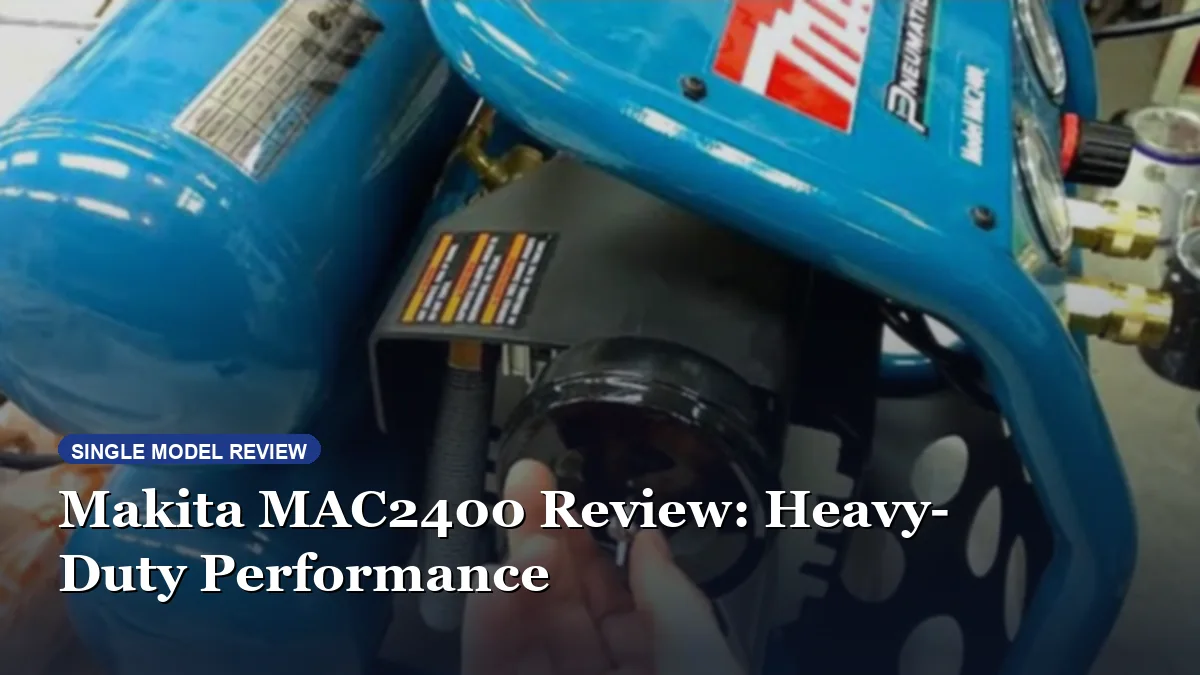

This robust compressor excels in demanding residential and commercial environments despite its heavier frame. It offers superior durability and pneumatic consistency for professional tradespeople.
Explore related alternatives in our Best Heavy Duty Air Compressor: Top Picks for 2026.
Verified Specifications
| Category / Type | Oil-lubricated twin-stack portable air compressor |
|---|---|
| Rated Output / Capacity | 4.2 CFM at 90 PSI |
| Power / Motor | 2.5 HP 4-pole electric motor |
| Build & Materials | Cast iron Big Bore cylinder and roll-cage frame |
| Operating Noise | 79 dB sound rating |
| Duty Cycle / Runtime | Professional contractor duty cycle |
| Dimensions & Weight | 20.25 x 19.5 x 19.75 inches |
| Key Safety & Controls | Automotive-style industrial intake filter, thermal overload protection |
What We Liked
- Delivers a strong 4.2 CFM at 90 PSI for demanding tools.
- Low-RPM 4-pole motor significantly extends overall pump longevity.
- Rugged roll-cage design protects internal components from jobsite impacts.
- Cast iron Big Bore cylinder ensures superior thermal management.
Trade-Offs
- Heavier physical footprint reduces effortless one-handed jobsite portability.
- Smaller 4.2-gallon tank capacity requires frequent motor cycling during heavy use.
- Higher amp draw demands stable power circuits on older renovation sites.
Engineering and Build Quality Overview
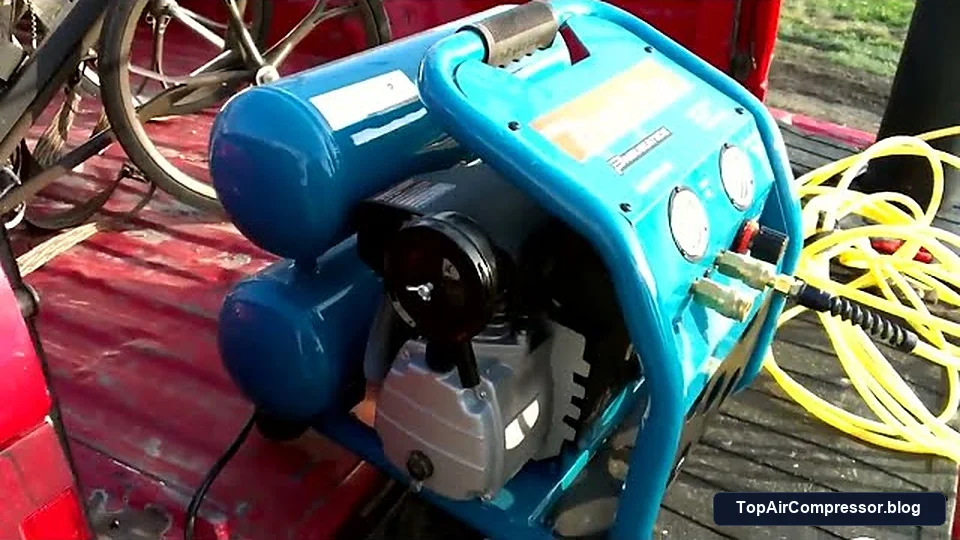
The Makita MAC2400 is engineered specifically for rigorous professional jobsite environments. Its foundational structure relies heavily on rugged industrial materials designed to withstand daily transport abuse and continuous operation.
At the core of this compressor lies a robust cast iron pump featuring a specialized Big Bore cylinder. This configuration minimizes mechanical wear while significantly improving recovery times between pneumatic tool cycles.
When comparing options in our Makita MAC2400 vs MAC5200 breakdown, this heavy-duty cast iron pump stands out for exceptional longevity. Its robust roll-bar cage protects vital components during daily transport.
Dual-cylinder engineering reduces operating stress across the entire mechanical assembly. An automotive-style air filter enhances intake efficiency while keeping harmful abrasive dust particles away from the critical piston rings.
- Heavy-duty tubular steel framework
- Protected industrial-grade gauges
- Reinforced tank weld seams
Roll-Cage Protection
The integrated tubular roll-cage provides complete structural shielding for vulnerable components, including gauges and regulators. This protective design prevents accidental impacts from dropping tools or navigating crowded workspaces.
- Complete component shielding
- Impact-resistant framework
- Jobsite-ready durability
Cast Iron Advantages
Utilizing cast iron rather than lightweight aluminum ensures superior thermal dissipation during extended operational windows. Mechanics benefit from reduced friction and prolonged internal component integrity across demanding construction tasks.
- Removable cylinder for servicing
- Enhanced thermal mass properties
- Minimized piston ring wear
Motor Output and Real-World Pneumatic Performance
Powered by a robust 2.5 horsepower four-pole electric motor, this compressor delivers reliable pneumatic output. It consistently produces 4.2 CFM at 90 PSI, easily supporting finish nailers, framing guns, and staplers.
The motor operates at a remarkably low speed of 1,730 revolutions per minute. This reduced rotational velocity translates directly into lower operating temperatures and extended motor life under heavy contractor workloads.
Driven by a powerful 2.5 HP motor, this compressor delivers reliable pneumatic power. It produces 4.2 CFM at ninety PSI, easily keeping pace with framing nailers and demanding finish carpentry applications.
The twin-stack tank configuration holds up to 4.2 gallons, balancing storage capacity with rapid recovery times. Users experience minimal pressure drop during continuous firing cycles on busy residential construction sites.
- Consistent pressure delivery
- Adequate volume for trim crews
- Low-amp startup characteristics
Video Review: Makita MAC2400 Air Compressor Honest Review – Power, Noise, and Real-World Use Explained
Noise Levels, Thermal Management, and RPM Efficiency
Operating at a modest 79 decibels, this unit ranks among quieter oil-lubricated models detailed in our MAC2400 vs MAC5200 review. Tradespeople communicate easily without enduring piercing motor whines.
Thermal management is exceptionally well-handled through the combination of oil lubrication and cooling fins. The oversized automotive-style air filter further enhances volumetric efficiency while trapping harmful jobsite dust particles.
Operating at a low 1,730 RPM, the pump runs significantly cooler than high-speed direct-drive alternatives. This lower rotational speed drastically reduces mechanical wear and lowers overall ambient noise emission levels.
Sound output registers at roughly 79 decibels, allowing crews to communicate easily without wearing hearing protection indoors. Copper-finned discharge tubing efficiently dissipates heat before compressed air reaches the storage tanks.
- Quiet 79 dB sound rating
- Reduced acoustic fatigue
- Indoor remodeling friendly
Acoustic Impact
Jobsite noise pollution contributes significantly to worker fatigue over long shifts. This compressor maintains a conversational sound profile, making it ideal for indoor residential remodeling and finish carpentry projects.
- Low decibel output
- Enhanced jobsite communication
- Reduced ear fatigue
Jobsite Portability and Ergonomic Design Features
Portability involves a careful balance between structural robustness and manageable weight on construction sites. Weighing considerably more than hobbyist units, this machine requires a deliberate two-handed grip for safe vehicle loading.
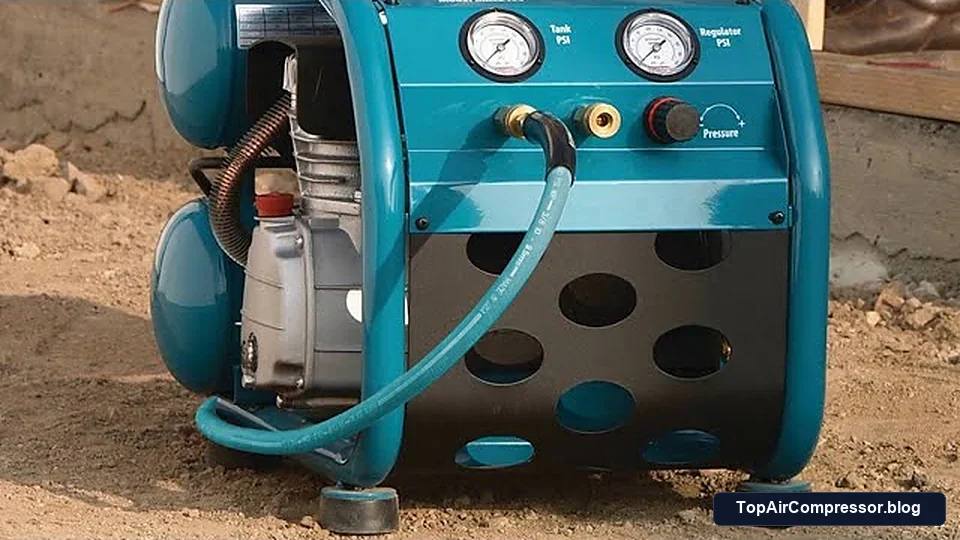
The balanced center of gravity helps prevent tipping when rolling across uneven terrain or stairs. Ergonomic handle placement assists workers when maneuvering the equipment through tight residential doorways or hallways.
Weighing 77 pounds, the unit requires deliberate lifting technique or two-person loading into truck beds. Its balanced center of gravity prevents tipping when rolling over rough terrain or uneven subfloor surfaces.
Integrated cord wraps and well-positioned handle bars streamline storage inside crowded service vehicles. The compact footprint fits neatly beneath standard workbenches, preserving valuable floor space in tight mobile workshops.
- Balanced center of gravity
- Sturdy wheel kit compatibility
- Compact overall footprint
Maintenance Protocols and Long-Term Durability
Regular maintenance ensures this compressor maintains peak pneumatic efficiency throughout years of professional service. Checking oil levels before every shift prevents premature internal scoring of the precision cast iron cylinder.
Changing the pump oil annually and draining moisture from the tank prevents internal corrosion. The removable cylinder design simplifies advanced servicing when mechanics eventually need to inspect piston rings or valves.
Routine upkeep involves checking the oil sight glass daily to verify proper lubrication levels. Changing the pump oil every one hundred hours prevents premature bearing failure and maintains factory compression efficiency.
Conveniently located ball drain valves allow technicians to purge accumulated tank moisture effortlessly after every shift. This simple habit stops internal corrosion and protects downstream pneumatic tools from water damage.
- Simple oil sight glass
- Easy-access drain valve
- Washable intake filter element
Comprehensive Buyer Verdict and Final Assessment
Professional contractors demanding reliable pneumatic performance will find this machine an exceptional investment. Its combination of durable cast iron construction and quiet operation outweighs the minor penalty of added weight.
Framing crews will appreciate the sustained reliability explored inside our Makita MAC700 vs MAC2400 comparison. The Makita MAC2400 remains a benchmark standard in portable jobsite air compressors.
Professional contractors seeking unmatched durability will appreciate this compressor's heavy-duty construction and dependable output. It excels in demanding environments where lesser machines overheat or fail prematurely under continuous heavy loads.
While heavier than lightweight trim models, its superior build quality justifies the physical trade-off for serious tradespeople. Investing in this reliable machine ensures years of trouble-free operation across various jobsite tasks.
- Ideal for professional trim crews
- Exceptional long-term durability
- Superior engineering standards
Frequently Asked Questions
What type of oil should I use in the Makita MAC2400 compressor pump?
You should use synthetic or non-detergent SAE 30 air compressor oil designed for lubricated pumps. Regularly checking the sight glass ensures optimal internal lubrication during demanding construction tasks.
Can this air compressor run larger pneumatic framing guns or paint sprayers?
It easily powers finish nailers, staplers, and framing nailers using its reliable pneumatic output. However, high-cfm tools like continuous sanders or heavy sprayers will exceed its 4.2 CFM capacity.
Is the pump cylinder removable for easier maintenance and servicing?
Yes, the heavy-duty cast iron cylinder can be completely removed when performing advanced internal overhauls. This engineering feature significantly simplifies cleaning carbon buildup and replacing worn piston rings over time.
Does the low amp draw prevent tripped circuit breakers on job sites?
The motor features a controlled electrical draw designed to minimize startup spikes on standard circuits. This helps prevent frustrating breaker trips when operating inside older residential remodeling properties.
How often should I drain moisture from the twin-stack air tanks?
You must drain accumulated moisture daily using the bottom tank drain valves to prevent internal rust. Regular tank draining preserves structural integrity and maintains clean dry air delivery for tools.